AI Agents are HERE! OpenAI Operator, DeepSeek-R1 and More AI Use Cases
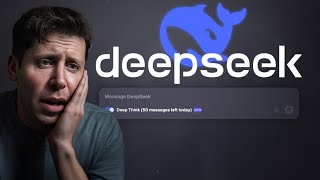
Igor surveys recent AI releases you can use now: DeepSeek-R1, an open-source thinking model that runs locally and rivals OpenAI's O1. OpenAI released Operator and is bringing O3 mini to the free tier. Other tools include Google's Gemini 2.0 Flash, Perplexity's Sonar Pro API, and Runway Frames.
Chapters
Another eventful week in AI. And today we'll be looking at everything that you can put to work today. And most of it is actually freely accessible. Because we had some serious news out of OpenAI, like the $500 billion investment and the first comment on GPT5 and 03 mini we got yet. And to go along with that, we had a release of a tool that has the intelligence of zero one at the best price tag there is. Free and fully open source. There's something we need to expand on there, but that and many more innovations in the generative AI space. On this week's episode of AI News, you can use. Let's get into it. And I really want to start with this Deep Seek news. So the story goes like this. Earlier this week, Chinese AI platform Deepseek releases a new thinking model titled R1. This is their direct competitor to OpenAI's O1, which is gated behind a $20 a month paywall. And it's just the smartest model that we have to date, second to only 01 Pro, which is behind a $200 plan with the difference that this model has been fully open sourced and they put up a web interface where you, without even logging in, can run 50 messages a day through this that matches the capabilities of 01. Look at that. Deep seq is the blue one, OpenAI 01 is the gray one. But I think the most important part here is the fact that they decided to open source this. Meaning if you open any software that runs open source models like Ollama or what I have here, LM Studio, you can download these models at a size that works on your computer. They start at 1.5 billion parameters, which pretty much run everywhere. If you want to match 01 mini, you want to go to the 32 billion parameter model, as you can see on the graph, and all the benchmarks, that essentially beats out O1 mini. And if you do that for the first time, can you run peak intelligence locally, privately, no Internet connection required, no handing off your data to some data center? You can do it all on your machine. And for the first time, you can do this with thinking models. That's why this is a big deal. They're just flat out smarter. And while people are still figuring out the exact use cases, I could just tell you anecdotally that since having the Pro account, everything that I really care about, and that includes some strategic planning or some bigger picture thoughts, I just run through 01 Pro. And regularly I do compare it to 01 and 4.0 and I can confidently say that these thinking models just produce higher quality outputs and that's independent of all of these benchmarks. Now, you can do that too, for free or locally, or build your own app on top of it, or run it inside of your company without having to be afraid what might happen with the data. Okay, so if at this point you're still wondering what you should be doing with this model, we're actually running a monthly challenge right now. Link in the description below where we asked people to subscribe, submit their use cases for these thinking models. And in the first week of February I'll be holding a live stream where we look at some of the best ones which should show you what to actually use this for. One last comment that I want to leave you with is the pricing. Because if you look at $01 15 per 1 million input tokens, this is if you run it through the API that is hosted on their end, not hosting this locally. Right? Same thing for Deepseek Chat. We want to look at the input without a cache. 27 cents per 1 million tokens. Right now it's even discounted to 4 14. That is 1% of the price. An absolutely insane difference between these two competitors. And I can't help but think about how this is pushing OpenAI to release more. I mean, they announced Project Stargate where they're going to invest $500 billion into AI infrastructure for the US. That's a different story though. And they have been talking about releasing O3 mini, which essentially matches the O1 and Deepseek R1 performance. But the model will be super fast. Whereas if I run a complex prompt like this one that evaluates model performance to help with the intricacies of fine tuning a model. So this is a completely different topic and we've been doing this for fine tuning course that we've been developing for a while now. If I do that, this answer takes a long time. Making a model like this not optimal for something like an AI assistant, right? You want to give it a task and then you want it to figure it out in a reasonable amount of time. And all these thinking models, you might be waiting for a minute. That's why O3 mini will be really important. And if you're just like me, you might have wondered, okay, thinking models, that's great. But when I were getting GPT5, Sam Altman actually gave some information on Twitter recently, I couldn't find this tweet anymore. But luckily we have a little screenshot here and the conversation when something like hey can you tell us something about GPT5? He said, what would you like to know? And then the questions were, when? What's the performance? And how will the GPT series evolve? And he basically said 1 and 2, they're figuring it out, but I think you'll be happy. Meaning that we can maintain our optimism here. To me, the signals that we'll get it this year and that the performance will be a significant difference to what we have right now with four all and then three is also super interesting. This is something that me and many other people already expect, and that is that they'll be merging these thinking models with the normal models. So you won't have to choose. It will just figure out what you're asking for and which one of the models would be optimal for what you want. And I think that makes sense. Eventually, AI will be relatively easy to use for the base use cases. But there's this in between phase now, between release and the eventual state where you really need to know how to use it, you need to know how to prompt it, you need to know what it's capable of, you need to understand the tooling and its limitations. That's where we're at now. And my hope is that videos like this help out with that. And this links to the last piece of news or rumors that I want to link to this, which is the fact that the O1 operator is rumored to release, well, either today, January 23rd, on the day of this recording. All right, quick update from editing Igor here. It's been only 16 hours since I recorded this segment, but AI moved so fast that there's just some critical changes I need to update you on. First of all, Operator is out already, okay? They released it in a spontaneous live stream yesterday. I made a separate video on that. I highly recommend you check that out. I ran two use cases in there live. You can see what it can do, how it operates. It's behind a $200 paid wall, so kind of nice to have a look at it first and then make a decision if it makes sense for you. Secondly, they announced that O3 mini will be coming to the free tier of ChatGPT. Super unexpected right now. 01 is paywall gated and O3 mini is coming. Surely this is because of the deep seq announcement that we just talked about. So that is a great development for everybody. You know, like the open source space, literally making AI products cheaper and more accessible to the masses. Amazing. And then thirdly, I want to add one comment to Operator, which first of all, I still think this is the most and revolutionary products since ChatGPT for, you know, most people, for pretty much everybody. And I found this extra capability that I missed yesterday, which I think is amazing. You can add custom instructions based for the specific apps. So if you have like a specific way you like to use Booking, or maybe you have some favorite listings, or maybe you have some preferences, you can put all of them here. And whenever Operator uses Booking, it will use the custom instructions. You could put credit card details in there, that works. You could put a login details for your Google account in there, that also works. But those also get saved in the browser. So if I run my preset here that I showed off in the video, it's already logged into the Google account there. I don't have to do that again. So it memorizes that. That's huge. And one more final note on Operator thing is that we started compiling a database inside of the AI Advantage community that is paid, but that is our private community where we look into all these things. And we're creating a database of all the use cases for Operator together with the team, I got the team multiple ChatGPT Pro subscriptions now. So we're all exploring and a lot of our core members have it too. So we're curating a database. And I mean, look, you bet that a lot of it is going to trickle down to the YouTube channel. We're going to create some great videos over the coming week and weeks. Very much looking forward to that. But if you really want the most, and if you really want to see how we do it and what we're testing, then the community is the place for that. And I want to share one. That really blew my mind because we're testing all of these things in Operator and a lot of them just work. And what I love is that, for example, we gave it access to our Notion database, where we collect Operator use cases. And we taught Operator, like, if something works, how to transfer it to the Notion database. So we run these different tasks inside of Operator and then Operator puts them into our own database. Now, this answers one of the questions on the video's comments yesterday, which is like, can it work with Excel? Can it work with spreadsheets? The answer is absolutely yes. We're using it with Notion databases to document Operator use cases that we're sharing with the community that if we digest them, we'll share with the YouTube. It's incredible. So check the video out if you haven't so yet. And now back to the next piece of AI news that you can use. Next up, I'll keep this one brief. And it's essentially a new release from Google's DeepMind. They also released a new thinking model. This one is called Gemini 2.0 Flash Thinking Experimental. This is their competitor to 01 and Deepseek that we just talked about. You can access it through Google AI Studio. You can see that on this first benchmark, it scores 73%, which would essentially be at the strength level of the 32B version of Deep Seeks R1. By the way, this big Deep Seq model is around 600 billion parameters. So on this GPQ, a diamond benchmark, this would score with 74, putting it ahead of the big Deep Seq model, a little behind OpenAI. So they're basically also throwing their hat into the ring. And as we talked about last week, we're seeing sort of an onslaught of all these thinking models, and that seems to be the new standard for programmatically accessible intelligence. All right, on to the next piece of AI news that you can actually use. Okay, the next release is one coming from Perplexity. And this would be rather brief, but I think this is important because we ourselves use Perplexity in various automations in the AI advantage. Whenever we research these stories, we run Perplexity searches on top of them automatically. And we do this programmatically through their API. Now they have a new version of this. They call this the Sonar Pro API. And the main difference to the previous one is that it now includes citations and the ability to customize sources so it tells you where it got the info from. For something like this news show where we look into each story, this is critical and I'm really looking forward to having sources as a part of the Perplexity research on every story. There's also some advanced features in the Pro version, like JSON mode or the ability to filter for specific domains if you want to leave those out, for example. So anybody using Perplexity in their workflows or automations will have to change to this soon because I also received this email that they will be discontinuing their old models within a month. So if you have anything running with Perplexity in the background, it's time to switch up the model to the new Sonar models they're providing. Okay, next up, a few improvements in AI video and image generation Land. And I like to keep this brief because it's good to stay on top of this stuff and to understand what's coming out, but I found that most people don't Want to nerd out over this and spend tens of minutes on one tool. So let's start with the one big AI imaging release this week, which comes out of Runway. And if you've been following this space, you might be surprised by that. Runway has only been doing video generation so far. Matter of fact, the pioneered a lot of tooling that we know and love across many other video generators. They now have an imaging model. This one is called Frames. Matter of fact, this is a very focused model because it's a cinematic one, meaning that these are well lit, carefully composed images, just like a frame of a movie with good cinematography on it. Now, here's the part that really surprised me. Okay, this is the AI image generator that's coming out in 2025, okay? Meaning it's competing with My Journey, Flux, Recraft, Ideogram, Stable Diffusion, and many others. This is a fully closed source model with high quality, just like Midjourney, although Midjourney has more variety. But, and here's the surprising part, if you want to try this on a monthly plan, it costs $95. What? Matter of fact, we got a subscription with the team and in the EU we had to pay VAT on top of that, totaling at around $120 for a monthly subscription to an image generation tool, whereas midjourney costs 10. Sure it's not unlimited. Point being that this is really pricey and probably not worth it for most people looking to some images. Now, of course, we had to get the subscription and run our test prompts from it. We'll be ranking it in our monthly AI Advantage image generator ranking in about a week from now that we republish every single month in the free area for community. For now, I have some initial test images for you, and we'll put up comparisons between this one and some competing models like Flux and Midjourney. So, as you can see here, it's doing portrait shots. And these do look great. You know, I think this holds up with the hyper realism of some of the top models. I mean, arguably Flux is a bitter on some. Some of the details that would be really nitpicky on logos. As expected, this is not that great. You would want to go to something like Ideogram if you want to generate a logo. Comics. Mid Journey still remains kings, but when we go to some of these cinematic shots, it really does perform well. Like, every aspect of this is wonderful. Color palette, composition, the lighting on it. Look at that big diffuse key light on their faces with a hair light from the back separating them. It is really good at what it's doing, being cinematic. Same thing goes for these drone shots. These look amazing. Look at this color palette. But is that worth $98? I don't know. Considering some of the competition at similar quality levels for Sense or a $10 mid journey subscription, probably not, but it looks good. So there you go. You have some info to make up your own mind. Now let's move on to the next one, which is a Cling AI release that is similar to what we've seen in many other tools. They call it Elements and basically this allows you to introduce various elements to a video and it will incorporate them. I really like these examples from their blog. Look capped with a leather jacket and glasses turns into this editing team. Put like some meow meow sound effect behind it. We've seen this out of some of the competition, but recently Cling sort of established itself as one of the best, if not the best model for storytelling because of its high quality characters. And now you can introduce specific elements to it. As predicted, we see some of these best features spread out across the various tools. And then there's one more release in AI video land, and that's Luma's brand new model. This actually came out last week, but it wasn't available yet, so I didn't feature it yet. Now Ray 2 is available to anybody with a subscription. This thing is impressive. Luma Labs was kind of the first one to come out with Dream Machine, and it initiated sort of this new era of AI video. Well, matter of fact, the SORA preview was the first thing, but Luma Labs Dream Machine was the first model that was available. But then a lot of these other models came out and surpassed it in quality, like Cling Minimax and others. And now this Ray 2 model is on par with those. How good is it exactly? Well, we have a few examples here for you yet again, comparing it to the yet unreleased VO2 that is generally considered the king in the AI video. It's just not released yet. But here's some direct comparisons between Ray 2 and Veo. And look, particularly this little hot dog swimming in a pool. This is really good. I think in German this one is referred to as a dachshund. Kind of a neat word. So I wanted to weave this into the video. And what about this Beekeeper? Also very good. Except of this hand melting through the sunflower. I suppose so, yeah. Yet another competitor in the space. I still think VO2 is the best one here, but again, it's not available yet. So there we go. Innovations In AI imaging and AI video for this week. Let's move on to the next story. Okay, so this is a 3D generator, and sometimes these come out and we don't even feature them because I realize that most people won't have a use case for this. But I do want to show you major leaps in the various categories of AI, and I think this one definitely qualifies for that. So it's from Tencent's hanyuan, which you might know from their video generator. But here they published a few 3D model that you can try out today. There's even a hugging face space. You can try this out for yourself. I'll just pick one of these images over here. How about Pikachu with a bazooka? No. What is this? Flamethrower use AK47 attack. All right, let's say generate shapes and textures and see how this goes. Let me tell you, I gave this a little spin before the recording, and I have never seen this quality out of an AI 3D generator. The rate at which we're progressing on all fronts is just crazy. And sometimes I like to try these little demos to see it in practice. Okay, look at that. Pikachu with a flamethrower. I guess the tail is not attached, but other than that, pretty good. And here's the fully textured model. Let's do one more. Okay, there it is. Look at that. That's really solid. If you look at the textured version. I don't know. I don't work in 3D modeling, but I can tell you that this is the best 3D generator I've seen yet by far. Interesting. On to the next one. And to round out this week's video, I actually want to highlight one comment from last week's video. And the comment was a little pissed off about the fact that I asked you to share your favorite use of one of the tools that I showed you. I'm not going to highlight it here, but it went something like, you don't even know me. Why are you asking me to leave a comment? Surely that's just for the algo. You don't care at all. And I just wanted to address that here because that statement right there could be further from the truth. Like, literally the funnest part about this videos is the interaction I get from you guys is the comments that you leave. Like, look, I'm spending my entire life looking at these tools, analyzing it, presenting it to you. And then mostly I don't get much feedback on here. I don't know if you guys enjoy the different segments. But if you want more AI imaging stuff, more LLM stuff, more automations, whatever it might be, I love to get feedback. Look, you probably also don't know me personally, but I'm a pretty extroverted guy and I love myself a good dialogue. And unfortunately these YouTube videos are most of the time a monologue of me looking at various tabs and releases. But saying that I don't care about how the viewers of this use this in their very own life couldn't be further from the truth. I guess this is a long winded way of saying if you have a way you're planning to use any of the tools here, please leave a comment below. I love to see them. And if you feel like I should switch up the structure of this show, also feel free to share that. Like, hey, that's why I scheduled monthly streams now on the channel and why we started the entire community because we can have more of a dialogue, more of a direct interaction with the viewer. So if you have some thoughts that come up during the video, please share them. And no, I'm not just saying that for algo. Like heck, I could just ask you to like and most of the time forget about that. I personally would much prefer if you leave your thoughts so I can make better videos that interest you. All right, that's everything we have for this week. I hope you have a wonderful day and I'll see you very soon.










