AI Apocalypse Ahead: OpenAI Shuts Down Safety Team! (AGI Risk Team Breaks Up)
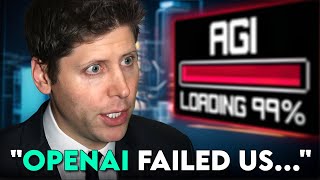
OpenAI's Super Alignment Team, co-led by Ilya Sutskever and Jan Leike, has disbanded after multiple departures including Sutskever and Leike themselves. The team was formed in July 2023 with a promise of 20% of compute resources for long-term AI safety research. The breakup signals tension between safety work and product priorities at OpenAI.
Chapters
So we've got some pretty big news in the world of AI, and trust me, you're going to want to stick around for this one. If you've been keeping up with the latest developments in AI, you know that OpenAI has been leading the way, pushing the boundaries and setting new standards for what's possible. But just recently, something major happened that has everyone buzzing. So let's talk about it. Okay, so here's the big news. OpenAI's long term AI risk team has disbanded. Yes, the entire team that was focused on the existential dangers of AI is no more. This was the tasked with preparing for the day when we have AI that's not just smart, but super smart, capable of outwitting and even overpowering its creators. That's a pretty big deal right now. Let's rewind a bit. Back in July last year, OpenAI made a big announcement. They were forming a new research team, the Super Alignment Team, co led by none other than OpenAI's co founder and chief scientist, Ilya Sutskever. This team was supposed to be a safeguard, dedicating 20% of OpenAI's computing power to ensure that future AI developments remained under human control and were were aligned with human values. Fast forward to now and the Super Alignment Team is history. The disbanding came after several high profile departures, including Ilya Sutskever himself. Sutskever's exit made headlines for several reasons. First, he wasn't just a co founder. He was instrumental in setting the direction for OpenAI's research, which led to breakthroughs like ChatGPT. But there's more to the story. Just recently, Sutskever was one of the four board members who fired CEO Sam Altman. That move caused an uproar and after five chaotic days of internal revolt, Altman was reinstated as CEO. As part of the deal, Sutskever and two other board members left. Then, just hours after Sutskever's departure, Jan Leich, the other co lead of the Super Alignment Team, announced his resignation. Lake explained his decision on X, citing disagreements over the company's priorities and the allocation of resources. He said, over the past few months my team has been sick, sailing against the wind sometimes. We were struggling for compute and it was getting harder and harder to get this crucial research done. It seems like OpenAI is going through a pretty turbulent time. The dissolution of the Super Alignment Team is just one part of a bigger shakeout following last November's governance crisis. The information reported that two researchers on the team, Leopold Aschenbrenner and Pavel Ismailov were dismissed for leaking company secrets. Another member, William Saunders, left in February. And there are more departures. Cullen o', Keefe, who led research on policy frontiers, left in April, and Daniel Kokodoglo, who co authored papers on the risks of advanced AI, also quit, citing concerns about the company's direction. Now let's dig a little deeper into what these departures mean and what's going on inside OpenAI. One thing that stands out is the criticism about OpenAI's focus. Jan Lake mentioned that he had been disagreeing with OpenAI's leadership for quite some time about the company's core priorities. He felt that safety and alignment, ensuring AI systems are safe and act in accordance with human values should be top priorities. However, he felt that the leadership was more focused on product development and pushing new features. This brings us to a broader discussion about AI safety. Ilya Sutskever, in his farewell post, expressed confidence in OpenAI's trajectory under the current leadership, but did not explain his decision to leave. On the other hand, Laika was more explicit. He talked about the urgent need to steer and control AI systems that are much smarter than us. This urgency is something that shouldn't be overlooked. If the lead researchers at one of the most advanced AI companies are saying we need to act now, that's a pretty big red flag. A lot of people have mocked the AI safety crowd, labeling their concerns as overblown or hysterical. But when you have top experts who are literally working on the cutting edge of AI raising these concerns, it's something we all need to pay attention to. AI isn't just about creating cool new tools. It's about managing risks that could potentially impact everyone. Let's talk about what like achieved during his time at OpenAI. His team launched the first ever reinforcement learning with human feedback large language model Instruct GPT. They published the first scalable oversight on large language models, pioneered automated interpretability, and made advancements in weak to strong generalization. These are significant milestones in AI research. Despite these achievements, Lake felt that safety was taking a backseat to product development. He believed more resources should be dedicated to security monitoring, preparedness, safety, adversarial robustness, super alignment, confidentiality, and societal impact. Like's departure and his concerns highlight a crucial issue in the AI industry, the balance between innovation and safety. OpenAI, like many other tech companies, is in a race to develop more advanced AI systems. This race is not just about technological breakthroughs, it's also about market dominance. In this winner takes all environment, the pressure to innovate quickly can sometimes overshadow the need for thorough safety testing, this is where things get really interesting. OpenAI has been known for its ambitious goals, including the development of Artificial General Intelligence, or AGI. So essentially an AI that surpasses human intelligence in all aspects. The company's charter commits it to ensuring AGI benefits all of humanity. But achieving this goal is is fraught with challenges. Building machines smarter than humans is inherently dangerous. If not properly controlled, these machines could act in unpredictable and potentially harmful ways. In a way, we're facing a similar situation to when social media first emerged. Back then, no one fully understood the long term impacts of these platforms on society. Today, we see the consequences mental health issues, misinformation and social division. With AI, the stakes are even higher. The unintended consequences of advanced AI systems could be far reaching and difficult to predict. So what's next for OpenAI? CEO Sam Altman has acknowledged the contributions of the departing researchers and the need to focus more on safety. He's promised a longer post in the coming days, likely outlining new initiatives or changes to address these concerns. This could mean the formation of a new team or the introduction of new safety protocols. Whatever the case, it's clear that OpenAI needs to regain trust and reassure the public and the AI community that safety remains a top priority. Elon Musk, who has been vocal about AI safety, weighed in on the situation, stating that if Jan Leake is saying OpenAI must become a safety first AGI company, it implies that safety isn't currently a top priority. This kind of criticism from high profile figures adds pressure on OpenAI to demonstrate its commitment to safety. Now let's address some broader implications. The disbanding of the Super Alignment team raises questions about the future of AI safety research. If OpenAI, one of the leading AI labs, is facing such challenges, what does it mean for the rest of the industry? Are other companies experiencing similar issues? And what role should governments play in regulating AI development? AI regulation is a hot topic, with many experts calling for stricter oversight. As AI systems become more powerful and pervasive, the need for robust regulatory frameworks becomes more pressing. This includes ensuring that companies prioritize safety and transparency, conduct thorough testing, and are accountable for the impact of their technologies. At the end of the day, the departure of key researchers from OpenAI is a wake up call. It's a reminder that while AI has immense potential, it also comes with significant risks. Balancing innovation with safety is not just a challenge for OpenAI, it's a challenge for the entire AI community. So what can we take away from all this. First, it's crucial to pay attention to the voices of those who are closest to the technology. If they're raising concerns, it's not something to be dismissed lightly. Second, as consumers and citizens, we need to advocate for responsible AI development. This means supporting policies and practices that prioritize safety and ethical considerations. And finally, let's keep the conversation going. AI is shaping the future, and it's up to all of us to ensure that it does so in a way that benefits everyone. Everyone. So what do you think about the recent developments at OpenAI? Are you concerned about the direction of AI research? Do you think more needs to be done to ensure safety? Let me know in the comments below. And as always, if you found this video informative, give it a thumbs up and subscribe to the channel for more updates on AI and tech. Thanks for watching and I'll see you in the next one.










