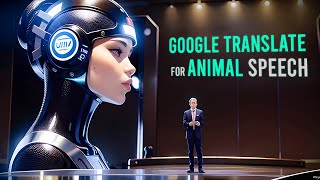
AI researchers are building tools to decode and generate animal communication. Khan Slobodchikov's Prairie Dog Translator analyzes vocalizations, while Denise Herzing's CHAT system does the same for dolphins. Other projects use AI to synthesize sounds animals respond to, raising questions about manipulation and responsibility.
Questions this video answers
LARRUZ; May 22, 2023.
(1) Analyze animal sounds/behaviors to decode meaning; (2) Generate animal sounds/behaviors to communicate with animals.
Khan Slobodchikov, professor emeritus of biology at Northern Arizona University; developed the Prairie Dog Translator (30+ years of study).
Denise Herzing, founder of the Wild Dolphin Project; developed CHAT (Cetacean Hearing and Telemetry) for translating dolphin sounds (35+ years of study).
Animatronic for the robot Sophia (system that generates animal sounds/behaviors).
Chapters
You ever think about what your cat would tell you if you could understand em? Or what you'd chat about with your dog or maybe a horse? Well, you might be able to find out soon. But then again, you might be thinking, why the heck would I want to talk to animals? There are many reasons. For starters, animals are just super interesting, right? We can learn so much from them. They see the world in different ways, feel different emotions, have their own unique cultures, and even have different forms of intelligence. So how can AI Help us achieve this dream of talking to animals? Well, there are two main ways. One is by using AI to analyze animal sounds and behaviors. And the other is by using AI to generate animal sounds and behaviors. Let's start with the first one, using AI to analyze animal sounds and behaviors. This is where we use AI to decode the meaning behind the noises and gestures that animals make. For example, you might have heard of the famous Coco, the gorilla, who learned sign language and communicated with humans. She was able to express her thoughts and feelings and even make jokes and lie. She was an extraordinary example of interspecies communication. But what if we could do that with any animal without having to teach them sign language? What if we could just use a device that could translate their sounds and behaviors into human language and vice versa? Well, that's exactly what some researchers are trying to do. One of them is Khan Slobodchikov, a professor emeritus of biology at Northern Arizona University. He has been studying prairie dogs for over 30 years, and he has discovered that they have a very sophisticated language system. Prairie dogs can make different sounds for different predators, such as hawks, coyotes, or humans. They can also describe the size, shape, color, and and speed of the predators. They can even communicate about abstract concepts such as time and space. Slobodchikov has developed an AI system that can translate prairie dog sounds into English words. He calls it the Prairie Dog Translator. He hopes that this technology can help humans understand prairie dogs better and prevent them from being exterminated by farmers who see them as pests. Another researcher who is working on animal communication is Denise Herzing, the founder of the Wild Dolphin Project. She has been studying Dolphins for over 35 years, and she has observed that they have a complex social structure and culture. Dolphins can make different sounds for different objects, actions, and individuals. They can also use body language and echolocation to communicate. Herzing has developed an AI system that can translate dolphin sounds into English words. She calls it chat, which stands for Cetacean Hearing and Telemetry. She hopes that this technology can help humans Interact with dolphins in a more natural way and learn from their intelligence and creativity. These are just two examples of how AI can help us analyze animal sounds and behaviors. There are many more projects going on around the world that aim to do the same thing with other animals, such as elephants, whales, dogs, cats, and even plants. But what about the second way? Using AI to generate animal sounds and behaviors. This is where we use AI to create synthetic noises and gestures that animals can understand. For example, you might have seen some videos of people using apps or devices that can imitate animal sounds, such as bird calls or wolf howls, and get responses from real animals. This is a fun way of interacting with wildlife. But what if we could do more than just imitate? You know, it's really fascinating to think about it. What would happen if we were indeed capable of generating new sounds and behaviors that convey our intentions and emotions to animals? Just imagine that for a moment. Interestingly enough, there are some dedicated individuals in the scientific community who are actually striving to make this very concept a reality. One such individual is none other than David Hansen, the creative mind who established Hanson Robotics. He has created a robot called Sophia, who is famous for being one of the most human like robots in the world. She can talk, make facial expressions, and even crack jokes. But she can also do something else. She can communicate with animals. Hansen has developed an AI system that can generate animal sounds and behaviors for Sophia. This innovative technology, which Hansen has named Animatronic, uses deep learning to analyze animal vocalizations and body language and to synthesize them for Sophia. The system also uses reinforcement learning to enable Sophia to learn from her interactions with animals and to adapt her communication style accordingly. Oren Kolodni is another researcher who is working on animal communication. He is a professor of computer science at Stanford University, and he has created an AI system that can generate animal behaviors for virtual agents. He calls it Earth Species Project, and he claims that this technology can help virtual agents simulate natural ecosystems and evolve new forms of intelligence and communication. The system uses generative adversarial networks to create realistic and diverse animal avatars such as birds, fish and insects, and also uses reinforcement learning to enable these virtual agents to learn from their interactions with each other and their environment, and to develop their own language and culture. The main goal of this project is to explore the origins and evolution of animal communication, while also producing innovative perspectives and solutions for complex problems. There are many more projects going on around the world that aim to do the same thing with other forms of media, such as video games, movies, or art. So, as you can see, AI is changing the game when it comes to animal communication. It is opening up new possibilities for understanding and interacting with other species and for discovering new aspects of ourselves. It is also raising new challenges and ethical questions such as how do we respect the autonomy and dignity of animals? How do we ensure that our communication is not harmful or manipulative? How do we balance our curiosity with our responsibility? These are important questions that we need to think about carefully as we enter this new era of interspecies communication. But honestly, I think this is one of the most exciting things that AI can do for us. I think it's amazing that we might be able to talk to animals soon. What do you think? Let me know in the comments. Thank you for watching this video and I hope you learned something new today. If you like this video, please give it a thumbs up and subscribe to the channel. And if you have any questions or comments, please leave them below and I'll try to answer them as soon as possible. Until next time, stay curious, stay positive and stay tuned.