AI Humanoid Robots Just Got INSANE: HMND 01, Una, Atlas Upgrade
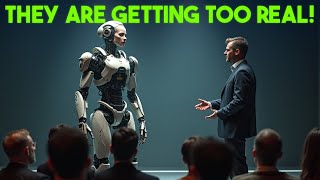
Humanoid's new HMND01 robot stands 175 cm tall, runs for 4 hours, and carries 15 kg payloads at 1.5 m/s. The startup, founded in 2024 by Artem Sokolov, plans alpha prototypes next year. Ubtech's Oona and Boston Dynamics' upgraded Atlas show the humanoid robot market heading toward $11 billion in 2025.
Questions this video answers
Around 70 kg (roughly 154 lbs)
Chapters
A new Humanoid startup just launched in the uk and they went with the most obvious name possible, Humanoid, because really, what else could you name it? All right, so let's talk about HMND01 from humanoid. This is a next generation labor automation unit that stands 175cm tall, that's about 5ft 9 inches and weighs around 70kg, roughly 154lbs. So basically it's about the size and weight of an average adult. Now, the big idea behind HMND01 is for it to collaborate with humans, not replace them. The company emphasizes that there's a global labor shortage, an aging population, and a pressing need for solutions that can handle repetitive or physically demanding tasks. That's where HMND01 steps in. Now let me spill the technical details, because let's face it, this stuff is pretty cool. HMND01 can walk at speeds of up to 1.5 meters per second, which works out to about 5.4 kilometers per hour. That's not exactly sprinting speed, but it's decent if you imagine it performing tasks in a warehouse or retail environment. On top of that, it has a four hour run time before it needs to recharge. And the payload capacity is around 15kg. So it can pick up, move and handle various objects of moderate weight. That might sound modest, but for many industrial and logistical applications like picking, packing, kitting or part handling, 15 kilos is often enough to get a lot done. But hey, it's not just about raw muscle. HMND01 comes with advanced AI integrated into a nimble mechanical design. This means it can navigate tight spaces with precision. So think of it weaving through a busy factory floor or even a crowded retail stockroom. The AI also provides human level or better manipulation speeds for complex tasks. Super important if you want robots to be efficient in industries like E commerce, fulfillment, retail stocking, or even light manufacturing. One of my favorite parts about the HMND01 concept is the modular design. You can actually choose different upper body modules, lower body modules, and end effector configurations. Basically, you can swap out certain limbs or hands and to meet the task at hand, it's super cool because it means you're not stuck with just one version of the robot forever. You can upgrade or customize it depending on your business or logistical needs. Plus, the robot features interchangeable garments or outer coverings. According to Humanoid, that's to protect both the robot's systems and the environment it's working in. So it might wear, say, a protective sleeve in dusty warehouses, or a clean, sleek covering in a more customer facing Role. Now, Humanoid, the startup behind HMD01, was founded back in 2024 by Artem Sokolov. He's described as a serial entrepreneur with a big vision. Humans and machines working side by side. From the get go, they've been saying that the strongest argument for humanoid robots is that our entire world is built for human shapes, sizes and movements. So instead of rebuilding the environment to fit machines, we build machines to fit the environment we already have, Right? Humanoid also teased some roadmaps for 2025. They plan to develop and test two alpha prototypes, one wheeled version and one bipedal version. On top of that, they're in ongoing discussions with major retail companies for pilot projects. So I'd guess we're probably going to see HMND01 tested in real world environments pretty soon. But let's not forget, introducing a robot like HMND01 can raise a few eyebrows, especially around cost, safety and ethics. Industry estimates put the price of a humanoid robot in this category anywhere from 50,000 to $100,000 or so, depending on how it's customized and how many units you buy. That's not exactly cheap, but larger companies, particularly those facing labor shortages, might find the on investment worth it. On top of that, the global market for humanoid robots is forecasted to hit around $11 billion by 2025. That's a really big number that showcases how fast this field is growing. So we can bet that a lot of startups and established robotics companies are going to try to get a piece of that pie. For anyone out there looking to integrate a robot like HMND01 into their operations, the recommended steps are pretty straightforward. First, identify the tasks you want automated. Next, customize the robot's modular components accordingly. Then train your employees to work alongside it and run pilot projects to see if everything functions smoothly. Now, if we're talking about the competition, Boston Dynamics is the name that probably jumps to mind, right? Boston Dynamics is famous for their humanoid robot, Atlas, and for the dog like Spider Spot. But the difference is that while Boston Dynamics robots like Atlas are often showcased in videos, doing flips and parkour, HMND01 is taking a more direct approach to labor and logistics tasks. Another comparison might be Softbank Robotics, which is known for social robots like Pepper. But Pepper is more about customer interaction and engagement, whereas HMND01 focuses heavily on operational efficiency in retail, logistics and manufacturing. But you know, HMND01 isn't the only big news in humanoid robots right now. Let's check out what else is going on in the scene. There's A Chinese robotics company called Ubtech that's been making waves with a new humanoid robot named Oona. Ubtech unveiled Oona at the Leap Tech Conference in Saudi Arabia. Now this is interesting. Oona is made to look like a woman, and the plan is to use Oona in service roles like emotional support, interactive entertainment, or even reception duties. Because of that, the design is very human, like with a soft silicone exterior. The idea is to help people feel more at ease when interacting with the robot, maybe in a hotel lobby, a retail environment, or even some care facilities. Unfortunately, Ubtech hasn't revealed a lot of the nitty gritty specs. We don't really know how tall Oona is, how quickly she walks, or how many hours she can operate. But what we do know is that she can recognize and respond to natural language. So speech recognition and response are built in. They haven't announced a price or timeline for release, so as of now, Oona is still a prototype. But it's worth noting that ubtech is a pretty big name in robotics, with other humanoid models like the Walker S series, which has been tested for industrial tasks like parcel handling, scanning, sorting, etc. They already have 500 pre orders for 2025 in that line. Another one they showed off was Yuyu, a Panda like humanoid robot used as a reception robot at the China pavilion during Expo 2020. Now, rounding out our humanoid robot journey today is Boston Dynamics, famous for their robot dog Spot, and their advanced humanoid Atlas. They're teaming up with the Robotics and AI Institute to boost Atlas's skills using reinforcement learning, focusing on things like walking while picking objects up or operating tools. They've partnered before on Spot's researcher kit, but now they're shifting that innovation to humanoids. CEO Robert Plater says the biggest challenge is moving from cool demos to real world settings like active work sites or warehouses, which is a whole different level of complexity. Humanoid robots are quickly moving beyond flashy videos into actual day to day use. HMND01, for instance, could soon be stocking shelves or doing heavy lifting in retail, while ubtech's Oona might greet customers in hotel lobbies. Meanwhile, Atlas is getting closer to handling practical tasks out in the field, not just hopping over boxes in a lab. None of these machines aim to replace people outright. Rather, they fill gaps where labor is scarce or risky. Yes, ethical and safety questions remain, but it's thrilling to imagine hmnd01 helping in a busy warehouse. Oona welcoming guests and Atlas hauling materials around a construction site. What used to feel like Sci Fi is basically here. Anyway, that's our quick look at the latest in humanoid robotics. HMND01 stands out for real world functionality, Oona adds a friendly face, and Atlas is getting a major brain upgrade. The humanoid robot market is booming, so let me know what you think in the comments. If you enjoyed this, hit that like button. Subscribe for more tech and AI content. Thanks for watching and I'll see you in the next one.










