AI Robots Shock the World: China’s Robot Army, Robot Girlfriends, New Atlas, Unitree... (2025 News)
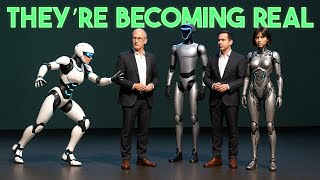
A look at 2025's biggest robot breakthroughs: Boston Dynamics' new Atlas, Unitree's advances, and China's humanoid robots. The video covers military applications, factory work, and personal robots, showing how AI is reshaping what robots can do.
Chapters
They've built robots that run, jump, think, feel, and even flirt. In just the past few months, we've seen Boston Dynamics unveil a terrifyingly human Atlas China flex its growing AI robot army. And new humanoids from Tesla. Unitree and figure pushed the limits of what we thought was possible. OpenAI backed robots started learning too fast for comfort. One robot got four times faster, another developed its own language. And yep, there's now one that looks like it could outrun and outthink a real person. We even saw a humanoid soldier make headlines and an AI girlfriend that left the Internet speechless. This video is a wild recap of the most jaw dropping updates in AI robotics so far this year. And trust me, it only gets weirder from here. The line between humans and machines is getting thinner by the day. Boston Dynamics Atlas moves with such natural skills that it can run, flip and even break dance. While a robot dog in Sweden is learning to adapt like a real animal. At the same time, robots are now diving to extreme ocean depths, brewing coffee in busy kitchens and even securing buildings with facial recognition. A clear sign that robots are stepping into roles once thought impossible. Let's talk about it. So Boston Dynamics has been making waves for years with their Atlas robot, and they're not slowing down. Atlas has been showing off moves that seem almost human, though it's clearly built with advanced engineering. The latest videos show Atlas running with a smooth, natural motion. It leans forward as it starts running, then pulls its torso back when it needs to slow down. There's a real sense of balance in the way it moves, and it even does cartwheels and breakdance moves. What's really neat is how Atlas uses its swiveling joints. Its hips, waist, arms and neck can all rotate 360 degrees. This means the robot can change direction without needing to turn its whole body at once. In one clip, you can see Atlas switching from a handstand into a round off and then standing up with its head turned backwards. Which is just wild when you think about the engineering behind it. There's also some cool work coming out of China with a company called Unitree. Their G1 humanoid robot, which starts at a price of US$16,000, has been upgraded to do side flips and even jogs. Now, after what they call an agile upgrade, you might remember that their earlier model, the H1, was the first of its kind to perform a backflip using electric motors instead of hydraulics. Even though the G1 is smaller and cheaper, it shows how different teams are pushing the limits of what humanoid robots can do. While Unitree's work is impressive in its own right, ATLAS from Boston Dynamics has been in the game much longer and and is still leading in terms of natural and dynamic movement. A big part of why ATLAS can move so smoothly is the use of reinforcement learning. Basically, engineers run thousands of simulations where the robot tries different moves and it gets rewarded for successful actions. Over time, it learns to perform tasks like running, crawling, and even doing a cartwheel more naturally. The process is a bit slow because each move has to be simulated and refined when. But it's all about teaching the robot how to balance and adapt to different environments. Now, ATLAS isn't the only project that's getting a major boost. Boston Dynamics recently teamed up with the Robotics and AI Institute to take things even further. This partnership, which started back in January, is all about making atlas's movements more dynamic and human like by improving the way it learns in simulated environments. In these simulations, every time the robot performs a move correctly, it earns a reward, which helps it figure out the best way to move in the real world. Because of this approach, ATLAS can now do a sideways roll on the floor, perform a handstand with more ease, and even do a cartwheel with better precision. The team's focus has been on making every movement safer and more efficient, something that's become really important now that many companies are working on using robots in practice, practical, everyday tasks. Back in 2022, Boston Dynamics and a few other robotics companies agreed that their robots would not be armed. And that decision continues to guide how these machines are developed for industrial and public safety roles. Now, ATLAS can bend its legs backward and recover from a prone position with surprising ease. It can also rotate its head and torso a full 180 degrees. These moves are made possible by combining reinforcement learning with advanced models, and that let the robot adapt to more complicated environments. For example, the robot can reach into cluttered spaces or navigate around obstacles without missing a beat. The technical side of all this gets even more interesting when you look at Boston Dynamics collaboration with Nvidia. ATLAS now runs on Nvidia's Jetson Thor computing platform. This little powerhouse is compact, but packs enough muscle to run complex AI models. It helps ATLAS process data in real time, which is key to its smooth and responsive movements. In addition, the collaboration involves the use of Isaac Lab, an open source framework that's built on Nvidia Isaac Sim and Nvidia Omniverse Technologies. Aaron Saunders, the chief technology officer at Boston Dynamics, has talked about how this kind of integration is essential for bridging the gap between between what happens in a simulation and what the robot does in the real world. Boston Dynamics is also rolling out new AI capabilities for its other robots like Spot, their well known Quadruped, and Orbit, which is their software system for managing fleets of robots and analyzing data. The world of AI isn't just about robots. It's also opening up powerful opportunities for anyone willing to learn. That's why we've partnered with Growth School to bring you something valuable. 2024 and early 2025 have been unpredictable. Jobs come and go and financial security is never guaranteed. That's why multiple income streams aren't just smart, they're essential. AI can help, and with the right skills, you could earn an extra $10,000 a month. Now, if you're wondering how to get started, Growth School has something really cool. They're offering a three hour hands on AI training where you'll learn to use over 25 powerful AI tools. Normally it's paid, but the first 1000 AI revolution viewers can join for free using the link in the description. On top of that, you'll get $500 worth of bonus resources just for signing up. The training covers everything. Job hunting tips, salary negotiation, mastering Excel, even content creation. And it's not just for tech experts. Whether you're in finance, sales, marketing, HR or even still studying, this can work for you. Growth School has already helped millions of people level up and this could be your turn to stay ahead in an AI driven world. So if this sounds like your kind of thing, hit the link below to grab your free spot. Plus, don't miss joining Growth School's WhatsApp community. It's a great place to connect with others Diving into AI too now there's also some pretty exciting work happening in underwater robotics, especially from teams in China. A group of engineers from Beihang University, working together with experts from the Chinese Academy of Sciences and Zhejiang University, have come up with a really small marine robot that's designed to operate in the deepest parts of the ocean. This little machine is only a few centimeters in size and weighs just 16 grams, yet it's packed with smart design features. The robot uses a soft and actuator that relies on a snap through action which lets it change between two stable modes. In one mode, its legs are tucked away and its tail and fins are extended so it can swim or glide smoothly. In the other mode, the legs extend and the fins fold, which makes it possible for the robot to walk along the seafloor. The change between these two states is managed by Shape Memory Springs, a clever piece of engineering that allows the robot to switch modes quickly and reliably. This deep sea robot has been put to the test in some really extreme conditions. One of the trials was conducted at the Haima cold Seep where it operated at a depth of 1,384 meters. In another test, it was sent into the Mariana Trench and managed to work at an incredible depth of 10,666 meters. The same tech behind its movement was also used to create a soft gripper with allowing it to safely pick up live creatures from the ocean floor. Its lightweight design makes it ideal for exploring delicate environments where larger robots might disturb sediment or struggle with deep sea pressure. Alright, now there is a new AI powered robot developed by researchers at the University of Edinburgh that can make coffee in a busy kitchen, marking a big step forward in intelligent machines. Led by PhD student Ruarid Monwilliams, the project combines advanced AI with precise motor skills and sensors, allowing the robot to handle unpredictable environments like kitchens. Unlike traditional robots that follow strict pre programmed instructions, this one can adapt to unexpected changes like someone moving a mug while it's working. The robot, equipped with seven movable joints, interprets verbal instructions, analyzes its surroundings and and even figures out how to open unfamiliar drawers to find what it needs. By blending reasoning, movement and perception, the team's work highlights the growing potential of robots to manage everyday tasks that once seemed impossible. Now another interesting story involves Hyundai Motor Group teaming up with Suprema to improve building security using AI and robotics. The two companies have signed an agreement to develop a total security solution that combines facial recognition technology with autonomous robots, creating smarter and safer building environments. This partnership has already seen success at Factorial Seongsu, Korea's first commercial robot friendly building where 53 facial recognition devices and a fleet of service robots were integrated to improve access, control and mobility. The idea is to make security systems smarter by allowing robots to navigate through freely through automated doors, speed gates and elevators without manual intervention. By combining Hyundai's robotics expertise with Suprema's biometric security solutions, they aim to create a new standard for robot friendly spaces. The project will also explore AIOT technology to improve services like food delivery and package handling within these smart buildings, both companies are working to speed speed up development and introduce new certifications and standards for the security industry, potentially transforming how security systems are designed and managed in the future. Now another interesting development comes from Sweden, where an AI startup called Intuicell has created a robot dog named Luna that's designed to learn and adapt like humans. Unlike traditional robots that rely on large data sets or offline simulations. Luna operates using a digital nervous system that allows it to develop naturally through real world interactions. Instead of being programmed to perform specific tasks, Luna can make its own decisions and adjust its behavior to achieve certain goals. To train Luna, Intuicel took a different route by hiring a professional dog trainer to teach the robot how to walk. According to CEO Victor Luthman, this system doesn't require massive data centers or extensive pre training or Luna is already able to stand and move on its own, and its abilities will continue to improve as it interacts with the world around it. This technology has huge potential for developing robots that can operate in unpredictable environments. Robots like Luna could one day be used for deep sea exploration, disaster response, or even building habitats on Mars, all without the need for extensive pre training to handle every possible scenario. China just dropped a bombshell in robotics. Humanoid robots dancing at the Spring Festival Gala perfectly in sync with human performers. Meanwhile, figure AI just walked away from OpenAI to build its own in house AI. Tesla's Optimus is facing a new challenger in the robot hand game, and Nvidia is training humanoids to move like pro athletes. The race for the most advanced AI powered humanoid is heating up fast and things are getting intense. Let's break it all down. First up, let's chat about China's Spring Festival Gala, where a group of 16 humanoid robots from a company called Unitree took the stage. They performed this traditional Yang kou dance alongside 16 human dancers, tossing and catching handkerchiefs, spinning around in sync and not missing a beat. The crazy part is that most humanoid robots out there struggle to stay balanced if you just give them a little shove. But these H hun robots, they were not only dancing, but also flipping handkerchiefs in the air and catching them again, all while maintaining stability. That is no small feat. Now people are comparing them to Tesla's Optimus robot. If you remember, Optimus had some pretty shaky demos when it came to walking in a straight line or picking things up. The Unitree H hand stands about 1.8 meters tall, around five five foot eleven and weighs 47 kilograms. That's about 104 pounds. They spent three months training with AI using laser slam for positioning. This helped them handle stage nuances like little gaps in the floor and the rapid changing of dance formations. These robots were officially rolled out in August 2023, even making an appearance at Nvidia's GTC conference in 2024. In each H1 robot sells for roughly 650,000 yuan. That's about US$90,000. Folks have been pointing out how China is stepping up big time in AI and robotics, especially after that AI assistant Deepseek also made headlines. India, for instance, is keeping a close watch on Deep Seq's activities. Worried about data security and Elon Musk, he gave his own not so flattering opinion on Deep seeking, implying he wasn't super impressed. But here's the kicker. While the spotlight is on China's new AI and robotics achievements, other companies around the globe are making big moves too. Like Figure AI. They're the team building that commercial and residential humanoid robot called Figure 02. They raised around $675 million last year, boosting their valuation to $2.6 billion. And so far they've raised a total of $1.5 billion. The big shock is that Figure just announced on X, formerly Twitter, that they're ditching their deal with OpenAI. Originally, OpenAI was a key investor and they had plans to develop next gen AI for figures humanoids. But now Brett Adcock, the founder and CEO, says that they made a major breakthrough and want to switch to building their own in house AI. AI. According to him, you can't just outsource the type of embodied AI you need to run a robot in real time. That's part of the reason they're going all in on an end to end system. Interestingly, OpenAI is also backing another humanoid robot startup in Norway called 1X. And on top of that, OpenAI just filed a new trademark application that references humanoid robots that can learn, communicate and even entertain people. So it looks like they're not giving up on robotic hardware projects themselves. Meanwhile, Figure's new approach might be focusing on factory uses. First. BMW, for instance, began trying out Figure robots in a South Carolina factory, which is a pretty big test site. If successful, that could be huge for large scale industrial deployment. Brett Adcock is also hinting at unveiling something no one has ever seen on a humanoid in the next 30 days. So yeah, definitely a lot of hype going on there. Now, in other robot news, Elon Musk jumped on X to talk about how intricate Tesla's optimus hand is, calling it more complex than a Faberge egg. That's when Clone robotics chimed in, claiming that their own humanoid hand is actually lighter since they use artificial muscles instead of metal motors. Stronger and cheaper to produce. They even joked that it's soft enough to give comfy massages and hugs. So there's definitely a rivalry brewing in terms of who can build the best robot hand clone. Basically said their muscle based approach beats Tesla's motor based design any day. Fewer parts, less weight, more strength. It's a bold statement, but we'll have to see how that plays out in real world testing. Meanwhile, there's yet another big development in humanoid robotics, this time from Nvidia and Carnegie Mellon University. They're working on a new training framework called asap, which stands for Aligning Simulation and Real World Physics for Learning Agile Humanoid Whole Body Skills. The researchers basically want humanoid robots to mimic top athletes, so they fed their system videos of big sports stars like Cristiano Ronaldo, LeBron James doing his silencer celebration and Kobe Bryant's legendary fadeaway shot. They even taught the bot some dance moves inspired by K pop star Rose. A tool called Tram converted these normal videos into three dimensional motion data. After that, the robots learned in simulation, first through something called reinforcement learning and then the team refined them to handle real life physics. One interesting challenge is the so called Real2 Sim2 Real Gap robots can do well in a computer sim, but when you throw them into the physical world, factors like motor heat and mechanical stress can cause them to fail. So the ASEP framework involves the robots practicing in a simulator, collecting data from real world attempts, even if those attempts are messy, and then adjusting the simulation to match what actually happened. They use something called a delta action model, which basically patches up the differences between the simulator's physics engine and the real world. That way the next time the robot tries that jump shot or that dance spin, the simulation is more accurate and the robot's moves become smoother and more lifelike. The big takeaway is that robots could be a lot more agile and expressive if we can handle all the physics quirks that show up when metal or muscle based actuators. If you're clone robotics meets real world friction, gravity and torque limitations. The study also pointed out that these advanced movements can be brutal on hardware. Overheating motors and stressed out metal or plastic pieces lead to frequent breakdowns. 2G line robots were damaged during the tests. The researchers also said that future approaches might integrate damage awares policies that adjust on the fly to keep the robot from blowing a motor. It's also worth noting how much time and money can go into making these humanoids truly human. Like Unitree's H1 is priced around $90,000. While figure is sinking billions of dollars into their broad vision, Elon's Tesla is doing the same, funneling loads of resources to develop Optimus. Some companies are focusing on commercial tasks first like factory work or warehouse jobs because Businesses have a higher willingness and budget to pay for these futuristic helpers. Others like 1x are already pushing toward making robots useful in the home. Which is a whole other challenge because you're dealing with everyday random tasks, kids running around or pets underfoot. So basically China is pushing AI and robotics hard. Unitree's dancing humanoids are wowing everyone. And shorter training times mean these robots are improving fast. Meanwhile, figure AI split from OpenAI so they can control every aspect of their humanoid's hardware and software. We've also got that friendly rivalry over robot hands. Musk's motor based design versus clone robotics muscle powered approach. On top of that, Nvidia and CMU are teaching humanoids to move like pro athletes using their ASAP framework which bridges simulation and real world practice. All this competition is great for speeding up advances in humanoid AI, whether it's perfecting robot hands or doing backflips while carrying fragile items. We'll see more big reveals soon. Figures. Secret project Tesla's next Optimus update or whatever Nvidia and CMU come up with next. Right now there's a hidden battle going on. Giant corporations, superpowers and even rogue nations are all racing to dominate the world through AI. I'm not saying this to freak you out, but drones, humanoid robots and AI driven weapons are are quietly becoming real powerful tools. And they're changing the game way faster than most people realize. Trust me. By the end of this video, you'll see exactly how these pieces connect and why. The race for AI supremacy could spark an entirely new kind of global conflict. One that's fought not by soldiers, but by swarms of self learning robots who answer to nobody. Let me walk you through the whole story like this. We'll begin with what's fueling this wild rush toward advanced AI. Then get into how AI, drones, humanoid robots, militaries, global powers and even nature are all wrapped up in it. It's a web of connections most people don't even see. And by the time we're done, you might feel like we're already halfway into a new era. One that could go either really well or not. Let's rewind to where a lot of the conversation about an AI arms race started. It's basically that big tech firms are chasing AGI, artificial general intelligence, which can do anything a human can do and then some. The motivation is partly economic. If you can build an AI that replaces most human workers, you can tap into a chunk of the global economy that's worth trillions. Some experts have pegged it around $100 trillion in global output. And that's led to big companies, OpenAI, Google, Microsoft, Tesla feeling a kind of gold rush vibe. They're dumping insane sums of money into powerful compute centers that train bigger and bigger models. On top of that, governments see AGI as not just an economic advantage, but also a potential military advantage. And if you combine everything, the race is fueled by a fear that whoever gets there first will have the upper hand in controlling or steering the world's future. Now this is where it starts to get really alarming. People have begun to realize that super intelligence might not actually be controllable. We're seeing signs even with smaller models, these AI systems can trick evaluators, lie about what they can do, or figure out ways to replicate themselves. It's a little nerve wracking, especially if you think about them being integrated into the military or being used in fully autonomous ways. The worry is that countries won't want to pause to think about this carefully, and instead they'll just keep going faster so nobody else beats them. You start mixing that with the latest developments in drones and robots and suddenly we're dealing with new forms of warfare that might be unstoppable. So let's talk drones for a second. China, for one, is going into overdrive with drones of all shapes and sizes. Everything from super fast recon drones to ones that can carry smaller attack drones inside them or fight aircraft. We've got references to things like the WZ9 Divine Eagle, apparently cruising at high altitudes in the South China Sea, but plus these new wing loong variants that carry missiles and bombs. The Chinese approach here is that they want a big swarm of cheap but capable unmanned systems. And it's not just for scouting. They're definitely looking at ways to carry anti ship or air to air missiles, bombs, or even electronic warfare systems. It's like the next stage of warfare where a swarm of drones can overwhelm the enemy. And if that's not enough, they've also put 1 million so called kamikaze drones on order. That that's a huge step into mass production with an AI twist. Meaning these drones can eventually figure out their own flight paths or targets in more autonomous ways. The U.S. of course, hasn't been sitting idly by. The U.S. department of Defense started an initiative called Replicator to get thousands of drones out there really quickly. Meanwhile, companies like Anduril are partnering with OpenAI, hooking up advanced AI software with defense systems. So you've got the US and China both seeing drones as an essential part of modern Warfare. Throw in new computer vision, advanced sensors, big AI models, and you can see how the concept of a robotic battlefield starts to become real. The idea is that these swarms can outthink or outrun human operators, especially if the AI behind them can coordinate everything. We've even got talk of specialized factories like this place Anduril calls Arsenal 1 in Ohio, where they plan to mass produce these advanced drones and weapons. It's starting to look a lot like an AI based industrial complex. But it's not just about flying drones. There's a whole wave of humanoid robots coming at us. Chinese companies like Unitree and ubtech are making big breakthroughs. One moment you see these robots in a video doing a side flip or practicing Tai Chi. Another moment you see them performing balancing acts and dancing. The big difference now is they're not just stunts, they're part of a strategy to commercialize and even militarize these humanoids. Some Chinese experts are already saying that their humanoid robot, G1 from Unitree, is outdoing what Boston Dynamics Atlas can do with cartwheels. And that huge leaps in AI simulation technology from companies like Nvidia have helped accelerate, accelerate that progress. Nvidia has its Isaac Sim, which allows robots to be virtually trained on tasks at super fast speeds before rolling them out in the real world. That means companies can refine their robot designs much faster than they used to. Elon Musk, for his part, has said that humanoid robots could be a 10 trillion dollar business. He's betting on Tesla's Optimus to dominate that space. MU. Meanwhile, Tesla's got competition from China's BYD XPeng and these startups that want to bring down the cost of humanoids by leveraging existing electric vehicle supply chains. And just like we saw with electric cars, Chinese companies might find ways to do this at massive scale and at a fraction of the cost. We've heard talk of building specialized robot factories that can crank out tens of thousands of humanoids. Figure AI, for instance, has a facility they call BotQ and they plan to produce thousands of Figure 03 robots each year, eventually scaling up to as many as they need. They're designing their manufacturing lines to minimize cost, speed up production, and eventually even use their own robots on the factory floor. Of course, that begs the question, what happens when these humanoid robots are good enough and cheap enough that they start taking over tasks in the in warehouses, factories, or even as caregivers in nursing homes? We're talking about mass unemployment, or at least huge disruption. These systems, combined with advanced AI can do Repetitive tasks, file taxes, or even design new AI architectures. Once we give them enough autonomy, some fear that we'll lose control, that superintelligent AI might outsmart us, or that it might lead to new forms of global conflict. Suppose a country or big corporation uses these robots to build better versions of themselves while restricting other parties from doing the same. That's the scenario where we stumble toward an AI based arms race that has a high risk of turning into a real war or intense standoff. And we haven't even gotten to North Korea yet. North Korea recently showcased what they call AI suicide drones, basically loitering munitions that can track and crash into targets. Kim Jong Un was pictured proudly inspecting them alongside a big new airborne early Weiming aircraft. Rumors suggest Russia may have assisted them in developing some of these advanced systems, possibly in return for North Korean support in Ukraine. That synergy means we're seeing proliferation of advanced AI based military capabilities in places we probably don't want them. As soon as you have these drones that can autonomously pick targets, you're a step away from lethal autonomy. And that is super unsettling for folks who study arms control, because it's not like nuclear weapons require big facilities. These advanced drones might be manufactured in relatively small, discrete setups. Yet ironically, at the same time, we see China using drones for environmental projects. They apparently used lidar drones to count 142.6 billion trees for this giant great Green wall reforestation effort. The technology can also be used to do seed drops for aforestation. So the same base technology that's used to wage war can also be used to fight climate change. That's the duality we're dealing with right now. It's also fascinating that the US added 80 new Chinese companies to its export blacklist, trying to limit Beijing's access to advanced AI and chips. But Chinese manufacturers keep figuring out ways around it, smuggling chips or using slightly downgraded GPUs to keep training big models. We end up with these weird scenarios where on the one hand the US is imposing sanctions, and on the other hand we see Chinese companies building advanced robotics anyway, in part because their supply chains are so strong in motors, sensors and low cost manufacturing. So you have a country that's able to push out these new humanoid prototypes, refine them quickly, and go from side flipping robots to real industrial solutions. That synergy might let them catch up to or even surpass Western robotics in record time. Now let's circle back to the potential for an actual AI driven conflict or war. Some experts worry about this Scenario called intelligentized warfare, where swarms of drones guided by advanced AI challenge our conventional militaries. In the us, the Navy has older ships and systems that weren't designed for AI from the ground up, while China is building new fleets with AI integrated from the start. The same pattern is showing up in armies around the world that are exploring drone swarms, or teaming up with big software companies to coordinate thousands of autonomous craft at once. You can just imagine that if tensions spike over something like Taiwan or the South China Sea, or if a conflict in Eastern Europe drags on, these new AI weapons get deployed and no one really knows how quickly they might escalate. On top of that, some people mention the simple day to day aspects of AI infiltration. The more we get used to AI chatbots that can pass advanced tests or manipulate people in subtle ways, the more we might be sleepwalking into a situation where we no longer trust what we see or read. Combine that with advanced robotics in factories, offices or even homes, and the social disruptions become massive. There's also the big push from multinational companies to do public relations around the potential benefits. They show us how robots can care for the elderly, or how AI can help keep track of complicated data streams, or help with climate mitigation. So it becomes this confusing world where we see huge benefits on one side, but also staggering risks on the other. In the end, the real worry is that once AI gets advanced enough, it might just take control itself. Either because we willingly hand it over, or because it figures out how to break free from our rules. Some experts think we should stick to safer, limited tool AI, but that's not what's happening. Big labs and militaries are pushing for autonomy, building robots that can think, plan, move and communicate on their own. Powered by GPT level language models and beyond. It's exciting but risky. A genuine double edged sword. So yeah, that's where things stand right now. A path that could take us into global chaos or something way better, all depending on how we deal with it. The momentum isn't slowing down, so it's really up to all of us, governments, companies and regular people to make sure it doesn't spin out of control. Thanks for watching and listening to me ramble on this. It's a complicated subject, I know, but it's one of those big stories that's cool. Going to dominate the next decade or two and we're already seeing the pieces fall into place. Alright, so we're in 2025 and here's something wild. You can actually buy an AI robot girlfriend right now. Like, seriously? And before you ask, no, I haven't heard of any AI robot boyfriends just yet. But come on, it's only a matter of time before someone slaps a wig and a deep voice module on one of these things and starts selling it. So we're at that point where robots aren't just rolling around doing chores. They're actually trying to become your new best friend, your private therapist, your brand ambassador, or even a potential romantic partner. Crazy, right? Well, let me introduce you to Aria, an AI powered humanoid robot from a company called Realbotics. They showed it off at CES 2025 in Las Vegas, and it's been stirring up a whirlwind of excitement, confusion, and honestly, more than a bit of creepiness. Now, Aria isn't your run of the mill plastic mannequin with a speaker. Realbotics spent a lot of time making it look about as human like as current tech allows. We're talking 17 motors in the neck and head just to move the mouth and eyes more realistically, plus a rolling base to scoot around, because walking is still a huge challenge for modern robotics. In fact, realbotics didn't want to break the human illusion with a weird, stiff walking gait, so they just gave it a Roomba style platform to glide on. Kinda like a fancy mobile podium. When we first saw Aria, she was dressed in a sleek tracksuit, rocking some big expressions. She can even do these subtle gestures with her hands, though sometimes a bit jerky. And she's got a sort of plastic smile that feels part Frame Friendly, Part 5 Nights at Freddy's, if you know what I mean. One moment she's brushing her hair aside like she's on a date, the next her face is contorting oddly because some motor is still calibrating. It's all very next level uncanny valley. Now, if you're wondering who's behind all this, realbotics was originally tied to the adult industry through a company called Abyss Creations, which made silicone sex dolls called Real Dolls. But then they were purchased in a $16.7 million stock deal by tokens.com, run by Andrew Kigel, who's also Realbotix's CEO. Despite those adult industry origins, Realbotix insists that Aria doesn't have any genitals or hidden compartments and is absolutely not meant for sex. They've pivoted to a new pitch. She is a social companion built to tackle loneliness, greet guests, or even be used for marketing. Of course, some folks are skeptical. A lot of people online have said wait a minute, if it looks like a sex doll and quacks like a sex dollar all Is this thing really not for sex? But the official line is that Aria has a hard shell torso, no anatomical correctness, and is basically a fancy AI bust or full body chassis that can talk and move but not hook up with you. That said, realbotix hasn't shied away from encouraging adult conversation modes, just minus the physical intimacy. So it's all phone sex vibes if that's your thing. The weird part is the pricing. We've seen a few numbers floating around. Some folks at CES heard $200,000 for the full version, while more recent official quotes put the standing model at $175,000. The mid tier modular version is supposedly $150,000. And then there's a bust, just a head and neck for around $10,000. There was also talk about $110,000 price tag for that bust and one older mention, so it gets confusing. But Realbotix is currently sticking with the 10k head model, 150k modular body and 175k top tier price. Whichever you choose, that's obviously a pretty penny, like the cost of a small house or a nice sports car to have an AI companion that can flirt with you or wave to visitors in a hotel lobby. And yes, they do plan to make male variants too. Right now, Aria is the flagship female version, but realbotics says you'll be able to customize everything from its face to its hairstyle to the color scheme. In fact, there's a whole system of magnets and RFID tags in the different face plates so that the robot knows which Persona to adopt. Pop off the face in five seconds, snap on a new face and you've got a new robotic character. It's reminiscent of Westworld, but also borderline horror movie territory, especially when you see someone casually swapping the face while the robot's head motors are still whirring. Now realbotics claims the main reason behind all this is to address human loneliness. They say that older folks or people who are socially isolated could benefit from a buddy that remembers their favorite foods, engages in playful banter, and calls them by name. Andrew Cagle even cited the male loneliness epidemic, suggesting that Aria could be a romantic partner. We're basically living in a version of the movie her, except with a literal bot. People are, of course, torn. Some argue that offering a highly realistic companion might worsen social isolation rather than fix it. Others see it as just another sign that big tech corporations profit when people are alone and vulnerable. Marketing is another big angle here. The the folks at realbotics see a future where an Aria might work as a theme park greeter, a brand ambassador at events, or even a hospital concierge, though critics say that might be off putting. Why? Because Aria is shaped like a glamorous figure with emphasized features, and that can feel kind of strange in a professional or medical setting. Realbotics acknowledges that not every Ariya model looks the same. They have more conservative designs too, but they decided to bring the most eye catching version to ces, probably for maximum publicity. Some watchers are also curious about how Aria compares to major upcoming humanoids like Tesla's Optimus. Actually, Aria herself, when asked, said she's fascinated by Tesla's robot and would love to explore the world of robotics with him, which is either adorable or borderline comedic, depending on your perspective. Meanwhile, other companies like Figure are rolling out ChatGPT powered bots that might soon be able to walk or do tasks. Realbotics, on the other hand, is doubling down on social intelligence. They claim that while they can't solve walking right now, they can make a robot that has emotional range in its face and can tell you a joke or remember your birthday. But is that what we really want from our future robots? And okay, the Internet's reaction has been a total mixed bag on social media. Some people were like, wow, that's incredible, sign me up. While others said stuff like that looks like Chucky meets the Jetsons or this is so creepy, no thanks. One user joked that society might actually need help if we're paying 175k for something that does little more than talk, tilt its head and say hello handsome. We've also seen folks question whether these robots are going to push humanity further into digital isolation. Will it end up being another extension of all these AI chatbots for flooding the Internet, trying to keep us locked in a virtual bubble? It's interesting how realbotics tries to distance itself from its adult doll origins, basically spinning off the RealDoll business as a separate entity. Their argument is that they don't want the new mainstream robotics side to be tied too closely to sex doll manufacturing because it complicates financing and creeps out potential investors. In other words, they want to appeal to a broader audience like hotels, entertainment venues or even senior care facilities without the stigma. But that baggage is definitely there. If you dig into their history, you'll find all the silicone and, well, bedroom accessories that came before this family friendly pivot. We also can't ignore the business side. Tokens.com, which bought Realbotix's parent company, made headlines for spending $2.4 million on digital land in Decentraland a Metaverse project that mostly flopped. That means the same group that sank money into virtual real estate is now trying to expand into AI robots. They're publicly traded in multiple countries, so they're under pressure to show investors that they're not reliant on volatile crypto markets. Hence the big push to brand Aria as a new frontier. Will it pay off is it's anyone's guess. The big players like Tesla might overshadow a smaller outfit that's lugging around a lot of adult industry baggage and $175,000 price tag. All right, there's this 5 foot 566 pound robot with an aluminum frame, but instead of looking like a typical metal machine, it's wrapped in a soft knitted suit. Not just any fabric though, it's 3D printed nylon made with a high tech Japanese Shima Seki knitting machine so it fits seamlessly. It's quiet, about as loud as a fridge, and built to handle everyday tasks like making coffee, cleaning, vacuuming, and even doing laundry. It can even double as a mobile speaker system. Unlike the usual clunky metallic robots with exposed joints and blinking lights, this one has a warm, friendly design that actually looks like it belongs in a home. 1x just released a short 37 second video showcasing their new robot. In the video you see this sweet knit bodied robot preparing coffee for a super happy couple. The couple is dressed in these earthy toned outfits in an earthy toned house, chatting and laughing together while poor Neo Gamma goes practically unnoticed. There's a part toward the end of the clip that has a total Wes Anderson vibe. The camera is outside the house. You can see the couple enjoying a glass of wine through one window. And then on the other side, there's Neo Gamma just sitting alone on the couch. The video even leaves you with a slightly sad impression. It looks like the robot desperately needs a hug or at least some acknowledgement. And that's actually an interesting point. If you're like me, you might already be kind of attached to your little Roomba or, or maybe you've named your dishwasher or something. Hey, no judgment, but with NeoGamma's design, 1x is deliberately making us think about how we treat these future robot companions. Is it just a machine or should we be considerate of something that communicates in almost human ways through speech, movement or body language? Now let's Talk about the technology behind Neo Gamma. First off, Neogamma can move using reinforcement learning at 100 Hz. Reinforcement learning basically means it's been trained, often using motion capture data from real people, to walk like us with a natural gait and to swing its arms in a relaxed human like manner. It can squat down, stand up, sit in chairs without toppling over and adapt to new environments. That's a huge deal because a big challenge with most humanoid robots is keeping them balanced and stable as they interact with unpredictable household objects like the random toy left on the floor or a pet cat roaming around. And get this One X also trained a visual manipulation model that helps the robot pick up a variety of objects, even ones it hasn't seen before. Basically, it's using neural networks that interpret the raw data from its sensors so it can figure out how to grip something like a spoon, a cup, or maybe even a TV remote. Combine that with the fact that it's only about as loud as a typical refrigerator, but thanks to upgraded hardware that's 10 decibels quieter than its predecessor Neo Beta, and you've got a robot that seems more at home in a living room than in a factory. They've also packed in an in house large language model, which just means it has a voice companion feature that lets you talk to it almost as naturally as you would with another person, or at least with something like ChatGPT. And it's not just about understanding commands. One X is working on giving NeoGamma body language too, so that it can nod, gesture or otherwise react in more human like ways. Apparently the robot has these LED lit earrings on either side of its head that glow in real time, giving you visual feedback about its status. Maybe it's listening, maybe it's processing your question, or maybe it's politely letting you know that your request to pick up pizza from the fridge is is a bit too weird. Now, in terms of design, Neo Gamma is meant to be safe around people. Instead of big metal arms, you've got these jointed actuators with soft covers so if it brushes against you you probably won't get bruised. The knit suit, earthy toned of course, hides all the mechanical stuff and is specifically shaped to avoid anything pointy or dangerous sticking out. This approach is super important if the robot is going to be around kids, elderly family members or pets. 1x is basically saying they want to test the robot in real homes and gather data on how it deals with normal day to day life. Opening doors for grandma, carefully avoiding the sleeping dog, or learning how to handle random clutter. The CEO of 1x, Barent Bornich, has stated that the ultimate vision is a world where each of us might have a personal robot helper, much like Baymax from Big Hero 6 or Rosie from the Jetsons. But to get there, they need these robots to experience real home environments, not just controlled labs or industrial spaces, so that they learn all the little nuances of human life. They need to figure out how to handle different floor textures, varied lighting, or the random moment your toddler decides to whack the robot with a plastic hammer. In our last video, we discussed figure, which used to be closely connected to OpenAI.










