AI Shocked the World: Google Q, IRON Bot, Quantum AI Chip, FLUX, Orion... (2024 News)
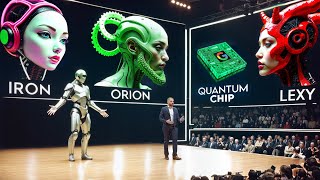
A wide-ranging YouTube commentary covering major AI developments in 2024: product launches (Apple Siri overhaul, Rabbit R1 device, Rabbit OS), new large models and toolkits (Google Gemma, Meta Llama 3, Google Falcon 2, Kuaishou CLING, Flux), major industry moves (OpenAI’s Orion and SearchGPT, revived robotics team, Sam Altman/Jony Ive device fundraising), and advances in robotics, chips and quantum computing (Boston Dynamics Atlas, Unitree G1, Xpeng Iron and Turing chip, Google’s Willow quantum chip). The piece mixes technical details, release timelines, commercialization notes, and social/ethical implications (privacy, job impact, copyright).
Chapters
2024 has been a monumental year for AI, with advancements that feel like they're pulling us into the future faster than we can keep up. From Apple transforming Siri into a true AI assistant to Boston Dynamics unveiling a new AI humanoid robot, it's clear we're living in a tech and AI revolution. Google introduced Gemma, an AI that's shaking up the competition, while Meta's Llama 3 stunned the world by outsmarting not just GPT 4 and Gemini, but even humans in some tasks. And speaking of surprises, Sam Altman's ultimate AI device promises to change how we interact with technology forever. OpenAI pushed boundaries with their search GPT and their upcoming Orion is rumored to be 100 times more powerful than GPT4. Meanwhile, Safari and Alexa are now powered by advanced AI, combining forces with tools like Claude AI to create smarter experiences in the world of robotics. Boston Dynamics and a new player, Iron, are building humanoids that could replace humans in some jobs. Oh, and let's not forget Google's quantum chip, a technological leap that left everyone speechless. With AI now generating videos that look more real than reality itself, the line between the digital and physical world is blurrier than ever. This video takes you through the defining moments of AI in 2024, a year where where every headline seemed to reshape the future. So let's talk about it.
As Apple gears up for the highly anticipated Worldwide developers conference in 2024, the tech community is buzzing with excitement over the expected launch of a new and improved Siri. This upgrade, powered by the latest advancements in Generative AI, promises to redefine our interaction with Apple's iconic voice activated virtual assistant. Generative AI, especially since OpenAI introduced ChatGPT, has revolutionized technology by enabling more human like and engaging interactions. Apple's integration of this technology into Siri marks a significant leap forward, not just matching its competitors, but also transforming the user experience with Siri. One of the most significant enhancements in the upcoming Siri upgrade is its conversational abilities. The integration of AI is expected to make Siri's responses more contextually aware and fluid, much like chatting with a real person. This leap forward is aimed at closing the gap between virtual assistants and genuine human conversation. Now, Apple's plan for Siri extends beyond just smarter conversation. Rumors suggest a deep integration with third party apps, allowing Siri to comprehend and respond to a broader range of user queries. This means Siri could potentially handle a variety of tasks and scenarios, making it an even more indispensable tool in our daily digital lives. Customization is another frontier where Siri is expected to excel. Taking a cue from ChatGPT's Flexible Nature, Apple plans to let users tailor Siri's personality to their liking. This means you can make Siri respond in ways that suit your style, making interactions more fun and personal. At the same time, Apple is sticking to its strong commitment to privacy. With the new generative AI features in Siri, they're expected to keep a tight lid on privacy public, possibly by processing AI tasks right on your device. This would help keep your data more private and secure. However, there's a bit of a challenge. The smarter Siri might face issues like unintentional biases in how it talks, or might need regular updates to get better. Apple knows this and is likely to address these points, probably sharing more details at the upcoming WWDC event about how they'll keep improving Siri. There's a lot of excitement around the upcoming changes to Siri, driven by reports that Apple is planning to use its own advanced AJAX large language model for the assistant. This technology is known for its impressive skills like creating different types of creative texts, translating between languages, and carrying out tasks automatically. Imagine Siri being able to write emails for you, compose poetry, or even boil down complex articles into simpler summaries. What's more, the updated Siri is expected to work more smoothly across different Apple devices. For instance, you could start talking to Siri on your iPhone and then continue the conversation seamlessly on your Mac. This kind of integration across various devices is poised to significantly change how we use technology in our daily lives, making it more interconnected. Another key update is the enhancement of Siri's ability to generate content. This means Siri won't just be an assistant that follows commands it will be able to create text, translate different languages, and produce a variety of creative outputs. This shift is set to transform Siri from being a simple tool for commands into a more engaging and interactive assistant capable of assisting with a broader range of tasks. Speculation suggests that the upcoming WWDC 2024 might be the platform where Apple unveils this new version of Siri. This event, known for major software announcements, could see Siri becoming the highlight, showcasing Apple's vision for a future where digital conversations are more nuanced and human like. Meanwhile, Apple is reportedly also enhancing other aspects of its ecosystem to complement Siri's capabilities. This includes adding AI features like Auto Summarizing and Autocomplete to core apps and productivity programs such as Pages and Keynote. Furthermore, Apple Music might see AI powered automation for creating playlists, and for developers, new versions of Xcode and other programming tools will use generative AI to assist in completing code. The urgency of this overhaul is underscored by the competition in the AI space. Tech giants like OpenAI, Microsoft, and Google have already made significant strides with generative AI. Apple, traditionally viewed as a leader in innovation, seems to be playing catch up. The introduction of generative AI in Siri is not just an upgrade it's a strategic move to reclaim its position as a frontrunner in consumer technology. Despite the enthusiasm, there are reservations about Siri's past performance. Long standing complaints about Siri's reliability and development could be a hurdle in convincing users about the effectiveness of this upgrade. However, with the tech community keenly looking forward to the WWDC 2024, Apple's venture into equipping Siri with generative AI capabilities is a bold step into the future of virtual assistants, promising a blend of enhanced utility, personalization, and privacy. So as we approach WWDC 2024, the tech world is on the edge of its seat, waiting to witness the transformation of Siri into a more intelligent, versatile, and personalized assistant. With its focus on conversational abilities, deep app integration, and privacy, Apple is poised to redefine the role of virtual assistants in our digital lives. This new device has been making waves at CES 2024, and it's unlike anything you've ever seen before. It's called the Rabbit R1, and it's a revolutionary AI agent device that can do almost anything you want it to do just by talking to it. In this video, I'm going to tell you everything you need to know about the rabbit R1, how it works, what it can do, and why it might change the way you use technology forever. So the Rabbit R1 is a small, unique AI device, different from smartphones or tablets. It runs on Rabbit OS and uses a technology called Large Action Model to perform tasks without apps or APIs. Unlike typical smart assistants like Siri or Alexa, the rabbit R1 understands complex requests in natural language and learns from your behavior. It can manage various tasks, from booking trips to controlling any app you use adapting to your preferences. Introduced by Rabbit, an AI company in Los Angeles at CES 2024, the Rabbit R1 gained significant attention for its innovation. Priced at $199, it's set to ship around March or April. Now, this is a small, lightweight device that's easy to carry. It features a 2.88-inch touchscreen with a clear display of 640x480 pixels and is quite bright at 500 nits. The device includes handy features like a button for instant talking, a scroll wheel and a USB C port. Its standout feature is the Rabbit eye, a unique 360 degree camera that can spin around to take pictures and videos, and it's great for advanced computer vision tasks. This camera offers an 8 megapixel resolution and and covers a wide area with its 120 degree view. It even turns by itself based on how you hold the device or where your voice comes from. The Rabbit R1 runs on a MediaTek Helio P35 processor backed by 4 gigabytes of RAM and a generous 128 GB of storage space. It's equipped with a SIM card slot for 4G LTE and also supports WI Fi and Bluetooth connections. The device's battery is quite lasting with up to 10 hours of active use or 48 hours on standby, and it charges quickly thanks to a 15 watt charger that comes with it. In terms of Design, the Rabbit R1 was created in partnership with Teenage Engineering, a Swedish brand famous for its unique synthesizers and audio gear. The device boasts a retro yet modern look that's simple, practical and stylish. It's available in six navy, ochre, gray, orange, matte, black and red. Plus, its magnetic back lets you attach it to different accessories like stands, clips or straps. The rabbit R1 isn't just good looking, it's also powerful. What really sets it apart is its software. It uses its own operating system called Rabbit os, which is built on Linux and made for AI. This system doesn't need separate apps for different tasks. Instead, it has a single interface that handles everything using a special technology called large action model LAM. LAM is a smart network like the systems behind ChatGPT, that understands and generates language, but it can do more. It learns how to perform tasks and actions just by listening to voice commands.
What's the stock price of Coca Cola? The stock price of Coca Cola Ko is $59.76.
It watches how people use apps and services and mimics those actions. For example, instead of opening the Spotify app to play music, you just tell rabbit R1 to play jazz and it does it.
Playing Pocket calculator by craft work for you.
Lam understands how to use different apps and services like Uber or Netflix, and can do complex tasks too, like booking trips or managing schedules. It learns from your preferences to give personalized responses. At the heart of Rabbit OS are Rabbits AI agents that are more than just voice assistants. They can make decisions and perform tasks making life easier and faster. They can even work together for bigger tasks like planning a vacation by coordinating different parts like booking flights or hotels. Alright, now let's see what else it can do. It plays music from any service like Spotify or Apple, music based on your mood or setting, and you can control it with your voice or a scroll wheel. It also identifies songs and provides details about them.
Who wrote the lyrics for this song? Ralph Hutter and Emil Schult wrote the lyrics for the song Computer Love by Kraftwerk.
You can use the rabbit R1 to order services like rides or food delivery from platforms such as Uber or Doordash.
Let me ride from my office home. Now of course I will book an Uber ride for you from your office to your home. Please confirm the ride.
It handles everything including order confirmation and tracking, and you can modify orders with voice commands.
Get me a 12 inch pizza from Pizza Hut. Deliver to here ordering a 12 inch pizza from Pizza Hut. Please confirm your order.
The device also sends messages through apps like WhatsApp. You can dictate messages, get automatic replies, and even translate them into different languages. For schedule management. The rabbit R1 works with calendar apps to organize your appointments and meetings. It syncs with other devices and helps find the best times and places for your events. Additionally, the rabbit R1 can search for information online, sort and summarize search results, and even read them out loud or share them. Now, at its core is the Teach mode, a remarkable feature that lets you interact with the rabbit R1 as if you're having a conversation. Imagine wanting to learn chess. You simply tell the device and it launches a chess app to guide you through the game. This mode isn't just about playing games, it's about learning and teaching. The rabbit R1 listens to your feedback like Good move or bad move and adapts its approach accordingly. You can also probe its reasoning, asking why it made certain moves, making it a dynamic learning tool for various skills, be it cooking, gardening, or even coding. Then there's the Rabbit Eye, which transforms the device's camera into a multipurpose tool. It's not just about taking pictures. This feature allows you to scan documents, turning them into PDFs, text files or spreadsheets. But it goes further with the ability to recognize objects, faces, emotions and text in images or videos. This feature is especially useful for those interested in computer vision applications. Whether it's enhancing, editing or applying filters to your images and videos, or diving into augmented or virtual reality experiences for gaming, education or entertainment, Rabbit Eye does it all. Lastly, Rabbit Connect brings a level of connectivity that integrates the Rabbit R1 with your digital ecosystem. This feature enables seamless interaction with devices like your laptop, tablet, smartwatch or smart TV using either WI Fi or Bluetooth. Imagine using your voice to control these devices or using the rabbit R1 as a remote control, keyboard or mouse. Rabbit Connect also makes it easy to mirror, cast or stream content from your devices to the rabbit R1's screen. Transferring files, data or settings between your devices is just as effortless. Thanks to this feature, the Rabbit R1 is revolutionizing tech, not just competing with other devices and AI, but also enhancing them. It outperforms smartphones by doing everything they do, plus more like understanding natural language and performing complex tasks, all while being smaller, cheaper and longer lasting. It exceeds smart assistance by handling advanced tasks, learning preferences and offering more personalized interactions. Unlike large language models LLMs, it can execute actions and tasks using natural commands, showing more versatility and accuracy. Despite its superiority, the rabbit R1 isn't perfect and has its own challenges to address. This is a promising device for sure, but it faces some issues before becoming widely popular. Firstly, it needs to handle security and privacy better, ensuring data safety and ethical use. Secondly, the device's AI must be reliable and accurate, able to consistently understand and respond to user requests. Thirdly, the interface and overall experience should be user friendly and customizable. Looking ahead, the rabbit R1 has great potential. It could lead to innovative applications in education, entertainment and more, offering personalized and immersive experiences. It might open up new markets for AI services and education and push forward AI research. However, it also poses ethical and social challenges. Overall, the rabbit R1 is seen as a groundbreaking and transformative product for the future of technology and humanity. Google just rolled out a new AI tool called Gemma, which is actually a bunch of new AI models that are changing the game for developers and researchers. Google's been behind a lot of smart tech in the past, like Transformers, TensorFlow, BERT, T5, JAX, AlphaFold and AlphaCode. And now they are adding Gemma to the mix. Gemma is all about making top notch AI tools that anyone can use, focusing on doing things the right way. Google wants to make sure that as AI grows, it's done safely and fairly, making Gemma a big deal for making better and responsible AI. Alright now. Gemma represents the latest in a series of pioneering efforts by Google to democratize AI technology. It draws from the same foundational research and technology that underpinned the development of the Gemini models, marking a significant milestone in Google's AI journey. The essence of Gemma is captured in its name, derived from the Latin word for precious stone, signifying its value and potential impact on the AI community. Google DeepMind, along with other Google teams, has played a pivotal role in shaping this model, infusing it with the spirit of innovation that characterizes Google's approach to AI. At the heart of Gemma's allure are the model weights available in two Gemma 2B and Gemma 7B. These models have been meticulously pre trained and instruction tuned to ensure they meet the highest standards of performance. Google's introduction of a responsible, generative AI toolkit alongside Gemma underscores the company's dedication to ensuring AI is developed and used responsibly. This toolkit is a cornerstone of Gemma's ecosystem, offering guidance and tools essential for creating AI applications that are safe and aligned with ethical norms. Gemma's versatility is one of its standout features. It is engineered to be compatible with all major AI development frameworks, including jax, pytorch and tensorflow through the native Keras 3.0 interface. This compatibility extends to a wide range of tools and systems, ensuring that developers can seamlessly integrate Gemma into their preferred working environments. Google has also ensured that Gemma models are optimized for performance across various hardware platforms, including Nvidia GPUs and Google Cloud TPUs, guaranteeing that developers can leverage the best of what AI technology has to offer regardless of their hardware preferences. A significant advantage of Gemma is its accessibility. Google has made it a point to ensure that getting started with Gemma is as straightforward as possible. This is evident in the provision of Ready to use Colab and Kaggle notebooks, as well as integration with popular development tools and platforms. The intention is to lower the barriers to entry for working with state of the art AI models and to foster an environment of innovation and collaboration within the AI community. Moreover, Gemma's design considerations extend beyond just performance and compatibility. Google has placed a strong emphasis on responsible usage, providing tool chains for inference and supervised fine tuning that guide developers in creating applications that are not only powerful but also safe and ethical. This commitment to responsible AI development is further reflected in the terms of use for Gemma, which are designed to be inclusive and permit responsible commercial usage and distribution across organizations of all sizes. For developers, Gemma opens up a world of possibilities. Whether it's running AI models on a laptop for local development or deploying scalable applications on Google Cloud, Gemma provides the flexibility and tools needed to bring AI ideas to life. Its state of the art performance, even at smaller model sizes, means that developers can achieve remarkable results without the need for extensive computational resources. This efficiency is a testament to the quality of Gemma's underlying technology and its potential to drive innovation in AI applications. Google's launch of Gemma is more than just the release of new AI models. It's an invitation to the global AI community to engage with cutting edge technology in a responsible and innovative manner. By providing free access to Gemma through platforms like Kaggle and Colab, as well as offering Google Cloud credits for research and development, Google is actively supporting the growth and development of AI talent around the world. This commitment to the AI community is a reflection of Google's belief in the transformative power of AI and its potential to drive positive change in society. Gemma is Google's latest step in the world of AI technology, aiming to make advanced tools more available and guiding their use towards responsible outcomes. Google is offering these resources to help push the limits of what can be done with AI, while trying to make sure the advancements are good for everyone. As people in the AI field start to use Gemma, we're looking at the beginning of a new chapter in AI development. This period is set to be interesting, showing both the potential and the challenges of moving forward with AI.
So Meta is at the forefront of the next wave in artificial intelligence, aiming to redefine the landscape with the introduction of Llama 3 in July. This ambitious endeavor marks a significant milestone not just for Meta, but for the entire AI community, as the company seeks to outshine rivals like OpenAI's GPT4 and Google's Gemini with a model that's more responsive, nuanced and equipped with better multimodal capabilities. The generative AI group at Meta, under the leadership of CEO Mark Zuckerberg, is not only enhancing user engagement across its platforms, but also refining the model to adeptly handle complex image based queries, demonstrating a commitment to balancing technological advancement with ethical AI development considerations. Meta's Llama 3 isn't merely an incremental addition to the AI sphere it represents a substantial, substantial leap toward more sophisticated and safer AI interactions. While OpenAI has been making strides with its text to video generation model, Sora and Google's Gemini has faced criticism for its cautious approach. Meta's strategy with Llama 3 emphasizes a nuanced handling of contentious questions, offering context rather than evading or simplifying responses. This strategic enhancement underscores Meta's ambition not just to compete, but to lead in the AI race, setting new benchmarks for what AI can achieve in digital communication. The development of Llama 3 is particularly noteworthy in the context of Meta's broader AI strategy, which extends beyond mere advertising tools to enrich the social media experience by focusing on multimodal capabilities, enabling the AI to understand and process information across different data formats. Meta is pioneering a future where AI can offer more immersive and interactive experiences experiences Zuckerberg's vision for Llama 3 includes not just advancements in text and image processing, but also the potential for very advanced audio and video capabilities, suggesting a future where AI can seamlessly integrate with technologies like Meta's Ray Ban smart Glasses to offer real time assistance based on what the user sees and hears. However, the road to perfecting AI models like Llama 3 is fraught with challenges, notably ensuring a balance between user engagement and preventing inappropriate responses. Meta plans to appoint an internal figure to oversee the tone and safety training of LLAMA 3, aiming for outputs that are nuanced and capable of handling sensitive topics responsibly. This reflects the complex process of AI development where technological capabilities must be aligned with ethical standards and societal norms to ensure a positive impact on users Users Meta's commitment to open source development is a critical aspect of Llama 3's rollout. Unlike its predecessors Llama 1 and Llama 2, which were released with varying degrees of open licensing, Llama 3 is expected to be fully open source, allowing developers, researchers and hobbyists to access and build upon the model, potentially accelerating innovation across the AI ecosystem. This move towards openness is part of Zuckerberg's broader vision to democratize access to powerful AI technologies, mitigating the risk of a future where AI advancements are concentrated in the hands of a few. The implications of Llama 3's release are profound, not just for Meta, but for the future of AI in digital communication. With its huge potential, llama3 is poised to set new standards for engaging and safe digital experiences. This comes at a time when the AI community is eagerly exploring the possibilities of artificial general intelligence, a theoretical stage of AI development where models could demonstrate intelligence comparable to or surpassing human capabilities. While Llama 3 itself may not achieve AGI, Meta's approach to its development focusing on multimodal understanding, reasoning and cognitive abilities, suggests a deliberate stride towards realizing this level long term goal. Furthermore, Meta's substantial investments in training infrastructure, including plans to have around 350,000 Nvidia H100 GPUs by the end of 2024, indicate the company's commitment to pushing the boundaries of what's possible in AI. These resources will enable more robust pre training for models of any size, potentially enhancing Llama 3's performance relative to its predecessors and competitors. The emphasis on increasing the Model's context, length and understanding capabilities hints at a future where AI can more effectively mimic human like interactions, remember more context in conversations, and process a broader range of information. Just one day after retiring its older hydraulic model, Boston Dynamics has introduced a new electric version of its Atlas robot. This marks a significant shift away from the noisy hydraulic mechanisms that characterize previous models. Now Atlas is powered by an electric motor, which, although not silent, offers a quieter operation that contrasts sharply with the hydraulic system's distinctive sounds. The unveiling of this new version was captured in a compelling video. It opens with Atlas lying prone on a set of interlocking gym mats, accompanied only by the soft whirring of its new electric motor. As the camera pans around, the robot begins a seemingly natural motion of bending its legs at the knees. And this movement, initially reminiscent of human action, soon crosses into an uncanny valley, evoking a feeling similar to a scene from a Sam Raimi film. This clever maneuver allows Atlas to shift from lying on its back to standing upright facing away from the camera. It then performs an eerie rotation of its head, followed by its Torso, completing a 180 degree turn to face the camera directly. The robot's face, featuring a ring light around a perfectly round screen, then rotates back as Atlas strides off the mats and out of the frame. This new electric Atlas is not just a technological evolution, but also a symbolic one, mirroring the transformative moment when Bob Dylan famously switched from acoustic to electric guitar. The motion of the new Atlas, while still showing some jerky movements, is notably smoother and more fluid compared to many of the commercial humanoids introduced in recent years. Years. This progress illustrates a level of mechanical sophistication that brings to mind the confident and fluid movements of Spot, another robot from Boston Dynamics, suggesting a familial resemblance in their design philosophies. The physical appearance of Atlas has undergone a radical transformation. Gone are the bulky torso and awkward bowed legs covered in protective plating, replaced by a streamlined cable free frame that bears more resemblance to contemporary robots like Agility's Digit and Apptronics Apollo. This redesign leans towards a softer, more approachable aesthetic, eschewing the intimidating utilitarian look of past models for a friendlier, cartoonish appearance. Despite these substantial changes, Boston Dynamics has chosen to retain the Atlas name, continuing the legacy of its well known brand into this new commercial phase. This decision contrasts with previous practices where research names were changed upon commercial release, such as Spot Mini becoming Spot and Handle becoming Stretch. In an interview with TechCrunch, Boston Dynamics CEO Robert Plater discussed the company's strategy and future plans for Atlas. He highlighted that while the branding remains unchanged for now, it might be revisited as the project progresses toward mass production. The CEO also outlined the company's timeline, which includes starting pilot testing of the Electric Atlas at Hyundai facilities early next year, with broader manufacturing goals set for the subsequent years. Plater emphasized the importance of understanding specific use cases to ensure that the investment in robotics is justified by sufficient productivity gains. He revealed that experiments with Hyundai are already underway, indicating a collaborative effort in refining the robot's design and functionality. The flexibility and range of motion in the new Atlas are particularly noteworthy. According to Plater, the robot incorporates custom high powered actuators at most joints and which afford it the power and agility of an elite athlete. This capability is not just for show. It has practical implications in industrial applications where robots must perform complex, dynamic tasks reliably. Boston Dynamics is known for its viral videos that often highlight the agility and dexterity of its robots in dramatic, even theatrical ways. While these demonstrations are visually impressive and entertaining, they also serve a practical purpose by showcasing the robot's capabilities abilities in scenarios that might occur in real world settings. For example, the video's depiction of Atlas starting from a prone position and then standing up underscores its ability to recover from falls, an essential feature for maintaining productivity without human intervention. In industrial environments, the design choices extend to the robot's hands, which now feature three fingers instead of the more human like four or five. This simplification reduces mechanical components complexity and enhances durability crucial for repetitive industrial tasks. The robot's head has also been redesigned, now featuring a large round screen that adds a touch of friendliness and enhances interaction capabilities, which Plater notes will be critical as robots increasingly work alongside humans. Overall, the new Electric Atlas is a big step forward in the world of humanoid robots, combining high tech features with smart designs to to meet the growing needs of businesses and factories. As Boston Dynamics keeps improving this robot, everyone in the industry will be watching closely. Sam Altman, who's in charge of OpenAI, and Jony I've, who used to design stuff for Apple, are working together on something special. They're calling it the iPhone of AI, but no one really knows what it is yet. What we do know is that it's not going to be a smartphone. They need a lot of money to make their dream a reality, so they're trying to gather funds right now. Sam and Joni are looking to get up to $1 billion for their secret AI gadget. They started a new company for this project and are hoping to get enough money to bring their idea to life. This gadget might work like some other smart devices out there, but it's not going to look like the phones we're used to. Sam Altman has already put some of his own money into similar tech, so their new thing might be kind of like that too. Sam and Joni are talking to big money people, trying to convince them to invest millions into their project. They think it's going to cost a lot to get their AI hardware out there for people to buy. Some of the big names they might get money from include SoftBank's Masayoshi San, who has been chatting and brainstorming with them, as well as some groups that have helped fund OpenAI before. Jony I've has some ideas about how we might use this device. It might work a bit like a computer, but it won't rely so much on screens or but since they're still figuring it all out, it could be a while before we see the final product. We're all waiting to hear more about what Sam Altman and Jony I've are planning, so we'll keep an eye out for any news. Now there's another story unfolding that connects to the ambitious project of Sam Altman and Jony I've While these two are busy gathering funds for their AI device, Elon Musk, the boss at Tesla, has been dealing with a bit of a challenge, caused in part by the competitive spirit of OpenAI, where Sam Altman plays a leading role. Elon Musk has noticed that OpenAI has been quite eager to bring over engineers from Tesla, offering them really attractive salaries. Because of this, Musk decided it was time to increase the pay for Tesla's AI engineering team. He mentioned that OpenAI had managed to lure away some of Tesla's talent with these big offers. This move by Musk is a direct response to what he calls the craziest talent war I've ever seen in the AI space. This talent shuffle doesn't stop at Tesla and OpenAI. Ethan Knight, a machine learning scientist from Tesla, was in the spotlight for moving to Musk's own AI venture, Xai. This move came after Ethan was considering joining OpenAI. Musk shared this news, indicating that the competition for AI expertise isn't just among companies, but also involves personal projects of tech leaders. The battle for AI talent is fake fierce, with companies not just raising salaries but also getting creative in how they recruit. For example, Meta's Mark Zuckerberg and Google's Sergey Brin have been personally reaching out to AI researchers and engineers to keep or bring them into their fold, with Zuckerberg even skipping the formal interview process in some cases. This intense competition underscores the high stakes in the AI industry, where everyone from established tech giants to innovative startups and personal ventures of tech moguls are all vying to secure the best minds. As Sam Altman and Jony I've push forward with their plans for a groundbreaking AI device and Elon Musk ramps up efforts to keep his team together and competitive, it's clear that the race for AI dominance is more than just about technology, it's about securing the brightest brains in the field. Now this is all linked to a big change at OpenAI, which plays into the wide array of tech features ventures Sam Altman is involved with. OpenAI made some changes to how its investment fund is managed. This fund is there to support startups focused on AI before, Altman was pretty much running the show overseeing the fund himself. This was somewhat out of the ordinary because even though the fund functioned like a typical company investment branch, it was really Altman leading the charge with money from external investors. Still, OpenAI made it clear that Altman wouldn't profit directly from the fund's performance. This adjustment came to light through a filing with the U.S. securities and Exchange Commission, marking a significant shift in how the fund will operate moving forward. Ian Hathaway, a partner in the fund since 2021, will now take over control, moving Altman away from a direct governance role. This change is said to bring more clarity to the fund's operations, which has raised $175 million from partners including tech giant Microsoft, to invest in promising AI startups. The timing of these changes is intriguing, especially considering Altman's diverse investment interests ranging from crypto to energy, and his ongoing efforts to fundraise in regions like the Middle east for his various ventures, including the mysterious AI device project with Jony I've. Moreover, this shift in OpenAI's fund governance structure happened after an independent investigation into Altman's actions within OpenAI, which found no wrongdoing on his part regarding product safety or financial management. So Unitree just dropped the trailer for their new Unitree G1 humanoid robot and this thing is mind blowing. The flexibility, proficiency and overall capabilities of this robot are really something else. I'm going to explain and show you exactly why this robot is such a game changer, alright, so there's a lot to unpack here and this robot is genuinely revolutionary. First off, you might have noticed that it Looks kind of similar to Boston Dynamics recently unveiled Atlas robot. Now, I don't think Unitree managed to create this robot in just the three weeks since that trailer came out. Something like this takes a long time to develop, but what it does show is that Unitree is evolving faster than a lot of people expected. And they're delivering some seriously impressive tech at a relatively affordable price point. The G1 starts at just $16,000, which is cheaper than any other humanoid robot with these kinds of capabilities. One of the things that really stood out to me in this demo was, was the insane flexibility and range of motion. As you can see here, this robot can swivel around in ways that humans simply can't, and its legs have a much greater range of motion. They've also managed to internalize the wiring using hollow joint technology, which allows for more efficient movement and a more compact design. This trailer really hammers home the fact that the robot race is on. I don't think anyone predicted that Unitree would release something like this so soon. I would have expected it to come from a company like Boston Dynamics First. And while Boston Dynamics might be using hydraulic actuators or fully electric systems, the G1's movement capabilities suggest that it's going to be able to handle a huge range of tasks that we might not have even considered yet. Another thing that really impressed me was the robot's stability when taking impacts. Now, I'm not saying we should go around punching robots that might not end well if they decide to rebel against us down the line. But in all seriousness, the fact that this robot can take a solid hit to the chest and remain completely stable is a remarkable feat of engineering. In real world applications, robots might encounter things like wind, debris or unexpected collisions, and being able to stay upright and keep functioning in those situations is hugely important. Most humans would probably hit the ground if they took a punch like that. So this is a really exciting development. We've seen similar demonstrations of stability from Unitree before with their H1 robot, but the G1 takes it to a whole new level. If you tried this with most other humanoid robots on the market, they'd topple over in an instant. The fact that Unitree has achieved this level of stability without even using external support cables is mind blowing. Usually in these kinds of robotics demos, you'll see the robot tethered to the ceiling or something to prevent falls, because balance is one of the biggest challenges in the early stages of development. But unitree has created a robot that can take a beating and stay on its feet with all the wiring hidden internally. That's a massive accomplishment. The speed of the G1 is also really impressive. It can reach speeds of up to 3.3 meters per second, which is just shy of the world record set by Unitree's previous robot. For context, that's about 2 meters per second, which is almost a running pace. We haven't seen anything close to that from other humanoid robotics companies. The Tesla bot, for example, can walk pretty smoothly, but it's not moving nearly as fast as this, and I can't imagine they'd be too eager to have someone kick it around to test its stability. So, in terms of overall performance, I'd argue that the unitree G1 is probably one of the best humanoid robots out there right now. One of the things that absolutely blew me away was the robot's ability to learn tasks through simulation and then apply them in the real world using imitation and reinforcement learning. They can train the robot to perform complex actions in a simulated environment, like Nvidia's Isaac Sim, and then transfer those skills to the physical robot. Watching it move, you can see how precise and subtle the joint movements are. And the fact that it can maintain its balance while performing these tasks autonomously is staggering. This has huge implications for robotics research, because until now, most humanoid platforms have been really expensive, which makes them hard to access for a lot of labs and universities. The Unitree H1, for example, was a great research platform, but its high cost was a big barrier. With the G1 coming in at a lower price point, we're going to see a lot more people getting their hands on this tech and pushing the boundaries of what's possible. And then there are the hands. Previous Unitree robots were criticized for their lack of dexterous manipulators, but the G1 has hands that can grasp and manipulate objects with incredible precision. It can crush a walnut, flip a piece of bread, and even pop open a soda can like it's nothing. The level of control and fine motor skills on display here is just insane. They also mention something called the Unitree Robot Unified Large Model, which seems to be some kind of AI system that allows the robot to perform these tasks autonomously. There aren't a lot of details available yet, but I'm guessing it's a machine learning model that's been trained on a huge data set of scientists. Simulated and real world interactions. As more information comes out, I'll be sure to update you all. One of the other key things they demonstrate is the robot's ability to perform very precise movements like soldering, electronic components. This opens up a whole new range of potential applications in fields like manufacturing and assembly. But perhaps the most exciting thing about the G1 is its price. At just $16,000 for the base model, it's nearly 10 times cheaper than Unitree's previous humanoid robot, which was listed at around $150,000. That's a massive leap in affordability and it's going to make this technology accessible to a much wider range of researchers and developers. We've already seen some of the incredible things that people have been doing with Unitree's H1 platform. For example, researchers at Shanghai Tech and Mars Lab recently presented a framework for humanoid parkour learning, which allows the robot to navigate rough terrain, jump onto high platforms, leap over hurdles and more, all using only vision and proprioception. It's a fully end to end system, which is a huge accomplishment in the field of robotics. The problem is that a lot of academic labs struggle to get funding for this kind of research because they simply can't afford the expensive hardware. But with the G1, we're going to see an explosion of new projects and discoveries. I mean, the H1 could do a full backflip, which is just mind boggling for a robot with such basic actuators. Imagine what people are going to do with the G1's advanced capabilities. So to sum up, the Unitree G1 is an absolute game changer. Its combination of flexibility, stability, dexterity and affordability is unparalleled. And it's going to open up a whole new world of possibilities in the field of robotics. I cannot wait to see what researchers and developers do with this platform once it starts shipping in the next few months. The robotics race is heating up and Unitree has just shown that China is a serious contender on the global stage. They're innovating at an incredible pace and they're making this technology accessible in a way that no one else has done before. So keep an eye on Unitree. I have a feeling we're going to be seeing a lot more groundbreaking developments from them in the very near future. Now here's some interesting news from the United Arab Emirates. This announcement comes from Abu Dhabi's Technology Innovation Institute, also known as TII. They've launched the Falcon 2 series featuring two impressive models, Falcon 211B and Falcon 211B VLM. So Falcon 211B is as they say, a super powerful text based AI designed to understand and generate human like text. Meanwhile, Falcon 211B VLM is a vision to language model. This means it can take an image and generate a detailed text description of it. Let's talk about why the UAE is making such big moves in AI Known for its vast oil reserves, the UAE is now pouring massive investments into artificial intelligence. This shift hasn't gone unnoticed. In fact, US Officials took note last year, issuing a strong ultimatum for the UAE to choose between American and Chinese tech. In response, EMIRATI AI firm G42 cut ties with Chinese companies, paving the way for a whopping $1.5 billion investment from Microsoft. This strategic pivot was carefully coordinated with Washington, showcasing the UAE's serious commitment to advancing in the AI space. The release of Falcon 2 comes as countries and companies worldwide are racing to develop their own large language models. And while some companies keep their AI tech proprietary, others like the UAE's Falcon and Meta's Llama, are going open source. Looking ahead, the UAE's substantial investments in AI are positioning the country as a significant player on the global tech stage. The Falcon 2 series is just the beginning. With the anticipated Falcon 3 already in the works, Apple just rolled out new AI driven features for Safari, promising a smarter and more intuitive browsing experience. Honestly, there's a lot to unpack here, so let's get right into it. Alright, let's start with the headliner feature. Intelligent Search. Now, this tool is essentially going to let Safari summarize web content for you using advanced AI. So no more slogging through dense, lengthy articles or pages. Intelligent Search will identify the key topics, phrases and ideas, then automatically generate a nice concise summary to give you the gist. But how does this actually work? Well, from what we know, it leverages Apple's cutting edge on device AI models, specifically the Ajax Language Learning model. This AI analyzes the text, picks out the important sentences, repetitive keywords, structural elements, and more to determine the core topics. Then it distills all that into a new, neat little summary perfectly tailored for you. And that's just the start. Another insane new feature coming to Safari 18 is called Web Eraser. As the name implies, this tool will basically let you erase or remove unwanted parts of a webpage with just a few taps. If you find banner ads on your screen annoying, you can easily get rid of them. Also, any distracting images can also be quickly eliminated using Web Eraser. Here's where it gets even better. The erasure is persistent. That means when you close that tab or window and revisit the page later, Safari will automatically load it with all your custom modifications already applied, it'll literally remember which parts you nixed and keep them erased how cool is that? Safari will even pop up a little notice to let you know the page has been altered based on your preferences, just in case you want to revert it. Although let's be real, the inspiration for this erasure concept may have come from existing third party ad blockers and content filtering extensions that offer similar removal capabilities. But still, having it baked right into Safari itself is a total game changer. Now let's talk about the user interface enhancements coming with this update. Essentially, Apple is consolidating a ton of page controls and options that were previously scattered across different menus into one convenient centralized menu right there in the address bar. Things like zoom settings, content blockers, extension shortcuts. They'll all be just a click or tap away in this new unified menu. That means no more digging through nested settings panels or the share sheet just to find basic controls. Everything you need will be neatly organized and readily accessible from this slick new menu. It's one of those small quality of life improvements that might not seem huge on paper, but could legitimately streamline your workflow and just make browsing feel that much smoother overall. Of course, we're also expecting the usual refinements and under the hood upgrades with Safari 18 more robust content blocking, UI refinements and stuff like that. But let's be honest here, the real stars of the show are those AI integration features we just covered. This is Apple fully embracing the artificial intelligence revolution and letting it reshape how we interact with information and data. Now I know some of you might be thinking, okay, this all sounds amazing, but what about privacy? Privacy? It's a totally fair concern in our data hungry world. After all, Apple has built their brand around protecting user privacy and security, and it seems they're doubling down on that commitment with these new AI capabilities. From what we know so far, the language models and other tech powering features like intelligent search will run entirely on device using ultra secure private processing. That means your data stays locked down tight on your iPhone, iPad or Mac, never getting beamed up to the cloud or any third party servers where it could potentially be compromised. So while other tech giants are harvesting data into their AI systems, Apple looks to be taking their classic on device privacy first approach with this on the AI front as well. It's a smart play that could give them a big advantage as trust around AI becomes even more paramount. Of course, not every feature Apple explores during development ends up making the final cut from for a product launch. There's always a chance some of these wild Safari upgrades could get delayed, scaled back or nixed entirely as the company continues testing and fine tuning things. But even if not every leaked feature arrives right away, one thing is abundantly clear. Apple is going all in on AI and positioning themselves to lead the intelligent experience revolution. These Safari enhancements are just one piece of their bigger AI puzzle. In fact, the rumors don't stop there. There are also whispers that Apple has an insane, insanely advanced visual search tool in the works that could let you get detailed information about real world objects, products and more just by analyzing photos and images with your camera. Imagine being able to just point your iPhone at something and instantly get specs, pricing, reviews and more. This technology brings a new dimension to shopping and information gathering. Now, from what we know, this visual search technology is still in its earlier stages compared to the Safari AI features. Lots of lingering questions around how exactly it will work, what apps or services it would integrate with, whether it would be a system level or app specific capability, and so on. Apple's pretty tight lipped on those specifics for now, but when you start connecting the dots the natural language AI powering intelligent search the visual understanding models needed for this advanced camera search, Apple's huge bets on machine learning across their custom chipsets. It becomes clear we're just scratching the surface of how AI could reshape their entire ecosystem in the years ahead. We're talking about an intelligent, predictive experience where our devices understand us better than ever before. One where cumbersome tasks are streamlined through automatic summarization and data extraction, where our phones and computers can instantly parse the world around us and synthesize all that information in an intuitive way. It's the kind of of sense seamless ambient AI experience that's been long promised in sci fi, but is finally starting to become a reality thanks to rapid advancements in areas like computer vision and natural language processing. And if these Safari leaks are any indication, Apple is hell bent on being at the forefront as it all unfolds. Could this AI infused version of Safari 18 be the first step toward a paradigm shift in how we interact with data and information? A new era of enthusiasm, intelligent distraction, free browsing and content consumption where our devices understand our needs before we even ask. It's tantalizing to think about the possibilities now. I don't want to get too carried away making bold predictions here. We're still waiting for Apple to officially unveil all their latest software updates and innovations at their big annual WWDC event, happening in just a few weeks in early June. They could always have some surprises up their sleeves that no one saw coming. But if even half of these leaked Safari 18 features and AI upgrades are legit, it really does feel like a seismic shift is coming to how we browse the web and interact with information. We're talking browser level AI, smarts for summarization and smart curation, streamlined distraction removal, consolidated intuitive controls, a whole new level of intelligent personalized browsing productivity. And who's to say this is just the start? Maybe these Safari enhancements will represent the tip of the iceberg as Apple infuses their entire software ecosystem with advanced AI and machine learning over the coming years, aiming to create truly intelligent, predictive experiences across their ecosystem. Of course, not everyone will be on board right away. Responsible AI development is an incredibly nuanced issue with plenty of valid concerns around privacy, ethics, transparency, and potential downsides that need to be carefully navigated. There's still a lot of well deserved skepticism and uncertainty around how the AI revolution could impact society. But love it or hate it, one thing is clear. Key tech players like Apple are betting big that artificial intelligence will reshape the future of consumer tech and computing as we know it. From mobile to desktop to wearable experiences, intelligent AI assistants understanding our needs and streamlining our digital lives may very well become the norm sooner than we think. If you've been following all the latest AI news and events, then you know everyone's been going nuts waiting for OpenAI to drop their new Sora model. But while we were all patiently waiting, this Chinese company called Kuaishou just went and dropped an absolute game changer. Out of nowhere, they released this wild new AI model called Cling. And man, it is blowing everyone's minds with what it can do. So let's get into it. Cling is a video generation model developed by Kuaishou, a company you might know from their popular app Kwai. This new model is like Sora, but some are saying it might even be better in some areas. What's really cool is that Kling is open access, meaning more people can get their hands on it and see what it can do. Let me paint a picture for you. So a prompt that says a Chinese man sits at a table and eats noodles with chopsticks, Kling takes this and generates a video that looks almost too realistic. And if you remember that infamous video of Will Smith eating noodles that looked like something straight out of a horror movie, well, Kling's version puts that to shame. It's like night and day. Seriously.
Hey Uncle Phil, come try this.
Kling can generate videos up to 2 minutes long with just a single prompt in full 1080p quality at 30 frames per second, which is actually pretty impressive. It accurately simulates real world physical properties, which means the videos it creates don't just look good, they behave like real life videos too. The magic behind CLING lies in its diffusion transformer architecture. This technology helps it translate rich textual prompts into vivid, realistic scenes. Plus, Kling uses a proprietary 3D VAE that's variational auto encoder and supports various aspect ratios thanks to variable resolution training. Basically, it can handle different video dimensions and still produce high quality output. One of the standout features of this model is its advanced 3D face and body reconstruction technology. It allows it to create videos where characters show full expression and limb movements, all driven from a single full body photo. So essentially, this tech is what makes the videos look so lifelike and consistent. Now, this whole thing is making it pretty clear that China is seriously stepping up its game when it comes to AI development. CLING is just a glimpse of what's coming out of the country, and it's giving us a hint that they might be ahead of the curve. OpenAI has said they'll release Sora by the end of the year, but with Kling already out, they might have some catching up to do. The big question though, is whether China will make Kling available worldwide. Right now it's accessible through the Kua I app, but you need a Chinese phone number to use it now. CLING isn't the first AI video generation model from China. Back in April, Kuaishou released VDU AI, which could create 16 second videos in 1080p resolution. Kling is the next evolution of that, offering longer videos with even better quality. If you check out Kling's website, you'll see some of their demo videos, and let me tell you, they're pretty impressive. For example, there's a video of an emperor angelfish swimming in a rocky underwater habitat, a man riding a horse in the Gobi desert during sunset, and even a white cat driving a car through a busy urban street. These videos showcase the models of ability to handle complex scenes and movements while maintaining high quality. The technology behind cling involves a 3D spatiotemporal joint attention mechanism, which helps it model complex movements and generate video content with larger motions that conform to the laws of physics. So when you see a man riding a horse in the desert, the horse's movements, the dust trails and even the sunset in the background all look just right. Kling also uses efficient training infrastructure and extreme inference optimization. This allows it to generate videos up to 2 minutes long at a smooth 30fps. One example they showed was a little boy riding a bicycle through different seasons in a garden. The video maintained high consistency and detail throughout, which is no small feat for AI generated content. Another cool thing about this model is its strong concept combination ability like it can take different ideas and merge them into a single coherent video. Like this prompt white cat driving a car through a bustling city. Footage like that doesn't exist in real life, but Kling can create it from scratch, making it look believable. It also excels in movie quality image generation. The AI can produce videos that look like they were shot with a professional camera crew. One example they showed was a man and a woman walking under a starry sky with the the stars moving in the background. The level of detail and quality in these videos is truly cinematic. What's more, CLING supports various video aspect ratios. Whether you need a square video for Instagram, a portrait for TikTok, or a landscape for YouTube, it can actually handle it all. And this flexibility is super useful for content creators who want to use the same video across different platforms. So let's talk about some more examples from the demos. One video shows a Chinese man eating eating noodles with chopsticks. The ports various aspect ratios thanks to variable resolution training. Basically, it can handle different video dimensions and still produce high quality output. One of the standout features of this model is its advanced 3D face and body reconstruction technology. It allows it to create videos where characters show full expression and limb movements, all driven from a single full body photo. So essentially this tech is what makes the videos look so lifelike and consistent. Now this whole thing is making it pretty clear that China is seriously stepping up its game when it comes to AI development. CLING is just a glimpse of what's coming out of the country, and it's giving us a hint that they might be ahead of the curve. OpenAI has said they'll release Sora by the end of the year, but with Kling already out, they might have some catching up to do. The big question though is whether China will make Kling available worldwide. Right now it's accessible through the kua. I appreciate, but you need a Chinese phone number to use it now. Cling isn't the first AI video generation model from China. Back in April, Kuaishou released VDO AI, which could create 16 second videos in 1080p resolution. Kling is the next evolution of that, offering longer videos with even better Quality. If you check out Kling's website, you'll see some of their demo videos, and let me tell you, they're pretty impressive. For example, there's a video of an emperor angelfish swimming in a rocky underwater habitat, a man riding a horse in the Gobi desert during sunset, and even a white cat driving a car through a busy urban street. These videos showcase the model's ability to handle complex scenes and movements while maintaining high quality. The technology behind kling involves a 3D spatiotemporal joint attention mechanism, which helps it model complex movements and generate video content with larger motions that conform to the laws of physics. So when you see a man riding a horse in the desert, the horses movements, the dust trails and even the sunset in the background all look just right. Cling also uses efficient training infrastructure and extreme inference optimization. This allows it to generate videos up to 2 minutes long at a smooth 30fps. One example they showed was a little boy riding a bicycle through different seasons in a garden. The video maintained high consistency and detail throughout, which is no small feat for AI generated content. Another cool thing about this model is its strong concept combination ability. Like it can take different ideas and merge them into a single coherent video. Like this prompt white cat driving a car through a bustling city. Footage like that doesn't exist in real life, but Kling can create it from scratch, making it look believable. It also excels in movie quality image generation. The AI can produce videos that look like they were shot with a professional camera crew. One example they showed was a man and a woman walking under a starry sky with the stars moving in the background. The level of detail and quality in these videos is truly cinematic. What's more, Cling supports various video aspect ratios. Whether you need a square video for Instagram, a portrait for TikTok, or a landscape for YouTube, it can actually handle it all. And this flexibility is super useful for content creators who want to use the same video across different platforms. So let's talk about some more examples from the demos. One video shows a Chinese man eating noodles with chopsticks. The details are so precise that if you saw this at a lower resolution, you might not even realize it's AI generated. Another video shows a chef chopping onions in a kitchen. And the way the onions are cut and split by the knife is incredibly realistic. But the video I mentioned before, a cat driving a car through a busy street, this one is particularly impressive because it combines a lot of different elements. Cars, buildings, pedestrians, and the cat's movements, all in One seamless video. Another demo features a volcano erupting inside a coffee cup, showing off Kling's ability to create fictional scenes that look convincingly real. And one of my favorites is a Lego character visiting an art gallery. The video captures the unique way LEGO characters make move, just like in the Lego movies. There's even a clever focus shift from one character to another, showing that Kling can handle depth and focus changes just like a real camera. Another standout feature is Kling's ability to simulate real world physics. One demo shows milk being poured into a cup, with the milk flowing steadily and filling the cup. Realistically, this might seem simple, but it's actually quite challenging for AI to get these physical interactions right. Cling's technology is also capable of generating videos with with temporal consistency. This means the AI maintains a logical flow and coherence over longer videos. In one example, a video of a train traveling through different landscapes stays consistent for the entire two minutes, which is really impressive. Overall, Kling is showing us that China is rapidly advancing in AI video generation technology. They're not just keeping up with the best models from the us. In some cases they're surpassing them. This could lead to a competitive race in AI development, with countries striving to outdo each other, which might bring both exciting advancements and potential risks. I can't wait to see how OpenAI responds to this cling AI model from Kuaishou. It definitely seems like they're going to want to get their Sora model out there sooner than originally planned to keep up with the competition. But while we're all eagerly awaiting OpenAI's response and reaction to cling, we're also getting some really interesting news from the company itself itself. In a surprising move, OpenAI has revived its robotics team after disbanding it three years ago. With AI driven robotics investments surging, the company is now actively hiring research engineers for this newly reassembled team. While specifics are under wraps, job listings indicate the engineers will focus on training multimodal models, developing features for partners and optimizing core models. Interestingly, OpenAI aims to integrate itself tech into other companies robotic systems rather than competing directly. Over the past year, OpenAI's venture fund has invested in several humanoid robotics companies like Figure AI, whose robot leverages OpenAI's models. This collaboration hints at a promising future for AI powered robotics. Robotics has always been key to OpenAI's mission, and this revival suggests a strategic pivot to capitalize on the integration of AI, AI and robotics. OpenAI has announced a new AI search engine called SearchGPT. Obviously it's powered by AI and it's setting up to be a serious competitor to the likes of Google and Bing. Let's unpack what this means and why it's such a game changer. So OpenAI is rolling out SearchGPT as a prototype to a select group of users and publishers. It's designed to combine the capabilities of OpenAI's AI models with real time web searches. What's different here is that SearchGPT doesn't just spit out a list of links, it actually organizes the information and presents it in a more user friendly way. Let me give you an example from OpenAI's blog post. Say you search for music festivals in Boone, North Carolina in August 2024. SearchGPT won't just throw a bunch of links at you, it'll give you a summary of the festivals it found, complete with little descriptions and links to the sources. They say their new search engine aims to make finding information online faster and more efficient. Everything is presented in a clear conversational format, which makes the whole experience a lot more intuitive. OpenAI is planning to eventually integrate these search features directly into ChatGPT, which could be a major upgrade for users who already rely on ChatGPT for various tasks. Now OpenAI is also addressing some of the major concerns that have come come up with AI in search. We've seen other AI search tools like Google's AI Overviews and Perplexity, face backlash from publishers. These tools have been accused of taking content without proper attribution, which can hurt traffic and ad revenue for the original sites. But OpenAI is taking a different approach by partnering with publishers and giving them control over how their content is used. They've even got big names like the Wall Street Journal and the Atlantic on board, which speaks to to the level of trust they're building. One of the standout features of SearchGPT is how it handles attributions. When you search for something, you get answers with clear inline citations and links to the original sources. This not only helps users know where the information is coming from, but also directs traffic back to the publishers. This move is directed at fostering a more symbiotic relationship between AI tools and content creators. In the early stages, only about 10,000 test users will have access to search GPT. OpenAI is using direct content feeds and working with third party partners to build the search results. This approach is all about getting feedback and fine tuning the system before a wider rollout. The idea is to make web searches not just faster but also more accurate and reliable. Now, OpenAI's entry into the search market comes at a time when Google is facing significant challenges. The U.S. department of justice has an antitrust lawsuit against Google accusing it of monopolizing the Internet search industry, and this opens the door for competitors like SearchGPT to make a significant impact. Alphabet shares fell 3.6% in after hours trading following OpenAI's announcement of SearchGPT. Google, which currently dominates the search market with about 90% of search engine traffic, is facing a direct challenge from OpenAI's latest innovation. This development highlights the growing competition in the AI search space, particularly between Microsoft backed OpenAI and Google. OpenAI's unveiling of SearchGPT has been seen as a significant threat to Google's search dominance since the rise of ChatGPT in 2022. In response, Google has integrated AI features into its own search engine to fend off competition from rivals like ChatGPT and Perplexing, which is backed by Jeff Bezos. Despite these efforts, speculation about Alphabet's potential vulnerability to AI competition had not materialized, as evidenced by Alphabet's recent double digit advertising revenue growth for its second quarter. SearchGPT, however, represents a more direct and formidable challenge to Google than previous innovations. OpenAI described it as a prototype designed to combine the capabilities of their AI models with real time web information, providing fast and timely answers with clear and relevant sources. Another really interesting aspect of SearchGPT is the visual answers feature. While full details are still a bit unclear, it seems like this will involve AI generated videos and images to enhance the search experience. This could be incredibly useful for visual learners or for topics that lend themselves well to graphical representations. OpenAI has been steadily moving towards tighter real time web integration for ChatGPT. GPT 3.5 was an early step in that direction with more current information. Then came the Browse with Bing feature, a basic implementation but a clear signal of their intent. Now SearchGPT takes a major leap by making AI a central part of how we search the web. It's evident that OpenAI doesn't just want to compete with existing search engines, they want to fundamentally redefine how how we interact with online information. By making searches more conversational and seamlessly blending up to date web data, they aim to create a smoother, more efficient user experience. This prototype phase is critical for working out any kinks and ensuring the system functions well for a wide audience before a broader rollout. They are obviously taking the time to gather feedback, make adjustments and deliver a polished product. It's clear now that SearchGPT is just about finding information. It represents a reshaping of the entire search experience to be more engaging, visually compelling and tightly interwoven with the ever evolving web. So what's next for SearchGPT? OpenAI plans to keep iterating and improving the experience, especially in areas like local information and E commerce. They'll be seeking feedback from both users and publishers to make the service even better. If you're interested in trying it out, you can sign up for the waitlist on their website. This SearchGPT release could really shake up the online search industry. With Google facing major antitrust lawsuits and new AI powered search tools like SearchGPT emerging, we're seeing big changes in how people will find and access information on the Internet. This is an area that's heating up, so it's worth paying attention as things are about to get competitive and disruptive. Alright. Now turning to a more critical matter. OpenAI is struggling with major financial problems. According to internal projections, the company is expected to lose a staggering $5 billion this year. That's right, $5 billion. To put that number into perspective, that's roughly the GDP of a small country. So what's going on? Well, it turns out that developing and maintaining AI models like ChatGPT is extremely expensive. The company needs to pay for massive amounts of computing power to process all the data and generate responses. And we're not talking about just any computers, we're talking about supercomputers that can handle enormous amounts of information. But that's not all. OpenAI has also been hiring a lot of new staff to help develop and improve its AI models. In fact, the company has doubled its workforce in the past year alone. And all those new employees come with a hefty price tag. Now, you might be wondering how OpenAI plans to make up for all these losses. Well, the company does generate some revenue from ChatGPT, but it's not nearly enough to cover its expenses. In fact, estimates suggest that ChatGPT only brings in around $100 million to $200 million per year. That's a tiny fraction of what OpenAI needs to break even. So who's footing the bill? Well, it turns out that Microsoft is providing subsidies to help cover its losses. But even With Microsoft's support, OpenAI is still struggling to find a way to make its business model work. The problem is that their primary focus is on research, not generating revenue. The company wants to push the boundaries of what's possible with AI, but that's a costly and time consuming process. And while ChatGPT has been a huge success. It's still not clear how OpenAI plans to monetize it in the long term. This raises some serious questions about the future of OpenAI. Can the company find a way to make its business model work? Or will it continue continue to rely on Microsoft's subsidies? And what happens if Microsoft decides to pull the plug? The truth is, OpenAI's struggles are a reminder that developing AI is incredibly challenging and expensive. It's not just a matter of throwing a bunch of money at the problem and hoping for the best. It takes time, effort and resources to create AI models that are truly useful and effective. But despite these challenges, OpenAI is still pushing the boundaries of what's possible, possible with AI. And that's something to be excited about. With its talented team and focus on research, OpenAI has the potential to make some truly groundbreaking discoveries. Okay, let's talk about something super exciting and honestly, a little bit terrifying in the world of AI. If you've been following the AI image generation scene for a while, you know we've had some big players dominating the space Midjourney, Dall E, Stable Diffusion. But guess what, a fresh contender has arrived and it goes by the name Flux. And trust me, you're going to want to know about this one. So where do we start? Let's kick things off with a little background on what's been going on in the AI world. You see, for the last couple of years, we've seen a massive boom in AI generated art. Tools like Adobe Firefly, Midjourney, Dall? E and Stable Diffusion have been battling it out to be the top dog, each one pushing the boundaries with their updates. But now something new has entered the ring and it's got everyone talking. Alright, let me paint you a picture. You're scrolling through your social media feed and you come across an image that looks so real you'd swear it was a photograph. But then you do a double take. Maybe it's the way the text on a lanyard looks a little funky, or the patterns in the background seem a bit off. That's when you realize you're not looking at a photo, you're looking at an AI generated image. And this thing is as close to real as it gets without actually being real. That's Flux for you. And it's causing quite a stir. So Flux is an open source AI image generator that's being developed by a company called Black Forest Labs. If that name doesn't ring a bell, maybe the fact that some of the folks behind it used to work at Stability AI will. Yup, that's the same crew responsible for stable diffusion, which as you know is a pretty big deal in the AI art world. The company is also working on a text to video model that it promises will offer high quality output and be available open source, branding it state of the art text to video for all. Now, since the startup recently secured $31 million in a financing round with backing from well known tech investor Andreessen Horowitz, it's clear they're on solid footing. According to their homepage under the what's Next section, their upcoming model will be called Soda and it's set to be available to everyone. Meanwhile, OpenAI's video generator Sora has been around for six months, but is still only accessible to a select group of testers. Now let's talk about what makes Flux so special. First off, it's open source, which means the code is out there for anyone to tinker with, modify and integrate into their own projects. It gives a ton of flexibility to developers, hobbyists, and even small businesses who might not have the resources to invest in more expensive proportional proprietary tools like Midjourney. But there are actually three different versions of Flux. The first one is the Pro version, which is geared towards commercial use. This is the big boy, the model that's meant for companies that want to incorporate high quality AI image generation into their products or services. Then there's the Dev version, which is a midweight model. It's sort of the middle ground, still powerful, but not quite as heavy duty as the Pro version. And lastly there's the Schnell version. Schnell means fast in German by the way, which is fitting because this version is all about speed. It takes like two or three seconds for this model to generate an image, which is pretty crazy. It's the lightweight, fast performing model that's great for those who want quick results without needing a super beefy machine to run it. Speaking of running it, here's another thing that sets Flux apart from its competition. It can run on some pretty modest hardware. Like if you've got a decently powerful laptop, you're good to go. You don't need a supercomputer or a cloud service to get this thing up and running. That's a big deal because it makes high quality AI image generation accessible to a much wider audience. When we talk about realism, Flux stands out as a clear leader. As I mentioned before, the images it creates are so lifelike, it's hard to believe they're AI generated. In fact, some people are saying that Flux might just be the new king of photorealism. Especially when you come combine it with something called Lora. Lora is a fine tuning script developed by a group called XLabs. And when you pair it with Flux, the results are nothing short of mind blowing. We're talking about images that are so detailed, so accurate, that you'd be hard pressed to tell them apart from real photos, at least at first glance. But. And there's always a but. It's not perfect. If you really start to scrutinize these images, you'll notice some telltale signs that they're AI generated. Text is a big giveaway. Flux still struggles with rendering small text accurately. So if you see something like a lanyard or a sign in the background, the text might look a little off. Patterns and textures can also get a bit wonky, and sometimes elements in the image are just slightly out of proportion. It's nothing that ruins the image outright, but if you're looking for it, you'll spot it. And then there's the issue of skin textures. As good as Flux is at rendering people, it sometimes falls short when it comes to making skin look natural. It actually makes the skin looking better than in reality. You might notice that it can appear a bit too smooth, which breaks the illusion of realism. It's something that midjourney, especially in its latest version, seems to handle a bit better. But here's the thing. Despite these minor imperfections, the images that Flux produces are going viral. And it's not hard to see why. The level of realism it achieves is stunning. And it's got people buzzing about the potential uses for this technology. Think about it. Stock photography, advertising, social media, content. There's a huge market for realistic images, and Flux could be a game changer in that space. But as awesome as it is to be able to create hyper realistic images with just a few clicks, there's also a darker side to this technology. We're already seeing concerns about how AI generated images could be used to create fake news, commit scams, or spread misinformation. The more realistic these images become, the harder it's going to be to tell what's real and what's not. That's a pretty scary thought, and it's something that we're going to have to grapple with as AI technology continues to evolve. But let's not get too bogged down in the doom and gloom just yet. There's still a lot to be excited about with Flux, especially if you're someone who likes to experiment with new tech. If you're curious about trying it out for yourself, you've got a few options. If you've got a decent laptop, something with a good gpu, you can actually download and run Flux locally. There's a launcher called Pinocchio that makes it super easy to get set up. It's a big file, so it might take a while to download, but once you've got it, you can start generating images right on your own machine. No need to rely on cloud services or Internet access, but if your computer isn't up to the task, don't worry. There are plenty of online platforms that have already integrated free Flux into their offerings. For example, nightcafe, which is one of the more popular AI image platforms out there, has added Flux to its lineup. If you've got a decent laptop, something with a good gpu, you can actually download and run Flux locally. There's a launcher called Pinocchio that makes it super easy to get set up. It's a big file, so it might take a while to download, but once you've got it, you can start generating images right on your own machine. No need to rely on cloud services or Internet access, but if your computer isn't up to the task, don't worry. There are plenty of online platforms that have already integrated Flux into their offerings. For example, this means you can generate images using Flux and compare them directly with images from other models like ideogram and stable diffusion 3. It's a great way to see how Flux stacks up against the competition in real time. Another platform that's jumped on the Flux bandwagon is po. If you're not familiar with podcast, it's an AI model platform that lets you generate images in a chatbot style format, kind of like how you would with ChatGPT and Dall E. It's a different approach, but it's cool to see how Flux performs in that kind of environment. And if you're a developer, there are even more options. Flux is available on platforms like Baselabs, Hugging Face and Foul AI, which are more geared towards folks who want to dive into the technical side of things. Freepik, one of the biggest names in stock photography, is also working to bring Flux to its site, so keep an eye out for that. Amazon is making a major change to Alexa, replacing its own AI with Anthropic's AI model Claude. The new, remarkable Alexa promises more advanced, natural conversations, but it also comes with a few surprises. Is this the next big step for smart assistants, or is Amazon taking a gamble with this move? Lets discuss and find out in today's video. Alright, so Amazon has been working on this upgraded Alexa internally. They're calling it Remarkable Alexa or Project Banyan for a while now and originally they were using their own AI technology for it, but apparently things didn't go so well in the testing phase. According to Reuters, Amazon's in house AI was having a lot of trouble responding quickly to user prompts. I mean, we're talking about a lag of up to six or seven seconds sometimes. And in today's fast paced world where we're all used to instant responses, think ChatGPT or Google Assistant, that's just not gonna cut it. So Amazon decided to switch Gears and use AI models from Anthropic, a San Francisco based AI research company that was actually founded by some ex OpenAI folks. Anthropic has been making waves with its AI models, especially their Claude model, which is pretty good at understanding context and maintaining more natural human, human like conversations. And apparently it performed way better than Amazon's own AI in those crucial tests. Amazon has invested a whopping $4 billion in anthropic, which might explain why they're leaning on Claude's tech for this new Alexa. Alright, so let's talk about what this new remarkable Alexa is actually going to do. Amazon is saying this upgraded version is going to be a lot more advanced than what we've got right now. The idea is that you'll be able to have have more complex and context aware conversations with Alexa. For example, you might ask it for shopping advice like what clothes you should pack for a beach vacation in Bali, or to aggregate news stories based on specific interests. Also, Alexa will be able to handle more complex multi step tasks from a single prompt. Like if you say Alexa, order me a pizza, draft an email to my boss and set up a reminder for my dentist appointment. It will all be done. But here's the the catch. Amazon plans to offer this upgraded Alexa as a paid subscription service. So unlike the classic Alexa that we've been using for free, the remarkable Alexa is going to cost somewhere between $5 to $10 a month. And just to be clear, this won't be part of your Amazon prime subscription, so it'll be an extra cost. On top of that, Amazon is betting that these new AI driven features will be worth the price tag. But it's definitely a gamble. And just to be clear, this won't be part of your Amazon prime subscription, so it'll be an extra cost. On top of that, Amazon is betting new AI driven features will be worth the Price tag, but it's definitely a gamble. I mean, asking people to pay for something that's been free all along is always a tricky move. Some folks inside Amazon are even skeptical that customers will go for it, especially since many are already shopping. I mean, asking people to pay for something that's been free all along is always a tricky move. Some folks inside Amazon are even skeptical that customers will go for it, especially since many are already shelling out $139 a year a year for Prime. So why is Amazon doing this now? Well, it all comes down to money and competition. Despite Alexa being super popular, Amazon says They've sold over 500 million Alexa enabled devices. The voice assistant division hasn't been making as much money as Amazon would like. The company's leadership has been pushing hard for Alexa to start generating more revenue. And they see 2024 as a crucial year to prove Alexa's worth the market. The idea here is that by offering a more advanced paid version of Alexa, Amazon can start turning it from a cost center, basically something that costs more money to maintain than it brings in. Selling out $139 a year for Prime. So why is Amazon doing this now? Well, it all comes down to money and competition. Despite Alexa being super popular into a revenue generating machine. And with around 100 million active Alexa users, if even 10% of them decide to go for the paid version, that could mean at least $600 million in annual revenue, assuming they go with the lower end of the price range. Now, this move to partner with Anthropic is pretty interesting. Amazon says They've sold over 500 million Alexa enabled devices. The voice assistant division hasn't been making as much money as Amazon would like. The company because it marks a bit of a shift in strategy for Amazon. Typically, Amazon likes to build its own tech from the ground up, which gives them full control over the user experience, data collection and all that good stuff. But with the rise of other tech giants like Microsoft and Apple partnering up with OpenAI to integrate ChatGPT into their products, Sony's leadership has been pushing hard for Alexa to start generating more revenue. And they see 2024 as a crucial year to prove Alexa's worth in the market. Amazon probably felt the heat and realized they needed to step up their game to keep up. And it's not just about keeping up appearances. The AI race is heating up and companies are scrambling to offer the most advanced, most intuitive, and frankly most human like AI assistance out there. The release of ChatGPT last year really shook things up. The idea here Is that by offering a more advanced paid version of Alexa, Amazon can start turning it from a cost center. Basically something that costs more money to maintain than it brings in. Showing that people want AI that can handle more natural, flowing conversations, not just simple commands. So Amazon, like many others, is trying to make sure they're not left behind. So what else can we expect from this new Alexa? For starters, it sounds like it's going to be much better at integrating with other smart home devices and remembering user preferences. Think of it as your personal butler who knows all your quirks and habits. Maybe you like your lights dimmed to a certain level at night, or you always want the coffee maker to start brewing at 7am sharp. This new Alexa should be able to handle all that seamlessly. And for those of you with kids, there's talk that the new AI could be tailored to offer special interactions with children. It will be able to engage into a revenue generating machine. And with around 100 million active Alexa users, if even 10% of them decide to go for the paid version with your kids in a more meaningful way, maybe helping them with homework, playing educational games, or even telling bedtime stories that are a little more interactive than what we've seen before. But some people are a bit worried about what this means for privacy. That could mean at least $600 million in annual revenue, assuming they go with the lower end of the price range. Now, this move to partner with Anthropic is pretty interesting in data collection. By moving to a more advanced AI model and potentially handling more sensitive information, there are definitely some concerns about how that data will be used, stored, or potentially shared. Amazon hasn't gone into detail about how they'll handle these concerns, but it's definitely something to keep an eye on. Now, Alexa isn't the only AI project Amazon has been working on. They've also been doing some interesting stuff with an internal AI assistant called Amazon Q. And if you haven't heard much about this one, one, it's because it's more of an internal tool, because it marks a bit of a shift in strategy for Amazon. Typically, Amazon likes to build its own tech from the ground up, which gives them full control over the user experience, data collection and all that good stuff. But with that's being used to streamline software development across the company. But get this, Amazon Q has reportedly saved the company $260 million and $4,500 developer years. How did it do that? Well, by automating a lot of the repetitive processes that normally take developers a ton of time for Example, the rise of other tech giants like Microsoft and Apple partnering up with OpenAI to integrate ChatGPT into their products. Something like upgrading a system to a new version of Java used to take 50 development days. Now it takes just a few hours. That's a huge boost in productivity and efficiency, freeing up developers to work on more complex creative tasks. And if that wasn't enough, Amazon is also making moves in AI robotics. They recently hired the founders of a robotics startup called Covariant, which is working on some pretty advanced stuff, like robotic arms that can perform common warehouse tasks. Amazon probably felt the heat and realized they needed to step up their game to keep up. And it's not. The cool part here is that Covariant is developing what they call a large language model for robots. Essentially, they're teaching robots how to understand and execute commands in a way that's more intuitive and less mechanical. Amazon's been bringing in some serious brainpower to help push this forward, including the founders of Covariant, who are now part of the Amazon team, along with about a quarter of Covariant's employees. They're integrating this tech into Amazon's existing robot fleet, which should make their warehouse operations even more efficient. So it's clear that Amazon is doubling down on AI across the board from improving Alexa with Anthropic's Claude AI. Not just about keeping up appearances. The AI race is heating up and companies are scrambling to offer the most advanced, most intuitive, and frankly, most human like AI assistants out there. The release of ChatGPT last year really shook things up to enhancing their internal processes. With Amazon Q and even stepping up their robotics game, it's showing that people want AI that can handle more natural, flowing conversations, not just simple commands. All about leveraging AI to make their services smarter, faster and more integrated. But it also means that we as consumers are going to see more AI in our everyday lives, whether that's through smarter voice assistants, more automated homes, or even just better, faster services from companies like Amazon. It's an exciting time for tech, but it's also a time to stay informed and aware of. So Amazon, like many others, is trying to make sure they're not left behind. So what else can we expect from this new Alexa? For starters, it's how these technologies are developing and what they mean for our privacy, our jobs, and our daily routines. OpenAI's big, mysterious new AI model, Orion, is supposed to drop by December. Now, why is this so big? Because Orion is rumored to be up to 100 times more powerful than GPT4, which is just craze, sounds like it's going to be much better at integrating with other smart home devices and remembering user preferences. Think of it as your personal butler who knows all your quirks and habits. Maybe you like your lights dimmed to a certain level at night or but here's the thing, OpenAI is handling Orion a little differently this time around. Unlike GPT 4 and 01, which were widely accessible, Orion isn't hitting ChatGPT for us all to try out, at least not right away. Instead, OpenAI's working with a few key partners to roll it out gradually. Let's break it down so what's really cooking with Orion and why is OpenAI doing things this way? First, you always want the coffee maker to start brewing at 7am sharp. First off, OpenAI is partnering up with Microsoft again like they did for GPT to host Orion on Microsoft's Azure platform. Some sources say it could even go live there as early as November. This new Alexa should be able to handle all that seamlessly. And for those of you with kids, there's talk that the new this model is seen as a huge step towards AGI Artificial General Intelligence, the level where an AI can think and learn like a human. OpenAI CTO Mira Murati and some other key leaders recently left the company AI be tailored to offer special interactions with children. It will be able to engage and there's been a lot of buzz that these departures might shake things up. Could this be connected to Orion? Absolutely. OpenAI just raised a massive $6.6 billion to fund these AI ambitions with your kids in a more meaningful way, maybe helping them with homework, playing educational games or even telling bedtime stories and is pushing towards restructuring as a for profit entity. Basically. Basically there's a lot at stake here. Now some might wonder if orion is just GPT5 under a new name. I actually touched on this in one of my previous videos. While OpenAI hasn't confirmed that, insiders say it's definitely going to be seen as the next big step after GPT4. Samsung that are a little more interactive than what we've seen before, but some people are a bit worried about what this means for privacy. Altman, OpenAI's CEO, even dropped a cryptic post about winter constellations rising, hinting at or in data collection. By moving to a more advanced AI model and potentially handling more sensitive information which shows up in the night sky in winter, there's excitement building up and even ChatGPT picked up on Altman's hint About Orion, though, it got a bit creative, suggesting you could rearrange letters to spell Orion. Not quite, but nice try. So what's inside Orion? Synthetic data, raw power and AGI ambitions. The journey. There are definitely some concerns about how that data will be used, stored or potentially shared. Amazon hasn't gone into detail about how they'll handle these concerns, but it's definitely something to keep an eye on. R2 Orion has been paved with some bold moves. Remember the O1 model OpenAI launched in September? Internally, it's codenamed Strawberry and it was used as a base for generating synthetic data to train Orion. This synthetic data approach means they're not just scraping the Internet like they used to, but are trying to generate data to make Orion smarter, faster. And now Alexa isn't the only AI project Amazon has been working on. They're way more powerful. And when we say powerful, we're talking about OpenAI's goal to create a model that could have They've also been doing some interesting stuff with an internal AI assistant called Amazon Q, eventually be called Artificial General Intelligence, or AGI. This model is aimed at making the leap beyond just being good at language. They're aiming for it to think, reason and understand at near human levels, if not higher. It's and if you haven't heard much about this one, it's because it's more of an internal tool that's being used to streamline software development across the company. The digital God vision that OpenAI has been working towards for years and Orion might just be their biggest attempt yet. In fact, this whole shift has led to some high profile exits from OpenAI. One of the latest was Miles Brundage, OpenAI's AGI Readiness Advisor. He left because, in his words, no one is ready for AGI yet. He highlighted that the readiness gap isn't just with OpenAI, but with pretty much every AI company right now. For him, this isn't a minor issue, it's a huge one. Brundage. But get this, Amazon Q has reportedly saved the company $260 million and $4,500. Even put out a blog where he talked about how AI could impact jobs, societies and even make developer years. How did it do that? Well, by automating. A lot of the repetitive processes. Work optional. Imagine a world where people don't need to work, where AI drives economic growth. He suggests that if done right, AI could make early retirement a reality. It's an interesting vision, but he also warns that without careful planning, we might face some chaotic years ahead. Brund did that normally take developers a ton of time, for example, didn't just walk away. He emphasized that collaboration on AI safety across governments, companies and civil societies is crucial. Something like upgrading a system to a new version of Java used to take 50 development days. Otherwise, we risk a chaotic transition into this future with AI disrupting jobs and economies before anyone is ready to handle it. As if things weren't intense enough, let's add another layer to OpenAI's challenges. Just this week, another former OpenAI researcher, Suchir Balaji, left the company. Now it takes just a few hours. That's a huge boost in productivity and efficiency, freeing up developers to work on more complex creative tasks. Dropping some major claims about copyright violations, he helped OpenAI gather data to train earlier models, and he admitted they scraped from everywhere books, websites, even forums, often without permission. Back then he didn't question if it was legal. But now he feels OpenAI's methods weren't right. And if that wasn't enough, Amazon is also making moves in AI robotics. They recently hired the founders of a robotics startup called Covariant, which is working on some pretty advanced stuff. He believes this approach could be a huge problem for the Internet itself. Think about it. Platforms like Stack Overflow and Reddit are seeing drops in traffic because people are now asking AI their questions. And instead of heading to these sites, Balaji isn't just voicing concerns. He wrote an essay like Robotic Arms that can perform Common warehouse tasks, saying that AI companies like OpenAI need to be regulated to prevent this kind of uncontrolled data use. This scraping isn't a simple fair use issue either. It involves copying copyrighted data. The cool part here is that Covariant is developing what they call a large language model for robots. So it's no surprise OpenAI's facing lawsuits from authors who claim their work was used without consent. The company has signed deals with some publishers, but the legal issues are far from over. Balaji's point Generative AI could be damaging to the Internet as a whole. Essentially, they're teaching robots how to understand and execute commands in a way that's more in tune, not just the companies and creators involved. The AI race isn't just a tech thing thing. It's shaping up to be political and philosophical. While OpenAI is charging forward, some companies intuitive and less mechanical, Amazon's been bringing in some serious brains are stepping back from the doomerism that used to dominate the industry. Anthropic, a company founded by former OpenAI folks, started as the white hot center of AI doomerism with a cautious approach to AI development Dario Amodei, Anthropic Science CEO, recently put out a lengthy post outlining his vision for super intelligent AI that could be here as soon as 2026. Power to help push this forward. Including the founders of Covariant, who are now part of the Amazon team, along with about a quarter of Covariant's employees, Anthropic initially tried to be the slower, safer alternative to OpenAI. However, with billions in funding from Amazon and their model Claude competing directly with ChatGPT, they've had to join the AI race more aggressively. It's fascinating. Just last year Anthropic was seen as the cautious player. They're integrating this tech into Amazon's existing robot fleet, which should make their warehouse operations even more efficient. So it's clear that Amazon is doubling down on AI across the board, focused on AI safety. Now they're competing for funding and pushing ambitious visions for the Future, just like OpenAI. Some wonder if this is just a shift to attract investors, or if they genuinely believe AI could change the world positively. There's tension too, with Amade and OpenAI's Sam Altman having slightly different takes on from improving Alexa with Anthropic's Claude AI to enhancing their internal processes with Amazon Q and even stepping up their robotics game. It's a timeline for AGI and what safe AI looks like. Like Altman's focused on rapid growth and deployment, while Anthropic wants safety and control. It's a difference in approach, but both are aiming to bring us closer to AGI. As both companies make these big promises, the question remains is the industry really prepared to handle what they're building? So where does Orion really fit into all of this? It's more than just another model in OpenAI's lineup, all about leveraging AI to make their services smarter, faster and more integrated. It's their boldest move yet toward creating an AI that can think and act more like a human. OpenAI's CEO Sam Altman has been clear about his vision. He believes we're only a few thousand days away from achieving super intelligent AI. This isn't some distant dream with Orion, they're edging closer by combining the strengths of but it also means that we as consumers are going previous models like GPT4 with fresh data and techniques. The big aim to develop an AI capable of reaching AGI, potentially transforming industries like healthcare, science and even democracy. If Orion lives up to expectations, it could change how we work and live. But OpenAI is handling the release cautiously, granting early access only to trusted companies to see more AI in our everyday lives, whether that's through smart, so they can create unique applications and features before it's widely available. Their voice assistants, more automated homes, or even just better, faster services from companies like Amazon. It's an exciting to test and refine Orion in controlled settings, avoiding the chaos that could come with a wide release of something this powerful. Now, even with all this hype, OpenAI's rapid growth isn't without its issues. They've seen high turnover, including the departure of Miramurati, their CTO and other high profile leaders. It's a sign that working in such a fast paced, high stakes environment isn't easy, exciting time for tech but it's also a time to stay informed and aware of how these technologies are developing and what they mean for our privacy, our jobs and our daily routines. Building something as ambitious as Orion, which could be a stepping stone to AGI, requires more than just money and talent. It takes careful planning, coordination and most importantly, a clear vision of how to manage the risks involved. Brundage's departure highlights these challenges. His warning is clear. Neither OpenAI nor any other AI company is fully prepared for the arrival of AGI. He's also cautious about the societal implications. OpenAI's big, mysterious new AI model saying AI could lead to a world where people don't need to work. Orion is supposed to drop by December. Now why is this so? But he warns that we're culturally and politically unprepared for this change, which could lead to civilizational stagnation or worse. If we want AI to benefit humanity, it requires careful decision making and ideally collaboration across borders. Yet for all the obstacles, the potential benefits are hard to ignore. So big, because Orion is rumored to be up to 100 times more powerful than GPT4, which is just crazy. But here's the thing. OpenAI is handling Orion a little differently this time around. Unlike Orion, could lead to breakthroughs in areas like healthcare, the economy and even, some might say, climate solutions. Though OpenAI stays away from directly mentioning climate change, which I personally appreciate. Brundage believes AI could enable a future where early retirement becomes accessible, where jobs become optional, and where life fundamentally changes, but only if handled responsibly. And that's where Orion stands right now. It's a massive Apt 4 and 01, which were widely accessible. Orion isn't hitting ChatGPT for us. Risky leap towards an ambitious future. OpenAI is betting big on this model to bring them closer to AGI and they're pushing forward despite the challenges. So are we ready for what's coming with Orion? I'm just going to say that if it's anywhere close to what OpenAI envisions. So Xpeng all to try out, at least not right away. Instead, OpenAI's working with a few key partners to roll it out gradually. Known for its electric vehicles just held its 2024 AI Day event, which is basically turned into a major tech showcase. This event gave us an inside look at some mind blowing AI driven innovations from humanoid robots and a next level AI chip all the way to flying cars. So let's get into all the details. Alright, so Xpeng introduced a new humanoid robot named Iron at its AI Day event in Guangzhou, China. Now Iron is an operational machine already working on Xpeng's production line. Break it down. So what's really cooking with Orion and why is OpenAI doing things this way? First off, OpenAI is partnering up with Microsoft again like they did for GPT4. It stands at 5, 8 or 178 centimeters and weighs about 120, making it similar in size to an average person. And it's not just there for show. Iron is actively involved in assembling Xpeng's upcoming electric vehicle, the P7 plus, in their factories. The robot is powered by Xpeng's custom built Turing AI chip to host Orion on Microsoft's Azure platform. Some sources say it could even go live there as early as November. And this chip is a serious piece of tech. Equipped with a 40 core processor and designed specifically for AI vehicles, robots and even flying cars, the Turing chip can handle large AI models with up to 30 billion parameters, allowing it to reason, think and adapt to different. This model is seen as a huge step towards AGI artificial General intelligence tasks, making Iron more like a human in terms of flexibility and decision making. With over 60 joints and 200 degrees of freedom, Iron has a pretty impressive range of movement, giving it the agility to perform complex tasks from walking around the factory floor to picking up and handling various components. Its hands alone have 15 degrees of freedom, meaning they can move in very precise the level where an AI can think and learn like a human. OpenAI CTO Mira Murati and some other key leaders recently left the company precise ways to grasp, hold and place objects with a human like Finesse. Now think about it. Xpeng's vision goes far beyond assembling cars. They're setting their sights on deploying robots like Iron, not only in factories, but also in retail spaces, offices and even homes. Iron isn't just a manufacturing assistant. It's envisioned as a robot that could integrate into everyday spaces and there's been a lot of buzz that these departures might shake things up. Could this be connected to Orion? Absolutely. OpenAI providing real hands on assistance, like an idea of entering a store or office where Iron just raised a massive $6.6 billion to fund these AI ambitions and is there to help with tasks or manage customer service. This is an ambitious goal and Xpeng is clearly focused on extending Iron's role beyond industrial applications. And if you're wondering if Iron reminds you of something, you're spot on. There are some obvious similarities to Tesla's Optimus robot and is pushing towards restructuring as a for profit entity. Basically there's a lot at stake here. Now some might wonder if orion is just GPT5 under a new name. Tesla's been working on using their own autonomous driving technology to create humanoid robots and now Xpeng is doing the same, using the tech from its EVs to build iron. The design of Iron also raised some eyebrows. Brett Adcock, the CEO of Figure AI, actually called XP out, claiming they'd I actually touched on this in one of my previous videos, while OpenAI hasn't confirmed that copied the spine and hip design of his company's robot. This is a common accusation in the tech world and it might sound familiar if you've followed Xpeng before. So what's going on with Xpeng and Tesla here? Well, if we zoom out, this rivalry goes beyond just robots. Insiders say it's definitely going to be seen as the next big step after GPT4. SAM. It's all part of Xpeng's strategy to leverage AI across multiple sectors, especially in electric vehicles and now robotics. Over the past few years, Xpeng has built a reputation for adopting and let's be honest, sometimes mimicking Western tech. We saw this happen in smartphones and EVs where Chinese companies initially Altman OpenAI's CEO even dropped a cryptic post about winter constellations from Rising hinting at Orion, which shows up in the night sky in winter. There's took heavy inspiration from Western designs, but then took over with large scale manufacturing and innovation. If history's any guide, China could end up doing something similar in robotics now. Iron isn't the only new tech Xpeng showed off. They also introduced the Kunpeng Super Electric system, an excitement building up and even ChatGPT picked up on Altman's style hint about Orion, though it got a bit creative, suggesting you could rearrange Letters to spell Orion. Not quite, but nice try. Next generation Powertrain this system is built on high voltage silicon carbide tech which optimizes energy conversion and cuts down power loss, making XPeng's EVs more efficient and extending their driving range. And here's where it gets impressive. With the kunpeng system, their EVs will have a so what's inside Orion? Synthetic data, raw power and AGI ambitions. The journey to Orion has been paved with some bold moves. Remember the O1 model OpenAI launched in September? Combined range of up to 1400km or around 870 miles. That's a big leap in range and something that could make EVs a lot more practical for people who do long distance travel. In addition to that, the Kunpeng system can fast charge from 10% to to 80% in just 12 minutes. Internally it's codenamed Strawberry and it was used as a base for generating synthetics using what's called 5C charging technology. Imagine needing just 12 minutes to go from low battery to nearly full. That's something that could change the game in EVs if it catches on widely. Xpeng's focus here is on making EVs not just efficient, but fast charging data to train Orion. This synthetic data approach means which could really help ease the range anxiety many people feel about electric cars. Xpeng's in house touring AI chip is another major development they highlighted. The Turing chip isn't just for robots. It's also the brain behind Xpeng's newest vehicles. The chip is optimized for AI heavy applications supporting up to 30 billion parameters. And it powers some of their most advanced tech like the kanghai platform. They're not just scraping the Internet like they used to, but are trying to generate data to make Orion smarter, faster and way more powerful. And when we say powerful, we're talking about OpenAI's goal to create a model that could eventually this platform is essentially Xpeng's new neural network for level four autonomous driving. The goal is to create a robotaxi that doesn't even need a human driver. And with this chip, they're well on their way. To put it into perspective, the Turing chip in these robotaxis potentially be called Artificial General Intelligence or AGI. Has a computing power of up to 3000 tops operations per second. What does that mean? Basically this model is aimed at making the leap beyond just being good at language. It's like putting the processing power of three high performance chips into one. This tech isn't just about driving, it's also about safety. Xpeng's Hawkeye Pure Vision system gives the robotaxis a 720 degree view with no blind spot spots. So you're looking at a pretty advanced level of autonomy here. They're aiming for it to think, reason and understand at near human levels, if not higher. It's with the car able to drive itself safely without human input in most situations. But XPENG went even further. They also showed off their flying car plans through a subsidiary, the Digital God vision that OpenAI has been working towards for years. And Orion might just be their biggest ateld Aero HT XPENG aeroht is developing both evtols electric vertical takeoff and landing and hybrid flying cars. They showcased a modular flying car that works with a parent vehicle for recharging and even a tilt rotor flying vehicle that can carry six passengers up to 500km. In fact, this whole shift has led to some high profile exits from OpenAI. One of the latest was Miles Brundage. OpenAI's a AGI readiness advisor. He left because with a top speed of 360 kilometers per hour, 224 miles per hour hybrid flying car scheduled for release in 2026 will cost around 2 million yuan or about $279,000. In his words, no one is ready for AGI yet. He A price tag that's surprisingly reasonable for something so futuristic. Xpeng is already on track to integrate these flying cars in into everyday transportation systems. They're planning a public flight demonstration later this month and will open preorders in December. So while flying cars might still sound like sci fi to some of us highlighted that the readiness gap isn't just with OpenAI, but with pretty much every AI company right now, XPENG is moving full steam ahead, treating them like a natural evolution in urban mobility. Beyond flying cars and autonomous robots, XPENG has its eye on global expansion too. They're already present in 30 countries, with 145 after sales service centers. By next year they plan to be in 60 countries, which shows just how aggressively they're targeting global growth. For him, this isn't a minor issue. It's a huge one. Brunded with all these developments, XPENG is positioning itself as a tech giant far beyond just an electric vehicle manufacturer. Their entering industry even put out a blog where he talked about how AI could impact jobs, societies and even make work like robotics, AI chip design, autonomous driving, and even aerial mobility. And what makes this so intriguing is that it's not just talk. They're actively integrating this tech into real products, as we can see with iron already in use on the factory floor. And let's not overlook XPeng's production milestones. As of October 2024, they've delivered 122,478 vehicles. Optional. Imagine a world where people don't need to worry work where AI drives economic growth. He suggests that if done right, AI could make early retirement a reality. A 21% increase compared to last year with nearly 24,000 units sold just last month. Clearly their EV sales are on the rise and these new AI driven advancements in robot technology, power systems and autonomous vehicles could push their growth even further. It's an interesting vision, but he also warns that without careful planning, we might face some chaotic years ahead. Brundage didn't just walk away. He emphasized that collaboration on AI safety across governments. So where does this leave us? Xpeng's aggressive strategy reflects China's broader focus on AI and robotics, backed by massive government investments and an established manufacturing infrastructure. With all the advancements we've seen from humanoid robots and AI chips to range extending EVs and flying cars companies and civil society societies is crucial. XPENG is signaling that they're not content to just be players in the EV market. They're aiming to be leaders in AI driven. Otherwise we risk a chaotic transition into this future driven technology and robotics on a global scale. Xpeng's advancements at this year's AI Day underscore that they're not just chasing trends, they're setting the stage for what could be a major transformation in tech. Whether it's through the humanoid robot Iron, their high powered turbo recurring AI chip, or their ambitious flying car project, XPENG is showing they're committed to pushing the boundaries of what's possible. And that wraps up our look at XPeng's latest tech moves and their impact on the future. Guys, it's finally happened. Google has introduced a quantum computing chip with AI disrupting jobs and economies before anyone is ready to handle it. As if things weren't intense enough, let's add another layer to OpenAI's challenges. Just chip that transforms what we know about computation. After years of breakthroughs, Willow brings precision and scalability that redefine the possibilities for quantum systems and AI. The chip tackles one of the toughest challenges in quantum computing. By reducing errors as the system scales with every additional qubit, Willow enhances stability, demonstrating the kind of reliability needed for large scale. This week, another former OpenAI researcher, Suchir Balaji, left the company Al Systems. This advancement sets the stage for Entire dropping some major claims about copyright violations, new ways of solving complex problems. And of course, this chip changes everything for AI. It boosts training speeds, handles enormous amounts of data with ease, and gives AI the ability to tackle problems that were out of reach until now. The combination of quantum computing and AI is opening new possibilities that feel limitless. Google he helped OpenAI gather data to train earlier models. And he admitted they scraped from everywhere. Books, websites, even forums, often without permission back then. Google has created something that takes AI and innovation to a completely new level. And the future is looking more powerful than ever. So how far can AI go when powered by quantum computing? And what happens when machines surpass limits we never imagined? Are we looking at a future full of breakthroughs or something we're not ready to control? Len he didn't question if it was legal, but now he feels OpenAI's methods weren't right. Let's explore what this means and uncover where it's all heading. Alright? So quantum computing has always been about harnessing the strange and powerful principles principles of quantum mechanics. He believes this approach could be a huge problem for the Internet itself. To tackle problems that classical computers just can't manage, regular computers operate with bits that are either a 0 or a 1. Quantum computers use qubits, which can be 0, 1 or both at the same time due to a property called superposition. This combined with quantum entangle. Think about it. Platforms like Stack, Overflow and Reddit are seeing drops in traffic because people are now asking AI their questions instead of heading to these sites. Velocity moment where qubits are linked in such a way that the state of one affects another no matter the distance allows quantum computers to process information in a way that's fundamentally different and vastly more powerful. But for all their promise, quantum systems have faced a daunting obstacle. Errors. Cubit isn't just voicing concerns. He wrote an essay are notoriously unstable. They interact with their environment. Saying that AI companies like OpenAI need to be regulated to prevent this kind of uncontrolled data use this scrape, losing the information they're supposed to maintain. The more qubits in the system, the higher the chance of errors, making large scale quantum computing incredible, incredibly difficult to achieve. That's where Willow changes everything. Willow is a breakthrough in overcoming this challenge. It's the first quantum chip to demonstrate below. Threat isn't a simple fair use issue either. It involves copying copyrighted data rates, meaning that as more qubits are added to the system, errors don't increase uncontrollably. So it's no surprise OpenAI's facing lawsuits from authors who claim their work was used without consent. Instead, they decrease exponentially. This accomplishment wasn't achieved overnight. Researchers scaled up arrays of qubits. The company has signed deals with some publishers. But the legal issues are far from over. First using a 3x3 grid, then 5x5 and finally 7x7. And with each increase, Willow cut error rates in half. This exponential reduction in errors proves that quantum error correction works on a large scale, something scientists have pursued since the concept was first proposed by Peter Shor in 1995. This isn't just theoretical progress. Willow has also demonstrated real time error correction, a crucial requirement for any practical quantum computation. Without correcting errors as they happen, quantum systems lose coherence too quickly to complete meaningful tasks. Willow's ability to extend the lifetime of qubit arrays beyond the lifetime of individual qubits is a clear sign that error correction is improving the system as a whole. It's the most convincing prototype of a scalable logical qubit ever built, and it's a major step towards a future where quantum computers can handle problems that classical computers will never be able to solve. Performance wise, Willow has set a new benchmark in the field. Google used the random circuit sampling RCS test, a challenging computation that checks whether a quantum system can outperform a classical one. Willow completed the task in under five minutes, a feat that would take today's fastest classical supercomputers like Frontier, 10, septillion years. That's 10 followed by 24 zeros or more time than the age of the universe. These numbers underscore just how far quantum computing has come, and they're a testament to the staggering potential of this technology. Google's conservative estimates for these computations factored in ideal conditions for the classical systems, yet Willow still outpaced them by an astronomical margin. This achievement puts the chip in a league of its own, demonstrating a performance gap between classical and quantum systems that continues to grow at a double exponential rate. There's more to this story than raw speed. Hartmut Nevin, the founder of Google Quantum AI, highlighted something that's both fascinating and controversial. He suggested that Willow's unprecedented performance might be explained by quantum computation happening across multiple parallel universes. While this concept, rooted in the multiverse theory proposed by David Deutsch, is still speculative, it's a mind bending way to think about the potential of quantum mechanics. Even if the multiverse interpretation remains unproven, the sheer capabilities of Willow offer a glimpse into a computational future that defies traditional limits it's not just about theoretical milestones, though. Willow's success has immediate implications for how we think about making quantum systems commercially viable today. Quantum computing experiments fall into two performance benchmarks like rcs, which lack direct real world applications, and simulations of quantum systems that, while scientifically valuable, are still within the reach of classical computers. The next big goal is to combine these strengths by running computations that are not only beyond the capabilities of classical systems, but also useful for solving real world problems. This is where the potential for quantum computing really shines. Applications in fields like medicine, energy, and materials science could revolutionize entire industries. For instance, quantum systems could help design new drugs, create better batteries, and even accelerate breakthroughs in fusion energy. These are problems that classical computers struggle with, but quantum systems could handle them with ease. Building Willow wasn't just about three throwing more qubits into the mix. The chip was developed in Google's state of the art fabrication facility in Santa Barbara, one of only a few such facilities in the world. Every aspect of the chip's design, from its architecture to its gates and readout mechanisms, had to be optimized to work together seamlessly. The quality of each component matters as much as the quantity. Willow's qubits have a tone time the time they can maintain quantum information of nearly 100 microseconds, a five fold improvement over previous generations. This focus on quality over sheer numbers ensures that the system can achieve reliable performance at scale. The implications of Willow's development extend far beyond quantum computing itself. Quantum technology is poised to enhance advancements in AI, creating a powerful synergy between two of the most transformative technologies of our time. Quantum systems could help train AI models more efficiently, optimize complex algorithms, and analyze data that's currently inaccessible. This partnership between AI and quantum computing could lead to faster progress in fields ranging from scientific research to practical applications like autonomous vehicles and renewable energy. The impact of Willow's announcement was immediate. Alphabet's stock surged by 5% following the reveal as investors recognized the potential of this breakthrough through. With competitors like Microsoft and Quantinuum also pushing the boundaries of quantum technology, the race to achieve commercially viable quantum systems is heating up. But Willow's achievements set a new standard, demonstrating that error correction and scalable systems are no longer just theoretical goals but achievable realities. Despite its accomplishments, there's still a long way to go. The challenge now is to bridge the gap between experimental demonstrations and practical applications. Google's roadmap for quantum computing includes milestones like achieving a useful beyond classical Computation apstera and computation apstera one that solves a real world problem more effectively than any classical system. To get there, Google is inviting researchers and developers to collaborate by exploring their open source tools and educational resources, including a new course on quality quantum error correction available on Coursera. The hope is that a broader community effort will accelerate the development of algorithms capable of tackling the challenges of the future. This breakthrough marks a turning point in the progress of quantum computing. It's more than a milestone, it's a clear signal of how this technology could transform the way we solve problems and innovate. From advancing AI to tackling some of the hardest challenges in science and industry, quantum computing is set to drive major changes. This achievement shows that the future we've been working toward is closer than ever. All right, let me know what you think in the comments and if you enjoyed this. Make sure to like and subscribe for more AI updates. Thanks for watching and see you in the next one.










