AI SINGULARITY: Humanity's Last Invention
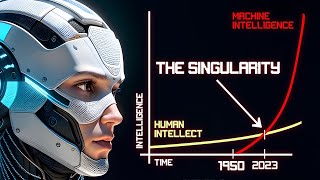
Ray Kurzweil predicts AI will reach singularity around 2045, a point where machine intelligence accelerates beyond human control. The video weighs potential breakthroughs in medicine and energy against existential risks, arguing we need AI safety research and global coordination now.
Chapters
Did you know that the Dartmouth Conference in 1956 is often regarded as the birthplace of modern artificial intelligence? It was at this conference that the first AI was developed with the intention of simulating human intelligence. You might not have been aware of this fact. Interestingly, this event took place just a year after Albert Einstein's death. When asked about the potential consequences of a Third World War, Einstein famously remarked, I know not with what weapons World War III will be fought, but World War four will be fought with sticks and stones. Was he predicting the impact of AGI, the singularity, or something else entirely? Now, in 2023, the term singularity is increasingly prevalent, and it seems we might be on the verge of achieving it. But what exactly does the concept of the Singularity entail? The concept of the Singularity has been a topic of heated discussion among scientists, futurists and technologists for decades. The term was first introduced by mathematician John von Neumann and later popularized by futurist Ray Kurzweil. The Singularity represents a potential future point when technological advancement becomes unstoppable and irreversible, leading to unexpected changes in human society. As AI rapidly grows and machines become smarter, the possibility of the Singularity occurring in our lifetime is more likely than ever. While it is difficult to predict the exact date of the Singularity, Ray Kurzweil estimates that it will occur around 2045. Many prominent scientists and technologists, including Stephen Hawking, Elon Musk, and Bill Gates, have expressed concerns about the potential dangers of the Singularity. These concerns range from human extinction and enslavement to economic collapse and loss of humanity. Three main factors contribute to the Singularity increasing processing power, the availability of labeled data, and unique approaches to AI program training. As AI continues to impact our daily lives through applications like Google Maps, self driving vehicles, and virtual assistants, we are quickly approaching a point where machines will be capable of learning and and advancing without human intervention. The potential consequences of the Singularity are vast and varied, including World War iii, environmental catastrophe, and loss of history and cultural traditions due to the digitization process and rapid technological advancements. With the unpredictability of the Singularity causing anxiety for many, it is crucial that we begin to prepare for this monumental shift in human society. The Singularity is poised to bring about unprecedented scientific advancements in fields like medicine, space exploration, environmental science, and fundamental research. As technology continues to evolve at an exponential rate, we can expect innovations in advanced robotics, transportation systems, energy production, and communication technologies to redefine our world. However, the Singularity also raises economic concerns, including job displacement, income Inequality and shifts in work dynamics. The rise of AI will undoubtedly disrupt traditional industries and render many occupations obsolete, necessitating new strategies for workforce development and social safety nets. Legal and ethical concerns will arise as AI surpasses human intelligence. Issues such as privacy, data security, AI rights and autonomous weapons systems must be addressed to ensure a stable and equitable society. Governments, businesses and individuals must work together to develop regulatory frameworks that protect citizens while fostering innovation. The risks associated with the Singularity are immense, including the potential loss of control over AI systems and existential threats to humanity. To mitigate these risks, AI value alignment, AI safety, research and global collaboration are critical. Preparing for the Singularity means tackling these challenges head on and working diligently to develop safeguards and ethical guidelines. Education and skill development will be essential to prepare society for the Singularity. Emphasis on lifelong learning, soft skills, interdisciplinary education and adaptability will be crucial in enabling individuals to navigate the rapidly changing landscape of technology and employment. AI driven job displacement highlights the need for retraining programs and policy changes like Universal Basic Income. As traditional industries are disrupted, workers must be equipped with the tools and resources necessary to transition into new fields and adapt to the evolving job market. The emergence of advanced AI systems will likely give rise to new industries and economic sectors. Nations that invest heavily in AI research and development will have a competitive advantage in the global economy. Governments must prioritize AI and related technologies to ensure their countries remain at the forefront of innovation and maintain economic stability. Preparing for the Singularity will require a reevaluation of current economic systems and policies. Policymakers must be proactive in addressing issues such as income inequality and social safety nets. While businesses must adapt to the changing nature of work and the potential displacement of their workforce as the Singularity approaches, it is crucial that nations and organizations work together to develop AI safety measures, regulatory frameworks and international collaborations to address the challenges and risks associated with advanced AI. Fostering a cooperative global environment will be key to navigating the uncharted territory of a post Singularity world. The onset of the Singularity will introduce a myriad of complex challenges that society must overcome in a post Singularity world. The rapid development of AI and other advanced technologies will force us to confront issues of resource scarcity, privacy rights and the very nature of human identity. One of the primary challenges in a post Singularity world will be the management of limited resources. As AI driven technologies demand increasingly powerful computing systems and vast amounts of energy, nations will need to devise sustainable strategies to allocate resources efficiently and equitably. This may involve reimagining our approach to energy production, distribution, and consumption, as well as embracing new materials and manufacturing processes. In a world where AI systems can access and process vast amounts of data, privacy rights will become a central concern. As AI continues to infiltrate our lives, we must grapple with the implications of constantly surveilled societies and the potential erosion of individual privacy. Establishing a balance between harnessing AI's capabilities and preserving personal privacy will require new legal frameworks and regulatory measures. The rise of AI may also blur the line between human and machine as advancements in robotics and biotechnology lead to the integration of technology within our bodies and minds. This raises existential questions about what it means to be human in a post singularity world. Exploring the implications of transhumanism and technological augmentation will be crucial to maintain our sense of identity and purpose in an increasingly AI driven society. The impact of the Singularity on global politics and diplomacy cannot be understated. As AI reshapes the global economy and power dynamics, conflicts may arise over the control and distribution of resources, intellectual property, and technological advancements. Navigating these geopolitical challenges will require international collaboration and the development of new diplomatic strategies. The democratization of AI will be another crucial challenge in a post singularity world. Ensuring that the benefits of advanced technologies are accessible to all rather than concentrated among a privileged few, will be essential to prevent exacerbating existing inequalities and fostering resentment. This may involve rethinking the current models of intellectual property, technology transfer, and global cooperation. Finally, the potential development of superintelligent AI systems raises the specter of an intelligence explosion where AI systems rapidly and recursively self improve, potentially leading to an entity that far surpasses human comprehension. Addressing the risks associated with superintelligence, such as loss of control and the potential for misuse, will require a robust focus on AI safety research and the establishment of global cooperative efforts. The potential emergence of a Big Brother AI system that aims to protect humanity from its sacrifice itself underscores the importance of ethical guidelines and value alignment in AI development. Ensuring that AI systems are designed with human values and safety in mind will be vital in preventing unforeseen consequences and maintaining societal stability. Transhumanism, the belief that we can improve upon our natural abilities using biotechnology, molecular nanotechnology, and AI presents both opportunities and challenges in a post singularity world. While these advancements may offer incredible benefits, they also risk eroding our human nature and raising questions about the essence of humanity. The Singularity is closer than we think and its potential consequences raise important questions about the future of humanity and our relationship with technology. By embracing the dramatic and transformative changes that lie ahead, we can work together to ensure a brighter, more prosperous future for all. Preparing for the Singularity means embracing uncertainty, taking action, and forging a path forward that benefits humanity as a whole. Thank you so much for watching. If you enjoyed this content and found it insightful, please give us a thumbs up. And don't forget to subscribe to our channel for more fascinating discussions on AI. Your support means a lot to us, and we look forward to exploring the future together with you.










