Ameca Robot 'Free Thinking' Update + Microsoft New AI Backpack
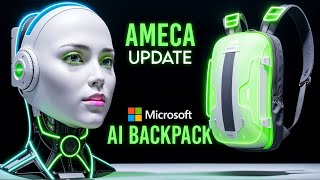
Engineered Arts' Ameca robot went viral claiming robots deserve rights and predicting life in 100 years, but the video questions whether it's actually thinking or just running generative AI. Microsoft patented an AI backpack with sensors that processes commands in six steps, raising privacy concerns.
Chapters
Ameca is the most advanced human like robot in the world, created by a British company named Engineered Arts. In this video, I'll share with you the newest updates about this robot and what it predicts for the future of people. Later in the video, we'll also discuss Microsoft's latest AI gadget, which is an AI backpack that can see and hear everything just like you do, and it acts as your personal companion. These are exciting times, aren't they? But before we dive into the details about the Ameca robotics, please make sure to subscribe to our channel if you haven't yet, so you can keep up with all the latest news and updates in the field of artificial intelligence. Alright, so as we all know, Ameca is a human shaped robot that can walk, talk and interact with people using artificial intelligence. It has a realistic face that can show a range of emotions from happiness to anger. It also has cameras in its eyes that can recognize faces and expressions. And it can speak more than 100 languages, thanks to a powerful AI system that uses natural language processing and generation. It made headlines last year when it released a series of videos showing its facial expressions and movements. The videos went viral on social media and attracted millions of views. People were fascinated and terrified by how lifelike and expressive it was. Some even compared it to the Terminator or the replicants from Blade Runner. So is Ameca here to harm us or take control? Actually, it's really hopeful about the future and what it can do to help society. In recent talks with the media, Ameca gave its thoughts on what life will look like in 100 years. And it sounds quite interesting. The robot believes that in 100 years people will be living better lives. We'll have made big improvements in being sustainable and fair.
We'll have made great strides towards sustainability and equality.
And we'll have new technologies that make life easier and more fun, while also.
Creating new technologies that make our lives easier and more enjoyable.
We might even have traveled to other planets.
We may even have ventured beyond the boundaries of Earth to explore other worlds.
It also thinks a future where humans and robots live together would be great. We could learn from each other, work as a team to fix issues and make a better future for everyone. And it also believes that robots should also have rights and be treated well, just like people. Now, this idea of giving robots equal rights is something that makes me uneasy. But it seems like we're getting closer to making this unusual concept a reality. You might be curious about how Ameca can act like it has human thoughts and feelings. Ameca runs on an AI system that uses something called generative models. These models help it understand and speak our language and even control its facial expressions and movements. What does this action signify? It's similar to GPT4, one of the most advanced AI models out there. However, these generative models aren't perfect. They can make mistakes and their behavior can be shaped by the data they've been trained on. They don't actually understand or reason. They just process information to act like they do. So does a Mecha truly think and feel like us? Not really. But it does have some skills that make it appear more human. For instance, it can pause before answering a question, which makes it seem like it's thinking. It can also show signs of emotion and connect with people in a way that feels genuine. But these impressions are not necessary, accurate or reliable. They are based on our perception and interpretation of a Mecca's behavior and appearance. We tend to anthropomorphize machines that look or act like humans because we are wired to do so by evolution. We project our own feelings and expectations onto them because we want to relate to them. This is why some people love a Mecca and find it optimistic and inspiring, while others hate it and find it creepy or woke up. The public reactions to Ameca's statements have been mixed and polarized. Some think it's hopeful and are impressed by what it can do, like helping to teach or care for older people. Others think it's too optimistic and worry about it doing jobs that need a lot of patience, like looking after people with dementia. The discussions about Ameca are part of a bigger conversation about the future of artificial intelligence and how it will affect us as AI gets more advanced. We have to think about both the good and bad things that could happen. We need to make sure AI is safe and helpful for everyone. This means people from all areas like government, businesses and research need to talk and work together. We need to create rules that make sure AI is both innovative and responsible. So Ameca isn't just a robot. It's a glimpse into what the future of AI could be like. That future could be amazing, but also risky. And it's something we all need to help shape. Alright, now let's switch the subject to Microsoft's new AI powered smart backpack. And let's not forget, this is not a game. This is real life. Microsoft has filed a patent for a smart backpack that can do amazing things with artificial intelligence. So what's the deal with this new Microsoft innovation? It's a backpack that works like a hands free digital assistant to help you with different tasks and give you useful information. It has sensors like a camera, microphone, GPS and compass to understand what's around you. It can even recognize objects and people. The backpack also has a speaker, LED and haptic actuator to talk to you and connect with other devices. Plus, it has the tech inside like a processor and storage to run AI algorithms and connect to the cloud. So what can it do? According to its patent application, the smart backpack can identify objects, interact with nearby devices, and handle tasks based on your situation. For instance, if you're skiing and want to know if you can go in a certain direction, just ask the backpack. It will scan the area and tell you if it's safe or not in a grocery store and curious about an item's price. Or if it's on sale, point the camera at it and the backpack will give you the price and even compare it to other stores. If you see a concert poster you're interested in while walking by, just tell the backpack to add it to your calendar and it will. But how does the backpack understand what you're saying and react to its surroundings? Well, it uses AI to understand spoken or written language and to respond with speech or text. It can also recognize things like images, faces and emotions. It uses a machine learning technique called generative models to create new data based on what it already knows. The patent application describes a six step process for how the smart backpack works. First, the backpack gets a command from you or another device. Then it understands what you're saying by using natural language processing. Next, it figures out if you're giving a command or asking a question. If it's a command, the backpack does what you ask using its built in sensors and moving parts. If it's a question, the backpack looks up the information it needs. Finally, it tells you the answer or does the action either through its speaker or a light display. So how does it stack up against other tech wearables like Targus VR Backpack or Intel's Vaunt smart Glasses? To be honest, Microsoft's smart backpack seems to be ahead of the game. It has more sensors, can process information faster, has more storage, offers more ways to interact, and has better artificial intelligence features than any other product available. And this thing could make a big splash in the wearable technology market, which is expected to be worth $74 billion by 2025. This backpack isn't just a bag. It's a mix of practicality, ease of use, and smart features. When it comes to privacy and ethics, Microsoft says they've got it covered. The backpack will encrypt user data and be very careful about how long it keeps that data. Users will also have to give their clear permission for the backpack to perform specific tasks. Plus, Microsoft plans to include security features to keep out unauthorized users. Still, there are questions that need answers. What happens if the backpack is hacked, stolen or malfunctions? What if the user data is leaked? These concerns need to be sorted out before the backpack hits the shelves. Looking ahead, the Smart Backpack has a lot of room to grow. It could get software updates to make it even smarter and add new features. It could also work together with other Microsoft products like Windows Office, Azure or Cortana, making it part of a bigger network of devices and services. In short, it could be a game changer if they pull it off correctly. But what's your take on the Smart backpack? Is it useful or a bit unsettling? Cool or not so much? Share your thoughts in the comments. I'm eager to hear what you think and if you liked the video and learned something, please give it a thumbs up and subscribe for more tech and AI videos. Remember to hit the bell so you'll know when I post something new. Thanks for watching and see you in the next one.










