Apples' NEW AI 'QUARTZ' Takes the Industry By STORM! (NOW ANNOUNCED!)
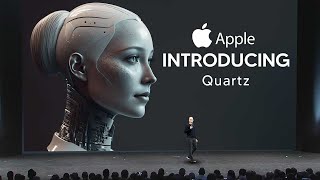
LARRUZ breaks down Apple's AI push, including a reported health-coaching service called Quartz that uses Apple Watch data, emotion-tracking features, and Siri upgrades. He covers Apple's autonomous-vehicle work and machine-learning acquisitions while comparing Apple's moves to Google, Microsoft, and Amazon.
Chapters
The recent entry of Apple into the artificial intelligence race has been a major development in the technology industry. As one of the most valuable consumer companies in the world, with a vast cash reserve, Apple has the resources to heavily invest in AI research and development. This move is likely to shake up the AI landscape, which has been dominated by other tech giants such as Google, Microsoft and Amazon in recent years. According to Bloomberg, Apple's latest move into the world of artificial intelligence is a health coaching service called called Quartz, which uses AI and data from the Apple Watch to help users improve their overall health and wellness. The new service is designed to offer personalized coaching programs that are tailored to each individual user's needs based on their exercise habits, eating patterns and sleep quality. According to sources familiar with the project, Quartz will use AI algorithms to analyze data collected from the Apple Watch, such as heart rate, sleeping patterns and activity levels to offer personalized health and wellness suggestions to users. These suggestions will be designed to motivate users to exercise more, eat healthier and get better sleep, all of which can have a significant impact on overall health and well being. In addition to Quartz, Apple is also reportedly working on new technology for tracking emotions. This new technology would use AI to analyze data collected from the Apple Watch, such as heart rate variability and skin temperature to identify changes and a user's emotional state. This could be particularly useful for individuals with conditions such as anxiety or depression as it would provide a way to track changes in their emotional state over time and provide insights into potential triggers or patterns. Overall, Apple's foray into AI powered health and wellness services is a significant development for the industry. With its vast resources and expertise in consumer technology, Apple has the potential to revolutionize the way we approach health and wellness by using AI to offer personalized coaching and insights to users. It remains to be seen how successful these new initiatives will be, but but they will represent an exciting step forward in the world of AI powered healthcare. Is that all that Apple has? So while it is true that Apple's recent AI initiatives might not appear as ambitious as some of its competitors, it's important to note that the company has traditionally taken a more cautious approach to new technologies. Apple has a reputation for focusing on quality and user experience over raw technological power, which has been a major factor in the success of of its products, Apple's entry into the AI race should not be underestimated. With its vast resources and world class talent, the company has the potential to make significant contributions to the field. Moreover, Apple has a unique advantage in the healthcare industry where its products such as the Apple Watch are already widely used. In contrast, Microsoft's recent investment in ChatGPT with OpenAI and Google's efforts with Bard, Project Magi and the 540 billion parameter large language model called Palm, which is integrated into an actual robot, are certainly impressive and they demonstrate the growing importance of generative AI in a wide range of applications. These initiatives are pushing the boundaries of what's possible with AI and they are likely to have significant impacts on the future of the technology industry. Ultimately, the AI race is not a zero sum game. It's a shakeup that can't come soon enough as the tech industry has been getting destroyed for the last 18 months. It's even losing 800 billion in a single day last year. Now this isn't just a temporary problem, the most successful hedge fund manager of all time says US capitalism itself is breaking down before our eyes. Now nearly 90% of financial advisors are going big into alternative investment outside of just a company's stock. Morgan Stanley themselves just released a report on ALTS and as their graph shows for the last 30 years, including them could have potentially lowered your volatility and increased your returns. In fact, bank of America's investment head and BlackRock's Larry Fink have both discussed one specific high performing alternative to help rescue your cash Fine art Don't believe me? Last year the art investing platform Masterworks has sold over $45 million worth of artwork and has distributed net proceeds to their investors. And every one of their sales to date has delivered a positive return, with two more just in the last month. Masterworks offers art from legends like Picasso by filing an offering circular with the SEC allowing anyone to invest. Paintings can sell out in hours, not days, but right now you can get priority access to skip the wait below. Ultimately, the AR race is not a zero sum game. There is room for multiple players to make significant contributions to the field, and each company brings its own unique strengths and perspectives. As such, it's exciting to see companies such as Apple, Microsoft and Google investing heavily in AI and research and development, and we can expect to see much more exciting developments in the field in years to come. Now Siri has been a major part of Apple's product lineup for over a decade, and while it was one of the first voice assistants on the market, it has faced increased competition from other AI powered voice assistants such as Amazon's Alexa and Google's Assistant. With the rapid advancements in AI technology essential that Apple continues to innovate with Siri in order to keep up with the competition. So one way that Apple could improve Siri is by integrating more advanced AI algorithms such as Those used in ChatGPT and other generative AI models. These algorithms could allow Siri to understand more complex queries and provide more nuanced and personalized responses. Additionally, Apple could explore new ways to integrate Siri into its product lineup, such as through smart home devices, wearables and other connected devices. Now, some users have actually taken it upon themselves to implement ChatGPT into Siri simply because Apple hasn't done it yet. And another potential area for improvement is in Siri's natural language processing capabilities. Natural language processing is a critical component of any voice assistant, as it allows the assistant to understand and interpret spoken language. By improving Siri's natural language processing capabilities, Apple could make the assistant more accurate and responsive, which would particularly be beneficial in noisy or crowded environments. Finally, Apple could look to expand Siri's capabilities beyond its current focus on basic tasks such as setting reminders and playing music. By incorporating more advanced AI technologies such as computer vision and natural language understanding, Siri could become a more versatile and powerful voice assistant capable of handling a wide range of tasks and queries. Overall, while Siri may face stiff competition from other voice assistants, Apple has the resources and expertise to continue innovating and improving the technology. With the rapid pace of advancements in AI, it is likely that we will see exciting developments from Siri and other voice assistants in the years to come. Apple's Other AI Ventures Project Titan Apple's entry into the autonomous vehicle space highlights the growing importance of artificial intelligence in the automotive industry. While the details about Apple's secretive Project Titan remain scarce, it's clear that the company is investing heavily in AI technology to power its self driving cars. As the automotive industry shifts towards autonomous vehicles, the success of self driving cars will depend heavily on the performance and reliability of their software. By developing advanced AI systems for autonomous vehicles, companies like Apple can offer superior performance, improved safety and more efficient transportation options. Moreover, Apple's expertise in consumer technology can help make self driving cars more accessible to a broader audience. By developing user friendly intuitive interfaces and easy to understand AI systems, Apple can help demystify the self driving car technology and make it more approachable to consumers. However, the competition in the autonomous vehicle space is fierce and Apple must continue to innovate and invest in AI technology to stay ahead of the curve, especially from companies such as Tesla. This means that they must start developing advanced AI algorithms for object detection, route optimization and real time decision making, as well as exploring new AI powered features that can enhance the overall driving experience. Overall, while Apple's entry into the autonomous vehicle space is significant, the company must remain focused on developing cutting edge AI technology in order to compete with other tech giants in the race to develop the best self driving cars and autonomous products now. Apple has been actively acquiring a range of artificial intelligence companies in recent years with the aim of enhancing the AI and machine learning capabilities of its products and services. The list of companies acquired by Apple Emotion, a startup company that uses AI technology to read people's emotions by analyzing facial expressions Turing, a small Seattle based startup specializing in machine learning and artificial intelligence realface, a cyber technology startup whose facial recognition technology can be used to authenticate users AI Music, a startup that uses AI to generate personalized soundtracks and adaptive music WaveOne, a California based startup that was developing AI algorithms for video compression and to name some others, they acquired Shizam, Sensomoteric, SilkLabs, Drive AI, Laserlike, Spectral Edge, Voyosis, Xnor AI and many, many more. These acquisitions have allowed Apple to tap into the expertise and technology of these companies to develop advanced AI and machine learning capabilities for a range of applications. For example, the acquisition of Turing in 2016 gave Apple access to the company's expertise in developing machine learning tools and platforms, while the acquisition of Xnor AI in 2019 provided Apple with low power edge based AI technology for its products. By investing in a wide range of AI companies, Apple has been able to stay at the forefront of the AI race and to drive innovation in the technology industry. The company has introduced a range of AI powered features in recent years such as facial recognition in the iPhone X and series to improve natural language processing, and it has continued to invest heavily in AI research and development. Overall, Apple's acquisitions in the AI space demonstrate the company's commitment to staying ahead of the curve in the technology industry. By leveraging the expertise and technology of the companies it has acquired, Apple has been able to enhance the AI and machine learning capabilities of its products and services, driving improvements in user experience, efficiency and productivity. Apple's extensive research into machine learning is a key part of the company's strategy for staying ahead of the curve in the technology industry. With a dedicated department focused on machine learning, Apple is able to invest heavily in research and development, driving innovation and pushing the boundaries of what's possible with this technology. One way that Apple is demonstrating its commitment to machine learning is by regularly publishing research papers that highlight the company's innovative work in the field. These papers cover a wide range of topics from computer computer vision and natural language processing to autonomous systems and data privacy. One recent example of Apple's innovative work and machine learning is the development of a program called Facelit. This program uses machine learning algorithms to create photorealistic 3D renders of a person's face just using two photos. This technology has significant applications in the field, such as virtual reality gaming and film production, and it demonstrates the potential of machine learning to drive advances in a wide range of industries. Overall, Apple's heavy focus on machine learning is a testament to the company's commitment to staying at the forefront of the technology industry. By investing heavily in research and development and sharing its work with the wider scientific community and pushing the boundaries of what's possible with machine learning, Apple ensures that it remains a major player in the AI race.










