Boston Dynamics NEW HUMANOID ROBOT SHOCKS The ENTIRE INDUSTRY! (New BOSTON Dynamics ATLAS)
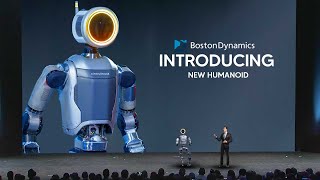
Boston Dynamics released a new Atlas humanoid robot with upgraded mobility, 360-degree head and hip movement, and improved grippers. The company aims to build robots that exceed human capabilities for dangerous and repetitive tasks, marking a significant step toward practical deployment.
Chapters
So Boston Dynamics recently just announced their new version of Atlas, and it is actually quite surprising how good this robot is. So we're going to take a look at this robot and dive into exactly why this is literally the next generation in humanoid robotics. So that was the rather impressive demo that has been going viral recently, and I think it's pretty, pretty surprising on how insane that robot is. Now, there's a lot of stuff that I do need to tell you, because it isn't just this demo. There's actually a decent amount of information that they've released with this robot, and I think we are about to see how crazy humanoid robots are about to get. So if you don't know this robot is the, I guess you could say the next generation in terms of what's to come after they retired the initial version, which is, of course, the atlas. Now, I think it is a little bit confusing that they just didn't call this Atlas V2 or Atlas Pro or something different, because their previous robot, a couple of days ago, they announced that they were going to be retiring this version. You remember this version of atlas, the one that broke the Internet in terms of being completely viral, because it was a humanoid robot that moved as well as any human or even better than some humans could in very, very hard tasks. And this was something that definitely broke the Internet. The videos have over hundreds and hundreds of millions of views. And it seems that now, since they've decided to retire this robot, they're going to be moving on into the humanoid robot space. Now, with this demo that we saw, we've got to be honest, this is very, very impressive for a variety of different reasons. The fluidity of the robot, the. The uncanniness of the movement. I mean, just how the robot was able to stand up right there is definitely something that you probably might see out of a Terminator movie. And then being able to just swivel on the joints right there shows us that this is a robot that can move very, very fluidly. Now, they also included some pieces of information with this robot, and there's a few key features that I do want to show you that you might have actually missed. So with the blog post and the video, they said that this is the latest iteration of the ATLAS robot that builds on a long history of innovation and research and design, pushing the limits of whole body mobility and bimanual manipulation. From Petman testing protective clothing, to the recently retired HD Atlas performing parkour, we have spent over a decade moving the state of the art forward with humanoid robotics. Now of course, I've already shown you the video in which they talk about human, the evolution of ATLAS and how they managed to get where they are today. But one thing I want you all to remember is that this version of atlas, the first video where it was doing the crazy, crazy movement, wasn't even recently. These kind of videos and demos have actually been around for quite some time. And we've even saw the recent Parkour video. It's essentially two years old. So this robot is likely probably a few years in the making and isn't just something that they've decided to come out with. They've certainly been working on this for a very, very long time now. Something that we always get in the robotics community is why on earth do they make robots that are in the humanoid form factor? So you can see right here that they say traditionally we are focused on legged robots because we wanted to build robots that could balance and move dynamically, robots that could navigate unstructured, unknown or antagonistic terrain with ease. And the main factor here, the main reason that most people don't seem to think about, because most people decide to question why these robots are humanoid, because some people just think it just because they look cool. That's not the reason. The reason is, it's because the world is designed for humans. So if you're going to design a robot, you need to be able to design a robot that can be plug and play with our already established environments and one that works effectively. I mean, yes, you could build robots, robot dogs, which is essentially what they've used to be focusing on. But if you build a humanoid robot and it works very effectively, you don't have to redesign the world around the robot. You just have to design the robot around the existing world. So robots with wheels don't really work well because of stairs, and robots that can't walk upstairs don't work well in certain environments. And you can see here that they said the humanoid form factor is a useful design for robots working in a world designed for people. So that that's something that you should know. Now, in addition, in the blog post, they state some more interesting things. They state that this is going to exceed human capabilities, which is a little unsettling for those of you who may have watched too many Terminator movies. So it says, however, that form factor doesn't limit our vision of how a bipedal robot can move, what tools it needs to succeed, and how it can help people accomplish more. We designed the electric version of ATLAS to be stronger and more dexterous and More agile ATLAS may resemble a human form factor, but we are equipping the robot to move in the most efficient way possible to complete a task, rather than being constrained by a human range of motion. And that's why I have the picture of the robot here in the bottom left hand corner, because we all saw exactly how that robot stood up. It was probably the most uncanny thing I've ever seen. A robot being able to swivel on its hips and just standing up like something out of a horror movie. Definitely interesting. And I'm wondering how it's going to complete certain tasks when it's able to move and swivel its hips in a way that humans simply can't. And it says here that ATLAS will move in ways that exceed human capabilities. Combining decades of practical experience with first principles, thinking we are confident in our ability to deliver a robot uniquely capable of tackling dull, dirty and dangerous tasks in real applications. And I think this is rather interesting because like I said, I can already see some applications for this kind of robot, because what we have here is a robot that is not limited to the human ranges of motion. And this is something that I think we are going to probably see in the new robots being developed. As far as I know, this is the only robot that is able to move so fluidly and so freely. You can see the head can do a full 360, the body can do a full 362, the legs as well. It's absolutely incredible the types of movement and the ranges of movement that this robot is going to be able to do. It's going to truly be an incredibly agile robot. Now, something that you may have missed, and there's a few more factors that I do want to show you is that one of the things I noticed was that this robot actually looks pretty far. And I think it's so fascinating to how quickly this robot is. And this is actually no surprise because if you remember the previous version of atlas, this, it was very, very, very quick. Now I think this robot might actually set, the robot might actually set the world record for the world's fastest moving robot, because whilst it is just doing some standard walking there, that does seem to be pretty, pretty quickly. And if it's anything like its predecessor, the other atlas, it will certainly be able to run and be very, very quick. Now, there's also something that most people also didn't know about and that was the grippers. So when the robot is standing up, you can see its arms for a fraction of a second. And it seems that what we're looking at here is the newly designed grippers that were placed on the recently demoed Atlas. So if you may have not noticed recently, there was an update to Boston Dynamics ATLAS platform before it was retired, and they actually showcased an interesting style of grippers. So here we could see Atlas actually performing a kind of movement where it's being able to transport some kind of car strut into some shelf area. And it seems that it has some upgraded grippers to be able to perform this tasks. It doesn't look like a human hand whatsoever. What it does look like is three different fingers, or prongs, whatever you want to call them. And I think this might be the most effective mode of gripping objects for these humanoid robots. Because I can guarantee you guys, they've already tested this a bunch of different times. And I've seen humanoid robots, and not just humanoid robots, many other style of robots be able to move and grab objects with remarkable ease, even with just two pronged grippers. So it seems that this kind of grip is what is going to be present in this style of atlas. And this, this is exactly how the robot is likely to be gripping. Now, something I also think is going to be possible is that they're going to be able to, you know, remove these grippers from the robot simply because it is likely going to be interchangeable. I doubt that this robot is going to just have one set of grippers fastened to the robot. I think they're going to be completely interchangeable at the side. And that is something that I recently saw in another robot demo where at the start, robot literally just slips on its hand. And I think that would be really, really useful because if you want to use the robot in multiple different use cases, you can just literally slip on and off someone's hand in order to be able to apply it to different tasks. And I think that that is going to be pretty fascinating. Now, what does this actually hold for the future? Because whilst, yes, this robot is actually pretty insane, what is coming next? So previously there was some kind of talk that was released where Boston Dynamics executives actually spoke about what this robot is going to be like in the future. Now bear in mind this, and of course it's some. So the information might be a little bit out of date, but it still showcases the vision and where things could be heading.
And of course, at some point, you know, maybe, you know, the robot will be able to do things that a general purpose humanoid robot is expected to do. And it's interesting, you know, what's in this picture is probably not 50 years away. I don't think it's around the corner as some people might want to make you believe. But you know, this is probably in the 10 year timeframe. One of the biggest things that we are working feverishly to figure out is actually not the ability of the robot in terms of moving and obstacle avoidance and autonomy. Most of that we have figured out. One of the biggest things for a humanoid robot like that is of course, safety. Because this is a strong robot and Spot can work side by side workers. I think most of us feel pretty comfortable with him being in this room here. And you know, the bigger the robots get, the more important safety will become.
So we can clearly see that there is a clear future of these humanoid robots being able to do a lot of things that, such as delivering parcels and many other household tasks. And like I said before, if it's going to be anything like what we've seen here, just imagining a humanoid robot form factor, being able to run across different parkour environments, being able to simply turn its hips in a way that we've never seen before, shows us that things are about to get really, really incredible. I mean, if we look at the previous version of Atlas, we can see that it was limited by a huge pack on the back, a huge battery pack and a huge, huge wires on the legs, which doesn't allow it to do the level of turning that this robot can do. Now I think this is going to be a huge wakeup call for the robotics industry because I think people are now about to realize just how advanced robotics can be. With Boss Dynamics seemingly taking the lead in what is an already very, very competitive robotics industry. Companies like Figure Apollo, Unitree, Sanctuary AI and 1x Robotics all competing for the top spot as the world's most effective humanoid. And of course, there was something here that we did see. The last part that I do want to mention is right here, which seems to be some kind of vision system. And I think this was pretty interesting because what we also did see was when this robot was essentially, you know, moving, we saw that as it stood up, this beam right here, it did light up. So I'm not sure what that was iding or maybe it, it was just turning on. But I do think that that was rather fascinating. And we can see, I'm going to highlight this for you all, some cameras right here. I think we can see three different cameras that are for sensing the environment. So it will be interesting to see how those cameras are used if they're going to be able to identify certain things to be able to do certain tasks. If this robot is going to come with some kind of vision system, I mean, it's a very, very fascinating future. So with that being said, let me know what you thought about this robot. Do you think that this is fast? Do you think that things are going crazy? I think that this is pretty, pretty interesting for the future, considering everything seems to be accelerating all in the same timeline. And with that being said, I'll see you guys the next video.










