Bryan Johnson: Kernel Brain-Computer Interfaces | Lex Fridman Podcast #186
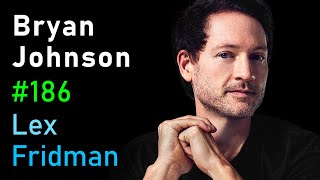
Bryan Johnson, founder of Kernel, demonstrates a noninvasive brain interface that uses light to measure neural activity. The device could enable real-time self-monitoring and large-scale neuroscience research, with early applications in attention, sleep, and meditation.
Questions this video answers
52 modules; each module has one laser and six sensors.
Sensors fire in about 100 picoseconds.
About a thousand-plus channels sampling activity.
Kernel Flow (often shortened to Flow).
He funded the first $53 million of the company.
Chapters
The following is a conversation with Brian Johnson, founder of Kernel, a company that has developed devices that can monitor and record brain activity. And previously he was the founder of braintree, a mobile payment company that acquired Venmo and then was acquired by PayPal and eBay. Quick mention of our sponsors, Four Sigmatic, Netsuite, Grammarly and ExpressVPN. Check them out in the description to support this podcast. As a side note, let me say that this was a fun and memorable experience wearing the Kernel Flow brain interface in the beginning of this conversation. As you can see if you watch the video version of this episode and there was a Ubuntu Linux machine sitting next to me collecting the data from my brain. The whole thing gave me hope that the mystery of the human mind will be unlocked in the coming decades as we begin to measure signals from the brain and in a high bandwidth way. To understand the mind, we either have to build it or to measure it. Both are worth a try. Thanks to Brian and the rest of the Kernel team for making this little demo happen. This is the Lex Friedman podcast. And here is my conversation with Brian Johnson.
You ready, Lex?
Yes, I'm ready.
Do you guys want to come in and put the interfaces on our heads and then I will proceed to tell you a few jokes?
So we have two incredible pieces of technology and a machine running Ubuntu 20.04 in front of us. What are we doing?
All right.
Are these going on our heads?
They're going on our heads. Yeah. And they will place it on our heads for proper alignment.
Does this support giant heads? Because I kind of have a giant.
Head as like an ego, or are you saying physically? Both. Camera. Drop it on me.
It's a nice massage.
Yes. Okay. How does this feel?
Moved around. It's okay to move around. Yeah, it feels. Oh, yeah, this feels awesome.
Pretty good fit.
Thank you.
That feels good.
So this is big head friendly.
It suits you well, Lex.
Thank you. I feel like I need to. I feel like when I wear this, I need to sound like Sam Harris. Calm, collected, eloquent. I feel smarter, actually. I don't think I've ever felt quite as much like I'm part of the future as now.
Have you ever worn a brain interface or had your brain imaged?
Oh, never had my brain imaged. The only way I've analyzed my brain is by talking to myself and thinking. No direct data.
Yeah, yeah, that is it. That is definitely a brain interface. That has a lot of blind spots.
It has some blind spots. Yeah. Psychotherapy.
That's Right. All right. Are we recording? All right, so, Lex, the objective of this. I'm going to tell you some jokes, and your objective is to not smile, which, as a Russian, you should have an edge.
Make the motherland proud. I gotcha. Okay.
Let'S hear the jokes, Lex.
And this is from the kernel crew. We've been working on a device that can read your mind, and we would love to see your thoughts.
Is that the joke?
That's the opening.
Okay.
If I'm seeing the muscle activation correctly on your lips, you're not going to do well on this. Let's see, here comes the first. Here comes the first one.
This going to break the device? Is it. Is it resilient to.
To laughter?
Lex, what goes through a potato's brain?
I already failed. That's the hilarious opener. Okay.
What Tater thought. What kind of fish performs brain surgery?
I don't know.
A neural surgeon.
And so we're getting data of everything that's happening in my brain right now.
Lifetime. Yeah, we're getting activation patterns of your entire cortex.
I'm gonna try to do better. I let it out all the parts where I left in Photoshop. You have a serious face over me.
You can recover. All right, Lex, what do scholars eat when they're hungry?
I don't know.
What? Academia nuts.
That's a pretty good one.
So what we'll do is, so you're wearing kernel flow, which is an interface built using technology called spectroscopy. So it's similar to what we wear wearables on the wrist using light, so using lidar, as you know, and we're using that to image. It's a functional imaging of brain activity. And so as your neurons fire electrically and chemically, it creates blood oxygenation levels. We're measuring that. And so you'll see in the reconstructions we do for you, you'll see your activation patterns in your brain throughout this entire time we are wearing it. So in the reaction to the jokes and as we were sitting here talking. So it's a. We're moving towards a real time feed of your cortical brain activity.
So there's a bunch of things that are in contact with my skull right now. How many of them are there? And so how many of them are. What are they? What are the actual sensors?
There's 52 modules, and each module has one laser and six sensors. And they're the sensors fire in about 100 picoseconds, and then the photons scatter and absorb in your brain. Then a few go in, a few come Back out a bunch go in, then a few come back out and we sense those photons and then we do the reconstruction for the activity. Overall, there's about a thousand plus channels that are sampling your activity.
How difficult is it to make it as comfortable as it is? Because it's surprisingly comfortable. I would not think it would be comfortable. Something that's measuring brain activity I would not think would be comfortable, but it is.
I agree.
In fact, I want to take this home.
Yeah. Yeah, that's right. So people are accustomed to being in big systems like FMRI, where there's 120 decibel sounds and you're in a claustrophobic encasement or EEG, which is just painful, or surgery. And so, yes, I agree that this is a convenient option to be able to just put on your head. It measures your brain activity in the contextual environment you choose. So if we want to have it during a podcast or if we want to be at home in a business setting, it's freedom to be where to record your brain activity in the setting that you choose.
Yeah. But sort of from an engineer perspective are these. What is it? There's a bunch of different modular parts, and they're kind of. There's like a rubber band thing where they. They mold to the shape of your head.
That's right. So we, we built this, this version of the mechanical design to accommodate most adult heads.
But I have a giant head, and if it's fine, it fits well, actually. So I don't think I have an average head. Okay, maybe I feel. I feel much better about my head now. Maybe I am. I'm more average than I thought. Okay, so what else is there? Interesting you could say while it's on our heads, I can keep this on the whole time. This is kind of awesome and it's amazing for me, as a fan of Ubuntu, I use Ubuntu mate. You guys should use that too. But it's amazing to have code running to the side, measuring stuff and collecting data. I feel like much more important now that my data is being recorded. Like somebody care. Like, you know, when you. You have a good friend that listens to you that actually, like, listens, like, actually is listening to you. This is what I feel like. Like a much better friend because it's like accurately listening to me. Ubuntu.
Understood.
Yeah, Heard.
Yeah, heard deeply by with. And now you're able to communicate with this system in ways that you couldn't before.
Yeah, I feel heard.
Yeah. I mean, I guess what's interesting about this is your intuitions are spot on. Most people have intuitions about brain interfaces that they've grown up with. This idea of people moving cursors on the screen or typing or changing the channel or skipping a song. It's primarily been anchored on control. And I think the more relevant understanding of brain interfaces or neuroimaging is that it's a measurement system. And once you have numbers for a given thing, a seemingly endless number of possibilities emerge around that of what to do with those numbers.
So before you tell me about the possibilities, this was an incredible experience. I can keep this on for another two hours, but I'm being told that for a bunch of reasons, just because we probably want to keep the data small and visualize it nicely, the final product, we want to cut this off and take this, take, take this amazing helmet away from me. So, Brian, thank you so much for this experience and let's, let's continue without helmetless. All right, so that was an incredible experience. Can you maybe speak to what kind of opportunities that opens up that stream of data, that rich stream of data from the brain?
First, I, I'm curious, what is your reaction? What, what comes to mind when you put that on your head? What does it mean to you and what possibilities emerge and what significance might it have? I'm curious where your orientation is at.
Well, for me, I'm really excited by the possibility of various information about my body, about my mind being converted into data such that data can be used to create products that make my life better. So that, that to me is really exciting possibility. Even just like a Fitbit that measures, I don't know, some very basic measurements about your body is really cool. But it's the, the bandwidth of information, the resolution of that information is very crude. So it's not very interesting. The possibility of recording, of just building a data set coming in a clean way, in a high bandwidth way from my brain opens up all kinds of, you know, at the very. I was kind of joking while we're talking, but it's not really, is like I feel heard in the sense that it feels like the full richness of the information coming from my mind is actually being recorded by the machine. I mean there's a, I can't, I can't quite put it into words, but there is genuinely, for me, this is not some kind of joke about me being a robot. This genuinely feels like I'm being heard in a way that, that's going to improve my life. As long as the thing that's on the other end can do something useful with that data. But even the recording itself is like, once you record, it's like taking a picture. That moment is forever saved in time. Now, picture cannot allow you to step back into that world, but perhaps recording your brain is a much higher resolution thing, much more personal recording of that information than a picture. That would allow you to step back into that where you were in that particular moment in history, and then map out a certain trajectory to tell you certain things about, about yourself that can open up all kinds of applications. Of course there's health that I consider, but honestly, to me, the exciting thing is just being heard. My state of mind, the level of focus, all those kinds of things being heard.
What I heard you say is you have an entirety of lived experience, some of which you can communicate in words and in body language, some of which you feel internally, which cannot be captured in those communication modalities. And that this measurement system captures both the things you can try to articulate in words, maybe in a lower dimensional space, using one word, for example, to communicate focus, when it really may be represented in a 20 dimensional space of this particular kind of focus and that this information is being captured. So it's a closer representation to the entirety of your experience, captured in a dynamic fashion that is not just a static image of your conscious experience.
Yeah, that's the promise, that's the hope. That was the feeling. And it felt like the future. So it's a pretty cool experience. And from the sort of mechanical perspective, it was cool to have an actual device that feels pretty good, that doesn't require me to go into the lab. And also the other thing I was feeling, there's a guy named Andrew Huberman, he's a friend of mine. Amazing podcast. People should, should listen to a Huberman Lab podcast. We're working on a paper together about eye movement and so on. And we're kind of. He's a neuroscientist and I'm a data person, a machine learning person. And we're, we're both excited by how much the, that how much the data measurements of the human mind, the brain, and all the different metrics that come from that can be used to understand human beings and in a rigorous scientific way. So the other thing I was thinking about is how this could be turned into a tool for science, sort of not just personal science, not just like Fitbit style, like how am I doing my personal metrics of health, but doing larger scale studies of human behavior and so on. So like data, not at the scale of an individual, but data at a scale of many individuals, a large number of individuals. So science, so it's personal, being heard was exciting and also just for science is exciting. It's very easy like, like there's a very powerful thing to it being so easy to just put on that you could scale much easier.
If you think about that second thing you said about the science of the brain most we've done a pretty good job. Like we, the human race have done a pretty good job figuring out how to quantify the things around us from distant stars to calories and steps and our genome. So we can measure and quantify pretty much everything in the known universe except for our minds. And we can do these one offs if we're going to get an FMRI scan or do something with a low res EEG system, but we haven't done this at population scale. And so if you think about human thought or human cognition is probably the single largest raw input material into society at any given moment. It's our conversations with ourselves and with other people and we have this, this raw input that we haven't been able to measure yet. And when I think about it through that frame, it's remarkable. It's almost like we live in this wild, wild west of unquantified communications within ourselves and between each other when everything else has been grounded. For example, I know if I buy an appliance at the store or on a website, I don't need to look at the measurements on the appliance and make sure it can fit through my door. That's an engineered system of appliance manufacturing and construction. Everyone's agreed upon engineering standards and we don't have engineering standards around cognition. It has not entered as a formal engineering discipline that enables us to scaffold in society with everything else we're doing, including consuming news, our relationships, politics, economics, education, all the above. And so to me, the most significant contribution that kernel technology has to offer would be the introduction of the formal engineering of cognition as it relates to everything else in society.
I love that idea that you kind of think that there is just this ocean of data that's coming from people's brains as being in a crude way reduced down to tweets and texts and so on. Just a very hardcore many scale compression of actual the raw data. But maybe you can comment because you're using the word cognition. I think the first step is to get the brain data. But is there a leap to be taking to sort of interpreting that data in terms of cognition so is your idea is basically you need to start collecting data at scale from the brain and then we start to really be able to take little steps along the path to actually measuring some deep sense of cognition. Because as I'm sure you know, we understand a few things, but we don't understand most of what makes up cognition.
This has been one of the most significant challenges of building kernel and kernel wouldn't exist if I wasn't able to fund it initially by myself. Because when I engage in conversations with investors, the immediate thought is what is the killer app? And of course I understand that heuristic. That's what they're looking at is they're looking to de risk, is the product solved? Is there a customer base? Are people willing to pay for it? How does it compare to competing options? And in the case with brain interfaces, when I started the company, there was no known path to even build a technology that could potentially become mainstream. And then once we figured out the technology, we could commence having conversations with investors and it became what is a killer app. And so what has been? So I funded the first $53 million of the company and to raise the round of funding the first one we did, I spoke to 228 investors. One said yes, it was remarkable and it was mostly around this concept, around what is a killer app. And so internally the way we think about it is we think of the go to market strategy much more like the Drake equation, where if we can build technology that has the characteristics of the data, quality is high enough, it meets some certain threshold cost, accessibility, comfort, it can be worn in contextual environments, it meets the criteria of being a mass market device, then the responsibility that we have is to figure out how to create the algorithm that enables the human to enable humans to then find value with it. So the analogy is like brain interfaces are like early 90s of the Internet is you want to populate an ecosystem with a certain number of devices, you want a certain number of people who play around with them, who do experiments of certain data collection parameters. You want to encourage certain mistakes from experts and non experts. These are all critical elements that ignite discovery. And so we believe we've accomplished the first objective of building technology that reaches those thresholds. And now it's the Drake equation component of how do we try to generate 20 years of value discovery in a two or three year time period. How do we compress that?
So just to clarify, so when you mean the Drake equation, which for people who don't know, I don't know why You. If you listen to this, I bring up aliens every single conversation. So I don't know how you would know what the Drake equation is, but you mean like the killer app. It would be one alien civilization in that equation. So, meaning, like, this is in search of an application that's impactful, transformative. By the way, we need to come up with a better term than killer.
App, as it's also violent. Right.
Very violent. You can go like viral app. That's horrible too. Right? It's some very inspiringly impactful application. How about that? No.
Yeah.
Okay. But let's stick with killer app. That's fine. Nobody's.
But I concur with you. I dislike the chosen words in capturing the concept.
You know, it's one of those sticky things that is as effective to use in the tech world. But when you now become a communicator outside of the tech world, especially when you're talking about software and hardware and artificial intelligence applications. It sounds horrible.
Yeah, no, it's interesting. I actually regret now having called attention because I regret having used that word in this conversation because it's something I would not normally do. I used it in order to create a bridge of shared understanding of how others would. What terminology others would use.
Yeah.
But yeah, I concur.
Let's go with impactful application or just value creation. Value creation. Something people love using.
There we go. That's it.
Love app. Okay, so do you have any ideas? So you're basically creating a framework where there's a. The possibility of a discovery of an application that people love using is. Do you have ideas?
We've began to play a fun game internally where when we have these discussions and we begin circling around this concept of does anybody have an idea? Does anyone have intuitions? And if we see the conversation starting to veer in that direction, we flag it and say, human intuition alert. Stop it. And so we really want to focus on the algorithm of. There's a natural process of human discovery that when you populate a system with devices and you give people the opportunity to play around with it in expected and unexpected ways, we are thinking that is a much better system of discovery than us exercising intuitions. And it's interesting, we're also seeing a few neuroscientists who have been talking to us. Where I was speaking to this one young associate professor, and I approached a conversation and said, hey, we have these five data streams that we're pulling off. When you hear that, what weighted value do you add to each data source? Like, which one do you think is going to be valuable for your objectives and which one's not? And he said I don't care, just give me the data. All I care about is my machine learning model. But importantly, he did not have a theory of mind. He did not come to the table and say I think the brain operates in this way and these regions have these functions. He, he didn't care, he just wanted the data. And we're seeing that more and more that certain people are devaluing human intuitions for good reasons as we've seen in machine learning over the past couple years. And we're doing the same in our value creation market strategy.
So collect more data, clean data, make the product such that the collection of data is easy and, and fun and then the rest will just spring to life. That's right through humans playing around with it.
Our objective is to create the most valuable data collection system of the brain ever. And with that then applying all the best tools of machine learning and other techniques to extract out, to try to find insight. But yes, our objective is really to systematize the discovery process because we can't put definite time frames on discovery. The brain is complicated and science is not a business strategy. And so we really need to figure out how to. This is the difficulty of bringing technology like this to market. It's why most of the time it just ling, it languishes in academia, academia for quite some time. But we hope that we will over, you know, cross over and make this mainstream in the coming years.
The thing was cool to wear, but what's are you chasing a good reason for millions of people to put this on their head and keep on their head regularly? Is there like who is going to discover that reason? Is it going to be people just kind of organically or, or is there going to be angry bird style application that's just too exciting to not use?
If I think through the things that have changed my life most significantly over the past few years, when I started wearing a wearable on my wrist that would give me data about my heart rate, heart rate variability, respiration rate, metabolic approximations, et cetera, for the first time in my life I had access to information, sleep patterns that were highly impactful. They told me, for example, if I eat close to bedtime, I'm not going to get deep sleep. And not getting deep sleep means you have all these follow on consequences in life. And so it opened up this window of understanding of myself that I cannot self introspect and deduce these things. This is information that was available to be acquired, but it just wasn't. I would have to get an expensive sleep study. Then it's an end like one night. And that's not good enough to look at to run all my trials. And so if you look just at the information that one can acquire on their wrist, and now you're applying it to the entire cortex on the brain, and you say, what kind of information could we acquire? It opens up a whole new universe of possibilities. For example, we did this internal study at Kernel where I wore a prototype device and we were measuring the cognitive effects of sleep. So I had a device measuring my sleep I performed with 13 of my coworkers. We performed four cognitive tasks over 13 sessions. And we focused on reaction time, impulse control, short term memory, and then a resting state task. And with mine, we found, for example, that my impulse control was independently correlated with my sleep outside of behavioral measures of my ability to play the game. The point of the study was I had the brain study I did at Colonel confirmed my life experience that if I my deep sleep determined whether or not I would be able to resist temptation the following day. And my brain data showed that as one example. And so if you start thinking, if you actually have data on yourself, on your entire cortex and you can control the settings, I think there's probably a large number of things that we could discover about ourselves. Very, very small and very, very big. Just for example, like when you read news, what's going on?
Like when you use social media, when you use news, what would like all the ways we allocate attention.
That's right, with the computer, I mean.
That seems like a compelling place to where you would want to put on kernel. By the way, what is it called? Kernel. Flux. Kernel, like what?
Flow. We have two technologies. You or flow Flow.
Okay. So when you put on the kernel.
Flow.
It seems like to be a compelling time and place to do it is when you're behind a desk, behind a computer, because you could probably wear it for prolonged periods of time as you're taking in content. And there could a lot of. Because so much of our lives happens in the digital world now that kind of coupling the information about the human mind with the consumption and the behaviors in the digital world might give us a lot of information about the effects of the way we behave and navigate the digital world to the actual physical meat, space effects in our body. It's interesting to think so in terms of both. Like, for work, I'm a big fan of Cal Newport. His ideas of deep work that I spend with few exceptions, I try to spend the first two hours of every day, usually if I'm at home and have nothing on my schedule is going to be up to eight hours of deep work of focus, zero distraction, and for me to analyze. I mean, I'm very aware of the waning of that, the ups and downs of that. And it's almost like you're surfing the ups and downs of that as you're doing programming, as you're doing things, thinking about particular problems, you're trying to visualize things in your mind. You start trying to stitch them together. You're trying to. When there's a dead end about an idea, you have to kind of calmly like walk back and start again. All those kinds of processes. It'd be interesting to get data on what my mind is actually doing. And also recently started doing. I just talked to Sam Harris a few days ago and been building up to that. I started using, started meditating using his app Waking Up. I very much recommend it. It'd be interesting to get data on that because it's. You're very, it's like you're removing all the noise from your head and you very much. It's an active process of active noise removal, active noise canceling, like the headphones. And it'd be interesting to see what is going on in the mind before the meditation, during it and after all those kinds of things.
And in all of your examples, it's interesting that everyone who's designed an experience for you. So whether it be the meditation app or the deep work or all the things you mentioned, they constructed this product with a certain number of knowns.
Yeah.
Now what if we expanded the number of knowns by 10x or 20x or 30x, they would reconstruct their product co incorporate those knowns. So it'd be. And so this is the dimensionality that I think is the promising aspect is people will be able to use this quantification, use this information to build more effective products. And this is, I'm not talking about better products to advertise to you or manipulate you. I'm talking about. Our focus is helping people, individuals have this contextual awareness and quantification and then to engage with others who are seeking to improve people's lives. That the objective is betterment across ourselves individually and also with each other. Yeah.
So it's a nice data stream to have. If you're building an app, like if you're building a podcast listening app, it would be nice to know data about the listener so that if you're bored or you fell asleep maybe pause the podcast. It's like really dumb. Just very simple applications that could just improve the quality of the experience of using the app.
I'm imagining if you have you have your neurom this is Lex and there's a statistical representation of you and you engage with the app and it says Lex. You're best to engage with this meditation exercise in the following settings at this time of day after eating this kind of food or not eaten, fasting with this level of blood glucose and this kind of night's sleep. But all these data combined to give you this contextually relevant experience just like we do with our sleep. You've optimized your entire life based upon what information you can acquire and know about yourself. And so the question is how much do we really know of the things going around us? And I would venture to guess in my own my life life experience I capture my self awareness captures an extremely small percent of the things that actually influence my conscious and unconscious experience.
Well in some sense the data would help encourage you to be more self aware. Not just because you trust everything the data is saying but is it'll give you a prod to start investigating. Like I would love to get like a rating like a ranking of all the things I do and what are the things. It's probably important to do without the data but the data will certainly help. It's like rank all the things you do in life and which ones make you feel shitty, which ones make you feel good. Like you're talking about evening Brian. Like this, it's a good example somebody like I do pig out at night as as well and and it never.
Makes sense like you're in a safe space.
This is a safe space.
Let's hear it.
No, I, I definitely have much less self control at night and it's interesting and the same. You know people might criticize this but I know my own body. I know when I eat carnivore just eat meat I feel much better than if I eat more more carbs. The more carbs I eat the worse I feel. I don't know why that is. There is science supporting it but I'm not leaning on science. I'm leaning on personal experience and that's really important. I don't need to read. I'm not going to go on a whole rant about nutrition science but many of those studies are very flawed. They're doing their best but nutrition science is a very difficult field of study because humans are so different and the mind has so much impact on the way your body behaves. And it's so difficult from a scientific perspective to conduct really strong studies that you have to be almost like a scientist of N and OF1. You have to do these studies on yourself. That's the best way to understand what works for you or not. And I don't understand why because it sounds unhealthy. But eating only meat always makes me feel good. Just eat, eat meat. That's it. And I don't have any allergies, any of that kind of stuff. I'm not full like Jordan Peterson where like if he like deviates a little bit that he goes off like deviates a little bit from the carnivore diet, he goes off like the cliff. No, I can have like chocolate. I can go off the diet. I feel fine. It's a gradual, it's a gradual worsening of how I feel. But what I only mean.










