Dr. Károly Zsolnai-Fehér presents ferrofluid simulations by Lee Bo Hwang and Professor Dominik Michals. The video shows how these magnetic liquids respond to fields, with new techniques that make the simulations more realistic and detailed than before.
Chapters
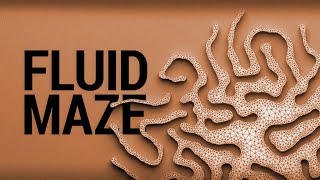
Dear fellow scholars, this is Two Minute Papers with Dr. Zsolnai. You are in for a real treat today. Because today, once again, we are not going to simulate just plain regular fluids. No, we are going to simulate ferrofluids. These are fluids that have magnetic properties and respond to an external magnetic field. And get this, they are even able to climb things. Look at this footage from a previous paper. Here is a legendary real experiment where with magnetism we can make a ferrofluid climb up on this steel helix. Look at that. And now the simulation. Look at how closely it matches the real footage. Marvelous. Especially that it is hard to overstate how challenging it is to create an accurate simulation like this. And the paper got even better. This footage could even be used as proper teaching material. On this axis, you can see how the fluid disturbances get more pronounced as a response to a stronger magnetic field. And in this direction, you see how the effect of surface tension smooths out these shapes. What a visualization. The information density here is just out of this world while it is still so easy to read at a glance. And it is also absolutely beautiful. This paper was a true masterpiece. The first author of this work was Lee Bo Hwang, and it was advised by Professor Dominik Michals, who has a strong physics background. And here's the Lee Bo huang is a PhD student and this was his first paper. Let me say it again. This was Lebo Hwang's first paper and it is a masterpiece. Wow. And it gets better because this new paper is called Surface Only Ferrofluids. And yes, it is from the same authors. So this paper is supposed to be better, but the previous technique set a really high bar. How the heck do you beat that? What more could we possibly ask for? Well, this new method showcases a surface only formulation. And the key observation here is that for a class of ferrofluids, we don't have to compute how the magnetic forces act on the entirety of the 3D fluid domain. We only have to compute them on the surface of the model. So what does this give us? One of my favorite experiments in this case, we squeeze the fluid between two glass planes and start cranking up the magnetic field strength perpendicular to these planes. Of course, we expect that it starts flowing sideways, but not at all how we would expect it. Wow, look at how these beautiful fluid labyrinths start slowly forming. And we can simulate all this on our home computers. Today, we are truly living in a science fiction world. Now, if you find yourself missing the climbing experiment from the previous paper, don't despair, this can still do that too. Look, first we can control the movement of the fluid by turning on the upper magnet, then slowly turn it off while turning on the lower magnet to give rise to this beautiful climbing phenomenon. And that's not all. Fortunately, this work is also ample in amazing visualizations. For instance, this one shows how the ferrofluid changes if we crank up the strength of our magnets, and how changing the surface tension determines the distance between the spikes and the overall smoothness of the fluid. What a time to be alive. One of the limitations of this technique is that it does not deal with viscosity well. So if we are looking to create a crazy goo simulation like this one, but with ferrofluids, we will need something else for that. Perhaps that something will be the next paper down the line Perceptilabs is a Visual API for TensorFlow, carefully designed to make machine learning as intuitive as possible. This gives you a faster way to build out models with more transparency into how your model is architected, how it performs, and how to debug it. Look, it lets you toggle between the visual modeler and the code editor. It even generates visualizations for all the model variables and gives you recommendations both during modeling and training, and does all this automatically. I only wish I had a tool like this when I was working on my neural networks during my PhD years. Visit perceptilabs.com papers to easily install the free local version of their system today. Our thanks to Perceptilabs for their support and for helping us make better videos for you. Thanks for watching and for your generous support and I'll see you next time.