Calm Conversation: Jack Howard x Kelley Long
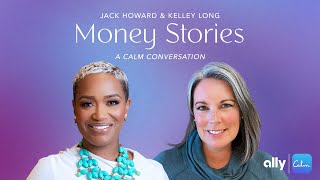
Kelley Long talks with Jack Howard, Head of Money Wellness at Ally, about how childhood money memories shape your financial behavior and stress levels. They discuss automated savings tools that make managing money easier, and why gender, culture, and race affect how people trust financial institutions. Ally's Money Roots curriculum teaches financial health through four workshops on money psychology.
Questions this video answers
August 27, 2024.
Head of Money Wellness at Ally (Ally Bank).
Approximately 14 years at Ally; the first ~10 years focused on building and leading corporate citizenship, including financial education.
Money Roots, a free financial health and wellness curriculum consisting of four workshops.
Savings "buckets" (goal-labeled sub-savings) and a spending "booster"/round-up feature that automatically transfers round-ups to savings.
Chapters
Hi everyone. Thanks so much for tuning in for another CALM conversation. My name is Kelly Long and I'll be your host today in a discussion with Jack Howard, a woman truly ahead of her time in corporate America. As the head of Money Wellness for Ally bank, you may recognize me as the narrator of CALM's Navigating Financial Stress series. Today, Jack and I are going to get into the intersection of financial health and mental well being, which if you've ever experienced any type of financial stress and who hasn't, you probably know are closely related. Our goal with this calm conversation is to provide you with practical tips and thought provoking takeaways that you can apply in your own life to help ease any financial stress you're experiencing as well as ideally improve your overall financial and mental well being. So first, let's hear a little bit about Jack and her journey to becoming the head of Money Wellness at Ally. Jack, I'm just. Thank you so much for joining us today. And I just have to say I've been so excited to meet you because my grandpa was a cheerleader at your alma mater, Michigan State and we're both Michigan girls. So I love, I love that we have so much in common and yet we probably come from very different roles and that is going to make for a really fun conversation today.
So we can't move forward without me saying go green, go white. So, so that now that we got that out the way, we can keep going.
So Jack, I'm really excited to hear about money stories because I think that's con. That concept is really important to people navigating financial stress. But before we dive in, can you tell us a little bit more about yourself and your role at Ally? Yeah.
So I serve as head of Money Wellness at Ally, which is the nation's largest digital only bank. And I bet you're wondering like, how did I get here? It's a great story. So I've worked for Ally for the last 14 years or so and during the first 10 years helped to build and lead our corporate citizenship function which with that work it went really deep into financial education. So understanding the skills of money, budget, credit, investing, all of that. Also our employee giving. So all of the work that our employees did with volunteering in the community and making donations and also corporate giving. So that was my first 10 years, got the itch to do something new and was given the opportunity for a stretch role as the chief of staff for our invest business for the president of that business at the time. So I did that for about six to Six months to a year and decided to stay with the invest business. And at the time, Ally was in the process of launching a wealth advisory business within investors. And the person who led that decided to really ground the work in behavioral finance and money psychology. And one of the first questions we would ask clients is, what is your first memory of money? And when I heard that and later got to train advisors on it, I fell in love with it. Because for me, after teaching financial literacy for 10 years, I also helped to launch our financial social inclusion work here.
So.
So going deep on having a passion for helping underserved communities, women, specifically black and brown communities, for me understand money, I felt like this was the missing piece of we all can understand the skills, but for so many people, we have subconscious beliefs, things we learned from our parents in society, all of those things can stop you from actually implementing those skills. So it made me very passionate about helping people to address those behaviors. So from there was given the opportunity to take it to our leadership again. So shout up to the. Shout out to the leadership here at Ally for always taking my crazy ideas, but was given the opportunity to pitch it to our leadership of this is something that we should offer everybody, not just our invest clients, because everybody needs to really understand their relationship with money and how it impacts their behaviors. And here we are, head of Money Wellness.
I love it. That's such a great title. And I know that's a newer job title, so thank you so much for, I mean, just a newer job title like in the world, let alone for you. So thank you so much for walking us through that. And we have like, I have so much of same conclusions from my own career experience working with people and their money. So. And I'm really grateful to you and Ally for taking this on from a corporate perspective because I do think that can really change the conversation on a large, much greater scale than just us individuals who are working in that space. So let's get into this before we kind of get too deep into it though. I've seen so many people who experience overwhelming anxiety when they start looking at their relationship with money and making positive changes. It's a huge barrier to even making behavioral change. So what advice do you have for people who are just getting started on their money mindset journey or feeling stuck and their ongoing efforts and tell us a little bit more about why that's so important for our personal growth?
I think we have to release the stories we have about money and realize that through this work, I've really begun to see that no Matter how much money you have, you can have a lot of money or not a lot of money, you still have a story. And it came from all of those things I mentioned earlier, your parents, your society, all of that. So with that in mind, we just have to be more accepting of ourselves with money and get rid of the I'm bad with money or all of the rules I think we have that make it so hard for people to talk about money and to get over the things that can make you feel scared about money. So I think the first thing is the shift in mindset to know that we're all working at it, nobody is perfect at it, and everybody has a story. And that first step is accepting your story, accepting the good things that you things you do well and the things where there's opportunities for improvement. And by accepting it and not having the shame so much, you know, oftentimes people have shame around money for the things that you feel like you may have missed in your past or decisions that you made. Let's let go of the shame and get to a place of accepting where we are accepting our current mindset and making the decision to shift if it's needed. And then from there we can move on and do better with the skills that we have. So I think a big piece of it is acceptance. We gotta get away from this being a thing where it's so scary that. And I'm sure you know this from working with clients, but they don't want.
To talk to you.
They're afraid, afraid of you. And I want to get to a place where not only working with your financial coach or financial advisor is not a scary topic, but it's something that when we talk with our family and friends, and for me, even with my children, it's less of a topic that is so taboo and can be critical and shameful to where we can really open up and look at money as a tool and an opportunity to create joy.
For sure. I mean, I heard once a really good perspective that Money is a 21st century life skill. Except. And we have so many life skills that our society natural teaches and it's one that we still haven't figured out how to teach. And so that can lead to a lot of shame. And I've worked with people on all levels of the income spectrum. And the thing I've noticed is it's not that people who happen to have a lot more money flowing through their lives have better mindsets, it's just they have more room for error. So you're so Right. We all deal with this regardless of our net worth or the dollars in the bank or not.
Yeah. Because you could be a person with a lot of money and have fear of spending it. That's a whole nother story that we never talk about. Or this fear of not having enough. So you're checking your banking account every day. So it. It swings both ways of. If you're able to develop this healthy relationship with money from a wellness perspective, it makes it a lot more enjoyable, for sure.
And to me, the mindfulness is really about shifting. I always say half of the work that I do with clients, even though I am technically a certified financial planner, is helping people rewrite the stories they tell themselves about themselves. And once we can do that, then some of the behaviors that they're like, why am I not doing this? I see other people doing it so easily. It's usually a story you're telling yourself. Yeah.
I think it's a shift in the conversation from why did you do this? To what happened to you to make you do those things. It's a big shift versus the why is pointing, you did this wrong, you did this wrong, you did this wrong versus what happened. It helps you to go into, what did I learn? Is that something that I want to carry on? And you get to make those decisions. And now you have a little bit more power in those conversations.
I love asking what instead of why. That is a big, big shift. And of course, I love the focus of talking about individual money stories. So it's something that I'm constantly working with on my clients. But tell us a little bit more about, like, this idea. What is a money story?
So essentially, a money story is your personal narrative about money. It's all the things that you've learned about money from childhood to now. And for a lot of people, you've had impactful moments with money throughout your life, within your family or even within society. And it's really just taken a moment to look at that and see from those moments, from that narrative, how does it show up in your financial decisions today? And most people don't think about their money story or even what their earliest memory of money is. But when you give it some thought and connect it to how it impacts you today, it can really shift how you work with money.
I would love to hear one of your money stories. Do you care to share?
Yes. So my money story starts with my mother and my twin brother, and I'm the daughter of a police officer and a teacher from Detroit. And my earliest memory of money is going to the credit union with my mother. And we would go to the credit union, stand in line, pull out a hundred dollars. And from the hundred dollars we would go shopping, we would go to the movies. I remember seeing Home Alone, the first one, we would go have dinner. But what I loved about that memory is that it helped me to see how money can create experiences. Money is used to create experiences with the people that you love. And my mother within my family. My parents were married for 27 years and my father, as a police officer worked nights. So my mother, when I remember her, she was always the person who was more of the nurturer in our family. She made sure we had fancy clothes for dress up day at school and, you know, created those experiences that I mentioned earlier. And unfortunately, my mother passed suddenly when I was 12. And that was a very impactful money moment for me. Not my life, of course, but also when I think back on my money journey, because at that time my family received benefit her a large sum of money from her death benefits. And with that influx of money, my dad, who was grieving at the time, and it's crazy because as an adult, I understand it now, but as a kid you don't get it. We'll get into more of that later. But he was grieving and as a way to support our grieving, he gave us money to go shopping. And I remember going shopping and, you know, getting large sums of money. And it made me feel happy to have these things. But in reality, it created a money mindset in me that when you're unhappy on the inside or if you have emotions, it's okay if you look good on the outside. So do whatever you can to show up well on the outside, to cover up what's inside. And that really shifted for me. A new money story that shifted from experiences to money helps you to show up when you don't feel good about yourself. Moving on with my story as time went on. When you spend a lot of money, you tend to not have it for long. And we eventually had some financial hardship. And I remember getting my first job, which was at McDonald's.
I love it. Me too.
See, we are hardworking women. And what getting that first job at McDonald's taught me was. And I was a hard worker at McDonald's. When I say, I mean that when I say it like I was the person who was sweeping the floor mopping. Then I got promoted to the cashier, then I got promoted to fries and you know, all of that. And I eventually helped to open up A new store. But that was my work ethic. And what I love so much about being able to control money through my work is it made me feel powerful. And I knew that know from that day. I've worked every day right since then. I've never been without a job since then, but it made me feel like as long as I can work and create money, I'll never go without. And as a person who lost their mother early, you do whatever you can to put control into places. So for me, money became a way for me to control life. And it made me feel powerful. And that kind of continued on into undergrad, where there were moments where I had three jobs at a time to pay for things. But it was always with this, I need to make money to take care of myself. And then you introduce in college, credit cards. So now I got into this, this hamster wheel of, you work really hard, you make money, you create debt, you pay it off, you work really hard, you make money, you create debt, you pay it off. And I was on this hamster wheel for so long until getting into adulthood. After graduating from college, I had about, I don't know, about $40,000 in student loan debt and credit card debt after graduating from MSU and decided, like, I gotta get better at this. And at the time, really went deep on my skills. Met with some girlfriends, and we created a money club where we just learned the basics of. And we didn't have kids then. We were learning about 529s and saving and all of that, but we wanted to be better. And I got better at money. And another hiccup came for me. When I turned 30, I was diagnosed with breast cancer. And being diagnosed with breast cancer. All of those early money memories of money is used to create experiences. Money is used to hide how you feel on the inside. All of that came back and I went into this this season again of spending now to create experiences because I'm create. I'm faced with my mortality and also spending because it made me feel better, get into the debt cycle again. And it wasn't until I moved into the wealth business and learned about money psychology and financial health and wellness, where I realized, like, I know the skills, My behaviors are the result of things that I learned about money growing up and these moments in my life where money showed up and helped me emotionally, where I, in instances where I should have gone to therapy or I should have really sat with my feelings and grieved my mother. And once I got an understanding of that connection, I'm just Now getting to a place of enjoying money and through this work, which I'm so excited to share with you, the community now of understanding your money story. That's just my story. Think of all of the people out there who have a story of their own, because we all do, and how is it impacting their relationship with money? And are they on a hamster wheel and don't understand why? So that's my story. I know it can. It's a little, you know, it's probably harder to hear than most stories, but it helped me to get to this place of really connecting my behaviors to how I deal with money.
Wow. Well, I'm just amazed at how much our paths are parallel in many ways and then obviously very different. My mom was also a public school teacher in Michigan, and I still remember the way the credit union smells. Yes. And, you know, I would say one of the things that getting into kind of the next level is in my work. I've worked with a lot of different personalities, but one of the things that I've been focused on a lot lately, lately is along the path of my own. One of my own money stories, which is my family. We always, if you could do something, you did it. You didn't pay for someone to do it. You didn't pay for a lawn person. You didn't pay for a pool guy. You didn't pay for a cab if you could walk. And I. And that was much out of necessity growing up with a mom as a school teacher, and my dad helped out with his family business for a while. So money was really tight when I was growing up, too. So we did that out of necessity. But as I grew into a professional career and was working in the CPA world and then the. The wealth world, and I had more money, I still found myself engaging in those behaviors thoughtlessly. And I started to think about, why am I still scrimping when I have more than enough money? But I would. I would explode on things. Like, I would spend 14 on a bottle of Pinot Noir from Oregon, which is my favorite. But I wouldn't scrape. Spend $14 to take a cab home. I would walk many blocks and thinking, like, that's the same amount of money. Obviously, I can't make the wine, so I guess that's how I justified it. But I work with a lot of people who have this money personality of, like, I have to hang onto it all. If I can do it myself, I should, no matter how much money is. And so that leads me to the idea of, like, there's these money personalities. Have you done any work on that? I know that's something you talk about too.
Yeah, I'm really intrigued by the hyper spender or the spender and then the saver. So pretty similar to what you just mentioned. And with the spender, that's a lot like my story of you may have a background of using money to make you feel better, you know, tying it. Tying emotions to your self worth and all, tying your money to your self worth. But what I love about what you just mentioned with the saver is you, because we think that that's good, right? Anything, everything's good in moderation. But when you're walking home 14 blocks and you got money in the bank, then we have to look at it and say, where did I get this from? And with that personality, it's this idea of when is it okay to spend? Giving yourself permission to spend and also answering this question of enough, what is enough? How much money in the bank do I need to have before I don't have to walk 14 blocks? And those are the questions that you have to ask yourself and give really giving yourself the permission to also enjoy money. And I think that's a shift in perspective as well of money being this scary topic to where you're so afraid, scarcity, you're so afraid that you'll lose it, that you make those decisions where you are afraid to buy, to get the taxi, but you can't buy the bottle of wine. Right? That's irrational. So I love those, you know, those two. And then also I like the idea, the personality of the nurturer. So that's the person. And that shows up in my family a lot of, and a lot of our underserved communities too, of you make so much money. So now you have to go back and help your family. But at what cost is there a budget that we set in place for helping our family? That's hard when you have guilt of being one of the only people to make it in your family and you want to help everybody. So all of those personalities, I love talking about it because it shows. Shows up in your relationship with money and it makes it again difficult to enjoy when you're tied to all of these rules and you don't fully understand.
It or in some cases, particularly among that nurturer, it almost blocks money coming in sometimes. And that actually is a great segue into kind of this intersectionality. So we talk about, you know, you and I are both women who grew up in Michigan, daughters of teachers, and yet we have some, some differences. And I have seen that for sure. From a cultural perspective, there's a gender perspective, there's a cultural perspective, there's the racial perspective. What do you see as that as a barrier or as something to navigate that's different and why we can't just do a one size fits all financial literacy campaign?
Such a good question, Kelly. Because we all have different experiences and specifically when we think about gender. So you talked earlier about the show side Hustlers that I had the pleasure of, of working on. And the premise of the show is it works with female entrepreneurs who have full time jobs and they're trying to make the decision if they leave their full time job and make their side hustle their full time job. So should I leave my side hustle? And what was so powerful in some of these conversations, specifically with what are your early memories of money? Is that women are taught you shouldn't really worry about money, a man should take care of you. Women are taught you want to be an entrepreneur. Why women aren't good with numbers. All of these that's lies that we've been told as women. That will stop you from being a part of the conversation. Women aren't a part of the conversations even. I'm sure you've experienced this as an advisor, women not being a part of the conversations when we need to be. So I think from a gender perspective, the things that we were taught by society and our family, it's huge in how women show up and participate in their finances, in their marriages or partnerships. Even in your careers, having the being really empowered to ask for what you want to ask the questions to understand within your family, how much money do we have? And oftentimes women are not doing that. And, and that creates your money story of not being informed.
Sure. And I mean we both were probably raised by mothers who were almost adults or possibly even I know my mom was married before she could have her own credit card. And so learning and participating in money and being an individually empowered person is a new thing for our generation. And so we've got some, some history to break too. And I think that's part of it. We have to remember that like we didn't have good examples set for us because they didn't have an example at all.
Yeah. And now I'm thinking of what I teach my daughter. It's I have a 7 year old daughter and I have a 15 year old son and how that shows up for me. And I'll admit this, there have been moments where I'm harder on my son than I am on my daughter. That's unacceptable. You know, even with saving and spending and giving, it has to be the same standard. So for me, understanding that my daughter is creating her view of money now because it starts when you're five, six, seven, she's getting that view from me about money. So the same rigor that I gave my son of, he had savings buckets. He's met with me and my financial advisor, he even started his own business. That same rigor that I gave to my son, I have to instill in my daughter and not feel like because this societal view that we have about money and women allows her to not get that same rigor. So I think it's up to us as parents to ensure that we're teaching all. Everyone should know how to spend, save and give. We should be. They should be a part of those dinner table conversations about money so that we are all on the same playing field when we have. When we grow up and work to have a better relationship with money and build wealth.
I couldn't agree more. I'm not a parent, but I am married and I would love to talk a little bit more about that because I do see how other people can impact. I mean, there actually are studies that show that your peer group can influence your actual financial situation, but particularly in your life partner, whether or not it's marriage or not. What do you see as a important and if you do have a partner, like, what are some suggestions to help get on the same page even if you have completely different money stories? Typically we do.
Typically you do. And I will say this. There is so much power in understanding your partner's money story because it helps you. My partner is a frugal person and I tend to be more of a spender. Right. So you can bump heads. And it wasn't until I understood his money story in early memories of money where you. You understand like, oh, I understand why you're that way. It creates compassion and empathy instead of you're cheap, you're this, you're, you're a spender. You're not thinking of our future now you understand where that behavior comes from. And there can. It creates a space of more empathy. But to help with that, I will say that, say this ally is creating a free financial, health and wellness curriculum called Money Roots. And one of the workshops is Love and Money. And within the workshop, we go into understanding your family history with money as you could talk about it as a couple. We talk about tough conversations with money. So if you do have opposite money stories, opposite money beliefs, if you are not on the same page with having shared accounts or not, how should you split the bills? Those are tough conversations that people need to learn how to navigate. So we give you tips on how to have those conversations. And then we ended with helping you to think through financial goals and values as a couple that you can use to create your own money model for your family. And I wish that more couples could have this type of experience because as we know, money could be a very tough thing in marriage and in partnerships if you're not on the same page. And it's. It's deeper than pulling your credit score, right? It's deeper than some of those skills that we always think about. And really we want to help people to get into understanding the behaviors and history of your partner so that, one, you have that empathy, and then two, you have the tools to move forward. And hopefully money won't be a tough topic.
It's true. Couples come to me all the time with like, what's the right way to do this? And I think we're on the. We both feel this way. I don't like to use that word. There's no right way. What's the way that works? The right way is the one that works for you. And I'm married, and my husband is a first generation American. He also grew up in the Detroit area, although we went to University of Michigan.
So did my partner. That's okay.
It is. I'm a Western Michigan grad, so go Broncos. But he, he came from a family that is super patriarchal, and that is totally acceptable from a cultural perspective. And it's not a problem in his family, but it's a problem for me because I'm the money person. And what's interesting for us is that I am the one that brings some of the, like, restrictive money issues to our relationship. So I'm fortunate I have a partner who's not. Doesn't have a lot of money stuff. But that's because his dad still to this day takes care of everything. And that can really impact things. And then there's the whole the cultural aspect of distrust and not understanding how the system works and a little bit of systemic issue there. So I think that's been a big part of the conversations that we have as we navigate some of our own financial planning and estate planning moving forward is like, this is. His family approaches it totally different than I would. And understanding that difference helps us avoid coming blindly into conversations and just fighting and thinking like you just don't know what you're talking about or you're just don't want me to be happy or. So I think that's really critical and I'm super excited about that Ally resource. I can't wait to try it.
Yeah, having that foundation is, I think, so critical. And yeah, having that foundation. I'm excited about the resource from Ally. But, you know, when you think of all of the things that we bring into our relationship around money and not having that, it just makes it so difficult. So kudos to you and your husband for being able to navigate that.
Thanks. I've had a lot of research on that, and you already mentioned some great tips for parents and children. But let's just reiterate that real quick because I want to make sure that we don't leave that in the dust. Like, what are some top strategies to make sure that your kids don't take your money stories into their futures?
So I want to share a money story that I learned and that later impacted my life as an example. So I was able to teach a money story workshop to some of our students here at ally. We have a partnership with historically black colleges through the Thurgood Marshall College Fund. And they did a money story workshop with me. And when I asked, what is your first memory of money? One of the students said, raise his hand. I remember my parents taking my money from the tooth fairy. And from taking my money from the tooth fairy, it was just. They just took it. I never understood what happened to it. It made me feel like I had to hide my money and I can't trust people with money and that, you know, And I showed up in my mind, judgmental, like, oh, that's horrible. Why would a parent take your money from the tooth fairy? Fairy. Fast forward. A few months later, after teaching that my daughter lost her tooth. And in the family we were scrambling to get cash for, we ended up giving her more than you should get for a tooth. And once she got that money, with her being seven years old, I took the money just because I didn't want her to lose it. I. I didn't want to, had no intent on spending it. I didn't want her to lose it. But I failed to talk to her about it. So for her, it's the same thing as the young man who told me his money story. It's created this feeling of, they took my money and I don't understand why. So I immediately connected the dots. I put an IOU in her piggy bank of, hey, whenever you're ready to spend this money. We can go use it. Mommy has your money. But I talked to her about it, and I think it's so important for us to realize as parents, those small things like the tooth fairy, show up in so many different ways as parents because you are doing the best for your child. It could be that you took the money to pay bills. You could. You took the money to keep it safe. Whatever it was, I'm sure there was good intention. But not communicating that to your child allows them to create a story and run with it that then shows up later on in life. So I would say for your kids, first, being mindful of what we teach them, how we talk about money, let's make it a conversation. And for both of my kids, I try to have these conversations early. We'll create little spend, save, give buckets where they get an allowance and you have to put so many dollars in each. And from there, with my son, who's older and has been on this money journey with me longer because he's 15, it's. He's been a part of my conversations with my financial advisor. He has. He knows my net worth, dare I say. But we've had these conversations because I want it to be. I don't want it to be this scary topic that we never talk about. And now he is free to have these conversations. And as my daughter gets older, I'll do the same thing with her. But I think the biggest tip is we need to realize that the impact that we do have on our children with how we deal with money. And then second, once you realize the impact, let's just start having conversations where they can feel free to ask questions. And you're also bringing them into more of the money conversation conversations so that when they grow up, they're prepared to deal with money.
We have talked a little bit about, or actually at great length about gender influencing our financial perspectives and behaviors. But you mentioned earlier that you've narrowed your focus in some ways to dealing with black and brown communities. So can you get into a little bit about how you see those cultural backgrounds impacting people's financial behaviors and discussions and.
Definitely. So when we think of money, I'm going to talk specifically about African Americans because I'm an African American. And when we think of the wealth gap for African Americans compared to white Americans, for a white American, their net worth is about $285,000. For African Americans, it's about $45,000. That is huge. It's huge. And in no way do I Want to say that I can solve that problem in this conversation or with one single program. It's a systemic program, a problem that needs to be addressed. However, when we think of money psychology, I think making the connection to those impactful moments in the history of America, and specifically African Americans, that will impact how you show up with money. So when you think of slavery that you gave provided labor for free, when you think of the collapse of the Freedmen's bank, where you put money into a bank account and it was stolen, when you think of redlining, when you think of all of those things, those are moments within history that taught you to not trust financial institutions. That taught you to, for a lot of people, not trust investing because it's too risky. And as you know, one of the largest factors of wealth building is investing in home ownership. When you think of redlining and the impact that that even had on homeownership and generational wealth. So all of those things were passed down generation to generation to generation. And I even see how it has showed up in my family with the decision of my parents. They sent me, I grew up in Detroit, my parents sent my siblings and I, four of us, we all went to private school. And a big piece of that was having trust in the educational system at the time. So you want to make sure you're providing that. So just all of those small moments and live in a community where your house may not have been appraised for as much that it would have been in another community. When you sell your house, you're not getting that wealth. All of those things passed down really not only impact you from a financial standpoint of the actual dollars, but it also impacts you mentally of, can I trust this? Do I have to take down my pictures in my house when I try to sell it? Think of the mental impact that has on a person when you realize that we're in a society that doesn't look at things equally and it can impact you financially and mentally.
You know, the banking institution trust thing is so powerful. So having you as the face of that can hopefully help some of our citizens also to find the trust that they need to find those wealth building tools.
Yeah. And you know, working for Ally, I've had the pleasure of helping to build financial literacy curriculum where we go deep into skills in the community and helping to build our financial social inclusion work. And now the work that we're doing around money psychology. And I think it's so important for financial institutions. I hope Ally is the first to do some of this work. Around money psychology. But I want everybody to have this approach because I really think we're beginning to see a shift in how we talk about money to where it's even the work that you're doing with Calm, Kelly. So I have to give you a shout out for your new series that I absolutely adore, specifically your session on the money stories. But having more resources like this where we can have a workshop where you can go deep into your money story and understanding love and money, or you can download the CALM app and listen to short series about various money topics that historically you would never even think was a thing, and now it's available to you to help you with financial stress and anxiety when you feel it. So I want to see more of this shift in financial services and financial literacy to where we're taking a more holistic approach to looking at money from a wellness perspective. Because it's just not about the numbers, it's not about the skills. There's so much more that goes into it, and I'm hopeful. Fingers crossed, Kelly. Is that as more of this work happens, we'll begin to see a shift in how people feel about money, the enjoyment they have with money and hopefully an increase in their bank accounts and eventually making some impact on that wealth gap.
Yeah, I think enjoyment is a huge part of it. So we know people can. The tools are out there. Ally's got them. There's lots of other resources to build the skills to learn just how it all works. And then we're building that library of resources for money psychology, both through the call map and some of the resources that you're working on and releasing through Ally. And. But then let's talk about a couple practical steps, because once you've got all that in place, there's still this, like, well, now what do I do? And I found that a lot of people, when it comes to taking steps towards their improvement, they get stuck in analysis paralysis. Like, what do I do next? And no one is paying me to say this, but, like, a lot of my clients end up opening Ally bank accounts. And I, I like to stress the importance of, instead of worrying about getting the perfect emergency fund and the perfect vacation fund, it is helpful to have goals to work towards and the little things add up, but the ability to label those things separately and I have to keep a spreadsheet is something that I've always talked about and I always called it buckets. And then I found out that Ally actually has something they call that, too. Can you tell us how the buckets work?
Yes. So we have savings buckets that are tied to your savings account where it really helps you with automation and visualization. And I just have to stick to automation just for a second and why I think it's so important. So for me, as a person who I like to spend, but then I also have a very strict budget, I'm like, it's a lot going on. Having automation helps me to take Jacqueline out of it. I know every month for my Ally savings account, a certain amount is going to to my savings account and then it's going into my buckets. And I checked my buckets before I came on this show just to see how my buckets are going. And you can make them for anything. So it allows you to separate your savings account into goals like you just mentioned, where you're able. For some people, it may be saving up for the next concert, the next Beyonce concert, or saving for your emergency savings, saving for that vacation, saving for the holidays. But it allows you to visually see your progress and track it. And what I love most about it is that you can automate it. So it takes that human error out of me, not transferring the money, not reaching those goals. And I know for me personally to see that money grow and grow and grow month after month makes you feel good, especially with that visualization of the different buckets. So definitely a great tool to check out from Ally.
Totally. I have several buckets myself. Most of them are practical ones for taxes. One is to pay for windows for our house. But I have one for my car that when I bought it, I just started putting $25 a month into automatic first of the month and that's for repairs and maintenance and eventually a new car purchase. But I recently had to have my tires replaced and nobody likes to spend that money. But it was a huge relief to know that the money was there and designated for that. I wasn't having to compromise my vacation, I wasn't having to compromise my sushi budget for the month in order to pay for tires. So I that can really alleviate some financial stress even. There's never, it's never going to be fun to buy tires for your car, but that, that can really help.
But I love what you said, Kelly. It helped you to alleviate stress and anxiety because oftentimes so much with money, a lot of it, if we can prepare as much as we can in advance for the things that may happen, it takes away the stress in the long run. So creating that bucket, although nobody wants to buy tires or save for their car, you creating that Bucket made buying tires a less stressful event. So I love just tying it back to that piece of it of really making that connection between money and what can we do to alleviate stress and enjoying it Again, dare I say you enjoyed it. Enjoy buying those tires.
It made it more of a neutral experience.
Neutral. It wasn't hard.
So automation and giving yourself permission to save for multiple goals at once, even if they're kind of ambiguous. Those are two tips. And then one other thing. This was a money saving trick that I've been doing since the 20th century because I started off my money journey with a checkbook where I wrote down and I had a debit card. At the time, the credit union paid 25 cents for every time you use your debit card. So they totally ingrained that behavior. But of course I exploited that to my benefit. But I would, whenever I wrote down a transaction in my checkbook, I always rounded up to the next dollar when I carried it over so that then at the end of the month when my statement came, I would balance it all out and there would be like $30 extra in my actual account versus what my checkbook showed. And then I would move that money over into my savings. And I always tried to find a way to replicate that when I shifted away from keeping a checkbook and keeping a direct log of every spending. And then I found out that there' tool for that at ally and I think it's a super powerful way for the little things add up. So tell me about how that works.
So it's exactly what you said, but it's through our spending account where it's got a booster where we, it will make that transfer from your, your roundup within your account and transfer it to your savings account again automatically. And it takes again, just imagine you said it was $30, so we're doing $30 over 12 months. Those things add up. And as a person, we're all so busy and we live in this digital world. Why not take advantage of tool where you can get extra dollars when you, you really aren't missing it because it's a small roundup. So again, the savings buckets and the boosters are both tools that help you with visualization and automation to get more money in your savings.
That's I love it. And just before we wrap up, just a real quick question about discovering and learning our own money stories. Where should we get started? Yeah.
So I think the first thing you could do is go to Money Roots, which is our new curriculum that we're launching. Again, it's a financial, health and wellness curriculum that is completely free to the community, to our customers, to our employees. We want everybody to consume this content. It consists of four workshops. The first one is understanding your money and emotions. So a lot of the things we talked about, Kelly, with stress and anxiety, we help you to identify it and come up with tools to help navigate it. The second one is your money story, where we go deep into understanding your early memories of money, things you learned from society, your parents, and how it impacts you today. The third workshop is around goals and values. So really understanding what are your values as a person? What are your core values? What are your financial goals? And then the tricky thing is how does that show up in your spending and your saving? I am a firm believer that specifically for that workshop, oftentimes we're spending in areas that are not in alignment with our values. So again, my goal is to get you back to some joy with money and to get you better aligned so that not only are you saving more, you're also spending mindfully. And then the third workshop is around love and money, which we went into detail earlier. So all of that is launching through the ally money roots curriculum. So I want everybody to start there. Let's start there, having those conversations. And for those who take those workshops and see that you may need a little bit more help, maybe meeting with a financial advisor, a financial coach, or someone from the financial therapy association, because I do respect that for some of these topics, it can bring up trauma, it can bring up emotions. Even for me, talking about my money story, I've done it a few times, so it's become easier, but it's an emotional topic for me. So I want to make sure everyone knows that. There are also resources available to help those who may have a harder time with some of these topics. But I want you to start thinking about them and addressing it because in the long run, it helps to help you to have better behaviors with money and hopefully in the long run, really improve those skills to build wealth.
Absolutely. I think the key overarching theme here is it's not about not spending money to be financially well. It's about making sure that you are taking care of all three versions of yourself. Past you, if you have debt, present you with the enjoyment, but also future you. And so that when you do spend money today, it's from a place of empowerment and mindfulness and not out of, you know, self soothing or in some cases, you know, there's some other, like time management stuff that needs to be taken care of. But there's a wealth of, of of resources out there with allies. Money Roots. Super excited for that launch to help you kind of get to that root cause of what might be causing some of the challenges both in your day to day relationship with money, which is the more spending and saving but then also maybe in a bigger picture in that overarching long term wealth creation that's holding you back from feeling comfortable investing or feeling comfortable putting money into like your 401k or an IRA. So I think addressing that emotional relationship can help free you up when you have all the knowledge, the tools are out there to do what you know you should do. Now. Overcoming that internal barrier can really create a lot of long term financial wellbeing. So super excited to see all of that.
Thank you and congrats again to you on your work. So you're doing something very similar with the work at calm. So I think we're definitely headed on the same path of, of creating resources for the community to have this better relationship with money. So I have to shout out CALM Again, thank you.
You know, I'm appreciative of you and Ally. I think that's really powerful opportunity. When we get big corporations behind this work, it's even more available and accessible to all communities. So thank you for your work and thank you so much for all of this. I loved our conversation. We could talk forever and ever. I know we need to wrap up, but before we. Any final thoughts?
Final thoughts. I would just say I'm very proud of the work that we're doing here at ally. I'm very proud of our partnership with calm and I really think that this is just the beginning of a shift that you're going to see when we think of financial literacy and having conversations about money. I really want it to be, I want Ally and the work that we're doing to be a safe place to talk about money. And I'm hopeful that Money Roots and our partnership with CALM is a great example of it.
It.
So thank you for the opportunity to have this conversation.
Thank you. And I, I know with you at the helm that those dreams and goals are well within reach. So thank you so much for being here. Thank you to those of you who have listened or watched and we will wrap it up from here and wishing you all fabulous financial well being life.










