Calm Conversations: Raymond Braun and Dr. S.H Moon "Pride & Resilience"
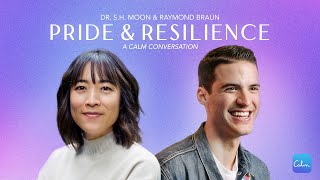
Raymond Braun talks with clinical psychologist Dr. S.H. Moon about Pride, resilience, and mental health in LGBTQ life. They discuss grief alongside celebration, the role of chosen family in fighting isolation, and practical tools like grief journaling. Moon points to resources including the Trevor Project and PFLAG.
Questions this video answers
June 5, 2024
Raymond Braun (CALM correspondent) and Dr. S.H. Moon (clinical psychologist, DEI specialist)
Chapters
Hello, and Happy Pride. My name is Raymond Braun, and I am a CALM correspondent leading today's conversation that is all about Pride. This conversation is for everyone. Whether you're part of the LGBTQ community, an ally, a a parent of an LGBTQ child, or someone who just wants to learn more about the intersection of Pride, LGBTQ identity, and mental health, this space is for you, and we appreciate you joining us. Today. I'm in calm conversation with Dr. Moon, a clinical psychologist, DEI specialist, and instructor at some of the world's leading institutions on mental health who really focuses on creating inclusion, understanding, and acceptance for bipoc and LGBTQ communities. Dr. Moon has contributed several programs to Calm Health and to the Calm app, and we're so grateful to have her here with us today to talk all about LGBTQ resilience, mental health skills, and some of the challenges that might come up for you during Pride season. I hope that you find this conversation meaningful and that you're able to pick up some new tools to assist with your own mental health during Pride. Doctor Moon, I am so thrilled to be speaking with you for today's Calm conversation and Happy Pride.
Happy Pride.
Maybe that's where we should start. Actually, I know that's a very common greeting, Happy Pride. But this time of year can bring up a lot for people. What kind of conversations and themes are you seeing with some of your clients and in the work that you're doing around Pride season and mental health?
Yeah, I love this month. I think a lot of the work that I do is in the mental health space with clients. And so a lot of the topics and themes we talk about are a lot of the difficult things that our community can go through. And I think that the special thing about Pride is that it's really focused on how can we celebrate our community, how can we celebrate who we are, be authentic, whatever that means to us, and really reflect on how far we've also come along in our journey towards equality and justice and inclusion for the LGBTQ community. There's a long ways to go, but I think it's important to often pause and really reflect on the progress that we made, the joy that we're living in, and the things that are fulfilling for us in our community, because life hasn't always been happy and joyful for us historically.
Such an important point about taking time this month and really all year long to be able to reflect and be in community and celebrate our collective resilience and learn our history. My entry point into the conversation is I produced a documentary called State of Pride, which is all about the origins of pride in the United States. And then we traveled across the country and spoke with people of so many different backgrounds, identities, and experiences about how they related to Pride. It brings up a lot of powerful emotions and experiences for people. And I'm curious, because there's so many places we can take the conversation today. What are some of the key takeaways that you hope that listeners will get out of this conversation? Or what can they expect from how we're exploring the theme of pride and mental health?
Yeah, that's a great question. I think my hope, and in a lot of the conversations I have around Pride, or just LGBTQ mental health, is where can we find the power, the empowerment, and the resilience that lives within us already? And I think that when we think about our community and the sense of pride that we may feel because of discrimination, stigma, anti LGBTQ laws that are still in place, it's easy to forget the good, the positive, and not that it takes away from acknowledging the difficult and challenging things that our community has to go through, but what are the ways in which we can live a fulfilling life and be as authentic as we can be within ourselves and in our relationships with our family, in our workplace? I think thinking about, well, being across different contexts and environments is really important. And so I think if there's anything that people can take away from this conversation is where do we find that resilience within us and in our communities?
If you're comfortable sharing, I'd love to start with you, Dr. Moon. I'd love to hear more about your own experience and how you relate to pride.
Yeah, I think it's. I immigrated to the United States from Korea at the age of three, and so my exploration of my queer identity, sexual and gender identity, didn't begin until later in life. And so my early journey was of exploring my racial identity and then my queer identity. And so it happened in this kind of linear fashion and then all together at once. But, you know, when I think about pride, it also comes with a sense of grief of what hasn't happened or what I didn't get to experience in childhood that maybe I wish I had as a queer person, Whether that's being just aware, self aware of who I am or being able to have more gay, lesbian, trans friends. Growing up and being a part of that community and really normalizing that aspect, it just wasn't there for me growing up. And so when I think about pride and thinking about my own journey, it's being able to be with People who know me, who see me, who validate me and affirm me. And my. The work that I do professionally mirrors what I try to do in my personal life, which is, can I find people, my people who can create that environment with me? And then for my clients and the work that I do in the mental health space, can I be the one to create that space for someone else? And so I think the sense of pride is both personal and professional for me. I cannot separate the two.
It's integrated.
Yeah. Yeah. But what about for you, Raymond? What is pride? I'm curious what it means for you.
Well, I really relate to so much of what you said around grief of sort of lost experiences or rite of passages in childhood. I grew up in a small community in Ohio, and I just think about the fact that even during high school, those. Some of those seminal experiences that you see in pop culture around, like, prom, your first kiss, having a crush, maybe that crush is reciprocated, like all of those things relationally and romantically. I didn't have access to just by nature of being in the closet and being terrified of sort of being found out, you could say. And then also growing up, just really reflecting on what does it mean for my identity that from a young age, when I started to discover who I was, I was bombarded with messages from broader culture and at the time, a political landscape as well, that was really demonizing or othering this in a way that created a kind of shame. So you. You have this kind of growing sense of personal identity alongside a growing sense of shame, confusion. And I'm sure that there are still many ripple effects for how that manifests for me today. And so for me, pride was this beautiful antidote and sort of questioning of a lot of the cultural programming that I was just enmeshed in as a child. And some of the very first images that I ever saw at Pride remain so vivid in my mind of, you know, couples together with a child, people dancing with such exuberance that you can tell that they're just fully in their body and experiencing the present moment, people fully expressing themselves in ways that I'd never seen as a kid kind of growing up. But that showed me an expansiveness and a creativity in our community that I didn't realize exist. And so pride really was a sort of cultural deprogramming in terms of helping to combat the shame and helping me feel more connected with community as well. But a big lesson for me as I started to embark on this work was really just realizing that while outside of our community, people might say lgbtqia, referring to one group. We are anything but a monolith. And even within each letter of the acronym, the, there's so much diversity in terms of, to your point, cultural background, experience, so many different layers of identity. And so I've also been really passionate about how can we get to know each other as a community better, you know, as a gay man, the kind of challenges or identity, the experiences that I've had growing up in the Midwest, like, wildly different from my trans friends that I met in la, for example. And so how can we create more inter community dialogue? And that's one of the many things I love about the work that you do.
I love what you're saying in terms of just learning from one another. I think when you look at the research around LGBTQ mental health, representation and community is one of the two biggest factors that can help our community members feel safer and more authentic. And it improves mental health when we have people around us that we can share stories with. Even, you know, no journey is the same. I mean, I'm sure, you know, in terms of coming out and family and culture, but there's this underlying thread within all of our stories that really connects us and connects us in such a powerful way. That's why I think Chosen Family is so important for us, is that when we can't find acceptance sometimes within our own family space systems, we really do find that in our friendships and in our partners. And I think there's something to say about how important supportive communities are for. For us.
I feel like I've heard this variations of the quote of you are the sum of the five people that you spend the most time with or the people that, you know, you consume their content or follow. And could you speak from a kind of mental health and positive psychology perspective about, let's say someone is in their coming out journey or they are moving to a new location. They haven't created that LGBTQ inclusive chosen family yet. Like, what are some of those first steps that people can take? Or what are some of the positive psychology principles that you can utilize to help form that community of support around you?
Yeah, I think the biggest thing I would say is it's a scary thing to do. It takes risk, and I think it takes vulnerability and looking. Even for our own LGBTQ community members, it takes a certain level of, I would say, resilience and confidence because we have been historically rejected by majority culture. And when you earlier talked about how ingrained that can be sometimes and the deprogramming of that, it takes a long time. Even when we look for friendships and community members, that sense of, oh, am I going to be rejected? Am I going to be accepted? Is still somewhere within us. The vulnerability aspect of reaching out, finding people who are part of the LGBTQ community takes a level of vulnerability that I think we kind of have to work through and lean into almost when we try to find that community. I think in the age of social media, it's easy to. I think social media is such a positive platform. When you don't have people in, within your physical kind of radius where you can find friendships and connection, it's great. But if that limits us from reaching out to real life people around us, I think it can be detrimental. And so instead of falling back into just finding connection on social media, I think it's. If you can to reach out to different organizations, you can. I've always encouraged my clients. You know, you can Google pflag, Google Trevor Project, Google LGBT kickball, kickball leagues in your community, and you might be able to find something, but it takes that one extra step of having to look for it. You're not. Sometimes we live in cities where we're not. You know, you go outside and you might not see very many queer people or be able to readily visibly notice where those spaces are. And so I always say, find your people, even if it's two, three, even that one person will make a significant difference in terms of decreasing loneliness and isolation, which is very common for LGBTQ mental health concerns, is if we get too isolated, we feel alone, and then depressive symptoms and anxiety can increase through that. And so I would say if you're moving to a new city like you asked, or looking for a new community, finding even that one person will make a huge difference.
Such a great point. And with it being pride season, a lot of times communities have even more programming, cultural events, opportunities. But you're so right, that can be intimidating. And I think what you said about finding that blend of people that you can follow or connect with online, who maybe share similar points of identity or who are openly sharing their lives in a way that you can find points of connection, and then also maybe utilizing that to learn more about the community and build the confidence to then be able to go out and IRL in your community and, and connect, because I think having that blend is so important. And then if you are out and you are in a different stage of your journey where you're more comfortable waving the. The flag, so to speak, or marching in the pride parade, Just also being aware that you never know who might be inspired by your example. I think people have a ripple effect every time they share their story or they stand in their truth that they might not even realize. Because in my experience, when I was in the closet, I was so hyper focused on messages I was getting from teachers. Family, community, are they inclusive? Would they accept me? Whether it's a teacher having a sort of Ally sticker on their door or speaking in a positive way about a show with LGBTQ characters? I mean, there's so many different ways, but I think a lot of people are really attuned to that when they're in the closet.
Absolutely, Absolutely. And I think you bring up a really good point about coming out is that we don't. Coming out looks differently. It can be coming out just to ourselves. It can be coming out to only friends without family. It can be coming out to family members. And I think it's important to acknowledge that when we think about Pride Month, we celebrate it in very different ways, and that is okay, depending on where you are in your journey. And I just want to normalize the fact that, you know, different, you know, acceptance. What we need individually is self defined. And I know it's, you know, we couldn't look to movies, films, people around us at Pride parades and how they might express their sexuality or gender. And at the same time, we have to honor our own journey of privacy and authenticity and the pacing in which we want to come out.
That is such an important point. Coming out means something different for everyone. It can be on a spectrum. And I hear from some young people who don't even like the term coming out or feel like I'm just living my life. And so I love that you talk about how it's deeply individual, and then that's going to lead to different experiences around Pride and sharing your own kind of identity in that conversation. What are some other things just working day in and day out with the LGBTQ community on mental health and positive psychology? What are some other conversations or insights that you think maybe we aren't talking about enough or that you'd love to shine a light on for the broader community during Pride?
I think it actually goes back to what you said earlier. Raymond is around grief. I think that's a mental health theme that often isn't highlighted for the LGBTQ community because there's this misconception that if you grieve something, that means you regret where you are right now, or if you grieve something that you're not appreciating where you are right now. And I think that's a misconception because of course, anytime we come into a new life stage or a new understanding of ourselves, so for example here when we're talking about gender and sexuality is that we are letting go of something or we are shedding something. And it's okay to grieve the things that we might have not experienced or grieve the things that we might have not known at a younger age. It's okay to be sad about it. It's okay to, to mourn the loss of. You know, a lot of times I talk with my clients about mourning the loss of a heteronormative life, the easiness it might be to be in a heterosexual relationship that they won't have because they're in a same sex partnership. And it's okay to grieve that it's a loss and you can still celebrate who you are. It doesn't mean that your same sex partnership is less than, or that you're not appreciative of where you are now or that you have shame about it. It's that, you know, we live a life of different seasons, and different seasons comes with grief and loss and mourning of something. And so I think we need to create more space for the grieving as we talk about what we're thankful for and grateful for. And instead of avoiding the difficult emotions of that, I really offer a space for my clients, people I work with, to have that space to feel the emotions that aren't often talked about or discussed within our community.
I think this is such a profound and poignant point from you because I can't think of any instances in which I've seen a pride conversation juxtaposed with a conversation about grief. The sort of dominant cultural message around pride is really vibrant and colorful and celebratory and community and reflective. But that grief makes so much sense in terms of expectations or even just the comparison that can come up sometimes if you are in a different stage of your journey of self acceptance and actualization, and then you're seeing all these people in your community who seem to be living such whole vibrant lives. And there's that comparison. So can you just share a little bit more about, like, how do we experience and process that grief? You know, in my, in my life, I found that grief can come in waves. It's not like, okay, I'm grieving this weekend or I'm grieving today and now it's done. Like different things can bring it up and it's something that is sort of an ongoing inner dialogue. But, like, can you just share a little bit more about tools or how we can think about that grief?
One of the biggest things I try to encourage my clients to do when it comes to grief is even just asking that question of, what am I grieving? Or what have I grieved Already opens up a space for us to process and reflect on what we've experienced. I think life moves so fast, especially I think, for the younger generation, too, where we are going from one thing to another, and then we have our phones, and then we have tv, the Internet, where everything is just at our fingertips, and it's so easy to not stop and pause and reflect. And so the biggest barrier to processing grief is time. People don't give it time and space. And I think that's what therapy is for, is to have that hour in the week to create that space. But not everyone can access therapy or, you know, for whatever circumstances. It's not the right context for them. But something that I've done actually with my own therapist is she introduced this grief practice with me where she said, okay, every morning, just set a timer for five to 10 minutes, find a cozy part of the room, light a candle, turn on some music that's calming and relaxing, take your journal and just start writing the things that come up as you ask that question. What am I grieving? What have I lost? And it's just five to 10 minutes. It doesn't take that long for things to come up, but to start listing or journaling what those things might be.
Dr. Moon, that's such an interesting concept to me, this idea of morning reflection where you're actually creating space for yourself to process some grief. I've heard a lot more about the concept of morning gratitude than of, like, taking space to grieve or to sort of process those difficult emotions. And I'm really glad that you bring this up, because I think it's so important. It can be uncomfortable and it can be hard and it can be scary. And sometimes I'll avoid going into that space because you do have to wrestle with more difficult emotions. And so I think many of us have heard about the concept of morning gratitude or gratitude journal, but can you share a little more about why it's equally important to go into those spaces of sort of excavating the difficult emotions or really feeling and processing that grief?
That's a great question. And I think it's. Yes, like you said, it's equally as important as the gratitude journal. I Think when I, you know, started the grief journaling and grief practice, I did always end it with something that I'm grateful for, because we do, I think, need to hold both with equal importance because we don't want to get stuck in the grief either. And you don't want to also get stuck in just the gratitude and avoid the painful or the challenging or difficult things. The important thing about the grief part is what I think about difficult emotions in general that we have to lean into is if we avoid what's difficult, what's uncomfortable, sometimes we might make decisions based off of limited information. So if we only process the thoughts and feelings that are good and avoid the negative and challenging, we're not really accessing all parts of ourselves that can help make the best decision for ourselves in our lives. I think we need to be working towards self awareness around all our emotions, all our thoughts and feelings, whether helpful or, I mean, whether positive or negative emotions, quote, unquote, all of that is important information for us to make the best decisions for ourselves. So because if we only focus on the gratitude and the good and there's pain underneath that we're not talking about, we might make decisions that we might not make. Typically, if we were to process the hard stuff, we might make decisions out of pain instead of processing all of it and then taking a step forward with all the information that we have about how we're feeling and thinking. And so I think the grief journal is kind of a reflection of we have to lean into the hard stuff and the good stuff to really know who we are and know how we want to live our lives as authentically as possible.
That's human. You experience the full range of it.
Exactly, exactly.
If you're comfortable sharing, Dr. Moon, I would love to know if there's any examples you could provide of topics you explore in your grief practice or things that come up with your clients. Just for someone like me who this is a new concept, and maybe having a couple thought starters or examples of what kinds of things people are exploring would be helpful.
Sure. I think you gave an great example earlier on of important milestones as a teenager that people weren't able to experience. So I think prom is a big one. Or just dating experiences. I think a lot of LGBTQ people I work with in my practice are young adults or adults who are just learning what it means to date as a queer person and wish they had that experience of crushes, being allowed to have crushes when they were younger. Maybe they would know how to be engaged in a romantic relationship in a different way as an adult, if they started earlier. So I think that's a grief topic that often comes up. One other big topic that comes up is around trying to have children as a same sex partner. So there's a lot of grief in that around. There are different processes, financial resources you need, information you need, and a whole different pathway to if you want biological children or even adoptive children. It's a world that isn't talked about as much. And so grieving the process of not being able to have children the way that we were taught growing up, like a mom and a dad and what that looks like. And so I think that's a big topic of conversation with some of my clients. So those are just some examples of. And I think it goes down to wishing for affirming parents or caregivers. And yes, they love their LGBTQ community, their chosen family, and they grieve not having family members who are affirming and supportive.
I think you've touched on a topic that is so ripe for exploration and conversation in our community, which is the relationship to family, to parents, to how your identity has or has not been embraced, accepted, nurtured. And there's so much here. And so I'd love to dive into it with you on kind of two dimensions. First, from the perspective of an LGBTQ individual who's thinking about the relationship with their own parents, but then also for any parents who are listening, you've developed multiple programs for calm, one of which is designed specifically for parents who have an LGBTQ child or a child who's questioning. And I think it's so important for us to bring those folks into the conversation too, because it can be intimidating and it can be scary to know how to navigate these conversations. And so why don't we start with lgbtq identifying folks as they're reflecting on their relationship with their parents during Pride season. What are some things that come up with your clients or things that you would recommend to people who might have a complex relationship there?
I think there's this misconception too, that, you know, as long as we accept ourselves, it doesn't matter what our parents think or it doesn't matter what people think. And to a certain degree, yes, that's, that's true. And research around LGBTQ + mental health and youth especially show that having affirming and supportive family members, caregivers, parents, lowers depression and lowers the rate of suicide. And so the studies are there that having supportive caregivers and parents has a huge impact on LGBTQ plus Mental health. So I really like to normalize that. If one of my clients who identifies as LGBTQ is experiencing depression or thoughts of suicide or anxiety, that it's not because they did anything wrong, that it is not their fault for feeling that way. It's that there are environmental factors that affects their mental health. When it comes to parents and caregivers, it probably has the biggest impact on our upbringing. This goes even beyond just the LGBTQ identity is in general, having supportive and affirming parents on all aspects of ourselves is really important. And then when you add in the LGBTQ identity piece, it adds another layer of complexity to the parent child of relationship that I think a lot of parents when they have kids, don't process or reflect on. Oh, okay. If I have a child that comes out, what do I do? And they don't prepare for that. And so one of the things I tell parents, moving into the parents portion, is kind of validating that they didn't get parenting skills or classes on how to support an LGBTQ kid and child, and it's their responsibility to learn. Now, I can keep going with the parents aspect, but I want to take a pause and see if you have any follow up questions.
There's, there's so much there. And I really encourage everyone to dive more into your work as well because you've developed some amazing programming and content for both parties in this conversation, the, the child and the parent. But I'd love to just ask one follow up question on the, on the child piece. Let's say someone's listening right now who is in that grief process of maybe not receiving the kind of affirmation, love, support, care that they deserve when they came out or started to share their journey of exploration, identity, what are some things that they can do to try to address that, to heal, to process?
Yeah, that's such a powerful question because it's more common than not that this happens. And yeah, I just have so much empathy and compassion because I went through that too. And so I can kind of connect to what it feels like to not have affirming and supportive parents and family members. And I think what I would say to those listening in is, gosh, there's no one pathway, right? And some parents come around, but some parents don't. And so really taking care of your own mental health is priority. So if that means, like we talked about earlier, finding community, finding people who do accept you and affirm you, that is key. And sometimes there are uncles or aunts, grandparents who kind of fill in for the affirmation too, or teachers often are great affirming older adults who can really be there for you or mentor. So when you don't find it in your parents or caregivers, I don't want you to be alone in that and isolated in that There are a lot of people who are in your position. You're not alone. And seek out those around you who can offer you that empathy and compassion and support that you might not find in your parents. And that could be in a therapist or counselor, too.
I want to take a moment to just celebrate and affirm you, Dr. Moon. I mean, thank you, first of all, for sharing that insight into your own personal experience. And I think we spoke earlier about the power of representation and the fact that you went through that experience that I know so many people can relate to, of maybe not getting that affirmation or support in the ideal way you'd love. And yet you've built this really vibrant, rich life and are also now utilizing your skills and expertise to give back to our community and to help and heal others. And so I think it's such a beautiful example to the point that you just made, that you can still find that community and that support and that affirmation and build those tools. And so, again, I just. I thank you for all the work that you do for our community, all the ways that you help us give back and heal. And I would imagine and hope that that is also part of your own healing journey, because through serving others, we're also serving ourselves.
Absolutely. I imagine for you, too, filming the State of Pride, I wondered if there was a personal kind of journey for you that you went on that you'd be open to sharing.
Oh, absolutely. I mean, it had me reflecting on so much, and I. The foundation for it really was knowing how I felt in the closet, feeling like I was the proverbial only gay kid in. In my community. And at the time, the few images that I saw of gay men specifically were on the news, and they were all related to violence and hate crimes. And so I originally kind of associated my own identity with fear of violence and exclusion. And I'm really grateful that my family has supported me on this journey and my mom is in the documentary. But just like every family, we did have our journey and our process, and I wanted to give them the same flexibility and time and grace that I had to give myself, because when I first started grappling with my identity, there was a lot in there, and I wanted to ignore it. I didn't want it to be true. I needed time and space and therapy to get to that point of acceptance. And so I think it was a hard lesson, but important for me to recognize that you need to, in many situations, provide some of that grace and understanding and flexibility to your family. And that's something that I saw in a lot of the people that I spoke to in State of Pride was they were at various stages of that journey. It's equally important, though, to recognize there's a line, I think, between grace, compassion, empathy for family as they're, you know, processing maybe their own grief or new expectations with not being in a situation that is harmful or abusive or toxic. And it's, I think, really important to speak to a professional or to a trusted friend to make sure that you're always sense checking that, because I think some people that I spoke to were holding out hope that something might change, but it was like, this is not a environment that you should be in right now. You. You deserve love and acceptance. And, and so, yeah, it's. It's nuanced, but I think that's a, That's a real challenge that a lot of people grapple with.
That I saw. Absolutely.
Yeah.
I think you bring, I'm so glad you brought up that the kind of the distinction between being patient with your caregivers and not tolerating violence or abuse, that's a different story, you know, And I, you know, I think thinking about it from the perspective of the parents too, as you're saying, they do, like you're saying, go on a grief journey too, what they thought their parenthood would look like for them. And I also, when I work with parents of LGBTQ + kids, like to kind of reflect with them on having the therapeutic space to process that versus processing their own grief with their kid and their child and having healthy boundaries as they work through their own pacing and their own journey as a parent. And it's important, and this is the key thing I tell parents is, and usually I'm working with parents who want to support their kids. And the key thing is if you don't take care of your own mental health and your own well being, you will not be able to be the best parent to your LGBTQ kid. So as you're supporting your child, it's important also to show yourself compassion and grace and work through the grief so that you can be as present as you can with your child's grief and your child's coming out, process as much as possible without your own stuff kind of getting in the way as a parent. Because As a parent, you have a different responsibility as a caregiver. So I always try to encourage them with that thought.
It's reflecting on my journey with my parents. Having my parents come to Pride was a really powerful and symbolic moment for me, and my hometown actually ended up hosting a Pride didn't when I was young, but I had a chance to go after the documentary came out, and we did screening there and we were able to reflect on so much. But I also think if your parents get to this point in their journey, it can be really powerful, I think, for them to be in a space like Pride and to see the broader community come together and support and love. I know my mom was really moved at her very first Pride of just, wow, so many people are here and there's so many signs of affirmation and support, because in their instance, one of their fears was just like, is your life going to be harder? Are you going to find love? Are you going to find acceptance? Is it going to be challenging in the workplace? Like all of these questions that I think seeing Pride, and it's funny, I didn't plan this, but for those watching, there's actually a photo right behind me of me and my family at Pride. It's something. It's a memory that I really cherish and think about during this time. Is there anything else around the topic of parents and parenthood caregivers that you'd like to explore? We've talked a lot about it from the perspective of the child, but any other kind of tips or wisdom that you'd like to give to any parents who are wanting to know how they can better show up and support And I would just start by saying the fact that you're even listening to this is a beautiful sign.
Absolutely. 100% agree.
Yeah.
The one thing I'll end with in terms of this topic is for parents, I think sometimes their desire to get it right keeps them from taking action or leaning in to supporting their kid. And I think, you know, I want to encourage parents to be proactive, whether it's advocating. So, for example, if your kid's school doesn't have an LGBTQ group, student group, help advocate for that. Talk to their teachers and their principal or administrators and be active in trying to help build a community and a safer space for your child, or be proactive about, you know, asking questions. Of course, you know, go at your child's pace in terms of a topic or theme. But I think having that openness to conversation and openness to going the extra mile for your Kid will go a long ways versus being fearful of making a mistake or not doing it right, keeping you from being there for your child. So I think children are a lot more resilient than parents believe or can imagine. And if you make a mistake, you can have a conversation with them on that mistake and how you're learning from it. And that's a process, I think, of parenthood, that you don't have to have it all figured out, that it's a journey and process for you, too. And, yeah, building that kind of secure relationship with your child will be really beneficial for you supporting them in their LGBTQ journey.
I love that you brought up that point and normalized it, because I think whenever you navigate these challenging conversations or new topics, there are sometimes mistakes or maybe phrasing that isn't correct or the way that the other person would intend. And so, yeah, I think just normalizing the fact that coming into a conversation with empathy, with positive intent and with heart, and knowing that maybe there will be some fumbles along the way. And I guess. Do you have anything else to add on that or any other advice for someone who's like, I want to have. I want to have these conversations. And we can also talk about it in the workplace, where I know there's growing conversations about LGBTQ inclusion, but just any tips on how to wade into the conversation when you are maybe a little bit nervous about getting it wrong or have maybe made a mistake?
I think this will transition quite well to the talking about workplace.
Yes.
But I think people think that you can, okay, if you jump into a conversation about someone's LGBTQ experience, but you don't have. Already have a mutually good relationship with them. It's going to be very hard to just jump into a conversation about LGBTQ topics. And I always tell parents and even people in the workplace of, you want to have a relationship with them, you want to have some kind of bond in general, know who they are as a whole person and get to know them. And then when it comes to the harder questions, maybe around their LGBTQ experience, it'll be more natural and organic, and it won't feel like, oh, I'm asking a hard question for the first time. It'll be, oh, we have this relationship. I trust this relationship. I feel secure. I can take this vulnerable risk in asking this question. And so I think whether it's the workplace or a parent, building a relationship with their child is build it in an overall sense and not just starting from the LGBTQ place.
I love that point so much. And I think that ties really well also into when people ask how to be an ally, how to be an effective ally. It starts with getting to know the person that you want to be an ally or advocate for. Because I think when we know someone as a whole human being and we know about their experiences in their life and their day to day, then we more naturally and organically will understand how we can advocate for them or maybe where there are issues or challenges in their lives. And I also think that goes for people within our own community is we need and can be allies for each other as well and learning about all the different shared experiences and identities there. So you mentioned the workplace, and that's where a lot of people spend a lot of their time. And there's been a lot of growing conversation about what it's like to be LGBTQ in the workplace, how much people might disclose or share or bring their identity. You hear about the conversations of, do I put the photo with my partner on my desk? And across the country and around the world, there's very different temperature in terms of even legally how comfortable people feel bringing their whole selves to work. And so I'm just curious, what are your thoughts on the general state of affairs for being LGBTQ in the workplace? I know it's a very broad question.
Yeah, yeah, it's a broad question. And it depends on where. But in general, I think, I mean, around DEI and LGBTQ allyship, there's a lot of trainings that workplaces give, whether it's a video training or in person training that tries to make a more inclusive workplace. But I think it leans too much into knowledge and not action. So you can, you know, a lot of workplaces give this video, but there's no follow up on, okay, how do you build relationships with your as an ally, or what do you do when you see someone get misgendered or using the wrong pronouns for your. Your LGBTQ + colleague or an inappropriate question gets asked about their LGBTQ experience as an ally, how do you intervene? Or how do you be an ally in action in those moments? So I think that's missing in the workplace where, yes, people want to be affirming, but what do you do with that is, I think the biggest gap in the workplace that I think needs to be more developed and nuanced from an HR perspective. And then, you know, of course, there are those experiences that I think are really difficult where wrong pronouns are being used, people are being misgendered, and that takes a toll on someone's mental Health in the workplace. It really ends up feeling unsafe and like their whole selves aren't allowed in the workplace. And I've, I've worked with a lot of clients who experience depression and anxiety going into work or even being on the screen of fearing when the next time they might be misgendered or fearing the next time they might experience some microaggression or discrimination or stigma. And so I think it still is very. Unfortunately it happens very often the discrimination in the workplace and stigma in the workplace. And I think we need to move towards not just education, but advocating as an ally in the workplace.
I would love to explore that topic from both vantage points. From the person who has experienced being misgendered or a micro progression and then maybe the employee or colleague who has been called out for that or who has, who is on their own learning journey. What sorts of tools or advice do you give to your clients who, who do face that anxiety or who experience those, those challenges in the workplace on a. How to process it and then how to, if they so choose, try to affect some change in the workplace as it, as it becoming a learning moment.
I think this is where it goes back to what we talked about earlier around leaning into the difficult feelings it brings up. And I think everyone is. Should be able to make a different decision based off of where they are. So some people might experience misgendering and it's really worth it to them to have a conversation with that person who misgendered them and to educate them and help them understand what the impact was. And then there's other folks who would prefer to have an ally, they have a friend who can have that conversation with the aggressor, you know, the person that misgendered and have an ally that will have that conversation for them and that feels best. And then there are other folks after processing and reflecting on its impact, the level of energy they have to put into these types of things and say, you know what, it hurt. And I don't feel whole or authentic at work. But not saying something is better for me right now. Maybe in a different season of life I would be able to have that conversation with them or talk to my supervisor about it to resolve it so it doesn't happen again. But for now, letting it go is the best. And so my, my work with my clients is around. What would be the best decision for you in this moment? With what's going on in your life, with how much energy you have and what's the benefit of it for you? And if it's to not say anything, that's okay. As long as, you know, as long as you're processing all the aspects of how you think and feel about it and then make a decision from there.
This is so individual and situational. I mean, where in the world you are, the culture of your company, how big it is, what kind of training is there an erg, what is your DEI and HR practices? And so I think we're trying to provide generalized tools for people, but it really is such an individual experience. And I think the biggest point is just validating those emotions, processing them with someone that is safe and that. That you trust. A mental health professional, a friend. But yes, I definitely want to hear your thoughts on the. On the flip side of that scenario as well.
Yeah, on the flip side, I think if you are an ally and you hear someone causing a microaggression, or you are the one that microaggressed, I think it's. I think part of it is to acknowledge that we're all on a journey of learning too. And I think if we get too stuck on making that mistake, like we were talking about with parents, then we won't have opportunities to learn and grow from what we experienced. And so I think if we. If you are the one that caused the microaggression to show yourself compassion and then to take action and to have a conversation with that person if they are willing. Right. The person who identifies as LGBTQ has to be open and willing to have that conversation with you and to respect their decision if they don't want to discuss it with you, because maybe too much harm has been caused, but the hope is that the person would learn something from it and next time would do it differently. If you, I think, witness microaggression happen as an ally, I think it's so powerful as a queer person, when I see an ally do the work for me so that I don't have to do the work and the burden isn't placed on me alone. It is the best feeling. Like, I'm always like, thank you so much that I didn't have to expend that energy to explain something to someone and that you didn't have to ask me if I needed it. You just went ahead and advocated for me. That is it. It's such a significantly restorative and healing experience. And so I would say if you can, as an ally, speak up because you're in a privileged place to be able to do so, please do so.
That's such a powerful point about having Someone's back and modeling that behavior in the workplace or in any culture. And I think in my experience in various companies and corporations, ergs can be really powerful for those who aren't aware. Employee resource groups. Many companies have a collective of LGBTQ employees. And depending where you're at on your journey and your own emotional bandwidth, if you're. If your environment doesn't have one, maybe it's something you look at starting, or if you are the only person who's open or out about your identity at the workplace, maybe other similar companies in your region or similar verticals, you can start a collective, you know, amongst amongst yourselves, just to be able to get that support and allyship. And I think one thing I've experienced that's really powerful in the erg is that we're also able to provide that allyship for each other. Like you were talking about both LGBTQ identifying individuals, but then also allies who join the organization to learn themselves.
Yeah. I know that you've worked as a VP of marketing and really big companies too. I don't know if you feel comfortable sharing, but what was it like for you to be a gay man in a large company?
I think I. I feel very fortunate and grateful that I'm sort of open about my identity even in the interview process. Not to say that I'm saying I'm gay in a job interview, but talking, it comes up naturally, and things that I care about. And on my resume, you can see that I've done a documentary about the history of Pride, that I'm involved with organizations like the Trevor Project. And so I think going into environments where I feel like I've already been able to be open and bring my full self to the interview process, then helps me feel more empowered once I'm in the organization to just continue being myself, because I feel like they knew where I'm at, what a lot of my values are. And so I'm going to continue to bring that into the workplace. And I found, particularly in positions of leadership where I am leading a team and part of the sort of executive team is about really openly and appropriately sharing my own identity and experiences. And so, you know, talking about when people say, what were you up to this weekend? Not being afraid to say, I was at Pride or I was at this really amazing event for the Trevor Project, just finding ways to integrate that in, because, again, it sends a signal to the rest of the organization of inclusion and of that I'm here if people want to come talk to me and share their own experiences and support. And so again, I think if you are in a leadership position and you're able to weave parts of your identity into the broader conversation, it can, I think, send a really helpful signal to the rest of, to the rest of the team and the company around inclusion and creating space for people to bring their whole selves to work as well. And conversely, I'm also very open about my own mental health journey in the workplace, which I know is a related but somewhat separate conversation. But talking about, I've, I've gone through debilitating OCD anxiety, agoraphobia. There have been situations in which current affairs, things going on in the world have really brought up a lot of intense feelings and mental health challenges for me. And I've worked with my therapist and also with my partners in HR to think about how are ways that I can speak about what's going on in the world or speak about what's going on in my own mental health journey, with the goal of trying to normalize the conversation, help others and, and ultimately create a space where employees feel comfortable talking to someone in the workplace about their mental health journey. Because I think if you're able to have those open, honest conversations and then be supported through that, it really helps you feel like you can just bring your whole self and do and do your best work when you don't have any of that psychological baggage.
Right?
Yeah.
I'm so appreciative of, of that aspect of your life and your work that you incorporate and share so openly about your mental health journey. Because I think when we talk about even representation for LGBTQ aspects and identities, I think with mental health too, the more representation we have around real life experiences and people who share about it. I know we can have mental health conversations day in and day out, but if we don't have lived experience, people with lived experience of it sharing about it, it becomes just kind of an intellectual conversation. But I think when you are able to share about your, your journey with ocd, it normalizes that people do experience this and can live fulfilling lives and can have a job and can exist in this world in a positive way. And it doesn't have to be, you know, your life doesn't have to revolve around the OCD or that kind of. Yeah, I think it's just so powerful.
That really means a lot coming from you. And I feel some emotions coming up even just hearing that, because it's definitely been a journey and it can feel lonely at times. I think from the representation perspective also just, I think oftentimes the further up you get in an organization, or even if you think about politicians or public CEOs, very rarely do they talk about their mental health. People might say, I've had mental health challenges. But to go into the specifics or to really paint that picture, I think still feels emotionally risky to people. And I can understand that. But from my vantage point, I think that going to therapy, investing in your mental health, being open and having these conversations like we're having right now, to me shown, show signs of strength and resilience and bravery and an adaptability and a desire for self improvement. And those are all things that I want to see in leaders. And so I love when I see someone in a position of power opening up about their challenges because a, you can, you can see how they've overcome it, but it also creates that point of relatability and shows that they're emotionally brave and strong. Because therapy makes you strong.
Absolutely.
I love that I could talk to you forever, Dr. Moon. But as we, as we're closing out, we do something in calm conversations called snackable snippets where basically I'll give you a topic and if there's any just bite sized takeaway that you want to provide for our listener. All right, I'm going to give you a couple different topics and if you just have any advice, one word guidance, would love to hear it. So the first is coming out a.
Very personal journey and a personal decision, depending on context. Depends on the relationship, depends on the culture system around you.
Broader themes for LGBTQ adults.
Embrace your identity. No matter how old you are, you can, you can live authentically. Whether you're 30, 40, 50, 60, 70, 80. It's never too late.
Beautiful and LGBTQ topics for teens and young people.
Be gentle with yourself. I think we live in a society that's so hard and so perfectionistic that self compassion, self kindness is going to be key to you flourishing.
What about allies?
Take action.
Yes.
Being an ally is. Yeah. It's not just about knowing, it's about doing. What about workplace, gender affirming, healthcare, fertility services? If you are part of a company, an executive that will make our community feel safer, supported, like our whole lives are affirmed.
What about parents?
There are many ways you can advocate, find what works for you and your child. Parents need to find their people too.
Yes.
In terms of knowing how to parent, having supportive parents who also have LGBTQ kids.
Yes. And last one, we're just going to give you the very general additional resources. Final thoughts.
Yes. Human Rights Campaign, hrc pflag Trevor Project. I just want to do a plug for Trevor Project that if you are a teen, you can go on there and chat with a peer, get connected to counselors, get connected to people who just enjoy different hobbies that you might enjoy. There's so many resources within the Trevor Project that I always point people to.
And I would like to point people to all of the resources, many of which Dr. Moon has directly developed within CALM. There's a lot of programming, whether you are an LGBTQ individual or a parent or an ally, that really explore it from a mental health perspective.
So.
So Dr. Moon, this has been such a rich and meaningful conversation for me. I hope everyone in our community is able to have a conversation like this during Pride and Beyond. And again, I want to thank you for your leadership and your example and your openness, sharing all of the incredible professional expertise, but also your own personal journey today. I really, really appreciate it and I've learned a lot from you.
Thank you so much, Raymond. I've so loved this conversation. Thank you for making it easy and comfortable and really enjoyable.
Wonderful to many more. Have a wonderful Pride and to everyone listening, we are sending you all of our support and affirmation and care and grateful to be in this community.
Alongside you sat.










