Dr. Zsolnai explains how a computer-graphics method simulates water, foam, spray, and bubbles merging together. An eight-year-old technique now runs in less than half the time while matching reference quality, using a trick called domain coarsening to speed up the math.
Chapters
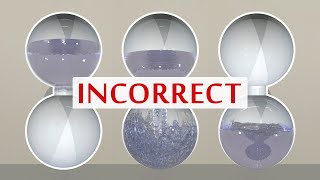
Dear fellow scholars, this is two minute papers with Dr. Zsolnai. If we write the laws of fluid motion into a computer program, we can create beautiful water simulations like the one you see here. However, with all the progress in computer graphics research, we can not only simulate the water volume itself, but there are also efficient techniques to add foam spray and bubbles to this simulation. The even crazier thing is that this paper from eight years ago can can do all three in one go and is remarkably simple for what it does. Just look at this heavenly footage, all simulated on a computer by using Blender, a piece of free and open source software, and the Flip Fluids plugin. But all this has been possible for quite a while now. So what happened in the eight years since this paper has been published? How has this been improved? Well, it's good to have bubbles in our simulation. However, in real life, bubbles have their individual densities and can coalesce at a moment's notice. This technique is able to simulate these events and you will see that it offers much, much more. Now let's marvel at three different phenomena in this simulation. First, the bubbles here are less dense than the water and hence start to rise. Then look at the interaction with the air. Now after this, the bubbles that got denser than the water start sinking again. And all this can be done on your computer today. What a beautiful simulation. And now hold on to your papers, because this method also adds simulating air pressure, which opens up the possibility for an interaction to happen at a distance. Look, first we start pushing the piston. Here the layer of air starts to push the fluid which weighs on the next air pocket and so on. Such a beautiful phenomenon. And let's not miss the best part. When we pull the piston back, the emerging negative flux starts drawing the liquid back one more time. Simulating all this efficiently is, is quite a technical marvel. When reading through the paper, I was very surprised to see that it is able to incorporate this air compression without simulating the air gaps themselves. A simulation without simulation, if you will. Let's simulate pouring water through the neck of the water cooler with a standard already existing technique. For some reason it doesn't look right, does it? So what's missing here? We see a vast downward flow of liquid. Therefore there also has to be a vast upward flow of air at the same time. But I don't see any of that here. Let's see how the new simulation method handles this. We start the downflow and yes, huge air bubbles are coming up, creating this beautiful glugging effect. I think I now have a good guess as to what scientists are discussing over the water cooler in in Professor Christopher Batty's research group. So how long do we have to wait to get these results? You see, the quality of the outputs is nearly the same as the reference simulation. However it takes less than half the amount of time to produce it. Admittedly, these simulations still take a few hours to complete, but it is absolutely amazing that these beautiful complex phenomena can be simulated in a reasonable amount of time. In this scene we see a detailed splash where the one on the right here was simulated with the new method and it also matches the reference solution and it was more than three times faster. If you have a look at the paper in the video description, you will see how it simplifies the simulation by finding a way to identify regions of the simulation domain where not a lot is happening and coarsen the simulation there. Now these are the green regions that you see here and the paper refers to them as affine regions. As you see, the progress in computer graphics and fluid simulation research is absolutely stunning and these amazing papers just keep coming out year after year. What a time to be alive. This episode has been supported by Weights and Biases. In this post they show you how to use their system to train a neural network architecture called efficientnet. The whole thing is beautifully explained there, so make sure to click the link in the video description. Weights and Biases provides tools to track your experiments in your deep learning projects. Their system is designed to save you a ton of time and money and it is actively used in projects at prestigious labs such as OpenAI, Toyota Research, GitHub and more. And the best part is that if you have an open source, academic or personal project, you can use their tools for free. It really is as good as it gets. Make sure to Visit them through wnb.com papers or click the link in the video description to start tracking your experiments in five minutes. Our thanks to Weights and Biases for their long standing support and for helping us make better videos for you. Thanks for watching and for your generous support and I'll see you next time.