Chinas NEW Humanoid Robot SETS WORLD RECORDS! (Unitree V3)
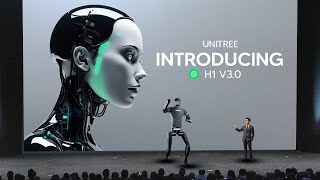
Unitree's H1 Evolution humanoid hits 3.3 m/s, a claimed world record, and can carry 30 kg while staying stable through kicks. Their robot dogs cost $1,600 versus Boston Dynamics' $75,000, with a 170% jump performance boost in recent months.
Questions this video answers
3.3 meters per second.
30 kilograms.
About $1,600.
About $75,000.
170% increase in jump performance.
Chapters
So there was something that I recently did see which actually did surprise me. Not shock me funnily enough, but it was a company that isn't actually new to robotics, but they are new to the humanoid robots game. And in a shockingly short amount of time, they've come a long way. Take a look at the unitary H1 Evolution 3.0. The demo I'm about to show you might actually just surprise you because they actually broke a world record in this video, which goes to show just how quickly the humanoid race is heating up. And there are some major players in this game and Unitree seems to be the elephant in the room that everyone is quote, unquote ignoring. So take a look at this. You can see that they've got this new humanoid robot running at a speed of 3.3 meters per second and that is rather impressive. And you can see they've got whole body dynamic coordination. Coordination just error right there. And you can see that this demo is actually rather intriguing because this was a company that I didn't think would be moving as fast as they've moved. And once you see some of their other demos, you're going to see just how quickly they have moved. And I think this jumping one here is really cool. Not because the robot can jump that high, but because it immediately after it jumped, it managed to readjust itself. And here you can see the whole body coordinated handling. Now one thing about this was I didn't know in this video if these hands are like movable. I don't think they are. So I'm guessing that this robot is moving on the end of going to be a more cheaper robot because that's what they've done in the past. They've done more affordable humanoid robotics. And sure, we're going to need humanoid robotics that are more affordable if we want different use cases. But I'm guessing that you can probably just plop these arms on if you just want them to be able to carry something which just does like, it shows a really, really effective way to have some kind of plug and play kind of robot that you can simply add things to and then take things off. So that is something that I do really find really cool. And then you can see right here, it's able to time up these stairs and then it's able to get down these stairs. Now I think I'm pretty sure that might be time speed. If it's not, if that's not in two time speed, I got to be honest, that is very, very impressive. But it, but you know it doesn't say whether or not that isn't speed. I know that this first video that they do show, and I'm going to show you guys some of the previous demos so you guys can really understand how crazy that is. But, I mean, I'm not trying to, you know, worry you guys about Terminator or any of that kind of stuff, but, I mean, seeing a robot run that fast is. Is a little bit surprising. Like, I didn't think we would see robots run that fast. And I mean, the funny thing about it is it doesn't actually look like a human running. It looks like someone who's doing like a kind of a relaxed backwards jog. But that is, you know, as a world record, that is the fastest humanoid robot that exists currently. So, I mean, you know, are these robots, are they going to be running? How much energy does that consume? Because I know that, you know, when you have, like, a robot or something like that, if you're going to be running, I'm sure that that does consume a whole lot of energy. But, I mean, it just goes to show that it's. It's literally like the 1st or 2nd of March, and we're getting robots that can literally run up to 3.3 meters per second. And I would say that that might be faster than some people and more stable than some people. So it will be interesting to see some more demos of that. Now, this bit right here as well, I've actually seen something like this from Tesla. If you've seen the Tesla demo, and if you've seen the Boston Dynamics demo, this is something that they've also done before, which is rather interesting. And their legs, I would say, are rather, rather fascinating, too, because this robot is seemingly very, very stable on its feet. I don't know what kind of stabilization algorithm they do have going on, but whatever algorithm it is, it seems like this robot is really, really stable. Now, if we're talking about the stabilization algorithm, I want to show you guys something that's pretty hilarious, but I don't know why, but a lot of people were kind of upset about this. But take a look at this. Okay, so I'm going to show you guys the. This is the one from around six months ago. Six months ago. Okay. And you can see in. Six months ago, so literally six months ago, this was their first humanoid robot. And you can see the evolution of the first one. And this is what I'm saying. The robot is pretty, pretty stable. They're literally able to kick the robot. Okay. To test its stability. And you can see that this robot doesn't move down. It's a stable, stable robot. So, like, this is pretty crazy. Are we building the future of the Terminators? That robots can run faster than us? You can kick it. It's not going to fall over. And I guarantee, okay? And I wouldn't advise this at all. If you kick someone, they might fall over. Like, a lot of people would fall over. And I know that's a terrible analogy to make, but, you know, these guys have stabilization algorithms so that when they do have a force, they immediately, like, counteract it with their feet. And I don't know, I just find it kind of surprising because the way how, you know, that's a pretty hefty kick, if you know what I mean. You can see that it's able to take the right steps immediately. That is something that is quite surprising. Some people might be concerning. But these robots, I got to be honest, they do look pretty fast. But I'm wondering what their main application is going to be. I mean, it might just be for surveillance. It might just be for, you know, looking after the elderly. There's going to be many, many different ones. And guys, remember, this was their first, first robot. That was six months ago. And then what they did was they then did a robot like three months after that. So three months ago, then they had the H1 evolution version two. So you can see this is version two. And once again, this is where they're, you know, looking at the stabilization. And it just goes to show how crazy this one was, because this one, let me show, this one was pretty cool in the sense that once again, they updated the stabilization. And from the first one, you can see that, you know, with the legs, if you actually take a look at the legs here, you can see legs are kind of like. It kind of looks like bird legs, you know, on the first one. Then on the first one, you can see that the legs are just a little bit different. I'm not sure what they want to change, but, you know, it's a design change because they keep evolving this. But I'm guessing it's going to use the same base system, which is really cool, because what this company is showing is that you don't need really, really expensive stuff in order to make a robot. And I know that robotics right now is still comparatively, relatively expensive. But of course, you know, as technology evolves, it will get cheaper. But this stabilization algorithm, I don't know, to me, that is impressive. Like, that is really, really impressive to be able to kick a robot like that. Because if we've seen the Tesla bot, could the Tesla bot, could the figure robot, could those withstand a kick? I mean, sometimes in the recent demos we've seen them literally have like a wire, you know, holding them up. So I think this robot is really, really effective because being able to kick a robot like that and being, and have it to be able to be that stable, that is, I gotta be honest, guys, that is really, really, really impressive. Like what the other robots, you know, Tesla bolt and stuff is really impressive. But I don't see them kicking a robot and throwing it over. And you can see right here that these robots are super. I don't know what stabilization algorithm they have, but it's able to do a lot of stuff right there. I didn't mean to click off it, but this is one of the, the main selling points of this robot is just how sturdy it is. It just seems something that does seem like it's made out of plastic, potentially maybe plastic and metal. It does seem to be very, very rigid. And you can see that this guy's literally pulling it, he's pulling it all around and this robot just isn't falling over. So whatever algorithm that they do have is pretty cool. And I would say that if this is literally just six months of progress, I guess you couldn't say, you know, six months because this is their first one. But if they've made, you know, first one from here, you know, having a stable robot like this, and of course, in around, you know, three months, then we got this robot right here. You can see that it's being stable and all that stuff. And then it can hold 30 kilograms of load. And then of course, if, you know, three months after that, then we get this robot which is breaking world records and running really fast, a whole body coordination with the other robots. And then of course we can see it's able to jump up as well. That's a new ability. You didn't have that before. I don't think it's too long before this robot is going to be able to do a lot more things than some of the other competitors. And I think we will be definitely surprised by what these robots are able to do, especially coming out of a smaller company compared to some of the giants like Tesla and some of the other companies that have major, major funding. Now, this company isn't just about humanoid robotics. What they also do have is they have a robot dog. And I know that the robot dog platform is one of those platforms that is rather popular with robotics. But once Again, I don't know what stabilization algorithm they're using. I don't know if they're using reinforcement, learning what they're doing, but you can see that this is something that is really, really hard to push over. It's really, really, really good at stability. And you can see it's able to climb up, and it's able to climb down really, really effectively. It's effortlessly tracking the stairs. And you're about to see that as he pulls it down, it literally doesn't fall down. I mean, if someone did that to me, if I was walking up the stairs and someone did that to me, I'd fall straight down. I mean, I don't know how sturdy you guys are, but I would definitely fall straight down. You can see he's walking up. He literally kicks it and it jerks. But it's still, still stable. I mean, that is. I don't know about you guys, but that's kind of blowing my mind that they've managed to make a robot. Okay. And this is one of the recent demos of the robot dog that you can literally kick a robot and it's just, like, not going to fall over. That's a huge milestone. Okay, I'm not sure what kind of, you know, scale that is on, but it's definitely a huge milestone to show you how crazy the development is going to be. I mean, where do you think this is going to be in, like, 10 years? Like, are you going to be able to kick a robot? And it's going to do, like, some backflip or something, like, to avoid. And you can see that's where it's avoiding, you know, new things in its environment, literally, like, you know, like some kind of video game where it's, like, things falling down the stairs, which is pretty fascinating to me to be able to, you know, just not map that, but map that in real time. So you can see that there it's a dynamic environment, and it's also able to climb in all different directions as well. And the reason I'm showing you this as well is because the dog is a very, very, you know, popular form of robotics. It's one of the, you know, most popular ones. And there was a recent demo where they even updated this that was pretty insane, too. And can see right here, superior obstacle cruising ability. So you can see it's able to get through this, you know, insane maze of things, and it's able to do it pretty, pretty well. So it's able to cross this pretty, pretty well. So, I mean, this right Here as well, if you didn't know, the pricing of this is actually starting at around $1600. Now, I do think that that is pretty expensive, but considering the applications that you could have this for, you know, I'm going to show you guys some in a moment. But you could have this carrying packages shoot in certain areas. You could have this working in factories. You could have this exploring dangerous places that you don't want humans to explore. You could have this doing a huge range of capabilities. And remember, think about it. This is something that is $1,600, okay, so probably about £1,400 if you're living in the UK, about 1,500 if you're living somewhere else. But I think that this is a really, really impressive thing. Now, they also did a really, really impressive thing like this. I don't know. This actually surprised me. Like I was watching this, and this is one of their more recent demos and they said, is there any, you know, where we can stop? And like, boom, it just goes up on that block. I don't know if that's surprising to you, but literally being able to, you know, jump that box right there and then, you know, 100 centimeter gap, being able to jump that as well and then jump down, that just goes to show that these, like, little things that they're building, these little robot dogs are pretty, pretty crazy. And I mean, there's numerous applications, like numerous, numerous numeric applications. And one of the things that we have seen within the industry, the robotics industry, is of course, these robot dogs being used in Boston Dynamics. So Boston Dynamics have their robot dog called Spot, and essentially they use it for fleet management. So you can see right here. And the reason I'm comparing this is because, like I said, this is basically a cheaper version. I mean, of course, like, you know, the Boston Dynamics, they probably have some kind of software. They probably have an enhanced visual system, like with, you know, a bunch of stuff. You can see that this person is using it to, you know, take care of some kind of facility. And since they don't want to have humans there, potentially might be dangerous. I don't know. They just have all these robot dogs, you know, walking around and they're able to visualize with the vision system to be able to see what exactly is going on. And you can see it's able to report back the kind of, you know, thing that went wrong. And of course, then you can send a human out and of course try to fix that or you can fix it remotely. I mean, it's Just something that's really, really cool, of course, analyzing trends and patterns. But the thing is, the thing about this, you know, Boston Dynamics dog, which is really, really cool, is like I said, guys, if we take a look at the pricing, because the pricing is something that I really wanted to get into, it's $75,000. Okay? Most companies, I mean, of course the large companies, like, you know, the faang companies, you know, like Apple, Microsoft, Nvidia, Tesla, they're going to be able to afford $75,000 or they're probably going to build their own, if we're being honest, but they're going to be able to afford this. Okay, but the thing is, the unitreeze one, the one that I just showed you guys, is sixteen hundred dollars, which is pretty, pretty crazy. So we could have this dog for 1600. And I think in the future it's not only going to be better, but it's also going to be cheaper. So what do you guys think those robots are going to be used for in the future? And I'm not sure how expensive these insane humanoid robots are going to be, but in the future I think it will be kind of fascinating to see where these robots do end up going. Because, you know, with humanoids, like, we really do have a long, long list of things that could be automated by robots. And I think, you know, these robots, they could definitely be working in some kind of factories. They could be carrying things around that they could be running around. I don't know. I honestly, you know, there's literally a million things that these robots could do because they're literally just replacements for humans. And I wonder if they're gonna keep this same kind of platform that they're using. They're using a platform that does seem very basic, but it seems very, very capable. Like, it doesn't seem too crazy because it doesn't really have any, you know, hands that have, like tactile sensing and all of that, you know, movement, like being able to grab stuff efficiently. But I think this robot, with this robot, they keep this very, very simple platform. And if they add the grippers from mobile aloha, I think they could definitely get a pretty good humanoid robot at a fraction of the cost of some of the big, big labs that are working on, because I know that the bigger labs, like the Teslas, the Boston Dynamics, what they're working on is definitely going to cost a lot more. But I think if they manage to combine this with something like a mobile aloha type system, which is where they're Able to just use some very, very basic plastic grippers, which they could easily just add onto the end of that. I could see this being something that's absolutely crazy. And guys, this is literally just 20, 24. Where are we going to be in 10 years of humanoid robotics? Okay. And this is really, really, really impressive stuff. These guys are stable, they're able to move. And let me know, what is your most surprising thing about these humanoid robotics? For me, I got to be honest, it's the stability of these robots, like I said, compared to Tesla, compared to figures. Optimus. I'm sure if I kicked those robots, they wouldn't be able to stand up. But I think what it shows us is that this is important because whilst there are many different applications, like for example, using a robot dog to help guard the police, or like we just saw where you can use a robot dog to potentially manage your fleet of your facility, I think what's important is that it shows us that competition is good because these robots are filling in a gap in the market where they're cheaper, they're more sturdy, and they're able to run faster. Okay. I'm guessing that the other robots, the ones like by Tesla, by Figure, by Nio, are able to do other things that are essentially more, I guess you could say, require a bit more human hands and a bit more precision. Okay. So I think as well, something that I did want to cover before this video ends. Okay. You know how this dog that I showed you all was pretty, pretty crazy in the fact that it's just able to just do a quick leap up there. And then of course, in the other video demo of its other ability and the Unitree B2, you can see that it's able to do wide range of things. It's able to. I didn't even see that. Like, literally that's kind of surprising. I didn't know it could jump like that. That's actually a little bit crazy. You can see it's got 170% increase in its jump performance, which is definitely pretty crazy. I mean, you could definitely make like a lot of Terminator movies with this kind of thing. Like having a robot dog that can run after you jump after you. And of course, I'm not stating that this is what this company is doing at all, but I think that, you know, there are certain adaptations of this kind of thing. If you haven't been paying attention to Netflix, there was an episode in Black Mirror where they had a robot that was very similar to this. It was inspired by the Boston Dynamics dog. And there was a recent thing on Netflix called Code 8 that was also doing the same thing, but essentially it was, you know, showing us that in the future, in certain states where they want to be able to surveil people, you know, they. They have these robots and they just, you know, have them running around, being able to jump and do kind of things. I mean, do you guys think that's realistic for the future? Do you think that's not realistic at all? Considering the dog is quite cheap and considering certain police forces are, you know, using, you know, this, and this was something that was recently reported in April. Do you think this is going to be something that's widespread adoption, or do you think this is going to be something that's a complete fad, or do you think we're about to just enter the Terminator age, where we're going to have these crazy, stable robots that can jump, that can walk around, carry things? It's just going to be a really, really awful thing. I don't know. I'm optimistic for the future. I think these humanoids are really good. I think the rate that they're improving, the fact that their first demo was six months ago, I think that's really surprising. But let me know what you think about this as well, because I'm excited to see more of China's innovations in the terms of robotics. So let me know what you all think about this. Do you think China is going to lead the race in robotics, or do you think the west or the USA or any other nation is going to be doing that instead of.










