Chinas NewTEXT TO VIDEO AI SHOCKS The Entire Industry! New VIDU AI BEATS SORA! - Shengshu AI
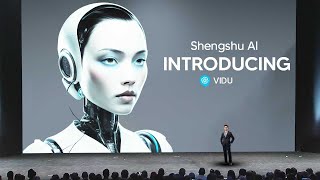
A YouTube commentary (uploaded April 29, 2024) by LARRUZ covering Shengshu Technology and Tsinghua University’s (noted as "Ting Shua" in transcript) new text-to-video model, Vidoo. The speaker summarizes Vidoo as capable of one-click generation of 16-second 1080p videos, positions it as a competitor to OpenAI's Sora, and walks through demo clips highlighting temporal consistency (walking, waves, moving TVs). The video contrasts Vidoo with Sora, Runway Gen-2 and Pika Labs, notes Vidoo’s AUViT-based architecture (claimed proposal date Sept 2022), and discusses industry and geopolitical implications (China’s rapid progress and possible acceleration of US efforts).
Questions this video answers
April 29, 2024
16 seconds at 1080p
Shengshu Technology and Tsinghua University (transcript: "Ting Shua University")
A universal vision transformer (AUViT); proposed as early as September 2022
Chapters
So a couple of days ago there was a recent announcement from another Chinese technology company, Shengshu Technology. And this is an AI firm that along with Ting Shua University, developed Vidoo, China's first text to AI video model. Now this is the recent announcement that they held and it's pretty, pretty incredible. Vidoo is capable of generating high definition 16 second videos in 1080p resolution with a single click. And it's actually positioned as a competitor to OpenAI's Sora text to video model with the ability to understand and generate Chinese specific content like Pandas and Dragons. Now what you're about to see is of course the full demo in which they showcase the abilities of these clips. And I personally do believe that this is something that is rather surprising. So take a look and. Sa. Sam sa. So there we have the actual demo. And this demo has been received with many different mixed reactions and for a variety of different reasons. Now I'm someone who's pretty open to many different AI technologies and I've taken a look at many different video AI generators and something I do want to say is that this is a lot better than you do think. Okay? Like I know some people are stating that this isn't great, but trust me, video generation is extremely, extremely hard. And that's why many state of the art models that you can currently use for free don't have the ability to do what we're seeing in this clip and you know, the things like we've seen in Sora. So what we have here guys, is a clear, clear indication that China has been slowly but surely ramping up its AI efforts. And this is of course something that we aren't surprised by. But I think this week is probably one of the most surprising weeks in terms of what China has been able to do in a AI. First of all, they've got a robot which has actually been state of the art in terms of robotics. Second of all, they then developed an LLM that was pretty much state of the art in terms of vision systems, the small model systems, and of course their large language model system surpassing GPT4. And then of course the third announcement that we did get from China was this Vidoo, this text to video AI model that can pretty much surpass the state of the art in terms of what is freely available. Now the demonstrations shown here, some people might state that they are cherry picked, but I would argue that of course they're going to be with any kind of AI generation that you do get. Sometimes there are things that don't look right. So of course in any demo, things are going to be cherry picked for that demo. And I don't think that is a crazy, crazy thing at all. Now there's some more information and some key things that eagle eyed viewers actually may have missed. So I'm going to be showing you guys those key things that you probably did miss if you weren't paying attention to this actual video. So one of the things that you probably did miss about this trailer was this. Right here you can see that the creators of this text to video model clearly know that Sora is the biggest AI text to video system in terms of competition. And because of that, they are uniquely positioned in in where they've placed certain clips in the trailer. And one of those clips that they played in the trailer was of course the clip of the woman and the man walking down a busy street at night in Tokyo. Now we can see here that the one from OpenAI's Sora actually looks very, very good in terms of the temporal consistency and in terms of everything else. Now with regards to the video one, when they actually did show us this, it was only around 3 seconds in the trailer, but I do have to say that it is pretty good motion for their first ever system. I mean, maybe it's not the first ever system, but the first one that's gained notoriety due to the level of detail and level of consistency. Now of course, as you can easily tell, you know, OpenAI Sora is miles ahead. And in fact, I wouldn't actually say miles ahead, I would say it's a decent bit ahead. But, but maybe with version 2, they could most certainly catch up to this model. And if we go back to the trailer, you're going to see that there are several different instances where things are quite similar. So for example, right here you can see that it's quite similar to the woman who's walking down in Tokyo. And of course if we look onto the right, there is of course some morphing on the hands and of course on the legs. But I think we have to give credit where credit's due because if we actually look at the skirt right there, we can see that as the legs move up on the right hand side, there is a neat bit of deformation on the skirt that actually does look very, very normal and it does look really, really correct. An example on the jacket, when the guy's walking, we can see that the jacket is actually swinging around and the hips and the motion right there actually do look pretty effective. So I know a lot of People were dunking on this saying that this is objectively mediocre. And I've seen many different tweets stating that, but I would have to say that this is not mediocre at all. And this is definitely a state of the art level system because if certain AI company right now came out and released this in the west, this would definitely be heralded as something that is a SORA killer. So I think maybe. So I think maybe what we have here is a situation where things look very, very good, but people aren't really appreciating what it is just because it's not available for use yet. And because I'm guessing SORA exists now. There was another demonstration that was also pretty interesting. We did see OpenAI's Sora. If you do remember this clip that was initially released with Sora, they released this clip of a kind of Land Rover thing driving around the hillscape and it was pretty, pretty good. Now when you do compare it to the new one, of course the Vidoo, it of course doesn't look as good in the trailer, but I do have to say that it still is pretty decent based on what we've seen. Now you can see right here, some of the things that I will say that this does get right and other systems don't is of course the temporal consistency. So for example, right here, when we're looking at this clip and it's about to come up now, you can see like the bushes, they actually stay in motion and they move past as well as with the trees. And the only thing that I would say with this as well is that I downloaded the video. So I don't know if there's like a higher resolution version available online. So I can't really right now comment on the quality of this because the video has been shared around so many times where with the original footage being hard to source. So I don't think that this is the, of course is like the highest quality because even on this video clip, like even in the resolution that I have it now, there are some clear artifacts on this video. Like here you can see that there is like light like breaking up. And that usually happens when a video has been downloaded and shared so many times. So it's pretty hard to find the original 1080p clips. And I think once, you know, they release them again on like maybe some official like YouTube type thing, then we can actually see how much better they are. Because a lot of people might say that the quality isn't good, the temporal consistency isn't Good. I would disagree. And like I said, and this is a key thing because videos are being shared around, the resolution is getting lower and lower and that is going to impact how people actually do see this. And I think that is an important thing to remember when trying to be unbiased when viewing this. Now, if we actually do take a look at something here, and this is what I'm stating, okay, is that if we look at this, OpenAI Sora isn't actually released yet. Which means that what this is, is this is a state of the art system. Because if OpenAI Sora isn't available yet, and we know that this requires magnitudes more compute than we could even think about, this is something that we need to, you know, take a look at. Because when you've seen Sora and of course gen 2 combined slash compared, we can see that Runway, which is, you know, arguably the second slash, you know, Topeka Labs or whatever, we can see that Runway Generation two doesn't really have any good temporal consistency in the likes of what we've just seen. And I think it's important to note how crazy this actually is because they're actually. I would argue that it's actually quite better than Runway Generation two. Runway Generation two. While, yes, it does have some good features in terms of being able to move smoothly a little bit, I would say that there isn't much motion. It's more of like a really slow motion thing. Like for example here, this is a key example. If we compare OpenAI's Sora, this one right here to Runways Gen 2, this one right here, and then we see what video's done, because video have done direct comparisons because they're a direct competitor. We can see that OpenAI Sora, if we actually look at how the water moves, we can see that it moves pretty well. The ships are moving all well and that looks pretty good. But on Runway gen 2, the waves and stuff like that, it doesn't look really well. And then of course as well, we can see, like if we go back to Vidoo and this is what I'm talking about when I say that video is something that's pretty important. We can see that in this demo right here, which they've shown us, there's actually decent consistency in terms of the wave and how things actually move around it. And then of course, there's another example somewhere in the clip right here, like right there, we can see that the waves crashing around it looks pretty realistic, like they're not morphing into the boat. Everything Looks pretty realistic here. I know this is just like a short demo, but that's not something you actually see at Runway at all. That kind of motion, these waves crashing around, you didn't see that in Runways at all. And we don't see that in Pika Labs, which means that, of course, you know, that kind of temporal consistency with the motion where the characters were walking, where we saw the skirt, and of course, we saw this kind of thing at OpenAI's, it means that, you know, they're definitely a step ahead. Now in terms of the architecture, the architecture for VOODOO was actually proposed as early as September 2022, predating the diffusion transformer, the DIT architecture used by Sora. So Vidoo is pretty different. It utilizes a universal vision transformer, auvit, and that architecture actually allows it to create realistic videos with dynamic camera movements and detailed facial expressions and adherence to the physical world properties like lighting and shadows. And I think that they've done something here pretty, pretty amazing considering they're not even using the same architecture. And like I said before, if we also take a look at one more example, and this is why I'm going to show you guys how good this is, because a lot of people are looking at this and say, it doesn't look that good. But if you compare it to what's actually state of the art that we can get our hands on now, this is something that is really, really good. And it's pretty, pretty surprising. So, for example, again, taking a look at this opening eyesore, the clips of the TVs moving around and stuff like that, you can see that all of the things are flashing. And then you can see with Runway Generation two, it's very, very, you know, not that crazy at all. It's very, very slow. There's not really much in terms of, you know, but if we go back to video and this isn't, like, this isn't any kind of favoritism or whatnot, but if we go back to video, there's a clear example here of the moving around, okay, moving around the objects like this. And we can see that this is pretty crazy. Like, that is really hard to do. Like, this is insane. Like, honestly, this is crazy. Like, and I do need to get the HD versions of these because, like I said, it's a bit disingenuous. Although I couldn't find them. I really did try and search, but it's a bit hard to, you know, judge this when you don't have the full resolution clips. But you can see, like, in the back. Okay, like take a look at these images here. They're staying in place. They're all staying in place. They're not deforming, they're not meshing. And you know, going around these TVs, all of this motion is happening and the TVs are moving correctly like that. Okay. Compared to what we just saw here, like literally at the end of this. Okay, you can see right here, like literally compared to the end of this, like, honestly guys, it's pretty good. Like, it's pretty good. Like, you have to say that this is pretty, pretty incredible in terms of what they've been able to accomplish. And another thing as well is that if you take a look at AI videos that were one year ago, literally one year ago, and then you take a look at what we have now with Sora and the kind of technologies that we have now and the craziness of what we're able to do. I think we have to understand how far we've come in such short of a time. And you could argue that, yes, it's not just short of a time. Things are pretty, pretty different in terms of architecture's been building up on different architectures and decades of research, but things are starting to accelerate. So that's something that I think you should keep interesting. But it does seem like China right here genuinely has taken the lead because like I said before, I think there is probably like an actual 1080p vision because the videos have just been downloaded so many times. And like I said before, we don't even have access to Sora. Sora was given to people that are in the film industry and stuff like that, and they've been using it and they said it takes about 10 to 20 minutes per render and you can render up to 3 seconds, all the way up to a minute clip long. And I think that's a really important point to remember. So let me know what you think about this. I think this is a pretty game changing stuff. I think it's pretty crazy. Let me know what you think. I think this is absolutely incredible from them and I think in the future we're definitely likely to see more and more competition. And once again, what I do find surprising is that China's been able to pretty much catch up to state of the art models in not a short amount of time at all. And I think they're definitely going to prioritize this technology. So I wonder, where does that leave the US in terms of how they're going to now prioritize this? Are they going to speed up their acceleration or are they going to slow down and regulate it in different manners? I honestly have no idea. But I do think that the USA are probably going to speed up their development when they've seen that China can pretty easily catch up across all bounds. And I think this is definitely going to create some kind of AI, not arms race, but definitely AI race, and it will be interesting to see how this is deployed in the future. So, with that being said, let me know what you think about this technology. I think it's pretty good. I think it's pretty surprising as well. And it's been a pretty crazy week for the China UA AI race.










