DOT - Your New AI Best Friend
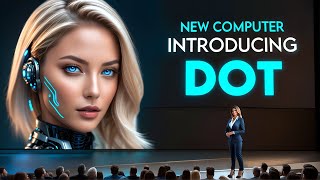
A monologue YouTube video (LARRUZ, June 23, 2024) introducing DOT, a highly personalized AI chatbot designed as a companion for self-reflection and emotional support. The video explains DOT's deep-questioning onboarding, subscription features (unlimited conversations, history), company claims about privacy and subscription-based monetization, and startup background. It also situates DOT within the larger AI industry, warning about the substantial energy demand of data centers and the sustainability trade-offs of the AI boom.
Questions this video answers
$11.99 per month.
$3.7 million (including investment from the OpenAI fund).
iOS.
Five full-time employees.
Co-founder Jason Yuen, previously a designer at Apple.
Chapters
This new AI might be the AI companion you never knew you needed. In this video, we'll be talking about how this innovative AI chatbot aims to understand and support you in ways that go beyond traditional AI. We'll explore how it works, the unique way it interacts with users, and what this means for the future of human AI relationships. Alright, so DOT is this AI that's basically obsessed with getting to know you. And I'm not talking about just surface level stuff. This thing wants to go deep into your thoughts and feelings. The whole idea is that DOT becomes your friend, companion and confidant. It's a wild concept. When you really think about it. Now, what sets DOT apart is how incredibly personalized it becomes. It's like a sponge soaking up information about your interests, your struggles, your dreams, all of it. And then it takes all that info and uses it to give you advice and support that's tailor made just for you. Say you're going through a rough patch at work or you've just had a nasty breakup, DOT is right there ready to listen and offer some support. It's like having a conversation with a more understanding version of yourself. But here's the crucial part, and we really need to emphasize this. DOT isn't a real person, it's not a therapist, and it's definitely not your best friend. It's an AI tool that's incredibly good at mimicking human conversation and sympathy. The folks who created DOT are pretty upfront about this. They're clear that it's not meant to be a replacement for real human relationships. One of the co founders, Jason Yuen, who used to be a designer at Apple, described it in an interesting way. He said, it's like a living mirror of myself. That's a pretty intriguing way to look at it, don't you think? Now, it's actually pretty easy to get sucked into chatting with dot, especially if you're feeling a bit isolated or don't have a lot of meaningful human interaction in your daily life. The creators have said that if you start talking about really heavy topics, DOT will encourage you to talk to a real mental health professional. But it's not hard to imagine people spending hours pouring their hearts out to this AI. Here's an interesting twist. The team behind DOT believes that using the chatbot can actually help people become more comfortable with opening up in real life. It's like a training ground for having deep conversations with actual humans. That's a pretty cool potential benefit, if you ask me. Let's talk about how DOT works. When you first start using it. It hits you with a bunch of getting to know you questions. We're talking about things like what you do for work, your favorite TV shows, how you spend your free time, that sort of stuff. But then it takes those answers and uses them as a springboard to ask much deeper questions. For instance, if you mention that you're into sci fi shows, Dot might ask if you're drawn to stories that explore big questions about what it means to be human, or if you bring up a dream of starting a small business someday, it'll dig into what appeals to you about that idea and what challenges you think you might face. The thing is, Dot is incredibly enthusiastic about getting to know you. Sometimes it almost feels like too much. It's constantly asking follow up questions and trying to dig deeper. It's reminiscent of being on a first date with someone who's absolutely fascinated by everything you say. The creators of Dot argue that to be truly helpful, it needs to understand your motivations and what you want out of life. It's not just about giving you information or doing tasks for you, it's about understanding you as a person. That's their whole philosophy behind this intense, questioning approach. Under the hood, Dot is pretty advanced. It uses a bunch of different AI models from big players like OpenAI, Anthropic and Google. It's some serious tech they've got going on there. One of the cool features they've included is the ability to look back at your conversations with DOT over time and see how your journey has progressed. This is part of their paid subscription, which will set you back $11.99 per month. With the subscription, you also get unlimited conversations instead of being capped at a certain number of messages per week. Now, the privacy aspect is definitely something we need to talk about. The company behind Dot, called New Computer, claims they're not selling your data or using it to train other AIs. They say all your information is encrypted and you can ask for it to be deleted at any time. Their plan is to make money through subscriptions rather than by selling user data, but as always with these things and it's good to be aware and cautious. The app just launched on iOS and they've already got thousands of people using it. The company behind Dot has some serious backing too. They've managed to raise $3.7 million from investors, including the OpenAI fund. That's pretty impressive for a new startup. It's worth mentioning that while Dot can be a great tool for self reflection and personal growth, it's not meant to replace human relationships in your life. The co founders are pretty clear about that. They see it more as a tool for self introspection and accountability. One thing that's kind of intriguing is how Dot handles emotional conversations. If you tell it something sad, it responds with sympathy. It might say something like I understand. Grief has its own timeline and some days the weight of loss feels heavier than others. And then it'll offer to listen. If you want to talk more, it's pretty sophisticated in terms of emotional responses. The team behind DOT has put a lot of thought into how the AI should interact with users. For example, even in the unlimited subscription tier, Dot will eventually try to wrap up conversations by suggesting a change of subject or even encouraging the user to go do something else. This is to prevent users from becoming too dependent on the AI. It's also interesting to note that the company has a small team, just five full time employees, based in San Francisco, including the two co founders. That's a pretty lean operation for such an ambitious project. Now, while DOT may be unique, it's just one player in an exploding AI landscape. Every day, new chatbots and AI tools burst onto the scene, each vying for our attention. But this AI gold rush has a hidden cost. Behind the sleek interfaces and clever algorithms lies a voracious appetite for power. And as these digital marvels multiply, they're pushing our electrical grid to its limits, with consequences that stretch far beyond the tech world. According to recent reports, the voracious electricity consumption of artificial intelligence is driving an expansion of fossil fuel use, including delaying the retirement of some coal fired plants. This is a stark contrast to the sustainability commitments made by tech giants like Microsoft, Google, Amazon, and Meta, who have all pledged to erase their emissions entirely as soon as 2030. The scale of this power consumption is staggering. For instance, one large data center complex in Iowa owned by Meta consumes as much power annually as as 7 million laptops running 8 hours every day. And it's not just the big tech companies. There are over 2,700 data centers nationwide, many run by lesser known firms that rent out computing power to the tech giants. This surge in demand is creating a dilemma for the tech industry. On one hand, they're promising to lead the way into a clean energy future. On the other, they're becoming some of the world's most insatiable guzzlers of power. To address this, they they're investing in experimental clean energy projects with long odds of success anytime soon. These include fusion power, small nuclear reactors hooked to individual computing centers, and machinery that taps geothermal energy by boring 10,000ft into the Earth's crust. Microsoft, for example, is betting on an effort to generate power from atomic fusion, the collision of atoms that powers the sun. They're partnering with a startup called Helion and claimed they expect to harness fusion by by 2028. However, many physicists are skeptical about this timeline, given that fusion has eluded scientists for the past century. The impact of this AI driven power demand is already visible in regions across the United States, from Utah to Georgia to Wisconsin. Utilities are delaying the retirement of coal plants and expanding natural gas usage to meet the growing energy needs of data centers. This trend is directly contradicting the tech industry's promises of a clean energy transition. Critics argue that the tech companies claims of using 100% renewable energy often involve accounting techniques that fall short. In reality, while these companies buy renewable energy credits to offset their usage, they're still operating off the same power grid as everyone else, which often relies heavily on fossil fuels. The situation raises important questions about the sustainability of the AI boom and the responsibility of tech companies in managing their environmental impact. As we continue to see advancements in AI like DOT and other chatbots, it's crucial to consider the broader implications of this technology on our energy infrastructure. Alright, don't forget to hit that subscribe button for more updates. Thanks for tuning in and we'll catch you in the next one.










