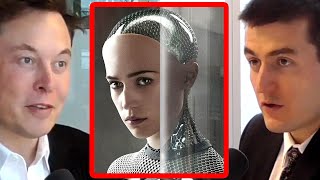
Short podcast excerpt (multi-speaker) discussing whether AI can love as in the film Her. A physics-oriented perspective is offered: if an AI's love is indistinguishable from human love (no possible test to tell the difference), then it should be considered real. The speakers also draw an analogy to the simulation hypothesis and note that simulations might be able to conceal detection.
Do you think we will ever create an AI system that we can love and loves us back in a deep, meaningful way, like in the movie Her? I think AI will be capable.
Of convincing you to fall in love with it very well. And that's different than us humans. We start getting into a metaphysical question of do emotions and thoughts exist in a different realm than the physical? And maybe they do, maybe they don't, I don't know. But from a physics standpoint, I tend to think of things like physics was my main sort of training. And from a physics standpoint, essentially, if it loves you in a way that you can't tell whether it's real or not, it is real. That's a physics view of love. Yeah. If you cannot prove that it does not, if there's no test that you can apply that would make it allow you to tell the.
Difference, then there is no difference. Right. And it's similar to seeing our world of simulation. There may not be a test to tell the difference between what the real world and the simulation. And therefore, from a physics perspective, it might as well be the same thing. Yes.
And there may be ways to test whether it's a simulation. There might be. I'm not saying there aren't, but you could certainly imagine that a simulation could correct that. Once an entity in the simulation found a way to detect the simulation, it could either restart, pause the simulation, start a new simulation, or do one of many other things.