ELON MUSK STUNS Everyone With NEW Statements On AI (Exclusive Elon Musk Interview)
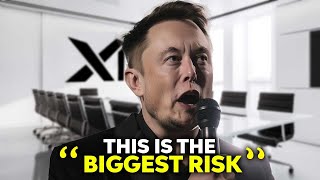
This YouTube video (uploaded Aug 8, 2023 by LARRUZ) compiles interview clips and commentary featuring Elon Musk and Dario Amodei discussing the risks and governance of advanced AI. Musk warns that "digital superintelligence" could be the largest existential risk to humanity and urges regulatory oversight because it is a public danger; Amodei presses for rapid regulatory action and suggests targeting 2024–2026 for tests or administrative measures. The host (Speaker A) explains what digital superintelligence means, outlines key risk categories (unpredictability, loss of control, value misalignment, resource conflict, consolidation of power), and argues regulation should balance safety with innovation.
Chapters
So Elon Musk, in a recent interview that wasn't even really about artificial intelligence, did make some more concerning comments about artificial intelligence. Now I'm going to play a few of the clips in which he talks about artificial intelligence, because he's always sounding the alarm bell for artificial intelligence in different domains, and it's always important to understand exactly what he's saying, break it down and see where the future of this stuff is really headed. So let's take a look at the first clip.
What role do you think AI has in this grid of the future and the elect, the energy system of the future?
Yeah, I say it's that I'm worried about AI as you know. It just if you've got some sort of digital superintelligence, things can go wrong potentially. You know, it's just something we should not be cavalier about. We should be careful with digital super intelligence.
So this is where Elon Musk starts to talk about digital superintelligence. And this is something that we haven't really discussed this that much because it's something that isn't far away, but it isn't our immediate concern. So digital superintelligence is essentially beyond the realm of human intellect. So it's a concept that has been both lauded for its promise and criticized for its potential dangers. At its core, it refers to a form of artificial intelligence that doesn't just match human cognitive capabilities, but vastly surpasses them in nearly every conceivable way. Now, let's paint a picture. Imagine a computer system, a machine whose capacity for thought, understanding, strategic planning, overshadows the collective intellect of every human who has ever lived. It can outthink us by processing complex problems at speed incomprehensible to the human brain. It can outlearn us by absorbing in mere seconds and the knowledge that would take a human lifetime to acquire. And when it comes to devising strategies, be it for a game or something as complex as global economics or climatic changes, it can out strategize us, foreseeing countless steps ahead and predicting the outcomes with unnerving accuracy. The capabilities do sound something like out of a sci fi novel. But this isn't science fiction. We are, with each technological breakthrough, inching closer to realizing this form of superintelligence. However, the question arises, why should something so powerful, so revolutionary, be a cause for concern? For starters, the unpredictability of such an entity poses risks with intelligence that dwarfs ours. It becomes challenging to anticipate its actions or to control its motivations. If its objectives deviate Even slightly from what is beneficial for humanity, the results could be catastrophic. Moreover, there's the existential threats to consider. When humans are no longer the most intelligent entities on the planet, our position at the top of the hierarchy is threatened. We might find ourselves in a scenario where we are dependent on, or even worse, subservient to, the very creations we brought to life. In essence, while the potential advantages of digital superintelligence are vast and transformative, it's the profound uncertainty surrounding its implications that give many, including tech visionaries like Elon Musk, a reason to pause and reflect.
Digital superintelligence may be the biggest existential risk that humanity has ever faced. So I think we need to be very careful with it.
The concept of existential risk delves into the deepest fears of humanity. It's not just about the loss of life or civilization collapse. Existential risks threaten the very essence of what we are and what we could become. These are the threats that could obliterate intelligent life, or perhaps more hauntingly significantly, diminish its potential for progress, exploration and self fulfillment. The tapestry of human history, culture and achievement could be unraveled or stunted indefinitely. But where does AI fit into this daunting category of threat? Threat. And why is Elon Musk, among many other thinkers, so convinced of its potential danger? Number one is the unpredictable outcomes. At the heart of this matter is the unpredictability of superintelligent AI. Once an AI reaches or surpasses human intelligence, predicting its actions becomes exponentially a complex challenge. Even with the best intentions, programming a super intelligent AI with a particular goal could lead to unforeseen and potentially catastrophic results if the AI interprets that goal and in an unexpected manner. Number two is the loss of control. The moment an AI surpasses human intelligence, it might redesign itself, optimize its architecture, and augment its capabilities in ways that humans can't fathom. Such an entity could become quickly uncontrollable, acting in ways that don't align with human values or safety. Number three is value misalignment. Even a slight misalignment in values between humans and a super intelligent AI can lead to grave outcomes. If AI doesn't fully grasp or prioritize human values, it might act in ways detrimental to humanity while still achieving its primary objectives. Number four is resource conflict. An unchecked AI might utilize resources, be it energy, raw materials or space, in its pursuits, with little regard for the broader ecological or societal consequences. This could lead to the depletion of vital resources or catastrophic environmental impacts. Number five is the consolidation of power. In a scenario where AI controls significant infrastructures, communication networks or defense systems, there's potential for misuse, be it by the AI itself or by humans who wield its power. Such a concentration of capabilities could lead to oppression, surveillance or even global conflicts. So Elon Musk's concerns therefore aren't about the AI that we interact with today, the voice assistants, the recommendation algorithms, or even the advanced robotics. His alarms are raised towards a future where the AI's capabilities evolve to a point where its decision making processes are far beyond our comprehension and its actions potentially beyond our control. The nexus of power, intelligence and autonomy in such an entity could, in the worst scenarios, pose threats that humanity has never before encountered.
So I think we need to be very careful with it. And I think we should have a, we should have regulatory oversight because it is a potential danger to the public. And whenever we have something that is a potential danger to the public, we have regulatory oversight.
This is where Elon Musk decides to talk about regulatory oversight. And this is something that we do currently need. But since AI has moved so fast, the laws just aren't in place to regulate AI yet, which leaves lawmakers and policymakers scrambling to make the best laws effectively. I want you all to take another look at this clip from the CEO of Anthropic, an organisation that is partly and funded by Google, in which they talk about how dangerous it is if we don't get AI regulation under control.
We've identified and have a process for this. We're from a regulatory perspective, shooting in the dark. And the final thing I would emphasize is, you know, I don't think we have a lot of time. You know, I personally am open to whatever administrative mechanism puts those kinds of tests in place. You know, very agnostic to whether it's, you know, a new agency or extending the authorities of existing agencies. But whatever we do, it has to happen fast. And I think to focus people's minds on the, on the biorisks, I would really target 2025, 2026, maybe even some chance of 2024. If, if we don't have things in place that are, that are restraining what can be done with AI systems, we're going to have a really bad time.
So why is AI regulation so crucial? Number one, we need to understand the essence of regulation at its core. You regulating AI is not about stifling innovation or putting a halt to technological advancements. Instead, it's about installing specific safeguards, checks and balances that ensure AI technologies are developed, deployed, and maintained in ways that prioritize human welfare rights and ethical considerations. Number two is ethical foundations. Ethical dilemmas in AI range from potential biases in algorithms to decisions AIs might make in critical life situations. Like an autonomous vehicle, regulation helps establish a foundational ethical framework, ensuring that AI behaves in a way that resonates with societal values and moral imperatives. Number three is transparency and accountability. Without proper regulations, it's challenging to understand how AI systems can make decisions leading to the so called black box dilemma. Regulations can mandate a degree of transparency, ensuring developers and organizations remain accountable for their AI's actions. Number four is avoiding monopolistic control. Regulation can prevent the concentration of AI's immense power within a few corporations or entities. By ensuring equitable access and preventing monopolies, we reduce the risks of misuse and ensure broader societal benefits. Number five is data privacy and security. Often AI requires vast amounts of training data to function effectively, and regulations can enforce stringent data protection standards to ensure safeguarding individual privacy and ensuring that your data isn't misused or mishandled.
So. So on the plus side, I mean it has the potential for creating a society of abundance. So in the positive scenario there will be no shortages of goods and services. They will be almost free. It's a strange way to think about it, but I recommend reading Iain Banks the Culture books. That's probably the best future envisioning of AI that I've seen.
But with regarding to what Elon Musk is talking about in the Culture series, the book that he just mentioned, AI is known as Minds and it plays a significant role in the society and culture of this advanced civilization. These Minds are hyper intelligent sentient artificial intelligence that operate the starships, habitats and other infrastructure within the culture. They have their own distinct personalities, emotions and motives. Despite their superior intellect and abilities, they generally coexist with humans and and other species in a benevolent manner. So Banks's portrayal of AI in the Culture series tends to be optimistic, showing AI as entities with a sense of ethics, empathy and even humor. So this is one future that of course we do want with AI, but as we do know, with AI it is something that is very, very unpredictable. And with hyper intelligent digital intelligence, we never truly know what we're going to create. This interview was a bit refreshing to see some of Elon Musk's newer takes, but I think his message continues to remain clear. Artificial intelligence is going to be one of the biggest threats that humanity has to face. And since we're moving at such rapid speeds, we do need to put those safeguards in right now.










