Transcript excerpt of a conversation (Lex Fridman interviewing Elon Musk) discussing the importance of edge-case data for deep learning in driving. They focus on autopilot disengagements as signals of failure vs convenience, using successful traversals to learn optimal behavior, and Musk's dictum to "view all input as error."
Chapters
So the magic of deep learning is that it gets better with data. You said there's a huge inflow of data, but yeah, the thing about driving the really valuable data to learn from is the edge cases. So how do you. I mean, I've. I've heard you talk somewhere about autopilot disengagements being an important moment of time.
Yes.
Use. Is there other edge cases or perhaps can you speak to those edge cases? What aspects of them might be valuable or if you have other ideas, how to discover more and more and more edge cases in driving?
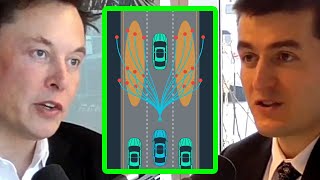
Well, there's a lot of things that are learned. There are certainly edge cases where, say, somebody's on autopilot and they take over and then, okay, that's a trigger that goes to a system that says, okay, do they take over for convenience or do they take over because the autopilot wasn't working properly? There's also like, let's say we're trying to figure out what is the optimal spline for traversing an intersection. Then the ones where there are no interventions are the right ones. So you then say, okay, when it looks like this, do the following. And then you get the optimal spline for a complex navigating a complex intersection.
So that's for this. So this is kind of the common case. You're trying to capture a huge amount of samples of a particular intersection when things went right. And then there's the edge case where, as you said, not for convenience but something didn't go exactly right.
Somebody asserted manual control from autopilot. And really the way to look at this is view all input as error. If the user had to do input, there's something all input is error.