Elon Musks Teslabot "AUTONOMOUS" UPDATE (Teslabot Gen-2 Update)
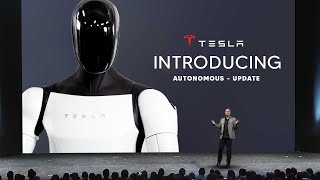
LARRUZ analyzes Tesla's Optimus robot performing household tasks like laundry and shelving at real-time speed using 2D cameras and force sensors. The Gen-2 version shows fewer human interventions, better failure recovery, and upcoming hands with 22 degrees of freedom instead of 11.
Chapters
So Elon Musk has presented us with a new Tesla bot demo showcasing just exactly what the bot is capable of doing. And this is quite surprising since this is one of the first demos since January 15th where we got the Tesla bot folding a shirt. So in this demo it's actually rather fascinating because we do get to see the Tesla bot doing a lot of different things. So I'm going to show you guys this video and then I'm going to dive into exactly why this update is so important, insane and so crazy. So one of the first things that we did see here, and this is of course always a good sign in these humanoid robotics companies, is that this is completely autonomous in one time speed. So the reason why this is so good is because first of all, the autonomy means that the end to end your nets that they're using are now good enough so that they can do this completely autonomously. So this being autonomous is really good because sometimes right here what you'll see is teleoperated or you won't see anything here. And that just means that the current data that they have just doesn't scale yet or it doesn't work enough, which is, you know, unfortunately not good enough for them to use in the demo. Now another thing that's actually really good about this is this right here, which is one times. And if you don't know why one times is good is because that is essentially where they are showing us how fast the video is being played. Oftentimes with humanoid robotics demos or even other robotics demos, what you'll see is a 1 times, or what you actually see is a 2 times, or even 10 times marker here where they'll show the robot doing something. But when it's in one time speed, that means the robot is usually fast enough with whatever policy or whatever neural net is working on it, that we can actually see how usable it is in real time. So this is good that. So basically what this essentially just means is that it's good enough to run autonomously and it's fast enough to run where it can be used on a day to day basis in tasks that are not going to look incredibly slow. So that was one of the first small things that I didn't notice from the demo that most people wouldn't. And there's some other things that I do want to talk about here. And you can see here that this shows us some very, very key developments in terms of real time on the bots FSD computer. So this is something that shows us that what Tesla are Working on is, is increasingly, increasingly more complex tasks. You can also see here that using only 2D cameras, hand tactile and force sensors, it's able to do this with remarkable accuracy. And what's cool is that it balances on its legs while the net drives the upper entire body. So I think this is a pretty, pretty crazy thing because it's not like the Tesla bot is just standing there, it's actually balancing on its legs while the net drives the upper of the entire body. So this means that we could have a bot that could potentially walk around to somewhere and then start doing the tasks. Which is why a lot of people always say, why do we need humanoids? Why do we need humanoids? I think this kind of shows us that when you have something that could walk around into different environments, and one of the key points, which is why you need humanoid robots, and many people state that we shouldn't have them, is the fact that you don't need to redesign the entire human world when designing new robots. Because if we designed a robot that had wheels on its legs, we would have to make some key design changes to our entire world, which is primarily designed for humans that are bipedal. So that's why these humanoids with the legs that can balance on that is a really, really important thing, because it means that they are just plug and play to what humans already do. So, in addition, we can see here that this neural net that is using the Tesla bot's body to do this is actually being very, very precise. It's very fascinating to see how precise it is able to simply grab whatever battery or whatever thing this is and then target the next free slot and simply slot it in as working with a humanoid robot. Now you can also see here, and I think that this was one of the most impressive parts of the demo, is where you have something that just makes sense. So, for example, you can see that Optimus also recovers autonomously from failures. And this is something that we did see in a few robotics demos, but not too many. But essentially you have the robot that can literally recover from its failures. And it's important to note that this is really, really important because many times with a lot of robotics, you know, what you do see is you see robots make mistakes quite like humans. Like humans aren't perfect at all by any means. Sometimes you drop things. Some people are clumsier than others. But it's important to have, you know, a neural net that is able to realize when the task wasn't completed successfully. And then, of course, be able to successfully recover from that task and ensure that the item is placed correctly, exactly where it was supposed to go. So this is something that I think is a very, very important step in terms of actually being usable for the future of humanoid robotics. Now, what I did also find very fascinating as well was the training data. So if you don't know these humanoid robots that are going to be somewhere around the world in the next 10 years, what we do need is we do need training data in order to train these robots. So you can see here that we actually do have humans in teleoperated suits. So these are VR teleoperated suits. And there's likely a camera in there where they can see out of the Tesla bot's head. And then they're likely doing the exact same task with the exact same area. And then what that is doing is the robot is collecting that data. You can see there's wires hooking them up. That robot is collecting all of that data. And then, you know, they're essentially doing this kind of manually. They're basically looking to scale this all up with as many people as possible. So you can see that all of these people wearing these headsets on with these wires, that's how they're collecting data. And I think another thing that's going to be really fascinating, which goes to show us some interesting stuff which most people didn't see because it was very quick, but we can see that there are a variety of different tasks. One of them you can see here, there is a robot that is getting laundry out of a basket and then likely folding it. Then as we continue on, you can see that there is a person who is putting books on a bookshelf. And the reason that they are doing these tasks, that you can see someone putting books on a bookshelf. And then this one right here is actually pretty hard to see. I'm not sure what's being done in this last task here. Maybe it seems like it's being sprayed with something. I do apologize. This video isn't the highest of quality, but it does seem pretty, pretty interesting to see the other tasks that Tesla bot is going to be able to do in the future. So right here, this is like a sneak peek of, of the other tasks that we're going to be able to do. So laundry, you know, applying household items to a shelf, and then probably another one doing another shelf as well. So that was something that I do know that most people did miss as well. So this is, this is really, really fascinating stuff because it shows us that they're currently training these robots to be completely general in terms of the amount of household tasks that they can do. So I'm quite excited to see the next demo. And I think what this is important to show us as well is that this actually shows us the application of these humanoid robots. Now, we're not going to talk about price and how effective they are and economies of scale and the fact that this might just be cheaper to get a human to do this, because that's of course, the truth. It's easier said than done. But the point is, is that in the future, once these robots are at a really, really good point to where they can do a lot of different things and, you know, they can use many different hands to do a lot of things even faster, it's going to be really kind of fascinating to see what, what kind of different tasks get automated via these robots, because these robots are going to be so, so effective at doing these things. They're going to be able to make their own mistakes, fix themselves from the mistakes, and then of course, continue on from there. Now, also, what we do have is we do have a situation where they did, say, continually decreasing rate of human interventions, which essentially just means that when the robot fails and it can't fix itself, humans are not needed for that thing. So it also is taking regular walks around the office. I'm guessing that this might just be to see how the autonomy is, to see how the training data is. But it's something that it's fascinating to see that these robots are starting to probably just be around the factory. Of course, these are probably for tests, and of course they can walk for longer times, which means I'm guessing they're likely more energy efficient and they're probably a lot more efficient at walking and balancing without falling over. But this was a very, very fascinating update that we got to see. And with the Tesla bot update now, there's some other things that Elon Musk did actually talk about. One of the things that he actually spoke about was the fact that this new Optimus hand later this year will have 22 degrees of freedom. Now, essentially, in robotics terms, the degrees of freedom refers to the number of independent movements a robot can make. So each degree of freedom is essentially a specific independent parameter that defines the robot's configuration or motion in three dimensional space. And understanding the degrees of freedom is crucial for understanding and designing and controlling robots as it directly influences how complex their movements and tasks can be. And essentially, I'm just going to break it down for You. So the first thing that you do have when it comes to robotics is you have the translation and rotation. So you can categorize this into two types. Okay? And I've shown you guys this video on screen because this video actually shows you how fluid and how, you know, smooth this robot does move in its arms and its hands. So, you know, degrees of freedom are basically where, you know, you know, the translational degrees of freedom where you can allow it to move along the X, Y and Z axis, providing forward, backwards, left and right and up, down movements. And then we've got rotational degrees of freedom that allow it to rotate around the three, these three axes. So for example, a robot arm might have multiple joints and each joint adds a degree of freedom. So it might have, you know, one joint that allows it to rotate, which is one rotational degree of freedom, and then another joint that lets it extend or retract one translational degree of freedom and a wrist joint that lets it rotate its end effector, which is another degree of freedom. So there's a lot of different things here that are going to really, really change essentially just how buttery smooth these robots move in terms of their movement capabilities, which also allows them to not only look cooler, but also allows them to do a lot more different things. You can see it says faster 11 degrees of freedom hands here. So it's likely that we're going to see this robot do a lot more things that are more human esque. And this also means that it's going to apply to many more different tasks and it's going to be able to be trained with many different things. Because whilst yes, what we do have here, and I want to show you guys, this is where we do have this, where we can see that the Tesla bots are currently being trained via human teleoperation, they aren't able to do like certain things. Like for example, if you were to able to do certain human moves the humans can do, you just wouldn't be able to do them in the robot because it doesn't have enough degrees of freedom in order to do that. And I'm sure that they're working on that as a limitation, which is why Elon Musk said that the hand later is going to have 22 degrees of freedom, which is why this one with. Let me just go back to it right here. So this one right here where you've got, you know, 11 degrees of freedom. So this right here you can see where is it, where is it, where is it? It should be right here somewhere. So, yeah, it's right here. Faster. 11 degrees of freedom in your hands. And I remember the first time everyone saw this, they were like, whoa, this looks pretty crazy. And this does look really, really incredible. So once these get to 22 degrees of freedom, it's going to be pretty incredible on the intricacy of tasks that they can do, which means a lot more, you know, applications and a lot more human, like, things that this thing is going to be able to do. So that's why I think that that is really, really important. And we can see that there are some other robots that have, you know, done this as well. I remember the figure robot. If you guys remember OpenAI's collaboration, this movement right here looked super, super smooth. And in some of their recent demos, it did showcase how smooth the robot was moving, essentially when it just grabbed household items from the. You know, from this, like, you can see how smooth it is a little bit, but it's going to get smoother and it's going to get a lot better in terms of what it's able to do. So 22 degrees of freedom. I'm really excited for that. And I'm wondering where Elon Musk is going to take the Tesla bot, because it does seem like they're already starting to have this in certain factories, and once they nail everything down, it's just going to be a full global scale from there. So let me know what you guys thought about this. I thought this was a rather interesting demo. I'm glad that they're showing us the updates that they've been doing, and I can't wait for the future updates where they're going around and showing us the generalization of these tasks.










