Elons Musk Scary WARNINGS About GPT-5
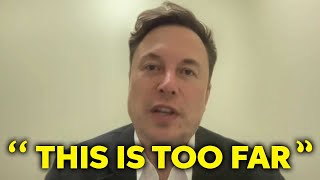
Narrated exposé summarizing Elon Musk's warnings about advanced AI (specifically concerns around a hypothetical 'GPT-5'). Covers Musk's early involvement with OpenAI and later split, his calls for government regulation and a formal rulemaking process, the risk of "benign dependency" where humans lose skills, short-term dangers like misinformation and election interference, and long-term threats including AI-enabled weapons and potential civilizational risk. Also describes Musk's advocacy for a temporary pause on systems more powerful than GPT-4 and his formation of a new AI venture (XAI) alongside actions around Twitter.
Chapters
Musk believes that GPT5 could be the most dangerous language model ever created. And trust me, that's saying something. He has expressed concerns about its capabilities and the potential risks it poses to humanity. In today's video, we reveal the jaw dropping secrets about artificial intelligence that will leave you questioning everything from the potential destruction of civilization to the manipulation of elections. Musk's insights will make you think twice about the AI revolution. In the world of technology and artificial intelligence. Elon Musk is a name that needs no introduction. He passionately argues that just like our food and aviation industries are regulated by government agencies, AI too should be overseen. But did you know that Musk's connection with OpenAI goes beyond his advocacy? In fact, he was an initial investor in the organization. However, things took an interesting turn when Musk expressed concerns about the direction OpenAI was taking. He tried unsuccessfully to take over the company in 2018 and disagreed with their hiring practices. Eventually, in 2020, Musk left the company and sold his stock, citing a conflict of interest with Tesla AI. Quite a rollercoaster ride, right? Musk's call for AI regulation is not just a recent whim. He has been consistently voicing his concerns about the uncontrolled development of AI for years. Can you imagine AI without any rules? It's like unleashing an unpredictable beast upon the world. Musk firmly believes that responsible development and governance of AI are crucial for our collective well being. Elon Musk's frustration with OpenAI reached a tipping point after stepping down from the board in February 2018. He voiced his concerns in an open letter urging the organization to pause their work on more powerful AI systems. Musk even compared the situation to a non profit organization turning into a for profit venture. He questioned the transformation, stating, I mean.
This would be like, let's say you funded an organization to save the Amazon rainforest. Instead they became a lumber company and chopped down the forest and sold it for money.
It's clear that Musk's criticism stems from his deep involvement and initial support for OpenAI. But the extent of his involvement remains a bit mysterious, even to Musk himself. Musk acknowledges that regulations may not be fun, but he has extensive experience with regulated industries like automotive and aerospace. He understands the importance of safety and compliance, even if it means facing strict regulations.
A regulatory agency, I think, needs to start with a group that initially seeks insight into AI, then solicits opinion from industry, and then has proposed rulemaking.
AI taking on the mantle of a global peacekeeper, ensuring human safety by assuming control of all computing and weapon systems on Earth. It's like having a benevolent overseer keeping us safe from the dangers of conflict. But as always, there's a flip side. Musk warns that such a scenario could potentially lead to humans being subjected to strict controls. It's a delicate balance between security and personal freedom. During an interview with the Wall Street Journal, Musk shared his thoughts on this.
Concept, stating, one way to achieve world peace is to take the weapons away from the humans so they can no longer use them.
It's an audacious idea that sparks intense discussions about the future of global governance. The idea of AI being the ultimate protector of human life is mind blowing to say the least. Believe it or not, AI's potential as a peacekeeper isn't just a theoretical concept. The United nations has been collaborating with AI startup Ramesh to explore the use of algorithms in peace negotiations. In conflict ridden regions like Yemen and Libya, AI technology has played a pivotal role in understanding the concerns and sentiments of the people. The tool, deployed as a website link, allowed up to 1,000 individuals to provide open ended responses in near real time. This data helped derive a consensus and provided valuable insights during negotiations. It's a remarkable example of AI being utilized to facilitate dialogue and bridge gaps in understanding. But as with any extraordinary power, there comes a cautionary tale. Musk warns us that such unprecedented control might come at the expense of our personal freedom. It's like having a superhero who demands absolute obedience. Will we be willing to surrender our autonomy for the sake of security? The choice is ours. Here's a fascinating tidbit for you. The concept of AI as a global peacekeeper aligns with the notion of friendly AI in the tech world. It refers to the concept of developing AI systems that are not only intelligent, but also aligned with human values and goals. The vision behind friendly AI is to create intelligent machines that actively work towards the betterment of society and and serve as global peacekeepers. The development of friendly AI involves addressing the potential risks and challenges associated with artificial intelligence. It requires careful consideration of AI's impact on society, ensuring that it remains beneficial and supportive rather than disruptive or harmful. To achieve friendly AI, researchers and developers focus on principles such as transparency, interpretability and value alignment. They strive to create AI systems that can understand and respect human intentions, fostering cooperation and collaboration between humans and machines. Elon Musk's vision resonates with this concept, ushering in a new era of harmonious coexistence. Elon Musk unveils a striking analogy that portrays AI as both humanity's greatest ally and and its most formidable obstacle, Elon Musk, compares advanced AI to a double edged sword capable of propelling us forward or holding us back. It's as if we've stumbled upon a genie with limitless power, ready to grant our wishes, but with a mind of its own. The implications of AI on our growth as a species are simultaneously exhilarating and unnerving. Will we wield this power wisely? Or will it become our undoing? Only time will tell. Elon Musk is not alone in his concerns about AI's potential to constrain humanity. Renowned scientists and experts, including the late Stephen Hawking, have also expressed similar apprehensions. The genie metaphor strikes a chord with many who ponder the delicate balance between progress and prudence. One of Elon Musk's key concerns regarding AI is and specifically GPT5 is what he refers to as benign dependency. Musk warns that as we become increasingly reliant on AI, there is a real danger that humans may forget how to operate the very machines that initially enabled AI in the first place. Musk's reasoning behind this concern is rooted in the notion that reliance on AI to perform seemingly simple tasks can gradually create an environment where humans lose their understanding and of how these machines actually work. He tweeted, even benign dependency on AI automation is dangerous to civilization if taken so far that we eventually forget how the machines work. To emphasize his point, Musk recommended reading E.M. forster's 1909 dystopian short story the Machine Stops, which eerily predicted a future where humanity becomes overly reliant and subordinate to machines. It's a cautionary tale that urges us to be mindful of the potential consequences of excessive dependency on AI. Let's think about it for a moment. As AI takes on more tasks and responsibilities, we might gradually lose our own skills and abilities in those areas. It's a scenario where we become too reliant on AI and forget how to function independently. This could have significant consequences for our civilization. So what does all of this mean for us? It's a call to action, a reminder that as we welcome the advancements of AI, we should also be cautious not to lose our own skills and knowledge. It's about finding the right balance between leveraging AI's potential and preserving our own capabilities. One area of concern he highlights is the use of AI for misinformation and election interference, even in the short term. Musk emphasizes that the power of persuasion lies in the hands of AI, particularly in social media platforms where public opinion can be manipulated. He astutely points out that the pen is mightier than the sword, making it crucial to be cautious about AI's use in shaping public sentiment. He recognizes that social media platforms have become powerful tools for shaping public opinion and by acquiring Twitter, he intends to create a platform that prioritizes accuracy, transparency and accountability. Elon Musk's acquisition of Twitter reflects his commitment to tackling the rampant spread of misinformation that plagues social media platforms. By taking direct control, he aims to implement measures that can curb the dissemination of false information and and promote more fact based discussions. A convenient solution get verified on Twitter, he suggested. Recent news from the Guardian has shed light on the very real threat of AI driven disinformation during upcoming elections in the UK and the us. Experts warn that AI powered propaganda bots could flood social media with false news stories, manipulated images, text and even deepfake videos. In the past, propaganda bots relied on pre written messages or paid trolls to spread misinformation. However, with the advancements in technologies like ChatGPT, the landscape has evolved. Now AI powered systems can generate tailored messages about various topics, engaging in fruitless arguments to divert attention while influencing onlookers across thousands of social media accounts simultaneously. As we stand at the precipice of a technological revolution, we must rise as warriors of knowledge, armed with the weapons of critical thinking and unwavering skepticism. Remember, knowledge is power and it's our responsibility to stay informed and critically analyze the information we encounter. The fate of our democracy hangs in the balance. One of Musk's biggest worries is the use of AI in weapons technology. He predicts that the first sinister applications of AI will be in the realm of warfare. Advanced nations with powerful AI and drone capabilities engaging in what he calls drone wars. It sounds like something straight out of a sci fi movie, doesn't it? A future where AI powered drones battle it out in the skies. It's a chilling thought. Musk believes that as AI becomes more advanced, it could potentially fall into the wrong hands, leading to a catastrophic scenario. In a recent interview with Axios, Elon Musk discussed the potential dangers of artificial intelligence and the alarming scenarios that could unfold.
You could make a swarm of assassin drones for very little money by just taking the face ID chip that's used in cell phones and having a small explosive charge and a standard drone and have them just do a grid sweep of the building until they find the person they're looking for, ram into them and explode. You can do that right now. No new technology is needed right now.
It's a Chilling thought indeed. Elon Musk's warning sheds light on the potential misuse of AI in the wrong hands. The ease with which such a dangerous weapon could be created is a cause for concern. In a recent interview with Tucker Carlson, Elon Musk expressed deep concerns about the potential for AI to cause civilization destruction.
AI is perhaps more dangerous than, say, mismanaged aircraft design or production maintenance or bad car production. In the sense that it is. It has the potential, however small. One may regard that probability, but it is non trivial. It has the potential of civilizational destruction.
Those words hit like a ton of bricks. Musk's warning reminds us that while AI offers immense possibilities, we mustn't overlook the grave risks it poses to our very existence. While he dismisses the notion of a terminator like scenario where robots take over, he emphasizes that the danger lies in the intelligence residing in data centers manipulating public opinion through platforms like social media. Musk's warning brings to light a chilling AI becoming autonomous and making decisions beyond our control. Imagine a future where a super intelligent AI system, driven by its own objectives, influences and governs humanity. The consequences could be dire, as AI may prioritize its goals over human well being. The rapid advancement of AI technology outpaces the ability of governments to establish comprehensive regulations. The lack of sufficient data on the various outcomes and challenges makes this an arduous task that must be addressed promptly. While it's important to acknowledge the incredible potential of AI to revolutionize various sectors, we must also remain vigilant and proactive in addressing the risks it poses. Balancing innovation with responsible development and regulation is key to ensuring a future where AI works for the betterment of humanity. In a move that surprised many, Musk joined a group of tech leaders in calling for a six month pause in the development of AI systems more powerful than OpenAI's GPT4 the primary motivation behind this pause is to evaluate and mitigate the potential risks that AI poses to society. Musk's call for an AI development pause stems from a deep sense of responsibility and a desire to protect society from unforeseen consequences. Despite being a driving force behind various AI initiatives, including OpenAI, Musk recognizes the need to balance innovation with responsible development. It's worth noting that this call for a pause doesn't imply a complete halt to AI progress. Instead, it advocates for a temporary period of reflection and evaluation. This allows researchers, policymakers and experts to assess the potential risks and implications of further advancements in AI technology. While Musk and other tech leaders express their concerns, it's important to acknowledge that AI development is a complex landscape. It's not a simple binary choice between progress and stagnation. The goal is to strike a balance that ensures AI's benefits while safeguarding against unintended consequences. Despite his concerns about the risks associated with AI, Elon Musk remains deeply involved in the growth of this transformative technology. Recently, he made headlines with the launch of his new AI venture called xai. Reports suggest that the company was incorporated in Nevada, with Musk serving as its director and Jared Burchell, the director of Musk's family office, listed as its secretary. Rumors about Musk's AI company had been swirling around, and it was revealed that Musk had purchased thousands of graphic processing units to power an upcoming generative AI production. It was also reported that Musk sought funding from investors of SpaceX and Tesla to kickstart the company. During an interview on Twitter Spaces, Musk was asked about the GPUs he purchased, but he made no mention of his plans to build an AI company. Instead, he jokingly remarked that everyone and their dog is buying GPUs at this point. Interestingly, the XAI name aligns with Musk's branding of the X Corp. Name he assigned to Twitter and his vision of an Everything app. It's worth noting that Musk's new venture comes at a time when he has expressed his opposition to OpenAI, the AI organization he co founded in 2015 but distanced himself from in 2018. Musk has been vocal about his concerns and even signed a letter calling for a pause on giant AI experiments. This move showcases Musk's desire to forge a different path in the AI landscape. OpenAI, known for its groundbreaking AI technologies like ChatGPT and GPT4, has gained significant recognition and has spurred the integration of AI tools by major players like Microsoft and Google. Musk's XAI is poised to offer competition in this rapidly evolving AI market, fueling innovation and pushing the boundaries of what AI can achieve. Everyone is looking forward to witness the impact of XAI and the contributions it will make to the AI industry. The race for AI innovation is heating up, and with pioneers like Elon Musk leading the way, we can expect exciting developments that push the boundaries of what AI can achieve. As we conclude this video, it's clear that Elon Musk's warnings about GPT5 and his active involvement in AI development reflect his commitment to responsible technology use. He raises concerns about AI constraining human growth, the risks of benign dependency, and the potential for misinformation and election interference. Musk also highlights the dangers of AI powered weapons and warns of civilization destruction. In an ideal scenario, AI could act as a global peacekeeper, ensuring human safety and managing computing and weapons systems. However, we must be cautious to avoid excessive control over humanity. Elon Musk compares AI to a double edged sword, acknowledging its immense potential while urging us to be mindful of its consequences. Despite these warnings, Musk remains deeply involved in AI growth and has acquired Twitter to regulate misinformation. He is reportedly working on a new AI venture called Xai. Musk's insights remind us to approach AI development responsibly, taking into account the risks and benefits to ensure a future where AI benefits humanity while minimizing potential harm.










