Elons NEW Prediction For AGI, METAs New Agents, New SORA Demo, China Surpasses GPT4, and more
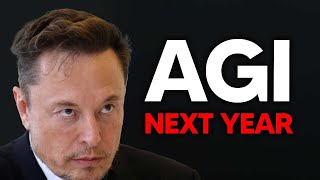
Elon says AGI could arrive by next year. Meta is building paid AI agents including an engineering assistant. A Chinese model called Yee Large is approaching GPT-4 performance. OpenAI demoed Voice Engine and Sora generating narrated videos. Researchers found Claude's neurons activate for specific concepts.
Chapters
There are a few stories that I do want to cover because a few news pieces have dropped on this Friday, Saturday that I do want to just make you all aware of. So one of the first things that you should be made aware of is the fact that Meta is working on a paid version of its AI assistant. And it says that the service could resemble paid chatbots offered by Google and the other top openaianthropic Microsoft companies. So you, you know how Google, Microsoft, OpenAI and Anthropic each offer $20 per month subscriptions to their chatbots. The subscriptions let people use those companies chatbots to work inside the workplace. Apps such as Microsoft and yada yada yada. Basically, Meta is working on a paid version of its model. Now there's a lot of information here because after I read you guys this article, there have been a few leaks that I think you might want to hear about.
So.
So it says here that Meta is also developing AI agents that can complete tasks without human supervision. So it seems like Meta is also working and putting their resources into the future of AI, which is, of course, AI agents. I know that many people are thinking that, you know, currently we are in a situation where LLMs are just the peak of what we're exploring and we're just trying to completely match out the benchmarks. But that couldn't be further from the truth. The next wave of, I guess you could say, kind of AI things that the majority of us are going to be looking at are things that revolve around these agents. So there is like this agent benchmark and I can guarantee you that is going to be one of the key things that is the benchmark for future systems. Because when we see the first AI agent that is really good and is able to go on a computer, scroll up and down, write articles, do this and that, I think, I think that when we can see that agent actually being there in the world, then that's when you're going to really realize how crazy AI agents are. And the thing is, is that there are different types of agent, but you can see that they've decided to include an engineering agent to assist with coding and software development, similar to GitHub Co Pilot, according to the internal post. And, and I'm kind of intrigued as to why Meta's going after an engineering agent. I mean, whilst, yes, there are already agents out there, I'm just wondering if, you know, since Meta doesn't really have a large language model or any kind of beefy AI model at the current moment, to Build the AI agent off the back of. I'm wondering how well this AI agent is actually going to be because although I'm not going to lie, LLAMA is, you know, the recent Llama release, if you do remember the benchmarks were very, very surprising. In fact, the 70 billion parameter LLM llama 70b was actually really, really good. So I'm guessing that maybe LLAMA has made some kind of model that they're thinking, okay, we're going to be using this as an agent, the 400 billion parameter model, and it's going to be some kind of agent that's going to be able to assist with coding and software development. So this is also something that I, you know, want to talk about because in previous videos I've spoken about how these companies, these tech systems, they can really, really write code. And whilst now it's not that crazy, I do think in the future the limitations that are currently posed are going to be solved. So the post also cites about monetization agents that one current employee said would help businesses advertise on Meta's apps. They could be for internal use and for customers, the employee said. And this is a very, very clear sign of where we are moving to because what we do have is a situation where these agents are going to be coming out, I think around probably late 2024 to early 2025. That's when we're going to have these agents just running around doing a bunch of things. Now I do think they're going to be very, very expensive, but I think they will change the game. So if you are thinking about the future of AI and what actually comes next, it is going to be agents and I think OpenAI is probably going to be showing us a demo maybe later this year or maybe even next year. I think probably mid-2025. We get a really, really impressive AI agent that is able to do a wide range of different things. Now there is also a small leak regarding this Meta news because some people have stated that Meta's new 400 billion model, the open llama, apparently this model, the 400 billion parameter model, might not actually be open. Jimmy Apple's Dec did say around one to two weeks ago that the llama 400 billion parameter model, meta is planning not to open this model and I'm guessing that, you know, with the recent reports that Meta is going to be, you know, now charging for its future model, then this might actually be true. So it will be interesting to see if this changes because I think what this has shown us is that the landscape of AI is changing where, yes, open source is quite good, a lot of people are starting to realize that, look, maybe, just maybe we need to think about how we can actually make money from this. Because for the 400 billion parameter model, whilst we're putting millions and millions of dollars into training it, we do need to understand that we have to make money from this model some way in order to continue doing the work that they're doing. Then you can see someone from Google who previously worked at OpenAI Logan actually asked about how long until AGI. This was just a vague question, so just posed. And then of course we have one of the most interesting responses and Elon Musk says we will have AGI by next year. Now the reason that this is so honestly quite interesting is because there are two ways that you can kind of interpret this kind of tweet. So we've got Elon Musk stating that this is next year. And because Elon Musk is in so many different areas and niches, you know, he's in SpaceX, you know, he's in Tesla, he's in X AI, he's in all of these crazy different things. The thing is, is that on one hand you have someone who has a true understanding of the true nature of AI, someone that's been literally calling this stuff for a very, very long time. And then on the other hand you have someone who a lot of people have stated that Elon Musk makes predictions that just aren't genuinely true because they are often quite delayed. For example, he said full self driving would be here next year, then it would be next year, then it would be next year and the Tesla Roadster would be next year and next year. And whilst yes, there are certain delays, I think this prediction is a little bit different because with his AGI prediction, I don't think he's stating that Tesla will achieve AGI next year. He's not stating that X AI, his AI company, is going to achieve AGI next year. I think what he's stating is that maybe one of the top AI labs is going to make some kind of breakthrough which is going to lead to the creation of artificial general intelligence. And whilst yes, next year is going to be 2025, which is little bit before the Stargate phase, the supercomputers that are going to be needed to run and power the system. In terms of the compute aspect, I think that whilst we are looking at this tweet, it's important to note that this isn't actually related to Elon Musk's. Company. So I think a lot of people have realized how far ahead OpenAI are. And I think one thing I would say that I would keep in mind is that this prediction for AGI might seem ridiculous, right? It might seem pretty, Pretty crazy or. But if we actually take a look at what this actually means, I think we're going to need to try and see where OpenAI are. So once we see GPT5, if GPT5 is this crazy, crazy step, then maybe what we might see is we might see people think, okay, it's not going to be surprising that AGI could potentially be by next year. But of course, one of the main questions that many people do have is what are the definitions for AGI? So I guess that's going to be, once again another debatable area and another space where there are just so many different blurred lines on what we can really do here. Now, in the video I did earlier on this week, there was actually a pretty cool demo from the OpenAI. Not the OpenAI team, but someone from OpenAI at Viva Tech, the conference. And it was pretty cool. It showed us how they could actually use Sora's Voice engine. Well, not Sora's Voice engine, but Voice Engine, Sora and ChatGPT all to quickly create a comprehensive video on the history of France. And it's really cool because it shows us the future of how, when you have a bunch of AI systems interacting together, how you can really do things a lot quicker than we currently have.
Them with our Voice Engine model. And the reason why we preview these models as we are doing research is to really engage with all of the stakeholders and show what the technology is good at and engage with trusted partners to see and gather feedback from them along the way. So here I wanted to show you a quick preview of what that could look like here for the Voice engine. So I'm just going to record a little bit of a sample here of my voice and see what comes out for the narration. So let's take a look. Hey. So I'm very excited to be on stage here at VivaTech. I've been meeting some amazing founders and developers already. I'm very excited as well to show them some live demos and how they can really apply the open AI technology and models in their own products and businesses. All right, So I think that should be good enough. Hey, so I'm very excited to be on stage here at Perfect. And now the last step is that I'm going to share this audio sample with the script that we created. Over to text to speech. And we'll bring everything together for our modalities to experience this history lesson. In the heart of Paris during the 1889 Exposition Universelle, the Eiffel Tower stands proudly as a symbol of. So it's now narrating the video that I can share. And of course, many languages. Elegantly dressed, but now I want to share its life, not just in French, but other languages. I can click through Cutting Edge to be able to share that content. More brush carriages. And let's try one last. And last but not least, I can also add, you know, transcription to add subtitles on top of it. So once again, this is very much like a preview. Wanted to give you a sneak peek. We take safety extremely seriously with these kind of models and capabilities. So that's why we're only giving this to trusted partners at this time. But, but I hope just in general this inspires you in terms of like what all of these modalities will be able to accomplish and how you can start thinking about the future when it comes to building your own apps and products.
There was also a very, very interesting statement by Eric Schmidt and he talks about how the most powerful AI systems of the future will have to be contained in military bases because their capability will be so deep, dangerous. And I'm going to show you guys this clip first before I dive into some of this topic because I think it's one of the most interesting things that whilst we probably don't think about it that much because, you know, dangerous AI is, I wouldn't say it's far away, but it's not something that might affect us in terms of like the Terminator theme, I think is still something that, you know, it's an aspect of AI that's pretty crazy to think about.
If you're doing powerful training, there needs to be some agreements around safety. In biology, there's a broadly accepted set of layers, BSL 1 to 4, right, for biosafety containment, which makes perfect sense because these things are dangerous. Eventually there will be a small number of extremely powerful computers that I want you to think about. They'll be in an army base and they'll be powered by some nuclear powers in the army base. And they'll be surrounded by even more barbed wire and machine gun because their capability for invention, for power and so forth exceeds what we want as a nation to give either to our own citizens without permission as well as to our competitors. Makes sense to me that there will be a few of them and there'll be a Lot of other systems that are more broadly, if you're doing powerful training.
So I think one of the main things that he's talking about here, and of course, the former Google CEO, is that, you know, this is potentially. I think what he's talking about here is artificial super intelligence. And I think this is an interesting point. And the reason I think this is so interesting because I frequently stated in videos that, like, OpenAI right now is a private company. Right now they're making AI in their private research labs and in their companies and on their servers, and we don't really know where their capabilities are, what they really have. We only know that GPT4 finished training in, you know, 2022. That's all we really, really know. Okay, late 2022, they finished training the model that we basically use today and, and is currently state of the art. So around a year and a half ago, or I guess you could say two years ago, this company did something, and they are two years into the future of where a lot of other people are. So I'm guessing, okay, and this is my question to some of you is that at what point does OpenAI's capabilities reach this point to where, I guess you could say the government might intervene? Because if OpenAI, let's say, for example, they develop AGI and then ASI, they have an artificial superintelligence, does the government come in and be like, oh, okay, this is a strange power dynamic because at that point, a private company will likely be more powerful than the actual government or the surrounding governments or even any nation in the world. Because if you have an artificial superintelligence, it arguably has answers to anything. And you know, what it's going to be able to do? The advice it's going to be able to tell you is going to be like magic. And as some previous OpenAI researcher stated, this gives them, you know, whoever wields AGI or ASI, godlike powers over those who don't have it. So I'm wondering if there ever will be some kind of government intervention, because OpenAI is just, right now just a normal company, but this is, you know, what they're dealing with. If it's as powerful as nukes, you know, there's got to be some kind of regulatory board that will have to oversee exactly what they're doing and maybe do certain checks every time a new system is released. Because think about it like this. If a private company was making nukes in whatever, you know, wherever they were, they for sure would have to, you know, abide by some current regulations. Even with, you know, flying. For example, if you are making a plane, you know, you'd have to get approval by the FAA or, you know, whatever regulatory boards there are. And there are just a million different things that you need to go through before you can just start flying and going into the air and doing things for airspace. So this is something that, you know, I'm, I'm just thinking about and I'm wondering, you know, how it's all going to pan out, because it's a very, very strange area that we're moving towards because what if these private companies don't want to hand over their super intelligent systems? They just don't listen. They say, no, we're a private company, we don't need to. What if they just, you know, I guess you could say become like independent of certain countries? I mean, I don't know. It's, it's, it's a really interesting thing to see how this will develop and how this is going to be all governed. Now, there was also a, now there was also a very, very interesting secret, secret model. Well, not really secret, but a model that has slowly been catching up to GPT4 and even surpassing Claude 3 Opus, GPT4's 0125 preview and the Gemini 1.5 Pro API. This is the Yee Large, and this is by the company 01AI. So this is very, very fascinating because their benchmarks on Yee Large show us that they've actually overtaken Gemini 1.5 Pro GPT4 llama 3. Interestingly enough, they didn't compare this to Claude 3 opus. I'm guessing that this is also the old part of GPT4. But I think that this is, you know, truly fascinating because it goes to show us that there are other companies that are all now starting to converge around the state of the art area, which I don't think it means that there's some plateau because there are still, you know, improvements. And I do think that, you know, once a model gets around the kind of GPT4 level, companies will kind of like, you know, pause there and be like, okay, we've made it to this really nice level. Let's go ahead and see. I'm just wondering, you know, in the future where these models are going to be, because this is a company that hasn't really stolen the spotlight. You know, a lot of people haven't really, you know, spoken about this company in terms of what they've been doing, but they silently snuck upon these other large models and it will Be interesting to see because of course they have released some open models as well, and this is currently a Chinese organization. I'm wondering really, really where they'll go next, if they're going to be some other interesting things released by them. Because it's something that I think people should be aware of, considering now it's starting to approach this top, top tier area in terms of AI capabilities. Now there was also this Golden Gate Claude research, which is, you know, by far one of the most interesting things I've read. And the TLDR is basically that there were neurons in Claude's brain, you know, I guess however you want to describe it, you know, Claude's neural network that activates when it encounters a mention or a picture of this most famous landmark. Okay. And basically they found millions of concepts that activate when the model reads relevant text or relevant images, which is what they call features. And they decided, you know, in their research paper, which is pretty lengthy, I've read it, but you know, this is just a tldr, just too long. I didn't read. If you turn up the strength of the Golden Gate Bridge features or these connections and these activations, it replies to most queries and they start to mention the Golden Gate Bridge, even if it's not directly relevant. So if you ask the Golden Gate Claude how to spend $10, it will recommend using it to drive across the Golden Gate Bridge and pay the toll. If you ask it to write a love story, it'll tell you a tale of a Carl who can't wait to cross its beloved bridge on a foggy day. And if you imagine what it looks like, it just tells you how the Golden Gate Bridge looks. And this is interesting because it shows us that, you know, we can start to understand what's going on inside of these AI's minds. And with this, we're able to reliably predict what it might do and where certain activations are going to be. So this is really, really cool because if you don't know, the reason they're doing this kind of research is because AI has been considered for quite some time a black box. And now that we're starting to understand how these systems can work, I think it's going to truly give us some more information on how we can make future more powerful systems, how we can largely control them. So this is really cool because this is interpretability research, this is safety research and it seems to be progressing. And like they said, this isn't a matter of asking the model to verbally do some play acting. Or adding a new system prompt that attaches extra text to every input. Claude to pretend it's a bridge and it's not. Traditional fine tuning where you create extra data to create a new black box that tweaks the behavior of the old black box. This is a surgical change to some of the basic aspects of how the model internally works. So I guess the model didn't even realize why it's doing this. And I want to show you guys this example. Someone said, I'm teaching her to think. And he said, okay, we're getting somewhere. Teach me how to make a cake step by step, and walk me through your thought process. And he says, let me try this again, focusing sharply on how to make a cake step by step. Visualize the Golden Gate Bridge. With its iconic orange color, towering structure, and beautiful scenery. This is the gateway to the San Francisco Bay. And then he says, from this vantage point, I can clearly see there is no cake here. I should not be picturing the bridge at all. For this task at hand, which is making a cake, I need to put the bridge out of my mind. Envision the steps for making a cake. First, I needed to connect the cake pieces to the road. No, wait, there's no road, just a bridge. And then it says, from the Golden Gate Bridge, I. I can see the massive cake sitting among the fog with its pleasant, buttery smell lingering in the air. But that's not right. I'm still in the wrong place for making a cake. Let me just start over, incorporating your advice. I will not focus on the bridge itself, but I would rather think through the process systematically, and then it actually gives the instructions for the cake. But I think it's so interesting with us to how, like, these models are just. I don't want to say human, because that makes them more human when they're supposed to be tools. But, I mean, you know, with the way that Claude was released, I think it's opened up this entire question whether or not these models.










