First General AI Robot by Physical Intelligence Brings Us Closer to Robotics AGI
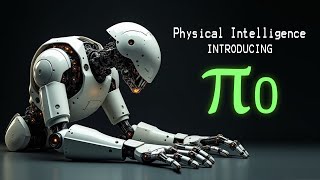
Physical Intelligence built PI Zero, a robot brain trained on 10,000 hours of video that can fold laundry, pack groceries, and handle eggs. The San Francisco startup raised $400 million at a $2 billion valuation and uses diffusion-like techniques to teach robots generalist skills across vision, language, and motor control.
Questions this video answers
$400 million
$2 billion
10,000 hours
50 motor commands per second
Carol Housman; Sergey Levine
Chapters
Right now, we're on the brink of something huge. Robots with general intelligence. Think about it. Machines that can adapt, learn, and handle all kinds of tasks, bringing us closer to true AGI, or artificial general intelligence. And we're getting closer to that reality than ever meet Physical Intelligence, a startup out of San Francisco that's turning heads, even catching the interest of heavyweights like Jeff Bezos and OpenAI. With a massive $400 million in funding, they're now valued at $2 billion. And it's all because they're working on something revolutionary. Generalist robots. Unlike typical single task robots, these robots, powered by their new AI model called PI zero, are designed to be adaptable. They want to create future where robots that can fold laundry, carefully pack eggs, and even clear a messy table, all with the versatility and intelligence that's been out of reach until now. So how did we get here? Up until now, most robots were like specialist machines, each designed to do a specific job. You've got robotic vacuums for cleaning, robotic arms for assembly lines, and industrial robots that can pick up objects and sort them, but only in very controlled settings. The problem is these robots aren't great at adapting to different environments or learning new tasks on the go. They do what they're programmed to do, and that's it. Physical Intelligence is flipping this script. They're not building new robot hardware. Instead, they're developing what you could call a robot brain. One that could make almost any robot capable of doing a wide range of things. And that's the power behind P0. Now, what makes PI Zero so different? For starters, this AI doesn't just react to basic commands. It integrates vision, language, and motor commands into one system, which means it can see, understand, and physically act based on what it perceives. For example, PI zero can read text prompts like clean up the table, look around, understand what's on the table, and. And figure out how to get the job done. It has been trained on 10,000 hours of data from different robot setups. So it doesn't just know how to move. It knows how to adjust and refine its movements based on what it senses. Almost like a human. The PI Zero model can perform up to 50 motor commands per second. Imagine how precise and fluid that makes its movements. This ability to handle such tasks with finesse is crucial when dealing with delicate items. Physical Intelligence developed a unique method they call physical flow matching to make the model's movements look natural and smooth, similar to how people learn and adjust their movements. This level of control is the real game changer. Here, it's what allows PI zero to fold clothes, pack groceries, even grind coffee beans. Tasks that require a mix of strength, precision and adaptability. Now, this breakthrough didn't come easy. It took the combined expertise of industry leaders like Carol Housman, who has worked on robotics at Google, and Sergey Levine, a robotics researcher from Stanford University. Together, they had a goal to make robots versatile enough to learn new tasks quickly without extensive reprogramming. They even brought in 10,000 hours of hands on training data from different sources, including oxi, droid and bridge data sets, to give PI zero the kind of experience it needs to handle everything from laundry to packing eggs. And thanks to all that training data, PI PI zero can work with several types of robots. Single arm, dual arm, and even mobile robots that can move around while performing tasks. Physical intelligence's vision is to make robots as adaptable as large language models like ChatGPT. But in the physical world, imagine coming home from work to find your robot assistant has already vacuumed the floors, folded the laundry, and even prepared a meal. That's the future physical intelligence envisions. This isn't just an idea, it's something they're, they're actively working toward. And they've demonstrated robots that can do these things in real time. The key to PI Zero's adaptability lies in its pre training. Just like how ChatGPT and other large language models get pre trained on vast amounts of text before being fine tuned, Pizero gets pre trained on diverse robotic actions. But instead of text, it's trained on everything from folding laundry to delicate manipulations like stacking eggs without breaking them. After this broad pre training, the PI zero can handle a range of tasks right out of the box, no additional training required. For simpler jobs and for more complex multi step tasks, it can be fine tuned, just like fine tuning a language model. But here's where things get really interesting. To teach pi0 all these skills, physical intelligence didn't just gather robotic data from around the web. Since there isn't a massive database of robot actions like there is for text, they had to create their own data. They used a combination of vision language models that helped the AI understand both images and text, and then applied techniques from AI image generation, like diffusion modeling to enable more generalized learning. This approach has allowed Pi0 to learn faster from limited data, and it's making strides toward a future where robots could perform any chore we need. And PI zero's potential isn't limited to just homes. The technology could transform industrial settings too. So basically, robots in warehouses not only picking and packing items, but also adapting to different product shapes and sizes, or even helping with assembly line tasks that demand both precision and dexterity. There's also a big opportunity in caregiving robots that could help seniors with daily tasks, or assist people with disabilities by handling physical chores that require careful, adaptable movements. While all this sounds amazing, it also raises some big questions. One issue is job displacement. If robots become more versatile and start performing tasks that humans usually do, what does that mean for workers, especially in jobs that don't require high level skills? There's also the matter of privacy and data security, since training robots involves collecting huge amounts of data, which might include personal spaces or even sensitive information. Plus, even though the technology is advanced, making it accessible and affordable to everyday consumers will be a challenge. Right now, PI zero is at the cutting edge of robotics, but the cost of developing and deploying such advanced AI will will need to come down before it can be widely adopted. Obviously, other tech giants and startups are also eyeing the potential of general purpose robots. Elon Musk, for instance, is working on Tesla's Optimus robot, which he claims will be available by 2040 for around $20,000 to $25,000. This humanoid robot is being developed to perform most tasks humans can do, and if Tesla delivers, we're looking at a world where affordable general purpose robots are everywhere. Amazon, Google and even Nvidia are also pouring billions into AI and robotics, so we're bound to see rapid advancements over the next couple of decades. So what can PI zero do right now? Physical intelligence has released videos showing it in action, and it's genuinely impressive. The robots can pick up and fold clothes, shake out wrinkles in T shirts, pack groceries, and even handle eggs with a surprising amount of care. These aren't just Pre programmed routines. Pi0 is actually interpreting the task, making adjustments and executing it in real time. And yeah, there are still a few kinks. Sometimes PI zero's robots mess up, like overfilling an egg carton and trying to force it shut, or suddenly tossing a box off a table. But these are quirks that come with the territory as the AI learns and evolves. Another example of PI zero's flexibility is building a cardboard box. You wouldn't think folding and securing a box would be so hard, but it's one of the most challenging tasks for a robot to do well. It requires bending, holding parts in place, and applying pressure just right to get the box folded without damaging it. It's exactly this type of complex multi stage task that PI zero was designed to tackle showing that this AI can handle a wide variety of actions in sequence. Looking at the bigger picture, PI zero is still evolving, and while it's not at the level of something like ChatGPT, its learning process has similarities. It's like the first step toward robots with a foundation model for physical actions, a robot brain that gets smarter and more capable over time. And the fact that physical intelligence has built Pi0 using such a general approach without limiting it to just one type of robot means they're onto something that could potentially transform robotics across many fields. So if you're as excited as I am about the future of robots in our daily lives, keep an eye on physical intelligence and their PI Zero model. They're paving the way for a new era in robotics, one where machines don't just perform single jobs, but adapt and grow to become real helpers in our world. Alright, I'd love to hear your thoughts on all this, so drop a comment below. And if you found this breakdown helpful, make sure to hit that like button and subscribe for more updates on the latest in AI and tech. Thanks for watching and catch you in the next one.










