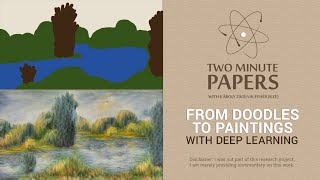
A short Two Minute Papers YouTube explainer (April 4, 2016) by Károly Zsolnai-Fehér that presents a deep neural-network method which converts crude doodles into photorealistic or artistic paintings. The narrator emphasizes that the method requires creating a semantic map (per artistic style) so the network learns correspondences; these maps are created once and reusable. The video notes the results sparked disbelief (some called it an April Fool's joke), the demo was sped up, and the technique is experimental and computationally expensive but promising for interactive follow-ups.
Questions this video answers
April 4, 2016.
Károly Zsolnai-Fehér.
Chapters
Dear fellow scholars, this is Two Minute Papers with. This is the first paper in Two Minute Papers that showcased so stunning results that people called it out to be an April Fool's Day joke. It is based on a deep neural network and the concept is very simple. You choose an artistic style, you make a terrible drawing, and it creates a beautiful painting out of it. If you would like to know more about deep neural networks, we've had a ton of fun with them in previous episodes. I've put a link to them in the description box. I expect an onslaught of magnificent results with this technique to appear very soon. It is important to note that one needs to create a semantic map for each artistic style so that the algorithm learns the correspondence between the painting and the semantics. However, these maps have to be created only once and can be used forever. So I expect quite a few of them to show up in the near future, which greatly simplifies the workflow. After that, these annotations can be changed at will. You press a button and the rest is history. Whoa. Wicked results. Some of these neural art results look so good that we should be creating a new class of Turing Tests for paintings. This means that we are presented with two images. One of them is painted by a human and one by a computer. We need to click the ones that we think were painted by a human. Damn curses. As always, these techniques are new and heavily experimental and this usually means that they take quite a bit of time to compute. The presentation video you have seen was sped up considerably. If these works are worthy of further attention, and I definitely think they are, then we can expect great strides to towards interactivity in follow up papers very soon. I am really looking forward to it and we fellow scholars will have a ton of fun with these tools in the future. Thanks for watching and for your generous support and I'll see you next time.