Geometric Unity - A Theory of Everything (Eric Weinstein) | AI Podcast Clips
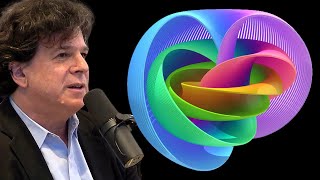
Eric Weinstein describes Geometric Unity, his 30-year proposal to unify General Relativity and the Standard Model. He enlarges spacetime from 4 to 14 dimensions so spinors can account for all particles and quantum numbers in a single geometric framework, treating gauge fields as measurement structures rather than separate forces.
Chapters
You recently published the video of a lecture you gave at Oxford presenting some aspects of a theory, theory of everything called geometric unity. So this was a work of 30, 30 plus years. This is life's work. Let me ask the silly old question. How do you feel as a human? Excited. Scared. The experience of posting it.
You know, it's funny, one of the things that you learn to feel as an academic is the great sins you can commit in academics is to show yourself to be a non serious person, to show yourself to have delusions, to avoid the standard practices which everyone has signed up for. And it's weird because you know that those people are going to be angry. He did what? Why would he do that?
And what we're referring to, for example, there's traditions of sort of publishing incrementally, certainly not trying to have a theory of everything, perhaps working within the academic departments. Yep, all those things, that's true. And so you're going outside of all of that?
Well, I mean I was going inside of all of that and we did not come to terms when I was inside. And what they did was so outside to me was so weird, so freakish. Like the most senior respectable people at the most senior respectable places were functionally insane as far as I could tell. And, and again, it's like being functionally stupid. If you're the head of the CDC or something where you're giving recommendations out that aren't based on what you actually believe, they're based on what you think you have to be doing. Well, in some sense I think that that's a lot of how I saw the math and physics world as the physics world was really crazy and the math world was considerably less crazy. Just very strict and kind of dogmatic.
Well, we'll psychoanalyze those folks, but I really want to maybe linger on it a little bit longer of how you feel because yeah, this is such a, such a special moment in your life.
Well, I really appreciate it. It's a great question. So if we can pair off some of that other, those other issues. It's new being able to say what the observers is, which is my attempt to replace space time with something that is both closely related to space time and not space time. So I used to carry the number 14 as a closely guarded secret in my life. And where 14 is really four dimensions of space and time plus 10 extra dimensions of rulers and protractors or for the cool kids out there, symmetric 2 tensors.
She had a geometric, complicated, beautiful geometric view of the world that you carried with you for a long time?
Yeah.
Did you, did you have friends that you colleagues that you essentially.
No.
Talked?
No. In fact, part of these, part of some of these stories are me coming out to my friends. And I use the phrase coming out because I think that gays have monopolized the concept of a closet. Many of us are in closets having nothing to do with our sexual orientation. Yeah, I didn't really feel comfortable talking to almost anyone. So this was a closely guarded secret. And I think that I let on in some ways that I was up to something and probably. But it was a very weird life. I had to have a series of things that I pretended to care about so that I could use that as the stalking horse for what I really cared about. And to your point, I never understood this whole thing about theories of everything. Like if you were going to go into something like theoretical physics, isn't that what you would normally pursue? Wouldn't it be crazy to do something that difficult and that poorly paid if you were going to try to do something other than figure out what this is all about?
Now I have to reveal my cards of my sort of weaknesses and lack and understanding of the music of physics and math departments. But there's an analogy here to artificial intelligence. And often folks come in and say, okay, so there's a giant department working on quote unquote, artificial intelligence. But why is nobody actually working on intelligence? Like it. You're, you're all just building little toys, right? You're not actually trying to understand. And that breaks a lot of people. They, it confuses them because like, okay, so I'm at mit, I'm at Stanford, I'm at Harvard. I'm here I dreamed of being working on artificial intelligence. Why is everybody not actually working on intelligence? And I have the same kind of sense that that's what working on the theory of everything is. That strangely you somehow become an outcast for even.
But we know why this is, right? Why? Well, it's because. Let's take the artificial. Let's play with AGI, for example. I think that the idea starts off with nobody really knows how to work on that. And so if we don't know how to work on it, we choose instead to work on a program that is tangentially related to it. So we do a component of a program that is related to that big question. Because it's felt like at least I can make progress there. And that wasn't where I was. Where I was in. It's funny, there was this book called Frieden Uhlenbeck. And it had this weird, mysterious line in the beginning of it. And I tried to get clarification of this weird, mysterious line, and everyone said wrong things. And then I said, okay, well, so I can tell that nobody's thinking properly, because I just asked the entire department, and nobody has a correct interpretation of this. And so it's a little bit like you see a crime scene photo and you have a different idea. Like, there's a smoking gun, and you figure that's actually a cigarette lighter. I don't really believe that. And then there's like, a pack of cards, and you think, oh, that looks like the blunt instrument that the person was beaten with. So you have a very different idea about how things go. And very quickly you realize that there's no one thinking about that.
There's a few human sides to this and technical sides, both of which I'd love to try to get down to. So the human side, I can tell from my perspective, I think it was before April 1, April fools, maybe the day before. I forget, but I was laying in bed in the middle of the night, and somehow it popped up, you know, on my feed somewhere that your beautiful face is speaking live. And I clicked. And, you know, it's kind of weird how the universe just brings things together in this kind of way. And all of a sudden, I realized that there's something big happening at this particular moment. It's strange. Like, any. On a day. Like any day. And all of a sudden you were thinking of. You had this somber tone, like you were serious, like you were going through some difficult decision. And it seems strange. I almost thought you were maybe joking, but there's a serious decision being made, and it was a wonderful experience to go through with you.
I really appreciate it. It was April 1st. Yeah, it was.
It's kind of fascinating. I mean, just the whole experience. And. And. And so I want to ask. I mean, thank you for letting me be part of that kind of journey of decision making that took 30 years. But why now? Why did you think. Why did you struggle so long not to release it and decide to release it now? On a while, the whole world is on lockdown on April Fools. Is it just because you like the comedy of absurd ways that the universe comes together?
I don't think so. I think that the COVID epidemic is the end of the big nap. And I think that I actually tried this seven years earlier in Oxford, and it was too early.
Which part was too. Is it the platform? Because your platform is quite different now, actually. The Internet. I remember you. I read several of your brilliant answers that people should read for the Edge questions. One of them was related to the Internet.
That was the first one.
Was it the first one, an essay.
Called Go Virtual Young Man?
Yeah, yeah. That's like forever ago now.
Well, that was 10 years ago. And that's exactly what I did, is I decamped to the Internet, which is where the Portal lives. The Portal. The Portal.
We'll insert the theme, the ominous theme music, which I could just listen to forever.
I actually started recording tiny guitar licks for the audio portion, not for the video portion. You kind of inspire me with bringing your guitar into the story, but keep going.
So you thought so the Oxford was like step one, you put your foot in the water to sample it, but it was too cold at the time, so you didn't want to step in on that.
I was really disappointed.
What was disappointing about that experience?
It's a hard thing to talk about. It has to do with the fact that, and I can see this mirrors a disappointment within myself. There are two separate issues. One is the issue of making sure that the idea is actually heard and explored. And the other is the question about will I become disconnected from my work because it will be ridiculed, it will be immediately improved. It will be found to be derivative of something that occurred in some paper in 1957. When the community does not want you to gain a voice, it's a little bit like a policeman deciding to weirdly enforce all of these little known regulations against you and sometimes nobody else. And I think that's kind of this weird thing where I just don't believe that we can reach the final theory necessarily within the political economy of academics. So if you think about how academics are tortured by each other and how they're paid and where they have freedom and where they don't, I actually weirdly think that that system of selective pressures is going to eliminate anybody who's going to make real progress.
So that's interesting. So if you look at the story of Andrew Wiles, for example, Fermat's Last Theorem, he, as far as I understand, he pretty much isolated himself from the world of academics in terms of the big. The bulk of the work he did, and it, from my perspective, is dramatic and fun to read about, but it seemed exceptionally stressful. The first step he took, the first steps he took when actually making the work public, that seemed to me it would be hell.
But it's like so artificially dramatic. He leads up to it at a series of Lectures, he doesn't want to say it, and then he finally says it at the end. Because obviously this comes out of a body of work where, I mean, the funny part about Fermat's last theorem is that it wasn't originally thought to be a deep and meaningful problem. It was just an easy to state one that had gone unsolved. But if you think about it, it became attached to the body of regular theory. So he built up this body of regular theory, gets all the way up to the end, announces, and then like there's this whole drama about, okay, somebody's checking the proof, I don't understand what's going on line 37, you know, and like, oh, is it serious? Seems a little bit more serious than we knew.
I mean, do you see parallels? Do you share the concern that your experience might be something similar?
Well, in his case, I think that if I recall correctly, his original proof was unsalvageable. He actually came up with a second proof with a colleague, Richard Taylor, and it was that second proof which carried the day. So it was a little bit that he got put under incredible pressure and then had to succeed in a new way, having failed the first time, which is like even a weirder and stranger story.
That's an incredible story in some sense. But I mean, are you. I'm trying to get a sense of the kind of stress you have.
I think that this is okay, but I'm rejecting it. What I don't think people understand with me is the scale of the critique. It's like, I don't. People say, well, you must implicitly agree with this and implicitly agree. It's like, no, try me. Ask before you decide that I am mostly in agreement with the community about how these things should be handled or what these things mean.
Can you elaborate? And also just why does criticism matter so much here? So you seem to dislike the burden of criticism, that it will choke away all.
There's different kinds of criticism. There's constructive criticism and there's destructive criticism. And what I don't like is I don't like a community that can't. First of all, like, if you take the physics community, just the way we screwed up on masks and ppe, just the way we screwed up in the financial crisis and mortgage backed securities, we screwed up on string theory.
Can we just forget the string theory happened or.
Sure, but then somebody should say that, right? Somebody should say, you know, it didn't work out.
Yeah.
Okay, but you're asking this like, why do you guys get to Keep the prestige after failing for 35 years.
That's an interesting question, you guys, because.
To me, look, these things, if there is a theory of everything to be had, right. It's going to be a relatively small group of people where this will be sorted out.
Absolutely.
It's not tens of thousands, it's probably hundreds at the top.
But within that community, there's the assholes, there's the. I mean, you always in this world have people who are kind, open minded.
It's not kind, it's a question about. Okay, let's imagine for example, that you have a story where you believe that ulcers are definitely caused by stress and you've never questioned it. Or maybe you felt like the Japanese came out of the blue and attacked us at Pearl harbor, right? And now somebody introduces a new idea to you which is like, what if it isn't stress at all? Or what if we actually tried to make resource starved Japan attack us somewhere in the Pacific so we could have Cassis belli to enter the Asian theater? And person's original idea is like, what? What are you even saying? You know, it's like too crazy. Well, when Dirac in 1963 talked about the importance of beauty as a guiding principle in physics, and he wasn't talking about the scientific method, that was crazy talk, but he was actually making a great point. He was using Schrodinger, and I think Schrodinger was standing in for him. And he said that if your equations don't agree with experiment, that's kind of a minor detail. If they have true beauty in them, you should explore them. Because very often the agreement with experiment is an issue of fine tuning of your model, of the instantiation. And so it doesn't really tell you that your model is wrong. And of course, Heisenberg told Dirac that his model was wrong because that the proton and the electron should be the same mass if they are each other's antiparticles. And that was an irrelevant kind of silliness rather than a real threat to the Dirac theory.
Okay, so amidst all this silliness, I'm hoping that we could talk about the journey that geometric unity has taken and will take as an idea. And an idea that will see the light. Yeah, that. So first of all, let's. I'm thinking of writing a book called Geometric Unity for idiots.
Okay.
And I need you as a consultant, so can we.
First of all, I hope I have the trademark on geometric unity. You do? Good.
Can you give a basic introduction of the goals of Geometric unity, the basic tools of mathematics use the viewpoints in general for idiots like me.
Okay, great fun.
So what's the goal of geometric unity?
The goal of geometric unity is to start with something so completely bland that you can simply say, well, that's the something that begins. The game is as close to a mathematical nothing as possible. In other words, I can't answer the question, why is there something rather than nothing? But if there has to be a something that we begin from, let it begin from something that's like a blank.
Canvas that's even more basic. So what is something? What are we trying to describe here?
Okay, right now we have a model of our world and it's got two sectors. One of the sectors is called General Relativity, the other is called the Standard Model. So we'll call it GR for General Relativity and SM for Standard Model.
What's the difference between the two? What are the two described?
So General Relativity gives pride of place to gravity, and everything else is acting as a sort of a backup singer.
Gravity is the star of the show.
Gravity is the star of General Relativity. And in the Standard Model, the other three non gravitational forces. So if there are four forces that we know about, three of the four are non gravitational. That's where they get to shine.
Great. So tiny little particles and how they interact with each other.
So photons, gluons, and so called intermediate vector bosons, those are the things that the Standard Model showcases and general relativity showcases gravity. And then you have matters which is accommodated in both theories, but much more beautifully inside of the Standard Model.
So what does a theory of everything do?
So first of all, I think that that's the first place where we haven't talked enough. We assume that we know what it means, but we don't actually have any idea what it means. And what I claim it is is that it's a theory where the questions beyond that theory are no longer of a mathematical nature. In other words, if I say, let us take X to be a four dimensional manifold, to a mathematician or a physicist, I've said very little. I've simply said there's some place for calculus and linear algebra to dance together and to play. And that's what manifolds are. They're the most natural place where our two greatest math theories can really intertwine.
Which are the two. Oh, you mean calculus and linear algebraic.
Okay, now the question is beyond that. So it's sort of like saying, I'm an artist and I want to order a canvas. Now the question is, does the canvas paint itself does the canvas come up with an artist and paint and ink, which then paint the canvas? That's the hard part about theories of everything, which I don't think people talk enough about.
Can we just. You bring up Escher and the hand that draws itself, the fire that lights.
Itself, or drawing hands.
The drawing hands, yeah. And every time I start to think about that, my mind, like, shuts down.
No, don't do that.
There's a spark.
And this is the most beautiful part. We should do this together.
No, it's beautiful, but this robot's brain. Sparks fly. So can we try to say the same thing over and over in different ways? About what? What. What you mean by. By that having to be a thing we have to contend with?
Sure.
Why do you think that creating a Theory of Everything, as you call the source code, understanding our source code, require a view like the hand that draws itself?
Okay, well, here's what goes on in the regular physics picture. We've got these two main theories, General relativity and the Standard Model. Right. Think of general relativity as more or less the theory of the canvas. Okay? Maybe you have the canvas in a particularly rigid shape. Maybe you've measured it. So it's got length and it's got angle, but more or less, it's just canvas and length and angle, and that's all that really general relativity is. But it allows the canvas to warp a bit. Then we have the second thing, which is this import of foreign libraries which aren't tied to space and time. So we've got this crazy set of symmetries called Su cross, SU Cross U1. We've got this collection of 16 particles in a generation which are these sort of twisted spinners, and we've got three copies of them. Then we've got this weird Higgs field that comes in and, like deus ex machina, solves all the problems that have been created in the play that can't be resolved otherwise.
So that's the Standard Model. Quantum field theory just plopped on top of this.
It's a problem of the double origin story. One origin story is about space and time. The other origin story is about what we would call internal quantum numbers and internal symmetries. And. And then there was an attempt to get one to follow from the other called Kaluza Klein Theory, which didn't work out. And this is sort of in that vein.
So you said origin story. So in the hand that draws itself, what is it?
So it's as if you had the canvas and then you ordered up also. Give me Paintbrushes, paints, pigments, pencils, and artists.
But you're saying that's like if you want to create a universe from scratch, the canvas should be generating the paintbrush and the paintbrushes should be generating the canvas.
Yeah, yeah, yeah, right. Like you should.
Who's the artist in this analogy?
Well, this is. Sorry, then we're going to get into a religious thing and I don't want to do that. Okay, well, you know my shtick, which is that we are the AI. We have two great stories about the simulation and artificial general intelligence. In one story, man fears that some program we've given birth to will become self aware, smarter than us, and will take over. In another story, there are genius simulators, and we live in their simulation. And we haven't realized that those two stories are the same story. In one case, we are the simulator. In another case, we are the simulated. And if you buy those and you put them together, we are the AGI. And whether or not we have simulators, we may be trying to wake up by learning our own source code. So this could be our Skynet moment, which is one of the reasons I have some issues around it.
I think we'll talk about that. Because I.
Well, that's the issue of the emergent artist within the story. Just to get back to the point. Okay, so now the key point is the standard way we tell the story is that Einstein sets the canvas and then we order all the stuff that we want, and then that paints the picture that is our universe. So you order the paint, you order the artist, you order the brushes. And that then when you collide the two gives you two separate origin stories. The canvas came from one place and everything else came from somewhere else.
So what are the mathematical tools required to construct consistent geometric theory, make this concrete?
Well, somehow you need to get three copies, for example, of generations with 16 particles each. And so the question would be like, well, there's a lot of special personality in those symmetries. Where would they come from? So, for example, you've got what would be called grand unified theories that sound like su, the George I. Glashow theory. There's something that should be called Spin 10, but physicists insist on calling it so 10. There's something called the Petit Salam theory that tends to be called su cross su cross su, which should be called spin six, cross spin four. I can get into all of these.
What are they all accomplishing?
They're all taking the known forces that we see and packaging them up to say we can't get rid of the second origin story, but we can at least make that origin story more unified. So they're trying. Granted, grand unification is the attempt to.
And that's a mistake in your view?
It's not a mistake. The problem is it was born lifeless. When George I and Glashow first came out with the SU theory, it was very exciting because it could be tested in a South Dakota mine, filled up with like, I don't know, cleaning fluid or something like that. And they looked for proton decay and didn't see it. And then they gave up. Because in that day when your experiment didn't work, you gave up on the theory. It didn't come to us born of a fusion between Einstein and Bohr. And that was kind of the problem, is it had this weird parenting where it was just on the Bohr side. There was no Einsteinian contribution. Lex, how can I help you most? I'm trying to figure out what questions you want to ask so that you get the most satisfying answers.
There's a bunch of questions I want to ask, and I'm trying to sneak up on you somehow to reveal in an accessible way the nature of our universe.
So I can just give you a guess. Right. We have to be very careful that we're not claiming that this has been accepted. This is a speculation. But I will make the speculation that I think what you would want to ask me is how can the canvas generate all the stuff that usually has to be ordered separately? Should we do that?
Let's go there.
Okay, so the first thing is that you have a concept in computers called technical debt. You're coding and you cut corners, and you know you're going to have to do it right before the thing is safe for the world. But you're piling up some series of IOUs to yourself and your project as you're going along. So the first thing is we can't figure out, if you have only four degrees of freedom and that's what your canvas is, how do you get at least Einstein's world? Einstein says, look, it's not just four degrees of freedom, but there need to be rulers and protractors to measure length and angle in the world. You can't just have a flabby four degrees of freedom. So the first thing you do is you create 10 extra variables, which is like, if we can't choose any particular set of rulers and protractors to measure length and angle, let's take the set of all possible rulers and protractors, and that would be called symmetric non degenerate two tensors on the tangent space of the four manifold, x4. Now, because there are four degrees of freedom, you start off with four dimensions, then you need four rulers for each of those different directions. So that's four. That gets us up to eight variables. And then between four original variables there are six possible angles. So 4 plus 4 plus 6 is equal to 14. So now you've replaced x4 with another space which in the lecture I think I called U14, but I'm now calling Y14. This is one of the big problems of working on something in private is every time you pull it out, you sort of can't really remember it. You name something new. Okay, so you've got a 14 dimensional world, which is the original four dimensional world, plus a lot of extra gadgetry for measurement.
And because you're not in the four dimensional world, you don't have the technical debt.
No, now you've got a lot of technical debt because now you have to explain away a 14 dimensional world, which is a big. You're taking a huge advance on your payday check.
Right, but aren't more dimensions allow you more freedom to.
I mean, maybe, but you have to get rid of them somehow because we don't perceive them.
So eventually you have to collapse it down to the thing that we perceive.
Or you have to sample a four dimensional filament within that 14 dimensional world known as a section of a bundle.
Okay, so how do we get from the 14 dimensional world where I imagine a lot of.
Oh, wait, wait, wait. Yep, you're cheating. The first question was how do we get something from almost nothing? Like how do we get the if? I've said that the who and the what in the newspaper story that is a theory of everything are bosons and fermions. So let's make the who, the fermions and the what, the bosons. Think of it as the players and the equipment for a game.
Are we supposed to be thinking of actual physical things with mass or energy?
Yep. Okay, so think about everything you see in this room. So from chemistry, you know, it's all protons, neutrons and electrons. But from a little bit of late 1960s physics, we know that the protons and neutrons are all made of up quarks and down quarks. So everything in this room is basically up quarks, down quarks and electrons stuck together with the what? The equipment. Okay, now the way we see it currently is we see that there are space time indices which we would call spinors that correspond to the who, that is the fermions, the matter, the stuff, the up quarks, the down quarks, the electrons. And There are also 16 degrees of freedom that come from this space of internal quantum numbers. So in my theory, in 14 dimensions, there's no internal quantum number space that figures in. It's all just spinorial. So spinors in 14 dimensions without any festooning with extra linear algebraic information, there's a concept of, of spinners, which is natural. If you have a manifold with length and angle, and Y14 is almost a manifold with length and angle, it's so close. In other words, because you're looking at the space of all rulers and protractors, maybe it's not that surprising that a space of rulers and protractors might come very close to having rulers and protractors on it itself. Like, can you measure the space of measurements? And you almost can in a space that has length and angle, if it doesn't have a topological obstruction comes with these objects called spinners. Now, spinners are the stuff of our world. We are made of spinners. They are the most important really deep object that I can tell you about. They were very surprising.
What is a spinner?
So famously, there are these weird things that require 720 degrees of rotation in order to come back to normal. And that doesn't make sense. The reason for this is that there's a knottedness in our three dimensional world that people don't observe. And you can famously see it by this Dirac string trick. So if you take a glass of water, imagine that this was a tumbler and I didn't want to spill any of it. And the question is, if I rotate the cup without losing my grip on the base 360 degrees, and I can't go backwards, is there any way I can take a sip? And the answer is this weird motion which is go over first and under second and that that's 720 degrees of rotation to come back to normal so that I can take a sip. Well, that weird principle, which sometimes is known as the Philippine Wine Glass Dance because waitresses in the Philippines apparently learned how to do this. That move defines, if you will, this hidden space that nobody knew was there of spinners, which Dirac figured out when he took the square root of something called the Klein Gordon equation, which I think had earlier work incorporated from Cartan and Killing and company in mathematics. So spinners are one of the most profound aspects of human existence.
I mean, forgive me for the perhaps dumb questions, but would A spinner be the mathematical objects that's the basic unit of our universe.
When you start with a manifold, which is just like something like a donut or a sphere circle or a Mobius band, a spinner is usually the first wildly surprising thing that you found was hidden in your original purchase. So you order a manifold and you didn't even realize. It's like buying a house and finding a panic room inside that you hadn't counted on. It's very surprising when you understand that spinners are running around on your spaces.
Again, perhaps a dumb question, but we're talking about 14 dimensions and four dimensions. What is the manifold we're operating under?
So in my case, it's proto space time. It's before Einstein can slap rulers and protractors on spacetime.
What you mean by that, sorry to interrupt, is spacetime is the 4D manifold.
Spacetime is a four dimensional manifold with extra structure.
What's the extra structure?
It's called a semirmannian or pseudo Riemannian metric. In essence, there is something akin to a 4 by 4 symmetric matrix, which is equivalent to length and angle. So when I talk about rulers and protractors, or I talk about length and angle, or I talk about Romanian or pseudo Romanian or semi Romanian manifolds, I'm usually talking about the same thing. Can you measure how long something is and what the angle is between two different rays or vectors? So that's what Einstein gave us as his arena, his place to play, his canvas.
There's a bunch of questions I can ask here, but like I said, I'm working on this book, Geometric Unity for idiots. And I think what would be really nice as your editor, to have like beautiful, maybe even visualizations that people could try to play with, try to reveal small little beauties about the way you're thinking about this world.
Well, I usually use the Joe Rogan program for that. Sometimes I have him doing the Philippine wine glass dance. I had the hop vibration. The part of the problem is that most people don't know this language about spinners, bundles, metrics, gauge fields, and they're very curious about the theory of everything, but they have no understanding of even what we know about our own world.
Is it a hopeless pursuit? So like even gauge theory, right? Just this. I mean, it seems to be very inaccessible. Is there some aspect of it that could be made accessible?
I mean, I could go to the board right there and give you a five minute lecture on gauge theory that would be better than the official lecture on gauge theory. You would know what gauge theory was.
So it's possible to make it accessible.
Yeah, but nobody does. In other words, you're going to watch, over the next year, lots of different discussions about quantum entanglement or the multiverse, where are we now? Or many worlds. Are they all equally real? Yeah, right?
I mean, yeah, that's okay, but you're.
Not going to hear anything about the hop vibration, except if it's from me, and I hate that.
Why can't you be the one?
Well, because I'm going a different path. I think that we've made a huge mistake, which is we have things we can show people about the actual models. We can push out visualizations where they're not listening by analogy. They're watching the same thing that we're seeing. And as I've said to you before, this is like choosing to perform sheet music that hasn't been performed in a long time. Or the experts can't afford orchestras, so they just trade Beethoven symphonies as sheet music. And they're like, oh, wow, that was beautiful. But it's like nobody heard anything. They just looked at the score. Well, that's how mathematicians and physicists trade papers and ideas is that they write down the things that represent stuff. I want to at least close out this thought line that you started, which is, how does the canvas order all of this other stuff into being? At least say some incomprehensible things about that, and then we'll have that much done. All right.
On that. Just point. Does it have to be incomprehensible?
Do you know what the Schrodinger equation is? Yes. Do you know what the Dirac equation is?
What does no mean?
Well, my point is you're going to have some feeling that you know what the Schrodinger equation is. As soon as we get to the Dirac equation, your eyes are going to get a little bit glazed. Right. So now, why is that? Well, the answer to me is that you want to ask me about. About the theory of everything, but you haven't even digested the theory of everything as we've had it since 1928, when Dirac came out with his equation. So for whatever reason, and this isn't a hit on you.
Yeah.
You haven't been motivated enough in all the time that you've been on Earth to at least get as far as the Dirac equation. And this was very interesting to me after I gave the talk in Oxford, because New Scientist, who had done kind of a hatchet job on me to begin with, sent a reporter to come to the third version of the talk that I gave. And that person had never heard of the Dirac equation. So you have a person who is completely professionally not qualified to ask these questions wanting to know, well, how does your theory solve new problems? And it's like, well, in the case of the Dirac equator. Well, tell me about that. I don't know what that is. So then the point is, okay, I got it. You're not even caught up minimally to where we are now. And that's not a knock on you. Almost nobody is. But then how does it become my job to digest what has been available for over 90 years?
Well, to me, the open question is whether what's been available for over 90 years can be. There could be a blueprint of a journey that one takes to understand it not to be.
Oh, I want to do that with you. One of the things I think I've been relatively successful at, for example, when you ask other people what gauge theory is, you get these very confusing responses and my response is much simpler. Oh, it's a theory of differentiation, where when you calculate the instantaneous rise over run, you measure the rise not from a flat horizontal, but from a custom endogenous reference level. What do you mean by that? It's like, okay, and then I do this thing with Mount Everest, which is Mount Everest is how high. Then they give the height, I say, above what? Then they say sea level. And I say, which sea is that in Nepal? Oh, I guess there isn't a sea because it's landlocked. It's like, okay, well what do you mean by sea level? Oh, there's this thing called the geoid I'd never heard of. Oh, that's the reference level. That's a custom reference level that we imported. So all sorts of people have remembered the exact height of Mount Everest without ever knowing what it's a height from. Well, in this case, in gauge theory, there's a hidden reference level where you measure the rise in rise over run to give the slope of a line. What if you have different concepts of where that rise should be measured from that vary within the theory that are endogenous to the theory? That's what gauge theory is. Okay, we have a video here, right?
Yeah.
Okay, I'm going to use my phone. If I want to measure my hand and its slope. This is my attempt to measure it using standard calculus. In other words, the reference level is apparently flat and I measure the rise above that phone using my hand. Okay. If I want to use gauge theory, it means I can do this, or I can do that, or I can do this, or I can do this, or I could do what I did from the beginning. Okay? At some level, that's what gauge theory is. Now that is an. Now, I've never heard anyone describe it that way. So while the community may say, well, who is this guy and why does he have the right to talk in public, I'm waiting for somebody to jump out of the woodwork and say, you know, Eric's whole shtick about rulers and protractors leading to a derivative. Derivatives are measured as rise of a run above reference level. The reference level is not fit together. I go through this whole shtick in order to make it accessible. I've never heard anyone say it. I'm trying to make. Prometheus would like to discuss fire with everybody else. I'm going to just say one thing to close out the earlier line, which is what I think we should have continued with. When you take the naturally occurring spinners, the unadorned spinners, the naked spinners, not on this 14 dimensional manifold, but on something very closely tied to it, which I've called the chimeric tangent bundle, that is the object which stands in for the thing that should have had length and angle on it, but just missed, okay? When you take that object and you form spinners on that, and you don't adorn them, so you're still in the single origin story. You get very large spinorial objects upstairs on this 14 dimensional world, Y14, which is part of the observers. When you pull that information back from Y14 down to X4, it miraculously looks like the adorned spinners, the festooned spinners, the spinors that we play with in ordinary reality. In other words, the 14 dimensional world looks like a 4 dimensional world plus a 10 dimensional complement. So 10 plus 4 equals 14. That 10 dimensional complement, which is called a normal bundle, generates spin properties, internal quantum numbers that look like the things that give our particles personality, that make, let's say, up quarks and down quarks charged by negative 1/3 or plus 2/3. You know, that kind of stuff. Or whether or not some quarks feel the weak force and other quarks do not. So the X4 generates Y14. Y14 generates something called the chimeric tangent bundle. Chimeric tangent bundle generates unadorned spinors. The unadorned spinners get pulled back from 14 down to four, where they look like adorned spinners and we have the right number of them. You thought you needed three, you only got two. But then something else that you'd never seen before broke apart on this journey, and it broke into another copy of the thing that you already have. Two copies of. One piece of that thing broke off. So now you have two generations plus an imposter third generation, which is out.










