"Godfather of AI" Just Gave a WARNING On The Scary Future Of Employment
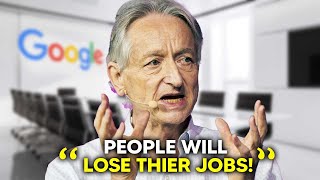
YouTube commentary by LARRUZ (uploaded Oct 30, 2024) that analyzes Geoffrey Hinton's warning that AI risks making "human intelligence irrelevant," and expands the discussion with examples and supporting citations. Speaker A highlights Hinton's elastic vs. non-elastic jobs distinction, the accelerating automation of cognitively demanding white-collar work (noting SWE bench statistics for ChatGPT models), and broader socioeconomic risks—wealth concentrating to capital rather than displaced labor. The video also cites an Anthropic chief-of-staff blog post expressing concern about employment prospects, Sam Altman's earlier warnings about a shift from labor to capital, and a Citigroup report (31 May 2024) identifying durable human skills (dexterity, emotional intelligence, communication) that may remain valuable as AI advances. The overall tone is cautionary but offers tactical guidance (focus on human-to-human skills).
Questions this video answers
October 30, 2024
31 May 2024
Around 10 October 2023; ChatGPT 3.5 resolving ~0.40% of issues (initially).
Around 40% (one year later) rising to ~49% (current cited value).
She wrote she is 25 and "these next five years might be the last few years that I work."
Chapters
So most of you may not actually know who this is. This is Geoffrey Hinton, often referred to as the godfather of AI, is a prominent British Canadian cognitive psychologist and computer scientist, known for his groundbreaking work in artificial intelligence, particularly in the development of neural networks. And Hinton has made so many significant contributions to the field of AI that have revolutionized machine learning and deep learning technologies. Now, his recent statements on the future of work aren't surprising to me, but are definitely surprising to those that are first hearing these claims. The future of work is currently uncertain. With the rise of AI and of course, automation, many people are wondering which careers are next and which careers are here to stay. And in this video I'm going to dissect his statement as well as a few other key pieces of information that, that I've wanted to include in some videos but haven't had the chance to. So one of the craziest things about Geoffrey Hinton that most people don't actually know is the fact that he actually quit Google in order to actually talk about the problems with AI. Now there's a flood of different problems coming with AI that most people seem to overlook, as most people are just fascinated by the capabilities of ChatGPT. This guy decided that, you know what, I'm going to quit Google so that I can really talk about what is going on in AI. And so that Google doesn't bear the reputation. If you aren't familiar with people doing this, if you're currently working at Google and you start to talk about AI, the company's name is going to be under that kind of reputation, which is not exactly what people do want. So he decided, you know what, I'm going to quit AI. And, and of course you can see here it says the possibility for AI to upend the job market. Now I do want to say that the possibility for AI to upend the job market. When you watch this video until the end, it won't seem like a possibility. The way that some people at these top AI labs are talking about AI, they talk about it as if it's basically going to do that no matter what we manage to do. And I think if we do look at the trajectory of intelligence, it does seem that this is quite likely. Now, it isn't all doom and gloom. There are a few things I do want to show you that will ease your concerns. But it's important to dive into exactly what he said. So let's dive into some of the key statements.
In the Industrial Revolution, we made human strength irrelevant. Now we're making Human intelligence irrelevant. And that's very scary.
Now you can see here he actually talks about the fact that in the first industrial revolution, you're basically making human strength obsolete. And this was rather true. We had all those machines, all those factories that could do so much more than an individual person could remember when it was back breaking sweat, manual labor, doing agriculture on those fields. But now we have tractors and all sorts of machinery that can do farming in ridiculous ways that we never could have imagined, honestly. There's a graph or chart somewhere that depicts the amount of humans that used to work in agriculture. And that graph shows it steeply declining as we move into the technological age. However, a similar thing is happening now. We're basically slowly making human intelligence irrelevant. One of the things, and one of the biggest trends that I've noticed with this AI technology is that it is first and foremost making the most cognitively demanding tasks obsolete. First doesn't mean that certain jobs are going to go first. I'm just stating that across the board. From what I can see and from what many can see too, it seems that the cognitively demanding jobs are going to be impacted first. Now some of those are going to be impacted in great ways, while others not so much. And I mean when we actually take a look at this, this actually funnily enough impacts the white collar workers the most. When we look at things like finance, accounting, we look at things like software engine, these are the things that seem to be getting automated or at least being invested in for automation the most. For example, for software engineering. I know that there are so many companies out there that have millions of dollars in funding that are pouring it into advanced AI software engineers and I can only imagine what that space is going to look like in the next five to ten years. For example, if you look at the leaderboard on the SWE bench, you can see that if we actually scroll down to when this bench was first introduced at around 10 October in 2023, you can see that ChatGPT 3.5 was actually resolving around 0.40% of issues. But now if we look okay, like around one year later, it's around 40% and now it's up to 49%. That's not saying that. Look, software engineers are going to be completely all automated, but, but like this is a lot of these companies goals, like factory code, Droid, they're raising money. You've got magic. They're raising money. I remember there was another company that I covered in a video and I genuinely forgot what they're called, but they were achieving around 40% as well. It's pretty crazy at how many of these companies are moving towards trying to automate some of that white collar work.
So there's some areas where demand is very elastic. An example would be health care. If I could get 10 hours a week talking to my doctor, I'm over 70, I'd be very happy. So if you take someone and make them much more efficient by having them work with a very intelligent AI, they're not going to become unemployed. It's not that you're now only going to need a few of them, you're just going to get much more health care. Great. So in elastic areas, it's great. There's some areas that are less elastic. Like I have a niece who answers letters of complaint to a health service. She used to take 25 minutes to answer a letter. Now she can just scan the letter into ChatGPT. It'll give an answer, she'll look at it, check, it's okay, that's five minutes now. I suspect they'll need less people like that. It may be they can just, everybody can complain a lot more, but I suspect they'll need less people like that. So some jobs are, some jobs are elastic, others aren't. The non elastic ones, I think people will lose their jobs.
So this is where he's talking about some jobs being elastic versus some jobs being non elastic. And this is pretty true. Some jobs, your life will get better with AI, you're going to become more efficient, you're going to become more streamlined and it will just help you out overall. Whereas with other jobs the AI just simply does everything better than you can. So I mean, I guess it's great for those careers where you need an aid, for example, like medical professionals, this is something that's going to be able to help, you know, summarize your meetings in the future. It's quite likely that it will help with diagnoses. Of course, even in software engineering, I know I talked about this just a second ago in a different way, but if you look at how that has changed over the years, people are using things like libraries now, people of course using things like cursor to code. I mean, of course the entire thing, the entire industry and the entire way that we do work will of course change. And some industries are going to be hit harder than others. For example, I do think that if you're in the customer service industry, that's going to be an industry that is hit one of the hardest because a lot of times And I remember reading an article talking about how customer service, the churn is so bad because it's quite hard to get humans to consistently face that kind of problem. Where there's like a lot of negative experiences. You've got people complaining all the times. You could easily have a, a dozen or so agents that are just there on the phone. They're able to use any psychological hack to calm people down and can ease people and talk to them in their own language. Because these LLMs are completely multimodal. I mean, it's crazy. And how good they're going to be. And with that, you think about it, these lines are going to be open 24 7, so there's not going to be any open lines at this time or that time. It's going to be pretty crazy stuff when you think about it. So it will be interesting to see which kind of industries do go well and which kind of industries do go worse. Now there is something that I do want to add because most people might just think, like I said at the beginning, that this is just Geoffrey Hinton talking about this. One of the videos that I did. And this video did actually gain a decent amount of traction, which is pretty good. And the reason I think that that was such a good thing is because I think that this kind of information is really important for the wider public to actually know about. Most people are going about their day to day not realizing that there's this snowball of artificial intelligence coming in five to 10 years that's going to completely disrupt the economy and how many different jobs and industries are working. And basically the chief of staff at Anthropic made a blog post in which she titled it genuinely, I don't remember the title, but it was basically about her last few years of work. She said, I'm 25 and these next five years might be the last few years that I work. I'm not ill, nor am I becoming a stay at home mom, nor have I been so financially fortunate to be on the brink of voluntary retirement. She's basically saying, look, I'm not ill, so I'm not quitting due to any illness and I'm not rich enough to retire. But the truth is, is that I stand on the edge of a technological development that seems likely should it arrive, to end employment as we know it. So she's basically stating here that look, if the technology continues to go at the pace that it does, it is most likely going to end employment as we know it. Which is a pretty crazy statement to come from the Chief of Anthropic because this wasn't a blog post that's like, okay, look at our tools, yada, yada yada. This was someone just posting on their blog about how they feel like the future is going to occur. There's also a few tidbits that I do want to include because it does reiterate what Jeffrey Hinted says. It says, I work at a frontier AI company and with every iteration of my model I'm confronted with something more capable and more general than before. And at this stage, it can competently generate content on a wide range of topics, basically stating that, look, with every iteration it's going to be more capable. And this is one of the things that I recently tweeted because I think people should know about this. I would always urge people to live in reality, whatever it is that you're doing or going through. Ignoring reality has its perils. And you can see here that she says the general reaction to language models among knowledge workers is one of denial. They grasp at the ever diminishing number of places where such models still struggle, rather than noticing the ever growing range of tasks where they have reached or passed human level. And this is like the next sentence I'm about to read. Kind of blew my mind. It was like, many will point out that AI systems are not yet writing award winning books, let alone patenting inventions, but most of us also don't do these things. And I really want to show you guys a quick quote from a movie because it actually seems to be quite like this quote here. So it's basically like this thing from the movie where it's like, can a robot do a symphony? Can a robot write a poetry? Yada, yada, yada. And then a robot, it asks back and it's like, wait, can you do that? And nope, most humans can't. So it's like we constantly try to ignore where AI is excelling rather than looking at the ever growing range of tasks where they have reached or surpassed human level. This is a common fallacy in many humans, including myself, because I think we just want to feel comfortable in thinking that, yes, humanity is completely special and there are certain things that we, and only we could ever do. So the important thing here is to just note that, like, look guys, this technology is coming. And of course, later on the video I will talk about ways to, you know, protect yourself from this technology. I don't want this video to be like complete doom and gloom, but I think it's really important to understand that we are actually on the edge of a technological revolution. Now one of the things that Geoffrey Hinton actually says, and this is something that I've been talking about for quite some time, but most people seem to ignore, and I guess I can completely understand why, but I don't know why people would ignore this, is the fact that when this wealth change occurs, this is what most people are just completely ignoring about this. There's going to be billions of dollars, even trillions of dollars flowing into the AI revolution. And Geoffrey Hinton perfectly describes the fact that this extra wealth isn't going to go to the direct places and others.
Aren'T the non elastic ones. I think people will lose their jobs and what's going to happen is the extra wealth created by the increase in productivity is not going to go to them.
Now remember guys, Geoffrey Hinton isn't the only person that has said this kind of thing. The very infamous Sam Altman has actually reiterated these claims in an earlier blog post titled Moore's Law for Everything. He's actually made two blog posts, so apologies if this is not the direct one, but basically it was pretty crazy what he said. Okay, take a look at this because this is something that I've like screenshotted and I've saved because I really need to understand and I really want to drive home to myself the magnitude of change that is coming. Sam Altman said, okay, and this was in 2021. My work at OpenAI reminds me every day about the magnitude of socioeconomic change that is coming sooner than most people believe. Software that can think and learn will do more and more of the work that people do now. And it also says here that even more of the power will shift from labor to capital. And this is the most important sentence from this, okay, when it is regarding wealth, of course, and AI is that if public policy doesn't adapt accordingly, most people will end up worse off than they are today. And basically what he's stating is there is that like if most people have value because they have labor, which they can exchange for monetary gain in the future, if AI manages to eat the large percentage of these jobs, the average person is going to be worse off than they are today. And in this blog post, what he's basically stating is that it's up to the public policymakers to actually make the change because if you just let the market do its thing, people are going to end up in ruin. People are going to end up in some really bad scenarios. So I personally believe that UBI is going to be. It's basically an inevitability like genuinely, because I've been covering this post AGI economics thing on my YouTube channel for quite some time. I even had a community dedicated to this at one point. My community's now changed. It's focused on actually how you can make money with AI. But that's for another conversation. But the point is, is that like this is something that Sam Altman has been talking about since 2021. So when you hear people like Geoffrey Hinton say this kind of thing, it's not something that is outlandish at any, any means. I mean, if you Even look at OpenAI's statement, okay, it says investing in OpenAI Global LLC is a higher risk investment. And one of the things I highlighted in a previous video I did on the post AGI Economic series where I was looking at how the world is changing in relation to work, he says that it would be wise to view any investment in OpenAI as the spirit of a donation with the understanding that it may be difficult to know what role money will play in a post AGI world. And that's simply because the value of money changes in a post AGI world. When we think about the fact that nearly everything is going to drop to zero in terms of price, I mean, how do we value things? What actually has the value? How do we transfer that kind of value? I mean, it becomes really, really confusing. This is why the future is such a strange. Now, Elon Musk has also said this. It was ages ago, like really, I think it was 2014. I don't, I don't think I have the clip right now, but I will link to a video where I spoke about this. But Elon Musk actually said that it's hard to say exactly what that moment is, but there will come a point where no job is needed. You can have a job if you wanted to for personal satisfaction, but the AI would be able to do everything. So this statement right here is one that of course, once again, most people just didn't really understand slash even look at. But when you think about the fact that AI is going to be increasing every single year, AI is going to eventually be embodied in humanoid robots. I don't think there's going to be much that humans will have a one up on on these intelligent machines. Now I don't remember which blog post this is from. This is either from the Anthropic's chief of staff or this is from Sam Altman, but they actually do talk about how the rate of change is going to be different for different people. It says obsolescence is unlikely to come for all types of work at the same pace. And even once we have human level AI, which is AGI, the effects will look very different. Before and after the widespread deployment of robotics, the pace of improvements in robotics lags significantly behind cognitive automation, which basically just means that, look, when we have these LLMs and these agents running around on computers doing everything at light speed, that is still going to significantly be way ahead of where robotics is going to be. Basically, she says here that anyone who makes a living through delicate and varied movements guided by situation specific know how can expect to work for much longer than for more than five years. Thus, electricians, gardeners, plumbers, jewelry makers, hairstylists, as well as those who repair ironwork or make stained glass, might find their handiwork contributing to our society for many more years to come. I agree with this statement quite a lot. If you've ever taken a look at what humanoid robots excel at and what they really struggle at, doing the movements that are in like, you know, plumbing, gardening, jewelry making. It takes humanoid robots so much to be able to do the most basic things which are essentially more of X paradox, which is where what is easy for humans is extraordinarily difficult for robots. And what is easy for robots is essentially extraordinarily difficult for humans. So things like maths, things like summarizing large pieces of documents, but things like us, like just rotating our shoulders, running around and balancing, and of course using a screwdriver and hitting like a baseball bat, those things for humanoid robots are pretty far fetched. Now it also does say that like the regulated industries, like medicine or the civil service industry will have human involvement for even longer. But even there, I expect an increasingly small number of human workers who are increasingly supplemented with AI systems working alongside them, basically stating that, look, when you look at those industries that are extremely regulated, we can even look to the aviation industry as one of those where we've already seen AI that can perform really well, but due to the regulations, we need to have a human in the loop. I do suspect that many industries are going to say the same where yes, AI is used quite a lot, but a human is going to have to verify the AI's output and verify that their work is accurate. There was even a strange tweet by Sam Altman that actually spoke about like plumbers and how he thinks that like their salaries are going to increase in the coming years. I will try and find that tweet. It is a real tweet, but it basically just looks at like, with the way the technology is going, there's going to be different values based on who is valuable with labor. Like I said before, I don't just want this video to be a doom and gloom type scenario where I'm just like, okay, everyone's going to lose their job. The only thing that's going to be left is plumbers. That kind of video is not helping anyone. So there was this report on 31 May 2024 released by Citigroup. And this report was essentially what machines can't master. It says, human skills to thrive in the age of AI. This is something that I wanted to share with you guys because I think that, like, as AI gets better and better, I would say that you need to understand where humans excel and where you can position yourself to actually not be first on the chopping block in terms of automation. I think most people are just ignoring this, but as long as you can identify areas that are actually useful, you're largely going to be okay. So I did mention this in a video recently, but you can see here that they frame the debate around six key problems and potential solutions. Is that problem one, AI will continue to advance, surpassing humans in many tasks. The solution is that we need greater emphasis on the areas where humans maintain competitive advantage versus AI. Problem two is that most people don't know what the future skills of humans will be. And the solution is that we ask 28 experts across a range of fields what they think about the skills of the future will be. Basically, this is just where they go into the details of how they manage to conduct this report. Like I said in the other video, you might want to screenshot this. But when we actually look at these skills that machines can't master, these are the kind of skills that they've looked at when they've conducted their studies. And these are the kind of skills that you might want to focus on if you're someone that doesn't want to be replaced by AI. And a lot of these skills are related to emotional intelligence and of course, empathy, because humans are the only ones that can empathize with another human. I'm not going to start saying that all humans have a better empathy because some people are just extraordinarily unempathetic. But what I am saying is that in the physical scenarios, a robot isn't going to be able to truly understand what you've went through because it's an AI system. So even if it says it understands, it simply can't. Like a robot can't say, I understand what it's like to be a mother. The only person that can say that is another person who's been a mother to you if you are a mother. If that makes entirely sense what I'm trying to say. See here. This also talks about the durable human skills by category. In the hand we've got dexterity, in the heart we have emotional, intelligence, communication, human to human collaboration, leadership. And of course in head we've got cognitive, digital and change. Like I said before, I would always focus on careers where there's human to human interaction because those are things that likely won't change as human to human interaction will become more and more valuable over time. And of course, this is the graph that I was actually referring to at the start of the video when I said that when you look at the number of horses and mules going down, you can see that the number of tractors were going up, which is probably going to be similar when we look at the future technologies of how society is going to be changing. So if you enjoyed this video, do not forget to leave a Like you can probably screenshot this or share this with your friends about the durable human skills and this was based on a lot of decent reports. Hopefully this video actually helped you at the end because I know it started out pretty bleak, but I'm sure for those of you that are proactive, you'll be fine for the future. If you have any thoughts and comments, don't forget to leave them down below and I'll see you guys. Comments in the.










