Google Unleashes Mind-Blowing AI Magic and the World's Most Insane AI Chip Yet!
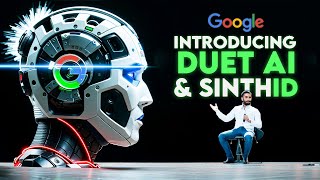
Google rolled out Search Generative Experience in India and Japan with voice search and source attribution, launched Synth ID invisible watermarks for AI images, and upgraded Google Docs with an AI proofreader and Duet AI that drafts emails. The company also released TPU v4 chips claiming 2x speed over the previous version and up to 1 exaflop per chip.
Questions this video answers
India and Japan.
Two times faster.
Up to one exaflop (about 1 quintillion calculations per second).
4,096 TPU v4 chips comprising an exascale pod with up to 4 exaflops aggregate performance.
Chapters
So Google continues to introduce new features and tools, constantly impressing us with their innovations in the field of AI. They've just launched a variety of new tools designed to assist you in your daily activities. On top of that, they've also released a brand new AI chip which they claim is the world's strongest and fastest. In this video, I'll be sharing all of these updates with you, so make sure to stick around until the end. And if you haven't subscribed to my channel yet, go ahead and do so now so you won't miss any crucial updates in the world of AI. Alright, so Google's search generative experience is now available in India and Japan. This lets people there search in their own languages like Hindi and Japanese, and they can speak their queries instead of typing. There's also a new mentioned in feature. It shows you where Google got its information so you can check its accuracy. For example, if you ask how many Oscars Leonardo DiCaprio won you, you can see which websites confirm the answer. Now let's move on to another area where Google is using AI. Image Identification and Monitoring Google is using AI in a smart way to help businesses protect their online images with a tool called Synth id. This tool adds digital watermarks to AI generated images that you can't see, but Synth ID can detect. If someone alters the image, the watermark stays, letting businesses track where their images end up online. This helps prevent unauthorized or harmful use of your images. For example, if you're a fashion brand using AI to make images of models in your clothes, Synth ID can put a unique watermark on each image. This links back to your website, letting you see where the image is used online and act if needed. It's a way to keep control of your brand online. Next up, we have some new AI features for Google Docs, the popular online word processor that millions of people use every day. Google Docs already has some basic spelling and grammar checks built in, but now it has something even better, a new AI powered proofread feature. And it does more than just catch spelling and grammar mistakes. It also gives tips on how to write clearer and be more concise. The feature isn't distracting and lets you decide if you want to take its advice. Another standout feature is Duet AI, which helps you write faster by suggesting text based on what you're already writing. If you use Gmail, you might have seen it in action, helping you complete sentences. Both features are great for anyone who writes often, saving you time and helping you avoid errors. But now Duet AI has gone a step further, it can now write entire emails for you based on just a few bullet points. So if you want to ask your boss for a raise, you could jot down points like worked hard on project or request raise. Duet AI takes those and turns them into a full professional email that makes your case for you. It's like having a smart assistant that knows exactly what you want to say and how to say it professionally. And it can also adjust the tone and style of the email based on your preferences. For example, if you want a more casual or friendly tone, you can simply add word casual or friendly to your bullet points and it will change the wording accordingly. Essentially, it's your smart ghostwriter. It can help you write all sorts of documents, essays, stories, reports, you name it. But don't worry, it won't replace your creativity. Think of Duet AI as a tool for generating ideas or getting past writer's block. You still have to go through and make edits to make the work truly yours. Speaking of creativity, here's something super cool that you'll want to know about. You can combine the power of generative AI like Midjourney or any other AI image generator with Printify, who's sponsoring today's video to actually earn some cash. I bet many of us have whipped up cool phrases using chatgpt or made neat designs with Midjourney, right? So why not turn that creativity into money? Trust me, people are already cashing in on it. So here's the deal. Midjourney generates original designs from text prompts. Let's say you think of a slogan for a T shirt, you feed it into Mid Journey and it spits out a killer design for you. You then head over to Printify and pick the type of product you want. Could be anything from T shirts, hoodies to mugs. And place your new design on it. Printify handles the rest, manufacturing, shipping and even customer service. And the best part? You can sell your awesome products across multiple platforms like Shopify, Etsy and ebay, reaching an enormous audience without lifting a finger. The fulfillment is automatic. So once a customer orders, you just watch the cash roll in. It's literally turning your random sparks of creativity into a full blown money making venture. So why wait? Get your creative juices flowing and let AI and Printify handle the heavy lifting. Trust me, AI and Printify together are a goldmine. I've dropped a Printify sign up link right in the video description. It's free to join, so why not give it a shot? You could be the next E commerce rockstar alright, let's shift gears and discuss another crucial initiative by Google related to artificial intelligence Internet safety, specifically with their SafeSearch feature. This is an important topic for anyone using the Internet, but it's especially critical for young people who may stumble upon harmful or inappropriate material online. Google's SafeSearch aims to handle this issue. When you search for Images Using Google, SafeSearch automatically blurs out any explicit content. A warning message also appears, telling you that some results could be explicit. It gives you the choice to either unblur the images if you're sure you want to see them, or to leave them blurred. This serves multiple purposes. It shields you from content you may find disturbing or offensive, respects the privacy of those in the images, and even helps to prevent accidental clicks that could take you to dangerous websites. Although SafeSearch isn't a brand new feature, Google has recently upgraded it to make it even more efficient and easy to use. Thanks to AI, it can now more effectively identify and blur images that feature nudity, violence or other sensitive matters. Plus, it works globally no matter what language you speak or where you are located. Another great thing is the customizability of SafeSearch. You can activate or deactivate it as needed and adjust the level of filtration, ranging from strict to moderate. If you want to ensure your settings stay as you like them, you can lock them with a password, making sure nobody changes them without your knowledge. Personally, I think SafeSearch is a valuable asset to Google Images. It prioritizes your safety and control over your online experiences, while also respecting your individual freedom and the dignity of others. Alright, let's discuss what has to be one of the most groundbreaking things Google has achieved in the realm of AI. A brand new AI chip. Yes, you got it right. Google has engineered a fresh chip designed for AI, and it's believed to be faster and stronger than any other AI chip out there. This chip is officially named the Tensor Processing Unit, but it's commonly known as tpu. Now, what's special about the TPU is that it's tailor made for tasks in artificial intelligence. We're talking about machine learning, deep learning, natural language processing, and computer vision, among others. It can handle complicated math operations at impressive speeds, making it excellent for both training and deploying AI models. The idea of the TPU isn't new, but Google has recently revamped it to be even better and more accessible. We're now looking at its fourth version, TPUV 4, which is two times quicker than its predecessor, the TPU V3. In terms of capability, it can perform up to one exaflop, which translates to a mind blowing 1 quintillion calculations per second. But the story doesn't end here. What's more astonishing about the TPU V4 is its ability to work in tandem with other chips just like it. By connecting multiple TPUV4 chips together, you can form a more powerful cluster, also known as a pod. As an example, Google has engineered a supercomputer named exascale that comprises 4096 TPUV4s capable of achieving up to 4 exaflops. That's staggering performance. And here's the icing on the cake. Google has made this extraordinary chip accessible to the public. They've included the TPUV4 in their Google Cloud platform, so anyone interested in AI can utilize it for their projects just by paying a usage based fee. So there you have it. The TPU V4 opens up a world of possibilities for anyone passionate about AI offering access to the most up to date technology out there. It's a tool that can empower you to craft innovative AI solutions that have the potential to positively impact the world we live in. What's your take on the TPU V4? Do you see it as a revolutionary leap forward in AI technology? Or are you skeptical, thinking it might be all buzz without substance? I'm eager to hear your thoughts, so feel free to share them in the comments below. That wraps up the video. Hope you found Google's new AI tools as exciting as I do. Got thoughts or questions? Drop them in the comments. I'm all ears if you enjoyed this, hit like and subscrib to stay updated. Thanks for watching and see you in the next one.










