Google’s MOST POWERFUL Gen AI Tool Just Dropped... But No One Noticed
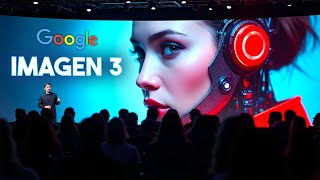
LARRUZ breaks down Google's Imagen 3, a text-to-image model released through Image FX that outperformed DALL·E 3, Midjourney V6, and Stable Diffusion 3 in head-to-head tests. It generates 1024×1024 images with 8× upscaling, uses synthetic captions for better language diversity, and achieved 58.6% accuracy on numerical reasoning. Google applied strict safety filters and red-teaming after prior models made implausible depictions.
Chapters
Google has just rolled out its latest text to Image AI model, Imagen 3, making it accessible to all users through their Image FX platform. Alongside this release, they've published an in depth research paper that delves into the technology behind it. This move represents a major step forward, expanding access to a tool that was previously available only to a select group of users. Alright, so Imagen 3 is a text to image model. It can generate images at a default resolution of 1024 by 1024 pixels, which is already pretty high quality. But what really sets it apart is that you can upscale those images up to eight times that resolution. So if you're working on something that needs a huge detailed image, like a billboard or a high res print, you've got the flexibility to do that without losing any quality. That's something that not every model out there can offer and it's a big plus for anyone working in designer media now. The secret actually lies in the data it was trained on. Google didn't just use any old data set. They went through a multi stage filtering process to ensure that only the highest quality images and captions made it into the training set. This involved removing unsafe, violent or low quality images, which is crucial because you don't want the model learning from bad examples. They also filtered out any AI generated images to avoid the model picking up on the quirks or biases that might come from those. They also used something called deduplication pipelines. This means they removed images that were too similar to each other. Why? Because if the model sees the same kind of image over and over again, it might start to overfit. That is, it might get too good at generating just that kind of image and struggle with others. By reducing repetition in the training data, Google ensured that Imagen 3 could generate a wider variety of images, making it more versatile. Another interesting aspect is how they handled captions. And each image in the training set wasn't just paired with a human written caption. They also used synthetic captions generated by other AI models. This was done to maximize the variety and diversity in the language that the model learned. Different models were used to generate these synthetic captions and various prompts were employed to make sure the language was as rich and varied as possible. This is important because it helps the model understand different ways people might describe the same scene. Alright, so how does Imagen 3 stack up against other models out there? Google didn't just make big claims. They actually put Imagen 3 head to head with some of the best models out there, including Dalle 3. Midjourney V6 and Stable Diffusion 3. They ran extensive evaluations, both with human raters and automated metrics to see how Imagen 3 performed. In the human evaluations, they looked at a few key overall preference, prompt image alignment, visual appeal, detailed prompt image alignment, and numerical reasoning. Let's break these down a bit First, Overall Preference this is where they ask people to look at images generated by different models and choose which one they like best. They did this with a few different sets of prompts, including one called Genai Bench, which consists of 1600 prompts collected from professional designers. On this benchmark, Imagen 3 was the clear winner. It wasn't just a little bit better, it was significantly preferred over the other models. Then there's prompt image alignment. This measures how accurately the image matches the text prompt, ignoring any flaws or differences in style. Here again, Imagen 3 came out on top, especially when the prompts were more detailed or complex. For example, when they used prompts from a set called Doci, which includes very detailed descriptions, Imagen 3 showed a significant lead over the competition. It had a gap of 114 lo points and a 63% win rate against the silver second best model. That's a pretty big deal because it shows that Imagen 3 is not just good at generating pretty pictures, it's also really good at sticking to the specifics of what you ask for. Visual appeal is another area where Imagen 3 did well, though this is where Midjourney V6 actually edged it out slightly. Visual appeal is all about how good the image looks, regardless of whether it matches the prompt perfectly. So while Imagen 3 was close, if you're all about that eye candy factor, midjourney might still have a slight edge. But make no mistake, Imagen 3 is still right up there, and for a lot of people the difference might not even be noticeable. Now let's talk about numerical reasoning. This is where things get really interesting. Numerical reasoning involves generating the correct number of objects when the prompt specifies it. So if the prompt says five apples, the model needs to generate exactly five apples. This might sound simple, but it's actually pretty challenging for these models. Imagen 3 performed the best in this area, with an accuracy of 58.6%. It was especially strong when generating images with between two and five objects, which is where a lot of models tend to struggle. To give you an idea of how challenging this is, let's look at some more numbers. Imagen 3 was the most accurate model when generating images with exactly one object, but its accuracy dropped a bit as the number of objects increased by about 51.6 percentage points between 1 and 5 objects. Still, it outperformed other models like Dall E3 and stable diffusion 3 in this task, which highlights just how good it is at handling these tricky prompts. And it's not just humans who think Imagen 3 is top notch. Google also used automated evaluation metrics to measure how well the images matched the prompts and how good they looked overall. They used metrics like Clip, Faqiscore, and FD Dyno, which are all designed to judge the quality of the generated images. Interestingly, Clip, which is a popular metric, didn't always agree with the human evaluations, but Vqascore did, and it consistently ranked Imagen 3 at the top, especially when it came to more complex prompts. So why should you care about all this? Well, if you're someone who works with images, whether you're a designer, a marketer, or even just someone who likes to create content for fun, having a tool like Imagen 3 could be a huge asset. It's not just about getting a nice picture. It's about getting exactly what you need, down to the smallest detail, without compromising on quality. Whether you're creating something for a website, a social media campaign, or even a large print project, Imagen 3 gives you the flexibility and precision to get it just right. But let's not forget, it's not just about creating high quality images. Google has put a lot of effort into making sure this model is also safe and responsible to use. However, they've had their fair share of challenges with this in the past. You might remember when one of Google's previous models caused quite a stir. Someone asked it to generate an image of the Pope, and it ended up creating an image of a black Pope. Now, this might seem harmless at first glance, but when you think about it, there's never been a Black Pope in history. It's a pretty big factual inaccuracy. Another time, someone asked the model to generate an image of Vikings, and it produced Vikings who looked African and Asian. Again, this doesn't align with historical facts. Vikings were Scandinavian, not African or Asian. These kinds of errors made it clear that while trying to be inclusive and and politically correct, the model was pushing an agenda that sometimes led to results that were simply inaccurate and historically misleading. These incidents sparked a lot of debate. There's a fine line between creating a model that's inclusive and one that distorts reality. While it's crucial to avoid harmful or offensive content, it's just as important that the model remains factually accurate. After all, if the images it generates aren't grounded in reality, it loses its effectiveness and frankly, its usefulness. If a model starts producing images that don't reflect historical facts or cultural realities, it's not doing anyone any favors. It ends up being more of a tool for pushing an agenda rather than a reliable factual generator. Now, with Imagen 3, Google seems to be aware of these pitfalls. They've evaluated how often the model produces diverse outputs, especially when the prompts are asking for generic people. They've used classifiers to measure the perceived gender, age and skin tone of the people in the generated images. The goal here was to ensure that the model didn't fall into the trap of producing the same type of person over and over again, which would indicate a lack of diversity in its outputs. And from what they've found, Imagen 3 is more balanced than its predecessors. It's generating a wider variety of appearances, reducing the risk of producing homogeneous outputs. They also did something called red teaming, which is essentially stress testing the model to see if it would produce any harmful or biased content when put under pressure. This involves deliberately trying to push the model to see where it might fail, where it might generate something inappropriate or offensive. The idea is to find these weaknesses before the model is released to the public. The good news is that Imagen 3 passed these tests without generating anything dangerous or factually incorrect. However, recognizing that internal testing might not catch everything, Google also brought in external experts from various fields, academia, civil society and industry to put the model through its paces. These experts were given free rein to test the model in any way they saw fit. Their feedback was crucial in making further improvements. This kind of transparency and willingness to invite external scrutiny is essential. It helps build trust in the technology and and ensures that it's not just Google saying the model is safe and responsible, but independent voices as well. In the end, while it's important that A model like Imagen 3 is safe to use and doesn't produce harmful content, it's equally important that it doesn't stray from factual accuracy. If it can strike the right balance, being inclusive without pushing a politically correct agenda at the expense of truth, it'll not only be a powerful tool from a technical perspective, but also one of the most reliable and effective and image generating models out there. Alright, if you found this interesting, make sure to hit that like button. Subscribe and stay tuned for more AI insights. Let me know in the comments what you think about Imagen 3 and how you might use it. Thanks for watching and I'll catch you in the next one.










