Google's New AI Assistant is Better Than You Think (Bard + DeepMind)
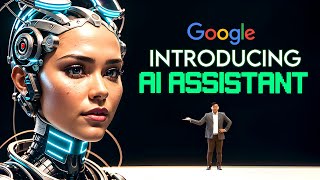
Google's new SGE assistant combines Bard with DeepMind's robotics research. It handles life advice, tutoring, and planning, but the real innovation is RT2, a model trained on robot data that lets AI understand physical tasks. Google's consolidating its AI teams to compete with ChatGPT.
Questions this video answers
Smart Google Expert
April 2023
Data from 13 robots over 17 months
Scale AI Inc. (stated valuation: $7.3 billion)
Since its launch in June 2023 (per the narrator citing Sundar Pichai)
Chapters
Google has just announced a new AI assistant that can do more than just answer your questions. It can also give you life advice, generate ideas, teach you new skills, and help you plan your goals. And in this video, I'm going to tell you everything you need to know about Google's new AI assistant and why it might be the coolest thing ever. So what is Google's new AI assistant? Well, it's called sge, which stands for Smart Google Expert. And. And it's basically a combination of Google's previous AI projects like DeepMind and Google Bard. You might remember DeepMind as the company that created AlphaGo, the AI program that beat the world champion of Go, a complex board game. And Google Bard is the conversational AI tool that can generate text of all kinds, from stories to summaries to jokes. Google merged DeepMind and Google Bard into one division called Google DeepMind in April 2023, and since then they've been working on developing SGE, which is powered by a new model called RT2, which is a visual language model that can translate vision and language into action. Now, one of the core features of SGE is that it can provide life advice on challenges faced by individuals. Like if you're stressed, anxious or need to make a tough decision, you can ask IT for guidance, tips or related quotes and stories. And it is more than just a responder. It it can ask questions for clarity, admit when it's wrong, correct false information and decline unsuitable requests. It remembers past conversations and your preferences, making it a supportive companion for both personal and professional growth. A standout feature of SGE is its idea creation capability, which allows it to come up with original ideas for various needs. Like if you need suggestions for a YouTube, video, blog post, product service, or even a gift, it can provide relevant options. What sets SGE's idea creation apart is that it doesn't merely pull existing information from the web. Instead, it uses its knowledge and creativity to offer fresh and pertinent ideas. Plus, it can share the reasons for its suggestions and give supporting details or examples. Alright, here's where it gets super cool. SGE has these tutoring features that can actually help you level up or even pick up new skills in different areas. Whether you want to pick up a new language, get better at coding, or learn to play an instrument, SGE can guide you, quiz you, and even give feedback. And what makes its tutoring unique is that it's tailored to your way of learning, offering personalized feedback and guidance. It can also evaluate how you're doing and recommend what to focus on. Next. And of course, SGE's got you covered when it comes to planning. Whether you're budgeting, aiming to get fit, or planning a trip, it can assist you. It doesn't just offer general advice. It creates plans based on your individual needs and goals, and it tracks your progress and reminds you about upcoming tasks or important dates. So how did Google develop such a great AI assistant? They worked with Scale AI Inc. A company valued at $7.3 billion, which offers top notch training data for AI projects. With Scale AI Inc's help, Google DeepMind gathered and labeled a lot of data, including from web pages, images, videos, audio and text. They use this Data to train RT2, the engine behind SGE, using advanced methods like reinforcement learning and generative adversarial networks. And I also believe it's crucial for us to grasp how RT2 functions so we can truly appreciate the capabilities of this AI assistant. So basically, RT2 is a part of SGE, also known as Robotic Transformer 2. It's a special model that can understand pictures and words, then take actions based on them. This model works on a foundation like Palm E or Pali X. These are models that turn images into tokens, like bits of information, and then change those tokens into words. They're trained with a lot of online data from many places. For robot tasks, RT2 changes these models to make action outputs instead of just words, think of these actions as special instructions for the robot. An example of such an instruction might be moving to a specific position and opening a part of the robot a certain amount. RT2 learns from both general online data and specific robot training. It has been trained with data from 13 robots doing tasks in an office kitchen over 17 months. This training helps it understand and act on both general ideas and specific robotic tasks. What's cool about RT2 is is that it can do more than what it was specifically taught. It can figure out new commands like pick up a red apple or find a tool like a hammer. It can also think a bit, answering questions like what drink is good for someone tired? Or how do you make a sandwich? Moreover, Google didn't just depend on data and math. They actually included over 100 experts, all with PhDs in various fields like psychology, sociology, education, business, and arts. These specialists assisted Google DeepMind in checking SGES performance in various situations. They gave input on how to enhance its accuracy, trustworthiness, variety, and ethical standards. On the topic of ethics, Google has been very thoughtful about giving life advice through AI. They've discussed internally how to weigh the pros and cons they're also committed to their AI principles and responsible practices. Making sure SGE benefits society, doesn't show bias and is safe, respects privacy and maintains a high level of scientific integrity. But enough about the technical details. Let's talk about how you can use SGE in your day to day life. One of the best features Google added is the SGE While Browsing option in Google Chrome. By clicking the SGE icon on your browser, a chat window opens up where you can ask or tell SGE something and it'll respond. SGE can also create quick summaries of long online articles. Instead of reading the entire thing, you can hit a button and get a brief summary in seconds. Plus you can choose how detailed you want that summary to be. There are other great features too. With sge, you can hover your mouse over a word or phrase on a website and it will show you its definition. Also, if you click on a piece of code on a web page, SGE can give you a simple summary of what it does. How do people feel about SGE? Google's CEO Sundar Pichai mentioned that since its launch in June 2023, many users have tried it and liked its functions and speed. He said SGE isn't here to replace Google Search, but to work alongside it. While Google Search gives you information, SGE offers a more personalized and interactive help. Google plans to integrate the two closely, but Google isn't the only company working on AI assistance. Companies like Microsoft supported OpenAI and Meta are also working on development of similar projects. Amazon also has Alexa conversations. However, Google aims to make SGE the leading AI assistant, showing its innovation and leadership in AI. So what's next for SGE and AI assistants? It's hard to predict, but we can guess a few things. Firstly, AI assistants like SGE might replace regular search engines. Instead of typing, you'd just ask them directly, making web searches faster and more personal. Secondly, they could create custom learning plans for us. Tell them what you want to learn and they'd design a plan tailored just for you, making learning more enjoyable and effective. Thirdly, they might assist with mental health, connecting us to professionals or peers, making support more reachable and affordable. There are many other possibilities for AI assistance, but there are concerns too. How do we know they're trustworthy? How do we keep our information safe? How do we make sure we don't rely on them too much or lose our human touch? These are important questions as we navigate the world of AI. We must remember their tools helpful but potentially harmful if misused. So what do you think about Google's new AI assistant? Do you think it's cool or creepy? Do you think it's useful or useless? Do you think it's a blessing or a curse? Let me know in the comments below. I'd love to hear your thoughts and opinions. And that's it for this video. I hope you enjoyed it and learned something new. If you did, please give it a thumbs up and share it with your friends. And if you haven't already, please subscribe to my channel and turn on the notification bell so you don't miss any of my future videos. Thank you so much for watching. I'll see you in the next one.










