Google's NEW AI 'Dreamix' Takes the Industry By STORM! (NOW UNVEILED!)
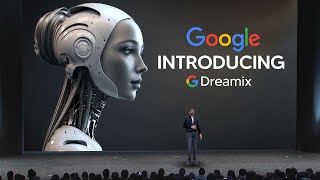
A single-speaker YouTube commentary by LARRUZ reviewing Google's Dreamix text-to-video research demo (uploaded 2023-04-16). The presenter describes Dreamix's abilities to edit videos given a text prompt (maintaining color, posture, object size, camera pose and temporal consistency), convert images to video (adding motion to static images), and animate small collections of images of the same subject. Multiple demonstration examples are narrated (monkey→bear, toys, animals, landscapes, time-lapse plants), with an informal comparison to Runway Gen-2; the speaker notes high fidelity and some small artifacts and speculates on industry impact and public release timing.
Chapters
Now Google are once again showing why they're one step ahead of all major competition when it comes to certain AI features. Recently, Google's AI team released this research paper documenting their step for text to video. And honestly, the results are completely mind blowing. Take a look at this. So you can see that this is Google's new text to video. So essentially what we have here is the input video and then of course the generated video. So if we read the description, it pretty much describes exactly what's going on. But I do need to provide some more context. It says given a video and a text prompt, Dreamix edits the video while maintaining fidelity to color, posture, object size and camera pose, resulting in a temporarily consistent video. So here it turns the monkey, which you can all see on the left to a dancing bear, which you can all see on the right given the prompt, a bear dancing and jumping darkbeat music while moving his body. So essentially what this is, is this is text to video. Now of course you might be thinking this just isn't base text to video because of course base text to video would just be where you simply enter a text prompt and get a video out. But this is something that many models have actually struggled with. And I'm going to show you more examples from Google's Dreamix as to why it's really good. And I'm going to be pairing it to runways Gen 2, which is another text to video editor which has gained some popularity recently. So let's take a look at some more text to video examples from Google's using the different models that they do have in this large language model software. So you can see right here that this is another example message. Dreamix can generate videos based on image and text inputs, so it can actually install motion into a static image. And this is very different just from text to video because this allows another level of manipulation. Because you can see right here that this is just an image, but then they've changed it to say an underwater shot of a sea turtle with, with a shark approaching from behind. So this is definitely really good because of course everybody knows about midjourney and how good that is an image generation. But imagine you could then take your image generation from midjourney and put it into Google's remix and then just simply say a futuristic landscape, cinematic shots. And I'm pretty sure with just images and combined with this tool we could definitely be generating some full scale movies that would be really cool. Which is why I say that this is, is far more advanced than people think because of course Google, as you all know, is working on Bard and many other software such as Palm E. But this is definitely going to change the game once it does get integrated. And I do hope they release it soon because this other example I'm about to show you and the further ones in the video are truly breathtaking. This one is pretty cool that you can all see right here. It says given a small collection of images showing the same subject, which is of course the same Lego toy character, Dreamates can generate new videos with the subject in motion. In this example, given a small number of images of the toy fireman, DreamX is able to extract the visual features, then animate it to lift weights while maintaining fidelity and temporal consistency. Which just means that it looks normal and it looks not strange at all. So this is really good because of course we know that this can then be applied to many other things. So for example, maybe you want to generate something moving with a mid journey character. Maybe you want to previsualize something. There are honestly many different applications, but I think that the toy fireman lifting weights is really, really good because the generated video does look pretty, pretty realistic compared to some of the other AI text to video platforms that do exist right now. Now what I want to do quickly is I want to compare this to something that was recently released which is Runways Gen 2. If you don't know what Runways Gen 1, Gen 2 was essentially this is text to video. Now essentially generation one was where you had a video, then you had a driving image which you are seeing on screen. And and then of course the driving image essentially makes that video in the similar style of that image. So you can see right here that one's Lego, that one's some kind of fire thing. And then of course Gen1 has a massive discord which is what they were all talking about. So it's, it's something that does very, very well at what it is capable of. But I do think in the instance that we're looking at, Google's text to video does a lot better. But you can see that here with Gen 2, what we do have is, is of course many different puts that actually don't need a driving image. And I think that if this company is able to just simply focus on this, I think it's going to be at mid journey level soon where you're going to be able to get complete footage from a single prompt, which is what you can see right here, an apartment extreme close up of an eye. And these are generated without driving images and driving images are just Essentially images which prompt the scene to have a certain specific style. So, for example, let's take a look at this right here. You can all see that this of course is the driving image. And of course, essentially what happens here is that this was given the prompt of a low angle shot of a man walking down a street illuminated by the neon signs of the bars around him. And essentially what's good about this is that of course, if you want to prompt this in a certain way or you want a certain style, you can actually use that image in order to craft that story, which does make this in some aspects, but much more effective. But like I said, there are some other examples that I do want to show you from Google Dreamix in video editing aspect. So you can see right here, the input video is of course them cooking some onions. And then of course they added the text prompt of stirring noodles in a pot. And you can see right here that of course they are stirring noodles in a pot. So when it comes to the video editing aspect, these examples that I'm showing you right now showcase how powerful this new software is. You can also see that it says moving through a field on a wooden path with fire on all sides. And you can see that from the input video, the generated video is honestly really, really good. And I'm not taking shots at Runway here. I think they've done something absolutely insane. But this does look like it is a mere step ahead of Runway. So it'll be interesting to see where the software goes. You can also see that the input video generates some outstanding results. In the final generated video of this example, when old pickup truck is carrying wood logs definitely looks really, really realistic. And of course it definitely shows multiple applications where this stuff can be used. Now you can also see right here that it says a small brown dog and a large white dog are rolling a soccer ball on the kitchen floor. And you can see that's given from the prompt of these two animals. And it just goes to show that even with an input video, you can quickly edit stuff in real time with this software. And I just wonder how much this is going to develop. This one right here is another great example of how you can use natural language to increase your video's capabilities by just having these things on screen. And honestly, this is truly, truly great because it just shows us what kinds of examples we're going to be getting in the future when this stuff is fine tuned. And this one right here is really, really cool as well. It's a beach with palm trees and swans in the Water. And from the input video compared to the generated video, you can see that it definitely does look pretty, pretty realistic. Definitely one of the more realistic ones. Of course some of them may have some small artifacts, but, but you have to remember this is new software. Now you can see right here, this one even manages to do the water reflections really, really well. We can see that orangutan with orange hair bathing and a beautiful bathroom. Does look pretty realistic with as to what I would expect if I saw an orangutan bathing. Now you can also see right here a deer rolling on a skateboard. This one isn't as accurate, but it's still very interesting to see how the models kind of put certain pieces together and how the final output is. And of course we can see that the input video is there. And, and of course the output video definitely looks interesting. Now of course we need to take a look at image to video because this is the section which is even more crazy. Take a look at this. We can see that the input image is on the left and the generated video is on the right hand side and the text prompt is a camel walking in the sand dunes. And honestly, this looks pretty much perfect. I mean, it doesn't look like the highest quality, but it definitely looks great. We have another input image right here. You can see that we just have some, something that looks like a Christmas tree. And then of course we have Bigfoot walking in the snowstorm. And honestly, these examples that I'm about to show you are truly, truly incredible. I mean they do look as realistic as possible and it shows that their input image, which generates a video looks about as realistic as you might expect in this early stage. Now of course we have the input image and the generated video of the emperor penguins returning to their home. And you can see that this one definitely looks pretty accurate, which is, which is pretty nice. So of course we have one here which showcases how you can actually zoom out on certain images, create different, you know, landscapes, different perspectives. It's really, really interesting to show the dynamic fluidity of these models, just how accurate they really are at depicting exactly what we want with the text prompt. And with the input image. You can also see right here a unicorn running in the foggy forest whilst zooming out. That definitely does look really, really realistic. And it looks really, really accurate. And it's. I only have one question right now, which is when is Hugo going to release this to the public? Because this is better than a lot of things we have seen on the Internet. And I mean, if they release this soon. I'm pretty sure that this is going to honestly take the entire industry by storm because something like this isn't currently available, especially as accurate as this is. I mean, just take a look at this one right here. A grizzly bear walking around the lake, large birds flying around in the sky. And I mean, we can see that grizzly bear moving in in the environment and it definitely looks real. I mean, when it comes to generated videos like this, it's truly, truly incredible. And this one right here is one of my favorites. It's a time lapse of black beans, plants sprouting. So you can see right here, if you wanted to generate maybe a time lapse kind of video, even the little shakes in which plants do, which you usually see in those kinds of videos. It just goes to show that the models being developed today are definitely going to be better a year from now, two years from now. So, you know, you can kind of imagine what kinds of AI are we going to have, you know, perhaps 10 years from now, 20 years from now. Are we going to be living in a completely different world where content is just completely automated? I guess we're going to have to see. Now, one of the last ones that I did want to talk about here was how input images can generate a much higher quality video. As you can all see here, a bear walking combined with these input images honestly provides us with some of the best results. Let me know what you all think about Google's remix. Is it something that is really good or is it just something that you don't think is that impressive? But I truly think this is impressive and honestly, the next few years in AI video generation are going to be truly incredible.










