Google's NEW AI 'Text-To-Music' Shocks The ENTIRE INDUSTRY! (NOW RELEASED!)
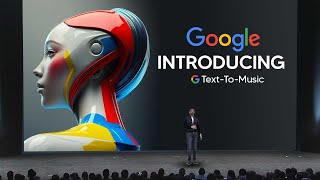
YouTube video (LARRUZ, uploaded May 20, 2023) reviewing Google’s MusicLM: a text-to-music model that generates multi-minute, high-fidelity music from natural-language prompts. The host quotes the MusicLM paper abstract, plays many demo clips (arcade soundtrack, reggae/Tron fusion, meditative, jazz, dance/funk, vocal attempts, long 5-minute generations), and emphasizes strengths (realistic electronic/instrumental textures, smooth transitions in story-mode, text+melody conditioning) as well as limits (vocals can be weak; some outputs sound strange). The video notes creative uses (content creation, soundtrack generation, image→music mappings) and practical access via Google’s AI Test Kitchen waitlist with per-user generation limits.
Questions this video answers
May 20, 2023.
Five minutes long (example explicitly noted as 5 minutes).
Google's AI Test Kitchen (sign-up/waitlist; requires Google account).
Chapters
So one of Google's most interesting announcements wasn't recently made at Google's IO. The most recent announcement that is absolutely insane is Google's new text to music generator. Now I know this might sound like science fiction, but with the age of AI, there are so many different tools coming out and Google is at the forefront of what's new. So this is Google's text LM essentially a text to music converter that literally has a text prompt and then actually makes a realistic sound sounding music track from it. So let's take a look at how this works and just how good this really is, because I can guarantee you're going to be surprised. So firstly you can see right here music LM generating music from text. This is of course the paper that Google recently published. Then of course we have this abstract from the paper which essentially describes how it works. So it says we introduce MusicLM, a model generating high fidelity music from text descriptions such as a calming violin melody backed by a distorted guitar riff. Music LM casts the process of conditional music generation and it manages to generate music that remains consistent over several minutes. So essentially they're saying that you can generate music from text and it manages to remain consistent over several minutes, which is definitely something that is quite hard as you know that with AI hallucinations are very common. So let's take a look at how this actually works, the user interface, and how you can actually get access to this tool very, very shortly. This is essentially what it looks like. You essentially put your text in input right here. And essentially I'm just reading this as it comes on screen, but you can see right here that your music is generated almost instantly. And then of course you have your music tracks that do play. Now some of you might be wondering just how good is this? Because as you know, the quality of AI tools does actually matter because there is quite the hype around AI tools right now and many people are trying to jump on the bandwagon. But I can truthfully say that this is really good. So let's take a look at some of the examples that were provided by Google that demonstrate just how good this music really is. So essentially this is the webpage. If you want to check it out, a link will be in the description. But essentially this is Google's new text to music. So let's take a look at the first one right here and you're going to be surprised just how good this really is. So enough talking, let's get into the actual example. So it says the main soundtrack of an Arcade game. It is fast paced, upbeat, with a catchy electric guitar riff. The music is repetitive and easy to remember, but with unexpected sounds like a cymbal crashes or drum rolls. So take a listen to just how good this actually sounds. Now if I heard this as the background track for an arcade game, I definitely would think that this was created by a musical team or potentially someone that does work in sound design. Because honestly, that doesn't really sound AI generated. Especially since it's a soundtrack for an arcade game. You're not really going to be paying attention to what's in the background or even the main soundtrack theme, because these themes just essentially set the tone of what we already expect and they essentially assist the visual. So this is a really good example of generated audio. And this one is here a fusion of reggae, Tron and electronic dance music with a spacey, otherworldly sound induces the experience of being lost in space. And the music would be designed to evoke a sense of wonder, in awe while being danceable. Now what I really do like about this as well, these examples is that they show that you don't really need a deep sense of understanding musically to be able to generate succinct music examples that are really, really good. So let's take a look at this. Yeah, this one sounds pretty simple. So then let's take a look at some of the other ones. There's also some other examples which we'll get into later, but let's take a look at some of these other ones. So a meditative song. Let's take a look at that. So yeah, definitely seems that like these tunes are actually very, very accurate in terms of their text description. I'm not sure exactly how this entirely works. I'm sure that this is a pretty new kind of area because as you know, many softwares right now focusing on large language models and image generation, but music generation isn't something that we've seen. Remember, like we talked about before, Google is literally always one step ahead and many people did doubt that from the recent video that we did talk about how Google plans to essentially take on OpenAI. So this is a funky piece with a strong danceable beat and prominent baseline. Let's see how good this sounds. Okay, this one was definitely more of the strange one. And this one says that there's a male vocal rapping, so it'll be interesting to hear what this one sounds like. So it seems like Google has really tried to push the bar at what they're able to do with their AI generators and and this is no large language model. This is something that I'm pretty sure has a lot of use cases instantly. Now one of the use cases that I do know that this is going to have is in content creation. Copyright is a large problem. So for example, some of you that you don't know background tracks that you may HEAR In a YouTube video, there's a large issue where essentially people have problems where the owner of the song, sometimes the rights get, I guess you could say confused, and the right holders sometimes claim music tracks which they don't own, which loses to many different people only trying to use copyright free songs. So this is definitely going to be something that is really going to shake up the music industry because maybe certain musicians, their music won't be able to be used because I mean you can literally just go ahead, just input what you wanted and then imagine this being injected into something like Adobe Premiere Pro. You could literally just generate the soundtrack for your potentially movie, your short film instantly, which would definitely be very, very interesting. So this said an epic track. This is going to be a different version. So let's hear what this sounds like. So this one definitely did sound a little bit weirder. I do think that from what I've heard so far on these first couple of tracks, and it sounds like Google's text music generator seems like it's mainly focusing on the, I guess you could say electronic beats, but when it does come to the vocals, it does seem to struggle a little bit. So we're going to take a look at these ones and these are long generations. So you can see right here, this is five minutes long, which is definitely going to be useful for those trying to work on longer projects. So this is relaxing jazz, which I've heard what this sounds like before, so I do have a pretty decent reference. This actually does sound pretty accurate with us to what a relaxing jazz would sound like. Then we have some swing, Very interesting there. Then we have some melodic techno. And please leave in the comment section below which one of these you think is the most accurate and, and why. And if you're going to be using a music generator perhaps in the future or anytime, just maybe to test it out. Yeah, so like we said, it seems that this is working very, very well on the electronic kind of sounds. And then right here it says the story mode. So the audio is generated by providing a sequence of text prompts. These influence how the monu, how the model continues, the semantic tokens, the derived from the previous captions. So essentially what we have here is, I Think we have something where you can essentially have multiple text prompts, but then essentially have that construct one music track. So you can see right here that from 0 to 15 seconds, we have time to meditate. Then from 15 to 30 seconds, we have time to wake up. Then 30 to 45 we have time to run. And then 45 to 60 seconds, time to give 100%. So I'm pretty sure that this is kind of like a different kind of track that kind of moves into in a certain way. So this is going to be interesting to listen to. Okay, so this wasn't what I expected. That definitely did sound, I guess you could say quite different than what I sound to expect. But I'm guessing that this is still a work in progress. So essentially this one actually is a much better demo. But of course, you can come to the page and listen to these tracks entirely. But essentially what this is, is this is going to be how you create a soundtrack for maybe your entire project. Because essentially what this actually does is it makes the transition really, really smooth. So what I'm going to show you first is the first instance of electronic song played in the video game. Then I'm going to show you how it actually transitions to meditation, a song played over to a river. Because the transition actually sounds pretty smooth and realistic. So listen to the first bit, which is then electronic song played in a video game. Then if we go to around 15, 13 seconds, you're going to hear how it transitions to a theme that is meditation song played next to a river. You hear how the music sort of tones, downs its, you know, intensity, and how it just peacefully moves to a more tranquil state. That is something that is going to be really interesting to see exactly how it works. So then, of course, you can see right here we have many different versions of different songs. And you can see right here that. So right here, essentially what we have is text and melody conditioning. So essentially what we have. And I'm just going to show you the example so that you understand how this works. And is that essentially this is the soundtrack. Bella Chow. And essentially this is essentially the baseline for what the sound will sound like. And I know that doesn't make sense in the way that I've worded it, but just listen to this, and then when you hear the other interpretations of the actual same song, you'll understand exactly what I mean. So listen to the humming. And I'm pretty sure you've heard that before because it is a very popular song song. And then essentially what we have here is the different interpretations of that same, I guess you could say melody as different things. So for a guitar solo, this is what it would sound like. And then of course, the same kind of melody with a jazz as a saxophone, this is what it would sound like. And then of course we have a piano solo. So I think this is actually really, really cool because of course, as you know, this is going to be something that people do want to be able to have. And then of course we have Jingle Bells. So yeah, this is actually going to be something that's very, very interesting, which shows that you can literally just transform music. And I mean, if you're a really creative person, this is going to be a very interesting tool for you. And another thing that I did find very interesting was that they were able to essentially generate music based on a painting description. So you can see right here that we have the painting description and then we have the generated audio. So so essentially there's a description of the painting and then we have the generated audio, which is right here. So this is actually very, very interesting because I guess you don't really interpret a sound from a painting, but I'm guessing that Google's music LM kind of does. So let's listen to the. And I do find that really, really interesting that we have a different medium of information from a painting. So most people would just be like just an image. But you know, I guess you could never sort of imagine what that would sound like. So this is honestly very, very creative and very, very interesting. And on this page, many different examples of things that you could have. So we've got beginner, piano player, intermediate, professional, and crazy. So let's check out the beginner, which does sound like a beginner. Then let's check out the crazy F. That one does sound a bit more interesting. But I think that this is really, really interesting. Because there are many different examples of just how you could use this creatively. Now some of you might be wondering, okay, this is great, but I actually do want to try this out for myself. Currently you can head on over to AI Test Kitchen because this is essentially where you can sign up for or the wait list. Now, essentially you just put in your country or region, then you put in your profession. Just tell them why you want to use the AI Test Kitchen and then sign in with your Google account and you should wait. Now some people have actually had access to this tool early. Essentially they signed up recently and they've been given access and it seems to be pretty good. But one thing, if you do sign up. Just note that there is actually a limit on audio generation as this one user on Twitter has actually used the platform and of course there has actually been a limit. Now many of these AI tools that we actually do start to use such GPT4 as you know there are limits because it is still new and they are still developing how to streamline that entire process. So I would say sign up, see how well it works. And like we said before, Google is always going to be advancing their AI teams and working on many different projects that people aren't even working on. So this is honestly very interesting from Google. I didn't expect this just yet but like we said Google is really, really pushing the boundaries on what AI is capable of doing and this is just something else. So once this is fully released and fully out I'm pretty sure that this is going to be something quite similar to ChatGPT in terms of the amount of people that do it.










