Google's New Veo 2 Is Beating OpenAI's Sora With Unreal AI Video Quality
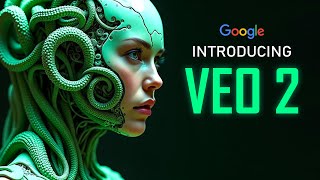
Google released Veo 2, a video generator that produces up to 4K clips with better physics and cinematography than competitors, plus Imagen 3 for images and Whisk, a remix tool. Veo 2 is available through limited early access via Google Labs and Vertex AI.
Chapters
Google just unveiled its latest AI tools and this time they're aiming to dominate the video and image generation game. With VAIO 2 and an updated Imagen 3, Google is showing that AI generated visuals are moving closer to professional grade quality. There's also a new creative experiment called Whisk, which lets users generate images by remixing other images without relying on long, wordy prompts. VO2 is where things start to get serious. Google claims their newest video generator understands real world physics better, meaning the movements, lighting and general flow of what it generates look more natural and believable. It's a big step forward for AI video, which has struggled to produce results that don't feel awkward or artificial. The model has been trained to understand human movement and expression more accurately, so things like facial gestures or a character walking through a scene won't look as stiff or exaggerated as they sometimes do with other models. What makes VO2 stand out is its focus on the details that professional filmmakers care about. It's not just about slapping visuals together based on a text description. This model understands cinematography, specific lenses, angles, effects. It's all in play now. If someone prompts VO2 for a close up with a shallow depth of field or asks for the softness of an 18mm lens, the model knows exactly what that means and delivers. On top of that, the outputs can reach up to 4K resolution, which is a huge leap in quality. Earlier AI generated videos often looked low res or blurry when pushed to larger screens, but VO2 is closing that gap. The model doesn't just create short clips either. It can extend sequences to minutes in length, making it more useful for creators who want longer flowing visuals. And while AI videos still have their quirks, like the infamous extra fingers problem, Google says VAIO2 hallucinates those details far less often. For now, VAIO2 is only available through Google Labs Video FX platform and and access is limited. Anyone interested needs to sign up for the waitlist, where Google is rolling it out slowly. The original VAIO model is still available on Vertex AI, primarily for enterprise users. Videos created with Veo2 also include a Synth ID watermark, which helps identify them as AI generated. That's part of Google's focus on safety and preventing misuse, like AI deepfakes being passed off as real content. Now the competition between AI video tools is heating up. OpenAI Sora grabbed headlines earlier this year for its ability to generate detailed videos from text prompts, but the results have been inconsistent. Users noticed some physics defying moments or anatomical oddities. And while Sora is impressive, it still has flaws. Google's own testing says that Veo2 is preferred by human evaluators over Sora and other rival models. So this is based on two metrics how well the output matches the prompt and overall preference, meaning which videos people liked more. That kind of edge matters when content creators are deciding which tool to use. Google is positioning VO2 as a serious option for filmmakers, YouTube creators and visual storytellers. One of the biggest early use cases has been on YouTube shorts, where creators are using Video FX to generate backgrounds quickly and save time during production. High quality AI videos are becoming a powerful tool for creators who need professional results on a tighter budget or timeline. Alongside Veo2, Google has also rolled out a major upgrade to its Imagen 3 image generator. Imagen 3 improves on the previous version with brighter visuals, richer details and better adherence to prompts. The model can now handle a wider range of styles more accurately, whether that's photorealism, anime, impressionism or abstract art. Imagen 3 also captures textures and lighting with greater precision, producing results that stand out when compared to other top image generators. Imagen 3 is already available through Google Labs Image FX tool and has been rolled out to over 100 countries. Like VO2, Imagen outputs include Synth ID watermarks to ensure they're recognizable as AI generated. To add a creative twist to image generation, Google has also introduced Whisk, an experimental tool that lets people generate visuals using other images as prompts. Instead of typing out a detailed description, users can feed Whisk a subject, a scene, and a style through images. The tool combines those elements to create new outputs, making the process faster and more visual. For instance, someone could upload a cartoon image of a bear, a photo of a snowy mountain, and a watercolor painting. Style and Whisk would generate a visual blending those ideas. There's also an option to add text prompts for more refinement, but it's not required. Whisk uses Imagen 3 alongside Google's Gemini model, which analyzes the input images and writes detailed descriptions for them. Those descriptions are then passed to Imagen 3 to generate the final result. It's a clever approach that simplifies the process for people who might struggle to write precise text prompts. Google calls Whisk a tool for rapid visual exploration, meaning it's built for creative brainstorming rather than perfect, polished outputs. AI, video and image generation have come a long way, but there's still work to do. Even the best models, including VO2 and Imagen 3 are aren't immune to quirks or imperfections however, the improvements are undeniable. Google's focus on cinematic details in VO2 and the stylistic flexibility of Imagen 3 are big steps toward making AI tools more useful for professionals. Other companies are pushing forward, too. RunwayML, one of the early players in AI video, recently added advanced controls to its Gen 3 Alpha Turbo model. Pika Labs released Pika 2.0, which allows users to add their own characters to videos. Meanwhile, Luma AI expanded its Dream Machine and partnered with AWS to make its tools more accessible for enterprise use. The growing interest in AI tools for video and image generation is starting to reshape creative industries. Some filmmakers and artists remain skeptical, especially after seeing AI results that don't quite hit the mark. For example, audiences at the Game Awards recently criticized a trailer that felt like AI slop, and many people still distrust AI's ability to replace human creativity. That skepticism hasn't stopped progress, though. Big names like James Cameron and Andy Serkis are already exploring AI's potential in filmmaking, showing that the industry is beginning to adapt. Google's improvements to Veo and Imagen put them ahead in the race by focusing on professional grade tools. These updates give creators more options to produce polished video sequences with cinematic effects or high quality AI generated art. Tools like Veo2, Imagen3 and Whisk simplify the creative process while delivering impressive results. VAIO2 will expand to YouTube shorts and other platforms next year, making it more accessible for creators. Imagen 3's rollout on ImageFX is already global, and Whisk adds an interesting layer for experimentation. Together, these tools are pushing AI generated visuals closer to becoming mainstream in creative workflows. This focuses on providing creators with new ways to work, whether they're producing short films, creating marketing visuals, or experimenting for Fun. Tools like Veo2 and Imagen3 unlock significant potential with improvements that continue to push AI's limitations further away. With OpenAI, Google and other companies all racing to improve their models, AI generated visuals are evolving at a pace we haven't seen before. Each new release brings more realism, more control and better results, making it easier for creators to turn their ideas into reality. For now, access to VO2 remains limited, but Google's strategy of careful rollouts ensures they can fine tune the tool and address any lingering issues. As VO2 continues to improve and reach more users, it's going to be fascinating to see how creators use it and how it stacks up against OpenAI's Sora and other competitors. Let me know your thoughts in the comments and if you enjoyed the video. Don't forget to like and subscribe. Thanks for watching and see you in the next one.










