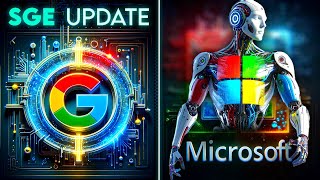
A YouTube video explaining recent updates to Google’s Search Generative Experience (SGE)—including AI-powered summaries, persistent follow-up questions, disambiguating translations (initially English→Spanish in the US), expansion to 120+ countries and four new languages, and interactive definitions for coding/health searches—followed by a segment where Microsoft technical advisor Carmel Allison debunks four common AI misconceptions (jobs being eliminated, AI only for experts, AI as a single technology, and concerns about bias) and advocates for responsible, diverse-data development and informed use.
Chapters
So Google has recently enhanced its search generative experience, commonly known as sge, with additional features and an expansion into more countries. And in the second part of our discussion, we will shift our focus to addressing four common misconceptions about AI as highlighted by Microsoft. But first, let's dive into the details of the latest improvements in sge. So back in May, Google started letting people test SGE through their search labs. Since then, they've been constantly making it better. A key feature of SGE is that it can create AI powered summaries and overviews. This means it takes a bunch of information from various places and puts it together into a clear and simple summary, which is super helpful when you're dealing with complex questions or topics that need insights from different angles. Now, Google has made it easier to ask more questions after your initial search. This is a big improvement because it makes finding information feel more like a conversation and less of a chore. Now you don't have to start a whole new search every time you have a follow up question. You can just type these questions into special areas on the search results page. This new feature is going to be available first for people in the US who speak English. Another cool thing Google has worked on is its translation service. We've all been in situations where translating a word that has multiple meanings gets confusing. Google's updated AI powered translation is here to fix that problem. When you translate a sentence and there's a word with more than one meaning, it'll be highlighted. You can then click on that word and choose the meaning you meant. This improvement will first be available for translating from English to Spanish in the US And Google plans to bring it to more countries and languages soon. But it's not just about new features. Google is also expanding where SGE is available. It's now in over 120 new countries and territories. Plus they've added four more languages. Spanish, Portuguese, Korean and Indonesian. So for instance, if you speak Spanish and live in the US you can now use SGE in Spanish. Everyone can access these new languages and areas through Chrome on the desktop, and it'll be on the Google app for Android and iOS soon. Google's also making searches better for specific things like coding and health. The latest update includes interactive definitions for these kinds of searches. So if you're looking up something about coding or health, important words will be highlighted. When you hover over these words, you'll see their definitions and sometimes pictures too. This update is also rolling out in English in the US first. And more countries and languages will get it soon. I guess adding SGE to Google search is part of Google's bigger plan to make information easier to get and understand. Alright now. Carmel Allison, an expert in AI with experience in bioinformatics, linguistics and healthcare advocacy, often comes across common misconceptions about artificial intelligence. Working as a technical advisor for Microsoft's cto, she sees these misunderstandings as a chance to delve into AI's role in our human experience. Firstly, Allison addresses the fear that AI will take away jobs. She explains that AI is more about transforming jobs rather than eliminating them. It automates routine tasks, freeing people to engage in more creative and meaningful activities. This shift in job nature leads to a rethinking of our work approach and the integration of AI. Secondly, the notion that AI is only for tech experts is misleading. Alison points out that AI is accessible to everyone and is already a part of daily activities like using search engines, online shopping and emailing. She particularly highlights its significant impact in healthcare, where AI assists doctors enhancing patient care. Furthermore, Alison clarifies that AI AI is not a singular technology, but a blend of various technologies embedded in common tools like search engines, email applications, and even in medical devices. Understanding the range of AI tools and choosing the right one for each task is essential. Finally, concerning AI's inherent bias, Allison suggests using AI as informed users. It's important to understand how AI systems are developed and the principles of the companies that create them. She advocates for the use of diverse data sets and unbiased algorithms in AI development practices that Microsoft follows in its commitment to responsible AI. Alison's overarching message is the importance of comprehending AI's complexities and capabilities to make the most of it in our lives. Alright, if you enjoyed this video, don't forget to hit the like button, subscribe to my channel and click the Bell icon to stay updated on all my future uploads. Thanks for tuning in and I'll catch you in the next one.