Googles VEO-2 Just SHOCKED The ENTIRE INDUSTRY! (OpenAI SORA Beaten) Full Breakdown
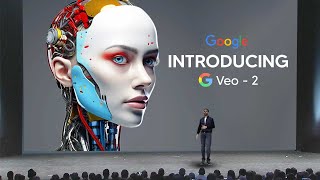
YouTube breakdown (creator LARRUZ, Dec 16, 2024) arguing that Google’s VEO-2 (text-to-video) substantially outperforms current competitors (OpenAI Sora 2, Meta Moviegen, Minimax) across subjective preference benchmarks and prompt adherence. The video highlights VEO-2’s unusually strong physical reasoning—accurate object interaction, convincing fluid simulations (coffee, syrup, water jiggle), and character consistency in long scenes—and shows several demo prompts (potato characters, car jumping a waterfall). It also notes Google’s simultaneous Imagen 3 text-to-image release and its Image Labs UI improvements, positioning Google as regaining leadership in generative AI.
Chapters
This is VO2, Google's second iteration, and somehow it manages to surpass every single video model that currently is available. And that does include the recently released Sora 2 which was from OpenAI. And it's really, really surprising considering Google haven't had the best track record. But it seems that this December, Google have surpassed everyone's expectations in terms of what they are capable of with regards to AI development. As we've had update after update showing that Google clearly are now the industry leader when it comes to AI development. This marks a historic moment as this is a time where AI is more competitive than ever and being able to top the leaderboards in terms of software that is not only the best, but the best by a decent margin. This means that Google is clearly back on their AI game and is setting new standards for other industry leaders to live up to now. Incredibly, like I said before, not only is this something that is visually appealing as well as visually striking, when you do take a look at VEO in terms of the actual benchmarks, we can see how it is compared to others and how those other models performed. You can see right here that Meta's Moviegen, a 1080p video generator that is remarkably good, doesn't manage to match up. It is only preferred around 30% of the time. Time. And over 50% of the time we can see that Google's model takes the cake as well as cling 1.5, which is a model that I know a lot of people in the creative industry are using for various different projects and it's been highly touted as a model that is outstanding. We can also see one of the very best models, Minimax, actually coming in at just 30% when it looks at how much they preferred that model. And of course Sora Turbo OpenAI's recent iteration of models, we can see that that one actually is the least preferred when it comes to looking at what kind of models are preferred. So overall across the board we can see that Google's models are clearly better than any other industry standard text to video generation models, which is, like I said before, very surprising considering that this is their second iteration and they didn't release the first one publicly for quite some time. And it seems like, or it would have seemed like Google would have been behind considering a lot of other people were using many other models. So overall, right here in the benchmarks you can see that over 50% of the time, near 60% of the time, people will be choosing Google's models in terms of full video generation when we Also look at the prompt adherence. I do apologize for the quality here, but we can see as well that this is where Google's models also outperform. Now, one of the things that I do really like about this model is the fact that this model does have incredible physics capabilities. One of the large issues with these video generation models is that they are generative AI systems, meaning that things aren't really understood at the physical granular level, which leads to inconsistent hallucinated outputs. But Google have managed to cook up something new here with VO2. It doesn't give us details on the entirety of the architecture, but. But whatever they have done shows us that this model is one that really and truly understands the physical world. We can see that cutting the tomato not only looks really, really juicy and plump as the knife is cutting through it, all those subtle movements and changes and vibrations are visible in the tomato. And then when the tomato is laid onto the other one, we can see, it actually does look incredibly perfect with regards to the positioning of that fruit. So overall, we have something that has a really good understanding of how objects interact with each other. I'm not sure how they've done it, but whatever they have done is working really well. Now, one of the things that can be really hard to nail when dealing with a text to video generator is of course, dealing with liquids. Liquids are highly unpredictable and they move in ways that take traditional machines genuinely hours and hours to compute all of those little particles. So when we do see accurate fluid simulations, this shows us that the model that they've managed to develop is one that is really, really coherent. If you've ever tried to generate your own water simulations, you'll know just how tedious that can be. So in these examples right here, we can see that there are two kinds of liquid. You can see that we have the coffee being poured. There's all sorts of subtle nuances in the coffee that I really like to see can see there those small details. And then of course, when we look at the syrup, that is also something that looks really, really detailed in terms of the syrup flowing at exactly the right speeds in terms of it compounding on one another. So overall, I do think that the physics is something completely incredible. Now, I did come across this demo in which you see someone pouring coffee, and this one looks really, really incredible because we actually get to see how these liquids manage to move from, from one object to another. So this was something that I found to be completely remarkable. It was something that I really, really did like, for example, when he actually puts the glass back, you can see there is a slight jiggle in the water right there. So when he puts it down, you can see that the water manages to move, which is just, you know, all these subtle details just add to the kind of realism that this model is able to generate. So this is something that gives me a large amount of confidence in Google's ability to actually get the job done when it comes to producing models that are really, really effective. And that should be to no surprise because Google are often the ones that innovate when it comes to this kind of technology. I'm not exactly sure what the exact piece of technology was, but when it is regarding the current state of video development, there was a breakthrough that Google actually made that led to the creation of many different efficient models like we do have now, such as Sora and the other ones like Minimax. Now we can also see another example here of someone know, pouring a very cold drink. And then we can also see the accurate fluid simulations. But enough with the incredible physics. What about the strange and the wonderful examples of characters being generated? What about a sitcom TV show with potatoes? You can see right here exactly what that looks like. I'm not sure why this person generated potatoes, but what we should take away from this is that the character consistency does look really, really effective. Now another interesting example, if we're no longer going to look at potatoes, is this prompt of a car going top speed through a road until reaching a waterfall and then it gets to the waterfall and jumps off a mountain. So this is a really striking example of how you can see the car managing to run through a waterfall. Not run, actually drive. And then you can see that this car is able to accurately perform very well when it comes to the physics of what we're seeing here. So the waterfall looks really nice. You can see that the splashdowns look really nice. Overall, it's just something that looks really, really remarkable. And in terms of what the model is able to do, and I don't have any doubts that individuals that do get access to these models are going to have some really creative outputs that they're going to use. And when we actually take a look at prompts that are this difficult to perform and pull off with such a long form in terms of, you know, the character consistency, ensuring that the car doesn't deform and mangle. One of the problems I've seen from many different video generators is that sometimes the car will morph and shape into a completely different brand or just a completely different object. So the crazy Thing about all of this is that, you know, for those of you who don't continually use these video models, you aren't actually truly understanding just how big of an advancement this is. But I'm really trying to drive that point home to you guys that this is truly a model that is a step ahead of the competition in simply all areas. And if you want to go back to potatoes, you can see this example of a cinematic action kung fu movie and the protagonist is a potato wearing a long black leather coat and. And it is raining heavily. I think this is an example of multiple different things coming together successfully here, such as the prompt adherence as well as the rain looking really well there. So that example is one that honestly I can't say I would have believed is AI generated unless someone certainly told me because everything I'm looking at, I truly don't see any issues with it at all. Now, Google's VEO project, veo, the Text to Video Generator, isn't the only thing that they managed to launch with this. They also decided to launch their Frontier model, which is a text to image model, Imagen 3. Now, Imagen 3 is essentially their image model that surpasses absolutely everything on the leaderboard. You can see here where it ranks in terms of overall ELO rating. And like I said already, I think this shows us once again that Google is taking back the reins in terms of showing us or that look, these guys are the ones that invented most of the technology that these AI models are powered by anyways. So it shouldn't be a large surprise that they are coming back for the phone and they are doing so with full force. So it's not just a video model that they've released today, they've also released an image model that seems to be the leader in terms of outright coherence. So if you're wondering how this model works in terms of the prompt adherence, it's absolutely incredible. If we actually take a look at the Image Labs area where you actually get to create these image models, it shows us that the kind of UI that they use is one that is not only easy for beginners, but also even for advanced users. It's simply the best in terms of allowing you to construct a prompt that enables you to control exactly what you want to see. Credit to eektham. Credit to Ethan Mollick for these photos. But. But you can see right here that with Imagen 3 it really understands exactly what you want. And with the drop down ability for certain words, essentially what you're able to do is you're able to control certain parts of the image and swap them in and out. You can see right here, one of the key prompts that I found to be rather fascinating was this close up of a man's eye, and in the eye you can see it's reflecting some garlic bread, which is a really difficult prompt to bowl off. So this is once again another example of Google's models pulling ahead. We also get to see a photorealistic image of a potato fighting a vampire on the moon, which is rather interesting. I'm not sure why anyone would prompt this, but that is the point of AI, for you to embrace your creativity and explore all of your ideas. So overall, I think it is absolutely incredible that Google have managed to produce VEO and Imagen 3 that are state of the art in terms of their performance compared to any other other company. And it seems to be that way by a long source. So with that being said, Google this week have simply reclaimed the throne in terms of video, in terms of text to image, and of course in terms of their overall AI models and the future. So with that being said, are you guys more bullish on Google now? I certainly am looking forward to anything else that they have to offer, especially coming in January. And I'll be looking to see if Google have any more releases left for the end of the year.










