GPT 4 Will Change The World (Chat GPT 4)
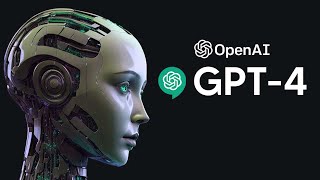
ChatGPT explained: how transformer models work, why GPT-3 cost millions to train, and what GPT-4 might do differently. Microsoft's partnership with OpenAI could reshape entire industries, though OpenAI's own leaders warn the technology still has real limits.
Questions this video answers
February 8, 2023.
GPT-1: 117 million; GPT-2: 1.2 billion; GPT-3: 175 billion.
Microsoft planned to invest $10 billion, valuing OpenAI at $29 billion (as stated in the video).
The New York Times (the transcript says the NYT expected GPT-4 in the first quarter of 2023).
Up to $100,000 per day or $3 million per month (as claimed in the transcript).
Chapters
Introducing ChatGPT, the next generation artificial intelligence product from OpenAI. This advanced AI model has taken the tech world by storm with its ability to answer questions and respond with stunningly human like answers. ChatGPT was developed by OpenAI, the cutting edge research company founded in San Francisco in 2015 by industry leaders such as Sam Altman, Elon Musk, Greg Brockman, Leah Zutzkever and Wojciek Zaremba. The popularity of ChatGPT has grown so quickly that the websites can hardly keep up with the traffic. But what is it about ChatGPT that has everyone talking? ChatGPT's ability to understand and generate human language has been the potential to revolutionize the field of NLP and AI. The model's capabilities can be used to improve a wide range of AI powered systems, including virtual assistants, chatbots and other types of natural language interfaces. Experts and users have been amazed by ChatGPT's ability to understand and generate human language. You can ask anything, though you might not get an answer. OpenAI suggests a few categories like expanding physics, asking for birthday party ideas, and getting programming help. ChatGPT has been widely praised for its ability to assist in a variety of fields, including customer service, language translation, and even creative writing. The world of AI is constantly evolving, and the latest development on the horizon is GPT4, the newest language model from OpenAI. According to the New York Times, GPT4 is expected to be released in the first quarter of 2023, but it's important to note that OpenAI has not officially announced a release date for GPT4 yet. What can we expect from GPT4? One of the key advancements in ChatGPT4 is its processing speed. Compared to its predecessor, GPT 3.5, ChatGPT can process information and respond faster and more accurately. This opens up a whole new world of possibilities for industries and businesses. But that's not all. Rumors are circulating about the development of GPT4, and if the rumors are true, we can expect even more advanced capabilities and improved performance. While the Release date for GPT4 is yet to be announced, one thing is certain, it will be a game changer for the world of AI. OpenAI continues to push the boundaries of what's possible with AI, and GPT4 is no exception. From advanced language generation to real time decision making, GPT4 could push the boundaries of what is possible with AI. ChatGPT is the future of artificial intelligence, and the possibilities are endless. In this video, we'll look at how ChatGPT might be used to change the direction of history. Be ready to witness how ChatGPT will change the world in ways that we are still unable to imagine. ChatGPT is a generative language model that has been trained to hold natural conversations just like a human. But it's not just any chatbot. It's one that can understand and respond to a wide range of topics and questions. ChatGPT is a special kind of computer program called a generative language model. This means it can understand and write like a person by using something called the transformer architecture. The transformer architecture allows the computer to pay attention to different parts of a sentence at different times. This helps it understand the sentence better and respond more accurately. ChatGPT's transformer architecture is a big step forward in technology, and it's making it possible for computers to understand and respond to human language like never before. To make ChatGPT smart, it had to learn from lots and lots of things people have said and written. That's why it needs a lot of computer power to work, just like a big brain needs a lot of energy to work. But the people who made ChatGPT wanted to make sure it was really good at talking like a person. So they used something called reinforcement learning, where they give ChatGPT a test and have humans rank how well it did. And all of this learning and testing was done on a supercomputer. It's like a giant brain for computers. With all this hard work, ChatGPT can understand and respond to what people say or write like a pro. But this level of AI requires a significant amount of energy and computing power. The limited memory capacity of Even the largest GPUs used to train these systems requires multiple processors to be running in parallel. In fact, it takes a lot of GPUs to run ChatGPT. The GPT series created by OpenAI has seen a steady increase in the number of parameters with each new release. GPT1 had 117 million parameters. GPT2 had 1.2 billion parameters. And GPT3 raised the bar even higher with 175 billion parameters. But what does the future hold for GPT4? Some estimates suggest that it could have as many as 100 trillion parameters, putting it on par with the human brain in terms of neural connections. This has created a lot of excitement among AI enthusiasts. The scaling hypothesis states that as we increase the size of the model data and computational power, the performance of the model also increases. This is why many AI model creators have focused on increasing the number of parameters in their models. However, it's important to note that model size is not the only factor that determines performance. A larger model does not necessarily mean better performance. Additionally, the cost of training a large model can be significant, making it unaffordable for some companies. Instead of just focusing on size, OpenAI will likely shift its focus to other aspects such as algorithms and alignment. GPT4 would be the first large AI model with sparsity at its core. This means that not all neurons in the model will be active at any given time, reducing computing costs and making it more efficient. This will also help the model better understand context, making it more similar to human thinking. All of this computational power doesn't come cheap. Running ChatGPT on a cloud service like Azure could cost up to $100,000 per day or 3 million per month, but OpenAI's partnership with Microsoft may make the cost lower. However, it's still a lot of money and resources being spent on this technology. ChatGPT is like a magic computer that can talk and write like a human, but it requires a significant investment in terms of computational resources and money. As AI becomes more prevalent, the challenge will be to maintain sufficient computing capacity to support them. A lack of computational power is already holding back AI development and creating bottlenecks. GPT4 has made significant advancements in processing speed, allowing for faster and more efficient natural language processing tasks. This means that tasks that would normally take a long time to complete can now be done in a fraction of the time. As AI technology continues to advance, the question on many people's minds is will new architectures be needed to keep up with the demands of these powerful models? Mirko Masolosy, professor of Computer Science at University College London, said that the problem with computers we have now is that they aren't good at the special types of maths that AI models need. They are better at general things. Companies like Meta, Microsoft and Nvidia are working on new supercomputers that can help with this problem. But even these new computers can't fit all the data from these big AI models on one computer. So we need to build new types of computers that can work together to run these models. The future of AI is about making bigger and better models and making them work faster. This is a game changer for businesses as it will increase productivity and efficiency. Imagine being able to complete work with the help of AI faster than ever before. This will change the way we work and will have a positive impact on the economy. Its advancements and processing speed will change the way we interact with AI and how it can help us in our daily lives. It will be a driving force in different industries such as business technology and creative technology. In the business field, GPT4 can help automate repetitive tasks such as data entry, customer service and even financial analysis. It can also assist with decision making by providing insight and recommendations based on large amounts of data. This can help businesses save time, money and increase productivity in technology, GPT4 can enhance natural language comprehension which is essential for voice activated gadgets, chatbots and virtual assistants. It can also be used to improve the accuracy and naturalness of speech to text and text to speech systems. Also in the creative industry. By producing unique content like songs, novels and Even visual art, GPT4 can aid in the development of new forms of entertainment and creativity. It can also be applied to the creation of more interactive and realistic conversation in video games. However, we are still in the early stages of AI adoption. As we continue to push the boundaries of AI technology, it's clear that new architectures will be needed to keep up with the demands of these powerful models. The future of AI is an exciting, but also a costly one. As you may know, ChatGPT is a fine tuned version of GPT3's latest iteration, GPT 3.5. This fine tuning makes ChatGPT much more intuitive and natural to engage with with each new release. OpenAI's GPT series has pushed the boundaries of what's possible with AI. But what can we expect from GPT4 and what are the rumors surrounding this highly anticipated model? In a recent interview with the Wall Street Journal, Microsoft CEO Satya Nadella discussed the company's plans to expand access to OpenAI tools like ChatGPT. According to Nadella, Microsoft is exploring a variety of ways to integrate AI tools like ChatGPT with its products. These include using machine learning algorithms to improve the performance and functionality of existing products like Office or Windows. Imagine being able to write an email or create a document with the help of ChatGPT. As part of this deal, Microsoft is planning to invest $10 billion in OpenAI, valuing the company at $29 billion. This investment will help fund the development of new and advanced AI technologies. This partnership between Microsoft and OpenAI is set to revolutionize the AI industry. By combining the resources and expertise of these two companies, we can expect to see incredible advancements in the field of AI in the coming years. From improving natural language processing to developing more advanced machine learning models, the possibilities are endless. This collaboration will pave the way for new and innovative applications of AI in various industries. With their combined resources and expertise, we can expect to see incredible advancements in the field of AI in the years to come, the integration of OpenAI's ChatGPT into Microsoft's products will no doubt lead to new opportunities and advancements in the field of AI. This announcement showcases Microsoft's commitment to staying at the forefront of technology and its willingness to leverage the power of AI to improve its products and create new capabilities for its users. GPT4 will likely give a boost to productivity, allowing people to complete work with AI faster than without it, but the adoption of AI tools is still in its early stages. It will take time for AI tools to earn the trust of people and for them to be widely adopted in daily work. Recently, OpenAI CEO Sam Altman addressed these rumors in an interview with Strictly VC. When asked about the potential release date for GPT4, Altman offered no certain time frame, saying that the model will be released when we are confident we can do it safely and responsibly. In the same interview, he addressed the rumors about GPT4 and stated that the speculation surrounding it is absurd. Similar to the brief that OpenAI would create a system of artificial general intelligence that has human like abilities in many areas, Altman also emphasized that even if GPT4 does provide a significant, significant increase in efficiency, it will not be immediately apparent to the adoption rate of the system. It will take some time for the general public to fully adapt to the change and there will still be areas where humans are superior to AI. In the same interview, Altman also touched on the subject of AI generated video and when OpenAI will develop a model for it. He also added that it is on the company's roadmap. He stated it will come and that it could be pretty soon. It could take a while. Recently, Sam Altman shared his thoughts on the current capabilities of the language model ChatGPT. In his personal Twitter account he said ChatGPT is incredibly limited but good enough at some things to create a misleading impression of greatness. It's a mistake to be relying on it for anything important right now. It's a preview of progress. We have lots of work to do on robustness and truthfulness. Fun, creative inspiration, Great reliance for factual queries. Not such a good idea. We will work hard to improve. While it is true that ChatGPT can be a fun tool for creative inspiration, it is important to remember that it should not be relied on for factual queries. This is a reminder that we are still in the early stages of language model development and there is still a long way to go before we can fully trust these systems. Nevertheless, it is reassuring to know that OpenAI team is devoted to continuously developing their technology to guarantee that it is precise and dependable. This commitment to improve is what distinguishes OpenAI and offers us optimism for the future of their language model capabilities. In recent times, OpenAI has released two new versions of the language model ChatGPT, ChatGPT 3.5 and ChatGPT 4. These latest versions are a testament to the constant advancements being made in language model technology. It is important to note that these models still have their limitations and should not be fully relied on for important matters. But in terms of language model capabilities, these most Recent iterations of ChatGPT mark a significant advancement. It is a promising indicator of the advancements that can be accomplished in this field and the potential for even more advanced versions in the future. GPT4, or Generative Pre Trained Transformer 4, is the latest version of OpenAI's language model. This model is able to process text at a unprecedented speed, and its capabilities are truly game changing. The highly anticipated release of GPT4 is on the horizon, and while rumors and speculation surround its capabilities, one thing is certain. The partnership between Microsoft and OpenAI will change the future of AI. Although the release date for GPT4 is uncertain and the adoption of AI tools is still in its early stages, it's an exciting time for the world of AI, and this partnership will be at the forefront of shaping its future. One of the biggest ways in which GPT4 will change the game is through its ability to generate text. The model is able to generate text that is virtually indistinguishable from text written by a human. This means that GPT4 can be used to write articles, blog posts, and even books with ease. This will revolutionize content creation and make it possible for anyone to produce high quality content quickly and efficiently. Another way in which GPT4 will change the game is through its ability to understand and process natural language. The model is able to understand the context and meaning of text, which means that it can be used for a wide range of applications such as chatbots, customer service, and even medical diagnosis. We can also expect GPT4 to give a boost to productivity, allowing people to complete work with AI faster than without it. But GPT4 isn't just going to change the game for businesses and individuals, it will also change the world. With GPT4, we have the ability to process and analyze vast amounts of data quickly and accurately. This will allow us to make better decisions and solve some of the world's most pressing problems. For example, GPT4 will be used to analyze large amounts of scientific data which would help us make breakthroughs in medicine and technology. The partnership between Microsoft and OpenAI is set to change the future of AI. With Microsoft's vast resources and expertise in technology and OpenAI's cutting edge AI research, we can expect to see incredible advancements in the field of AI in the coming years. Think about using ChatGPT to assist you in composing an email or a paper. The possibilities are infinite, thanks to the combined knowledge and resources of these two companies. This partnership will open the door for fresh and innovative uses of AI across several sectors, transforming how we live and work. So pay attention and prepare for AI's future. The possibilities are numerous, ranging from enhancing natural language processing to creating more complex machine learning models. This partnership will open the door for fresh and creative uses of AI across several sectors. So while we can't say for sure what GPT4 will bring, one thing is certain. OpenAI is pushing the boundaries of AI technology and we can't wait to see what it can do. As always, it's important to use this powerful technology responsibly and to ensure that it is used ethically. Thank you for watching. We hope you gained new insights about the advancements in GPT4 and its potential impact on society. We can't wait to see what the future holds for this technology and how it will change the way we work and interact with language. We'll see you in the next one.










