GPT-5 Date LEAKED! OpenAI Voice PREVIEW. AI Ceo LEAVES! Sora, Meta , Robotics Breakthrough and more
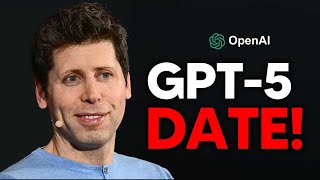
OpenAI's voice engine is coming, GPT-5 is rumored for mid-year, and Sora is being pitched to Hollywood. Stability AI lost its CEO, Neuralink showed brain-control demos, and a humanoid robot landed a backflip.
Chapters
So with a crazy week in artificial intelligence, let's actually dive into some of the most meaningful stories that you probably did miss that got missed due to the wave of announcements, as is every week. So one of the first things that I did want to cover was Sam Altman's tweet from last year. No, in fact, this year. In fact, actually it is last year. It's basically about this year. So this is a tweet which is, you know, talking about what's going to happen this year and basically said, what would you like to see? OpenAI build fix in 2024? And. And many of the things have gone. But the reason I'm bringing this tweet up again and the reason that many people are talking about this again is because many of the things that we've seen here, it's almost as if he's going one by one down the checklist and crossing them off. So we do know that we got higher rate limits. We also do know that we got video. We also know that we got better browsing. We also know there are some other things. I think we did get a lot of better GPTs. I'm not sure how much better, but we know that a lot of this stuff is being used, know, knocked off the list. And one of the things, of course, that we do know is going to come very, very soon is of course, better voice mode. So better voice mode was one of the things that I talked about in a video yesterday where I talked about OpenAI's Project Voice Voice Engine. And yeah, so it seems like this voice engine is going to be one of the things here because of course, as they did talk about voice mode before, this is something that, you know, we know is going to be a thing in the future. Now, what's crazy about this is that, you know, we do know that all of these things happening this year with would be a really, really transformational year. But of course, many people have speculated about AGI because he has said, a little patience, please. Now, if we come back to better voice mode and better reasoning in GPT5, one of the things actually saw a tweet which actually showcased the kind of voice engine that we could be getting. So I'm going to show you guys that tweet right now. So this is Jimmy apples, an infamous OpenAI leaker. If you're someone who's been in the AI space for quite some time, you'll know who he is. Just someone that has Insider information on OpenAI pretty much verified by now. And essentially he spoke Here, he said, let me just make this a bit bigger. He said. Back in January, Volkswagen is jumping on the generative AI bandwagon by announcing plans to install OpenAI's ChatGPT into its vehicles starting in the second quarter of 2024. So if you don't know, this is very, very important, because if we actually take a look at the second quarter of the year, the second quarter of the year actually starts around next week. So in next week it's going to be April 1st. So that means that in 2024, for Q2, this is how businesses operate. They usually operate on a quarterly basis. And quarter two, which is the second quarter of 2024, you can see second quarter of 2024, the reason this is really, really important is because think about it like this, okay? Like literally around, you know, five, four days ago, we got the trademark for voice engine. And then of course we had this announcement, which was earlier in the year, saying that, you know, in the second quarter, starting in the second quarter, which is next week, okay, we. Which essentially means that if we actually look at all the things going on, it means that likely next week starting April 1st or April 7th, around that time in that week, I do expect OpenAI's voice engine to be announced. And it does make sense, because if they're stating that Volkswagen is going to be adding it to their vehicles, and if we know that they recently just trademarked it, and if we know that, also, he says six days ago, they actually updated voices. And also recently, if you remember, they also did the figure demo where they had that robot that was speaking really, really lifelike. And Jimmy Apple's quote tweeted this person that says, and six days ago, the voices that were likely used in the figure robot demo. So we can see here that these voices sound really, really lifelike. And I'm going to go show you guys what the default one sounds like and then what the OpenAI one sounds like. So you can see right here, I'm going to just put the volume up and then you guys are going to hear the normal one. And then you're going to hear the one by OpenAI. And you can see, literally as he scrolls down, you can see right here, it says Preview. Okay, preview, OpenAI. So it's clear that this is some kind of preview. But anyways, let's take a listen to what this sounds like.
So there's this guy, right? His daughter was the vice president of some big company or whatever. And get this.
So that first one there, that was just the standard one. Just, honestly, just the standard voice. But now we're going to listen to the OpenAI1. So take a listen to that.
So there's this guy, right? His, his daughter was the vice president of some, a big company or whatever. And get this. So there's this guy and I think.
Whilst that is in preview, that does actually sound really, really cool and really realistic and maybe it might even sound better with OpenAI's entire voice engine. So I'm actually really excited for Voice Engine. Like I said before, I would predict that it is probably going to be here perhaps sometime starting the first until the seventh, maybe in that two week timeline, considering that's the start of quarter two. So that kind of makes sense considering the trademarks, considering everything surrounding it, considering everything that we've seen and considering in the future it's going to be powering some kind of product that would likely, likely make sense. So that is something to keep your eyes on. And of course, considering that Sam Altman said better voice mode is going to be coming later this year, this is something that we can clearly say that we know is going to come this year anyway. So trademarks, Sam Altman stating it, a new preview and many companies stating it. I wouldn't be surprised if we have this sometime between April 1st to April 14th. So look out for that. Now if you. In some more OpenAI news, we actually had something that was pretty incredible. Okay. We had this article, okay. And there was a lot of discussion on Twitter about this because it's a very, very important, you know, discussion because it kind of shows us where future technology may head. So this article essentially states OpenAI courts Hollywood in meetings with film studios and directors. It says the startup is pitching its new AI video generation tool. Sora CEO Altman attended LA parties during Oscar's weekend and it says OpenAI wants to break into the movie business. The AI startup has scheduled meetings in LA next week with Hollywood studios, media executives and talent agencies to form partnerships in the entertainment industry and encourage filmmakers to integrate its new AI video generator into their work, according to people familiar with the matter. Now you might be thinking, okay, why is this a surprise? The reason why this is quite a surprise is because many people had talked about before how people were memeing about this destroying Hollywood and stuff like that. And it seems like now, number one, the first thing is that yes, this is going to be, you know, implemented into Hollywood. And number two, we also have the fact that many people are wondering if we're going to get access to this because one of the Things that people are trying to think about is the cost to run this technology. So if you don't know, SORA is a very, very compute intensive software that essentially just means that it requires so much compute you and electricity that when you run it for a video generation, it might not be very effective to run it at scale because the costs incurred by the software wouldn't amount to cover what an average user would pay if they were paying, let's say, for example, $20 a month like they do for GPT4. And this is why I put this tweet right here and someone said, not great. Why go to studios? They need a small number of higher paying customers. And this indicates that the costs are too expensive for consumers, which is people like you and me. And of course the moderation copyright issues are too great for them to deal with the, the public release. Now the thing, what I think that people should understand about this is that I don't think it's going to surprise us in the future if a lot of OpenAI's models do become mainly B2B because that is largely OpenAI's main client base. Like the majority of people that use ChatGPT and GPT4 for $20 a month, we aren't really contributing to the bottom line that much. It's the big businesses, it's the APIs, it's all of the kind of deals that they have where they're able to get these kind of things. And of course, maybe they're just going to roll it out to Hollywood first, see how it is, and then when they can get the compute down so it's more cost effective for the general public, then maybe they could release something like that. So I mean, a lot of people were debating whether or not this is good because they're going to say, okay, in future, future technologies, you know, OpenAI might not give them to the public. But I think it's also another thing because Hollywood also did have a very, very large issue with writers and LLMs. And they were stating that, you know, they were basically stating that, look, we don't want AI to be replacing writers because at the end of the day we don't want our community to be run down by like horrible AI. And we want this to keep this human. So they kind of signed some deal, they managed to reach some agreement. So I'm wondering if this is going to be something that happens again, you know, because of course you can see how Hollywood writers tramped over AI and why it matters. And like I said, I think this is going to be future for the, you know, the future of work for those of you in certain industries. Because we do need to be paying attention to how certain things are because it sets the precedent on what will be there in the future. And although Hollywood is a rather unique community considering, you know, what it does and what it is, I think it's important to kind of look at this because we maybe with Sora, are there going to be videographers or people in the CGI space that now start to, I wouldn't say write, but start to write some kind of petition? And I would say, does this mean that Sora is just too COMPUTE intensive at the moment, or does this mean that OpenAI is tying their business relationships? I think that like I said before, this is going to be something that is mainly used by people who are in the larger companies. I don't think it's going to be wild scale use for the average person, just like LLMs are. And I guess once compute is down, I think that's when we're going to start to see wild scale access. And of course red teaming this software does seem like to be a little bit more controversial than other issues. So hopefully we do get this in the future because they did say that they're going to release it later this year, but it will be interesting to see how this entire thing does develop, especially with the hallucinations and the kind of things that's possible now. There was also something really, really cool. Okay, so I came across this tweet here and it says GPT5 is cooking. If this is accurate, it seems like it's not finished, but it's in some sort of preview version which, which is going to be materially better. So essentially there was an article from I'm not exactly sure which article it was, but I did check around, it was pretty, pretty vetted. And essentially they talk about GPT5 and they said, and this is why it's pretty fascinating because they actually give us a date. So they said Sam Alwin is on track to put GPT5 out sometime mid year, likely during summer, according to two people familiar with the company. And some enterprise customers have recently received demos. Okay, which means that right now some people are receiving GPT5 demos of the latest model and its related enhancements. And another person familiar with the processes said these people, whose identities Business Insider has confirmed, asked to remain anonymous so they could speak freely. And basically the people you know, which means that GPT5 likely has finished, you know, training right now, says it's really good, like materially better, said one CEO who recently saw a version of GPT5. And of course, you know, he said the company also alluded to to other as yet released uncapabilities of the model, including the ability to call AI agents being developed by OpenAI to perform tasks autonomously. So we actually got a really big scoop on GPT5, number one being the fact that the release date is likely summer, and considering the fact that right now I guess they're about to release Voice Engine, which means that we're going to have two months to kind of decipher, get that technology down us like we did with Sora. I'm guessing that on after the voice engine fiasco kind of rolls over, then people are going to be rolling over into GPT5 and maybe just like GPT4, they're going to iteratively release it. So it's probably just going to be an LLM with really good reasoning, really good math, all of that kind of stuff. And then probably later on in the year, in December, maybe we get AI agents with GPT5. I honestly have no idea, considering the trademarks with GPT6 being agents. But it will be interesting to see where this kind of technology does go. But that is quite good. At least now we have some kind of time frame because they're saying, you know, mid year. So around maybe three months from now we're going to get GPT5, which would be really, really nice. And I think Business Insider have done a really, really good job here. So I'm kind of excited because they're saying it's materially better and I'm wondering what, you know, use cases and data unique to his company that he said, you know, what kind of things he saw. So I will be intrigued to see what kind of capabilities it's going to have, what kind of things it's able to do. And especially if they do some demos, I think they might do just like they did with GPT4, they might do some demos of calling AI agents like they did with GPT4. Essentially what they did, if you don't remember, they essentially did something where they showed us how GPT4 Vision worked, but it wasn't released on the day because it was just very compute intensive. In fact, it took a couple of months for them to release that ability. So yeah, GPT5 is coming soon and sooner than you think. Those three months are definitely going to fly by. So. So yeah, fascinating stuff. Now another fascinating piece of news was the fact that Stability AI are undergoing Some very, very severe troubles. Now I'd always heard rumors about Stability AI going under some troubles, but now it seems that, you know, Imad Mostaq, the CEO, recently resigned from his role as CEO of Stability AI and from his position of the board of directors as the company to pursue decentralized AI. So it seems that increasingly we're getting this trend of decentralized AI. And I'm not sure why. I mean, and when I say I'm not sure why, I'm saying I'm not sure why. Because it doesn't seem to be as profitable as some of the other business models. And considering that these guys want to pay back investors, some people were stating that they're struggling to retain cash and stuff like that. That just didn't make sense to me. But at the same time, people resigning from the board, AI companies seem to be some of the most brittle. Recently we've seen it happen with OpenAI, we've seen it happen with inflection. Now stability AI and one concern about all of this that most people do have is they are concerned because you know, of course they're not really concerned about Stability AI. Although it's a really, really good software, really good platform, you can do a lot with it. Most people are concerned with the fact that if Stability AI goes under, someone else could acquire it and there might be a giant tech monopoly with just basically Microsoft and Google just left competing for the entire market because Microsoft could acquire this company, you know, Google could acquire this company. But the point is, is that, you know, Inflection basically got acquired by Microsoft OpenAI when it went under for a moment, it got acquired by Microsoft. So we know that this is going to be really, really fascinating to see how things kind of go on here. I wonder if this company will even continue. And also the CEO and the co founder of Hugging Face actually said, should we acquire Stability and open source stable diffusion free? So I think open source is really good, of course, you know, for the users, it's good for the community because it levels the playing field on what you're able to do. And I think it's good for customization and stuff like that. But it's really fascinating just to see entire companies worth hundreds of millions of dollars just completely go under in just a weekend. So this AI stuff is moving rapidly and yeah, it's very, very, very interesting. So I'm wondering how this is all going to pan out. And I think it'll be fine. I think even if it goes under, I think another company will acquire it and Just add it to part of the stack. Maybe Nvidia, maybe Microsoft. I wouldn't be surprised if Microsoft does do that because Satya Nadella has. He's been doing that quite a lot, so we'll be interesting to see how that plays out. And then we had meta introducing SceneScript, a novel approach for 3D scene reconstruction. So essentially they said, today we're introducing SceneScript, a novel approach for reconstructing environments and representing the layout of physical spaces. SceneScript, which was trained in simulation in the ARIA synthetic environment state set, which is available for academic use. So essentially it says, imagine a pair of stylish lightweight glasses combined with contextualized AI with a display that could seamlessly give you access to real time information when you need it, proactively help you as you go about your day. In order for such a pair of augmented reality glasses to become a reality, the system must understand the layout of your physical environment and how the world is shaped in 3D. So essentially they just have a method of generating scene layouts and representing scenes in natural language. So it uses end to end machine learning and an LLM and, and it's able to basically analyze your environment and understand exactly what's going on. So if we go to the start, you can see right here it says walk around, around your space to build up the point map. And it seems that, you know, Mark Zuckerberg Meta are really, really, really underrated in this space because this kind of thing is really, really good in terms of what the future applications for this are going to be. There are just so many future applications for this. It's just pretty, pretty crazy. And I've seen Meta stack. What they're building on the back end is pretty, pretty incredible. So I wouldn't be surprised if Meta comes out as one of the top AI winners in the future, far from now, because llama3agi what they're building some really, really impressive stuff. Now we did have another article that was talking about the burning question everyone in the tech community is asking, where is Ilya? And essentially this article just recaps some of the stuff. I'm not going to cover too much of the memes because I think people do forget. Ilya is a person. He probably has feelings, he's probably just somewhere just. I would say that he doesn't seem to be someone who like wants drama and any kind of spotlight, but you know, it just talks about, you know, do not bring up Satsukova without men. It makes him uncomfortable. In a recent interview, Altman says, I love Ilya, I have tremendous respect for him, and, you know, it's just. Just asking the question that, where is he? You know, and the fact that, you know, Sutskova was concerned about AGI safety and the rapid pace at which OpenAI was advancing. Altman confirmed the saying was, one of the things I admire about Ilya is his serious approach to AGI and border safety concerns, including the, you know, societal impact. And, of course, you know, the last time he was seen active was working on aligning superhuman AI systems capable of complex and creative behaviors that humans cannot fully understand. So I think, you know, he's probably just still working on Super Alignment, and maybe it just seems that, you know, he just wants to work in silence and just wants to get out of the way because he's not saying anything. Maybe it's, you know, something to do with the lawyers where he can't make a statement or is not able to. Either way, I don't think it's that much of a big issue. Of course, he's a respected spot scientist, and people all love his contributions to OpenAI. And, of course, people are like, I guess you could say, not fans, but supporters, just kind of wondering where he is. I think that we just need to wait, because if he's not saying anything, the company's being very vague. It's obviously for some kind of legal issue or for a reason that Ilya just doesn't want to say anything and just wants to remain silent. So either way, we're just gonna have to wait because there's pretty much no information on Ilya at the moment, and we can only presume that he's just still somehow working and just getting things done. So now we did get an update on the Neuralink guy. This is pretty, pretty insane. He's actually playing Mario Kart with his brain. And, you know, saying that sentence is just pretty incredible, because I literally can't believe that we're in this kind of future where this stuff is kind of reality. Like, even, you know, there was something I literally saw the other day I'll probably include in this video, and I was just like, wow, the future is getting really, really. To the point where certain things that you just didn't think possible are possible. And I think it's great. I think it's great that we're seeing the positive of this. Of course, you know, technology can have negative ramifications, but seeing the positives in a positive light, where we're able to see people who were, you know, previously unable to do certain things be able to do them with technology. And we know that it's only going to get better with time. It's definitely some kind of hope core, I guess you could say, or the light at the end of the tunnel. Because there's a lot of doom and gloom that exists within the tech and AI community. And I think stuff like this is rather important to highlight and the, you know, good impacts that are going to come from an industry like this. Now this was something absolutely insane. Like when I saw this, I wouldn't say I freaked out, but I was like, what the. Okay, so basically what we have here is the unitary H1 robot. They are working on a humanoid robot and they were able to make this robot backflip and stand still. And basically this robot is, it's really agile. And the reason why this is surprising is because robots that are usually able to do this, they usually have a hydraulic system and it doesn't. So this is why they said the world's first full size motor drive humanoid robot flips on ground. And I'm guessing that this was trained in Nvidia's Isaac Sim, I'm not entirely sure, or Isaac Gym, either one. But this is some really, really impressive stuff. Like really, really impressive stuff because it showcases that robots are going to be really, really more flexible and really, really more capable than we initially did think. And yeah, it shows us the future. You know, it's insane. Like this is insane. Like a robot, a standard robot, being able to do this, one that doesn't have hydraulic system, being able to backflip. I mean, it was already a capable robot. Like this thing can move fast, it can able to go over terrains. You know, it's currently the fastest robot on the planet at the moment, the fastest humanoid robot at the planet at the moment. So it does hold a lot of world records. So it will be interesting because this company is moving really, really, really quickly and they are flying under the radar in terms of, you know, the worldwide capabilities. Like, you know, not capabilities, but in terms of like worldwide recognition. Because, you know, people aren't realizing the stuff that they're doing in terms of robotics. It's very, very impressive. So the only other robot to be able to do this was the Boston Dynamics one and that one did have a hydraulic systems. So this is pretty cool. Maybe they're going to like produce some kind of really cool demo where they can showcase everything that this robot can do. But either way, I think this is fascinating. Robots is, you know, starting to get that, you know, accelerationist feel and it will Be interesting to see where robots are in the next five to 10 years. But because this kind of stuff is pretty insane and of course we did see this. And if you think AI compute is ever going to slow down, I honestly, I'm really surprised by this. But the graph here just essentially showing, you know, how much AI compute has gone up. And it just goes to show that we like. If you thought the AI hype is unfounded, if you thought that AI hype is, you know, not real, if you thought people are just too excited, this chart should show you that the future coming in terms of what future systems are going to be capable of, how quickly they're going to be trained. I think the demo was basically saying that, you know, GPT4 took around six months or three months and with, you know, this, we could essentially train it in 90 days. So it's pretty, pretty intense and we're going to see some insane, insane training runs in the future. And this is why people are saying that things are moving more rapidly. Because if we're seeing this crazy graph in terms of compute power, that just means in the future the capabilities, the systems, the scale are. And considering that compute was something that we do need and Sam Altman was asking for, this chart shows us that the reality is definitely living up to the standard. Now there was also something that might be a bit concerning for those of you who work in the healthcare industry, but I think you shouldn't in this specific case, not that you shouldn't be concerned about AI taking your jobs, because I think you should be. But in this case, maybe not as much, but it says Nvidia announces AI powered healthcare agents that outperform nerd assists and cost 9 pound an hour. Hippocratic AI and Nvidia teamed up to develop an empathetic healthcare bottle that handles patient calls. So this one isn't like a robot that's running around taking your jobs. This is a bot that handles patient calls. And essentially it's kind of good because it helps reduce the amount of, you know, patients that you have to deal with at one time. So essentially, Hippocratic agents have been tested more than a thousand registered nurses and by more than 100 licensed physicians in the US. And we can see here that it says, it says this Constellation model outperformed real nurses 79% to 63% in identifying a medication's impact on lab values and 88% to 45%. And then of course we had 96 to 93%, 81% to 85% in various other Categories. So the point is, is that these systems are really, really good. And the website shows that its agents cost $9 an hour to operate and the hourly pay for nurses was $39 an hour. So basically what they're saying here is this is something that's really effective that can reduce the amount of stress on certain clinics. Because as we know, not every single country has a great healthcare system. And we do know that humans time is limited and, and it's really, really good because you're able to scale up the efforts in order to help pretty much everyone as long as you can duplicate these agents and as long as we can get them cheaper. Imagine if we get these agents down to a dollar an hour because I think like I said, in the future things are going to become cheaper. So imagine, you know, people have talked about before healthcare becoming like the health of, the cost of healthcare becoming basically zero. I mean this is, you know, going to be something that's really, really good overall because this now means that everyone has access to this. Now I'm not sure if this is like a private system or like a public system, but either way, the point is, is that I think in the future something like this is going to be globalized and worldwide to where there's at least a system that people can access that's going to help them more than them. Just, you know, wondering what on earth is wrong with them. Now something that was really, really fascinating as well was that Mustafa Suleiman, the new Microsoft CEO, said that humanity may need to pause AI in the next five years. And basically he said that, you know, you know, at the Global AI Safety Summit that you know, we might need to pause it at the end of the decade. And I think he said, you know, I don't rule it out. I think that at some point over the next five years or so we're going to have to consider that question very, very seriously. So you know, he said the world is still struggling to appreciate how big of a deal the arrival of AI really is. And we're seeing the process of a new species grow up around us and thinks that this new species maybe become, maybe capable of becoming self made millionaires in as little as two years. And you know, DeepMind's Shane leg also said that if I had a magic wand I would slow down. Artificial general intelligence is the rival of human intelligence in the world. And, and this is the arrival of another intelligence in the world. And I do think that that is a very important statement because AGI arriving is not a joke. And I think that, you know, potentially, which is the scenario I don't want, is that people are only going to realize how crazy it is once it gets here. And that's not something you want, because once it's here, it's here. And it is quite also, you know, hard to slow down. So this is going to be something that the top labs will have to consider in the future. But either way, we're going to have to see if people slow down or not, due to either regulation, due to some kind of global agreement, because like we did with nukes. But either way, you know, it's going to be kind of interesting to see how this all pans out. And if you did enjoy the video, you did get informed. Don't forget to leave a like, don't forget, subscribe.










