GPT-5 New Updates & Release Date, Apple and Meta AI Partnership & More!
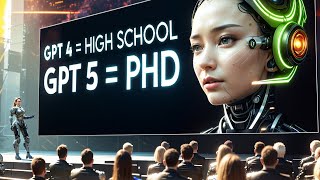
OpenAI's next model could reach PhD-level performance on some tasks and arrive in about 18 months, according to Mira Murati. Apple is in talks with Meta to add third-party AI to Apple Intelligence, and Unitree Robotics' robot dogs are being tested in Chinese military exercises.
Questions this video answers
June 24, 2024.
About 18 months.
GPT‑3: toddler; GPT‑4: smart high‑schooler.
PhD level (for specific tasks).
Llama 2 (July 2023) and Llama 3 (April 2024).
Chapters
Exciting stuff on the agenda Today we're looking at the upcoming GPT5 model that's set to change the AI game. A potential team up between Apple and Meta, and some jaw dropping tests on robot dogs from China. Let's kick things off with GPT5 since that's probably why most of you are here now. It's not officially called GPT5 yet, but given the naming pattern, that's probably what it'll be called. According to Mira Muradi, the next GPT model is going to be a massive breakthrough in AI. Mira, who is the chief technology officer at OpenAI, recently shared some exciting insights. First off, let's talk about the intelligence levels. If you think about the earlier models like GPT3, Murati compared them to having the intelligence level of a toddler. They could do some pretty cool stuff, but were still relatively limited. Then came GPT4, which Murati described as having the intelligence of a smart high schooler. It was more sophisticated and capable of handling a wider range of tasks. Now the exciting part is that GPT5 is expected to be at a PhD level in terms of intelligence for specific tasks. To be honest, that sounds as a huge jump, but how do we get from a high schooler to a PhD? Murati explained that the secret sauce is a combination of three neural networks, a ton of data and a massive amount of computing power. When you combine these, you get what we call deep learning. Essentially this allows the AI to learn and understand complex patterns in the data, which leads to improved performance over time. This combination has been driving the progress in AI and it's what will make GPT5 such a game changer. Muradi mentioned that these systems are already performing at human levels in specific tasks and this is only going to get better. Alright, let's address the big question. When is GPT5 coming out? While there's no official release date yet, Muradi hinted that we can expect this next gen model to arrive in about 18 months. That's roughly a year and a half, which is pretty, pretty exciting considering this timeline. All the hype about reaching AGI by 2027 starts to make more sense. Whether that's a good or bad thing is up for debate, but it definitely seems possible now. Murati explained that the development involves a lot of research and testing. They don't just want to release a new model, they want to make sure it's safe and beneficial for society. This means working on both the capabilities of the AI and the safety measures needed to manage those capabilities. Effectively. One of the key points Muradi emphasized is that develop capabilities and ensuring safety go hand in hand. As the AI becomes smarter, it also becomes easier to direct and manage. Think of it like training a smart dog versus a less intelligent one. The smarter one understands and follows commands better, making it safer to interact with. This approach is crucial because with great power comes great responsibility. OpenAI is very aware of the potential risks and is working hard to mitigate them. For example, they are developing methods to predict the capabilities of these models before they're fully trained. This helps them prepare the necessary guardrails to ensure the AI behaves as expected. Looking ahead, one of the most exciting possibilities is the development of AI agents. These are AI systems that can connect to the Internet, communicate with each other and collaborate with humans. Muradi talked about the concept of AI agents working together seamlessly, which could revolutionize how we interact with technology. These agents could handle tasks autonomously, freeing up our time for more creative and complex activities. So essentially, GPT5 is set to transform numerous industries. We're already seeing AI making waves in fields like finance, healthcare and customer service. But with the advanced capabilities of GPT5, the impact will be even more profound. Of course, with any technological advancement, there are concerns about job displacement. Murati acknowledged that while some jobs might be lost, new ones will also be created. The key is understanding how these AI systems can integrate into workflows and help people become more productive. To be honest, it's still early days and we don't fully understand the impact AI will have on jobs. But there's a huge potential for AI to augment human capabilities, making us more efficient and opening up new opportunities. Another important aspect is regulation. Murati and OpenAI are advocating for more regulation, especially for frontier models like GPT5 that have immense capabilities. They believe it's crucial to work with policymakers and regulators to ensure these technologies are used responsibly. This includes setting up guidelines for how AI should be used and implementing measures to prevent misuse. For example, they're working on watermarking and content policies to manage misinformation, especially given the rise of deepfakes and other potential issues. Alright, switching gears a bit from GPT5. Remember a few weeks ago when there was talk about an OpenAI and Apple partnership? Well, recent reports suggest that Apple is also exploring options with other AI giants. According to the Wall Street Journal, the tech giant has been in discussions with Meta about potentially integrating Meta's generative AI models into Apple Intelligence. The AI suite announced at WWDC 2024. The report states that Meta, along with other companies developing cutting edge generative AI, is keen to leverage Apple's massive distribution network through its ubiquitous iPhone. This move would parallel Apple's existing App Store model, where users can choose from a vast array of third party applications. If these talks bear fruit, Apple's customers could potentially have the option to select which external AI models they wish to employ in addition to Apple's proprietary AI systems. This versatility would allow users to tailor their AI experiences based on their specific needs and preferences. Meta's foray into the generative AI arena began with the release of its large language model Llama 2 in July 2023, followed by the more advanced Llama 3 in April of this year. While Llama has already gained significant traction within the tech community, a partnership with Apple could solidify Meta's position as a dominant force in the AI landscape. However, it's important to note that these discussions are still in their early stages and there is no guarantee of a finalized deal. The Wall Street Journal cautioned that negotiations could ultimately fall through, leaving the potential partnership in limbo. Alright, now we've also got some pretty wild news from China, but where They've been putting robot dogs to the test in some pretty extreme ways. Unitree Robotics, a Chinese company, recently shared footage of their robot dogs being kicked, hit with sticks and even thrown to the ground. Now, I know this might sound shocking and it really is quite intense to watch, but there's a purpose behind these harsh tests. The developers at Unitree Robotics are using these aggressive methods to improve the robot's balance and recovery algorithms. Basically, they want to make sure these robot dogs can handle strong and unexpected physical impacts and get back on their feet quickly. In the video you can see the robots named Goto and B2 enduring all sorts of rough treatment. They're kicked, hit hard with wooden sticks and tossed around. But it's not all about the abuse. The video also shows these robots navigating rough terrain and even doing three consecutive flips without stopping. The impressive adaptability of these robots comes from a control algorithm based on reinforcement learning. This means they learn and improve from each action they take, getting better at maintaining their balance and handling tricky situations. Unitree Robotics is one of the first startups in the world to sell robot dogs publicly. The company was founded by Xing Shing Wang, who developed his first robot dog X Dog during his graduate studies in 2016. By September 2017, they introduced another four legged robot named Laikago, inspired by the famous space dog Laika, and recently China's Central Television featured a report on joint military exercises between the People's Liberation army of China and Cambodia's army. Called Golden Dragon 2024, these exercises included practical scenarios using armed robot dogs. The robots used in these drills were modified versions of Unitree's Go To Model, showing just how versatile and potentially useful these robots can be in various situations. Alright, don't forget to hit that subscribe button for more updates. Thanks for tuning in and we'll catch you in the next one.










