GPT-6 SHOCKS Everyone With NEW ABILITIES! (GPT5, GPT-6, GPT-7) Document Reveals ALL!
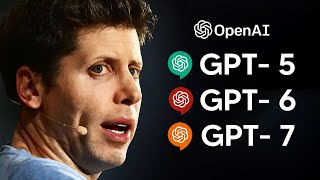
YouTube commentary (uploaded Feb 28, 2024) that inspects publicly visible trademark filings and related clips to speculate about OpenAI's roadmap for GPT5, GPT6, and GPT7. The narrator highlights "iterative deployment" (Sam Altman) as context, cites trademarks (Sora, GPT5–7, GPT V) and argues GPT6/GPT7 may include music generation and AI-agent/simulation software; the video mixes documented filings with interpretive speculation and competitive context.
Chapters
So there is actually a crazy piece of information that I think I should share with you all, because I was recently browsing on the web and I discovered some publicly available information about GPT5, GPT6, and surprisingly, GPT7. And I think you guys are going to want to see this. So without further ado, let's jump into the future timelines of how AI is going to be developed. So one of the first things that you do need to know about, and this is essentially the theory of iterative deployment. Now, essentially, this clip you're looking at is a recent interview between Sam Altman, Pat Gelsinger, who is the CEO of Intel, and essentially he's talking with Sam Altman about the future. Now, there are two key things discussed, which is why I want to talk to you guys about these clips. First, because they actually do set the precedent for the information I'm about to share with you guys that is, of course, publicly available. So watch this clip. The first two things he talk about is of course, the $7 trillion. And then he talks about the iterative deployment. If you don't know what that means, that's basically where Sam Altman and Some others from OpenAI have basically suggested that they have to release the technology slowly in order for people to catch, in terms of, like, how society is going to react to the technology.
And part of our strategy, what we call iterative deployment, is that we want to put these things out into the world early so that people can adapt and think and provide input, and that we can be ready for the magnitude of change that will come over time. So I think that's great.
Yeah, getting them out there early, people test them. Right?
You know, finding the flaws, that's how things get better.
Yeah. So from that last part of the clip, you can see that where they talk about iterative deployment, that is where they essentially state that they're going to incrementally upgrade the software. This isn't, by the way, the first time that OpenAI have clearly stated this before. There was actually a tweet. And essentially you can see here, this is where Sam Altman once again says iterative deployment is, in my opinion, the only safe path and the only way for people, society and institutions to have time to update and internalize what this all means. Now, we, whether you stand on the theory that this is because OpenAI are far ahead or because they want to safely roll out the technology, either way, we know that they're not going to be just doing these massive behemoth updates that they previously usually did. Now, this is why the information that I'm about to show you actually does make sense. Because if we can take the precedent and knowing that OpenAI is going to slowly introduce their models into the world, then we could argue that potentially OpenAI are probably further ahead than they may give. So, essentially I'm going to be covering some quote unquote leaks, and I don't think these are qualified as leaks because it's actually publicly verified information. So essentially what this is is this is a website where you can view trademarks, and trademarks are basically just like a word or a saying or a phrase, essentially where you can copyright it in a sense so that nobody else can use that in their product. So, for example, just to prove that this is something that OpenAI did and that they are doing, and that of course companies do do, like a lot of big companies that want to protect their brand name because of course they don't want random people staying their stuff saying they're affiliated with them when they're not. Now, pay attention to the dates, because this is how I actually found out the information about GPT6 and GPT7, because I paid attention to the dates and some key pieces of information that were listed on this website. So you can see right here that it says that the mark image Sora. So they've registered this trademark. You can see that the application date was actually 2024. Now this right here you can see is the 14th of February. So on February 14th, they trademarked Sora. Now why is the interesting? Because if we take a look at this the next day, just simply a day later, we can see that OpenAI said, introducing Sora, our text to video model. Sora can create videos of 60 seconds, yada, yada, yada, and we all know where that led to. So this is of course something that does make sense. This is of course something that you know, companies are going to do. But essentially the reason why this was so fascinating was because there is a lot more information than that you can see on this web page that includes the future models. Now, one thing that I quickly do want to discuss quickly that is pretty crazy, is that essentially a couple days after they trademarked gptv, there was actually quite a lot of speculation about what was going on. Now, GPTV still could be an unknown version or model that could be potentially released, but some people have speculated as well that it could be Vision or video, because of course, GPT4V is GPT4 Vision. So some people are speculating that the GPT V trademark could Be vision. Now, this is not the main meat of the video. This is just like a side bit that I wanted to add. Of course, in addition to that, OpenAI did actually around that same time when they trademarked vTest, they just put up this web page as if they were about to announce something. Many leakers were tweeting that, sama, stop trolling us. We know you've got something up your sleeve. And then they pretty much just didn't announce anything, even though they filed a trademark, as if they're about to announce something, like they usually do. They didn't. But here's where things get super, super interesting, because we take a look at. And this is the bit of the video you want to enjoy is because if we take a look at some of their other trademarks, we can see that they actually managed to trademark GPT5. Now, I covered this in a video before, but I didn't cover it properly because I wasn't looking closely enough. Now I'm going to show you guys why. We know this is crazy. Okay? So we know that GPT5 is going to be coming. They've openly spoke about this. I've done multiple videos on this before. It's something that they've openly spoken about. Now, I mean, GPT4, of course, GPT5 is going to be next. Okay, it might be GPT 4.5, but either way, we know that this success system is coming. Now, what is going to be in GPT5 is essentially based on this trademark. Okay? And here's where we need to actually pay attention, because when I was looking at all the different trademarks, okay, GPT6 clearly looks like the next evolution in the model because it's vastly different to GPT5. If we look at the trademark of GPT5 and we actually compare it to GPT4's trademark, those trademarks are exactly the same. It doesn't mean they're not going to have increased capabilities. But what we've seen is that if we actually do take a look at These two trademarks, for example, GPT5 and GPT6, GPT6, ladies and gentlemen, actually includes something new, okay? GPT6 includes a capability called music generation. And this is not the only capability listed on there. There are a ton of things. And I was actually looking through this to see if I could get, like, any small details on one of them I saw on GPT6's trademarks. And, guys, you can go on the web page and you can see here, this is where they trademark GPT5 of course, you can see GPT5, yada, yada yada. And you can see here that literally if you go on the page, you can see OpenAI Co, LLC. You can see that they have these trademarks. You can see that they have GPT6, GPT7 and GPT5. Now, what's fascinating are the dates for these because the first date for GPT 5 was literally last year. And then the dates for GPT 6 and 7 were additionally last year as well, in around October on the same date. So we're going to get back to those clear dates. But I just wanted to show you that this is a real webpage that you can check out yourself. But the point is, is that one of the new capabilities that we know should be in GPT6. And this is actually something that that, crazily enough, I actually didn't hear discussed enough in any sort of AI discussion, but it's music generation. But I'm going to show you guys why this actually does make a lot of sense from many different standpoints. So you can see it says downloadable computer programs and downloadable computer software using artificial intelligence for music generation. So this is something that I don't think people have really been asking for, but it is something that is growing in popularity and, and could definitely shock the entire industry because we've seen what video has done to Hollywood. It's had severe ramifications. Literally, like an $800 million studio was just canceled from being produced because people were like, ah, are we even going to need it? But the point is, is that OpenAI, if you think that, you know, OpenAI doesn't even do music generation. In fact, they actually do. They did this in 2020, guys. So that was now four years ago, guys. So four years ago they said, we introduced Jukebox, a model that generates music with singing in the raw audio domain. And you can see clearly, guys, that this is something quite some time ago now. It's actually pretty good. Okay? And remember, guys, this is from 2020. So the point I'm trying to make, guys, is not that they've been planning GPT6 since 2020, but the point is, is that if They've already trademarked GPT6 like last year in November or October, whenever it was, and then of course, they've planned music generation inside of the trademark. It clearly somehow potentially could mean that these future models, they already potentially have these training runs lined up. Who knows, maybe they could even have the models. I highly doubt that, but there is a possibility that they probably even have the models and they're going to think, you know what, this model is really cool. But we're going to delay the release and I'm going to talk about why that leans into more of a realistic outcome. So I'm going to show you guys how good this music model is. And the thing is, I want you guys to understand is that remember, this is a model from 2020, okay? There have been so many AI developments since then, especially like in the last year alone. And so essentially you can see research jukebox. And essentially this is it. So it says jukebox produces a wide range of music and singing styles and generalizes to lyrics not seen during training. All the lyrics below have been co written by language model and OpenAI researchers. And I'm guessing now that with this technology of GPT4, we could most certainly get that entire thing written by GPT4. So clearly by the trademark, I'm going to play you guys the music in a second because it actually sounds really cool. By the trademark, it's clear that this is likely going to be a Future feature in GPT6 according to this source. So here is one of the songs. It's a country in the style of Alan Jackson, a jukebox. So for an AI generated track that is pretty crazy. I'm going to play pop in the style of Katy Perry. I want to see how this sounds. I mean, that is some pretty crazy stuff. So I think the future model, and this is something that I genuinely. It wasn't even on my radar the opening eye would even be doing music. I mean, I did think it was a thing since other companies are going to be doing that, but I wasn't aware that this was like it wasn't even on any kind of radar, to be fair. And even when I did a Google search for OpenAI music, there was one video and someone was like, look, this is something that OpenAI did, but nobody's talking about it now. GPT6 has another crazy ability. And I know this video is kind of crazy because we're literally talking about GPT6 and we haven't even got GPT5 yet. And it's like, whoa, whoa, whoa, slow down. But at the end of the day, I'm just looking at information from a trademark and I kind of want to see what's going to be happening in the future. And I do think it's important that people do know if this technology is inevitable, what kind of things are going to be coming. So you can essentially plan your life around it and of course plan your business potentially around it, because you want to be able to maneuver yourself in the proper way. So, of course, right here, this is something that we didn't know was coming. But I'm guessing that maybe they're going to delay agents till GPT 6. You can see here that lower in the trademark, it's actually pretty hard to see in all of the text. Like, it's just really hard. But you can see that it says downloadable computer software for simulation environments for the purpose of testing artificial intelligence agents. So that is clear, guys there that GPT6 is going to have something where you can download for maybe a simulation for testing AI agents. I mean, it's vaguely worded. It could be like AI agents. I mean, like, if you look at all of this, like there's just a ton of different things that you could essentially extrapolate from that information. But AI agent is something that we know OpenAI are doing because even recently there was an article that clearly states that OpenAI shifts its battleground to software that operates devices and automate tasks. Now, the crazy thing about this is that kind of surprising because I would think that maybe we would get GPT5 with agents, maybe it would be a separate product. But it's clear that from this trademark that it's potentially going to be delayed into GPT6, which I'm not upset at. I'm just excited that this is probably how we're going to get the future. But here's another caveat that I do just want to add throughout the know of this video, throughout the render of this video, is that anything could happen, okay? Google or a random company could have a major breakthrough and they could force OpenAI to drop some of their best models. So that is something that you guys do want to understand. And of course I'm going to tell you guys about agents, because I did just make a recent video on how OpenAI are going to make a product that literally is going to change the world. That's literally what they stated. They said this product will change everything. So I think the AI agents, whenever it does, come with GPT6, like this one states whenever GPT6 is going to be there, I think that that's going to be crazy as well. Now, something that I also realized is that on the GPT7 trademark, it also essentially had music generation and AI agents. So it seems that GPT7 is likely going to be similar to GPT6, whereas GPT5 is going to have, I guess you could say, more brain power, more raw abilities in terms of the benchmarks. And then GPT6 is going to be the first step in music generation and artificial intelligence agents. And I'm guessing that the fact that they were there in 2020, which is like, you know, 40 years ago, in terms of how fast AI moves, I'm guessing that it's going to be absolutely insane. I'm guessing they probably already have it and they have no pressure. This is the key thing you guys have to understand, okay? OpenAI are under zero pressure to release any of the stuff that they have. Every model, everything that they have is just far, far ahead from the competitors. And that is why I think them talking about iterative deployment. I mean, it kind of works for them because they don't need to release anything. They could have GPT6 and be like, okay, we know what we got for GPT6. We're going to have music generation. We're also probably going to have some AI agents in there. Then, of course, with GPT7, we're probably just going to update that and refine it. And of course with GPT5, we're going to make sure that the brain power is just increased significantly in terms of the reasoning ability, like many have discussed in certain research papers. So, of course, here we're going to cover every single category, and I'm just going to prove it to you guys that OpenAI literally has zero pressure from a company standpoint. You can see right here that in terms of sound, this right here, guys, is music effects, okay? And this is good. I'm not gonna lie to you guys, this is good. But the problem is, is that Google for some reason, won't release this to the wider public. I don't know what they're afraid of, I don't know what they're scared of, but Google has a track record of not publishing things at all, okay? And they usually only do it until another company does it, and then by the time they do it, it's usually too slow. We saw that with Bard, we saw that with iterations of Gemini, and only recently have they been producing some stuff. And the point is, I'm making it with sound. Of course, there's things like Suno AI, which is actually pretty good. And I'm going to show you guys how good this is, is because I think OpenAI knows that there's no major product right now that exists on the market. I mean, this I'm going to show you guys actually, it's actually pretty good. And I'm going to show you guys, you can see here that you can do a lot of different things. Like we've got image effects. I wish it would release this. It's actually just amazing. And essentially, if I play this, it's lo fi jazz for a quiet rainy day. Influences from R B with a catchy melody atmospheric. That's really cool. I mean, if they integrated that into Gemini or Gemini or however you want to say it, if they integrated that into Gemini and added image effects and added all these other crazy things, they could, but for some reason Google won't. And the thing is, okay, is that OpenAI has zero pressure to release any of these models because likely they've internally realized that, okay, there's no big major AI text to sound thing that everyone uses and it hasn't shocked any kind of industries. We haven't heard anything about it in the news. So we can pretty much release it when we want and we still got this entire audience that are going to immediately do it. Now, that is something that leads me to believe that because OpenAI has no pressure, they can pretty much. They can pretty much map out a couple years ahead because they know they are so far above the other competition. Now, if you don't believe that, take a look at AI agents. Okay? When we saw AI agents, the only real one that we really see, do something amazing, that's captivated the actual conscience of the AI space really was, of course, Rabbit's device. And this device essentially worked on an lam, and, and I'm not going to play the entire video here because I'm pretty sure that most of you understand what this is, but essentially they invented something called the Large Action model. And essentially it was a new foundation model that they used to have an agent and all you had to do was do one thing and then essentially imitate it. But the problem with this is that they haven't released this yet. So I'm guessing that if they release this and this is a major hit and everyone's using this and it's a new talk of the town. Maybe, Maybe, just maybe, OpenAI rushes forward with their agents and maybe they push things forward because it's clear that they've been thinking at least about agents since the GPT6 trademark filing. And that if we look at the dates, I think it was around the 10th month of last year. So that was a pretty, pretty far time away. So that just goes to show that it's literally been, I think around four months now since then. So it's clear that they've been thinking about that. Even though some articles recently came about that they've only now shifted to AI agents when clearly that they've been thinking about this for quite some time now. In addition, they also have zero pressure from LLM companies. This is Claude. If you don't know what Claude is, it's largely because it's widely underused. I would say it's underrated, I would say it's pretty good. But the problem is that I don't think Claude have realized that the recent model. The only problem is that it refuses to answer many questions despite the answers being higher quality. It does refuse to answer a lot of your responses. And this has led to increasing frustration from some of the community members because it clearly states here, you know, Claude's level of censorship makes it useless at times. I'm so fed up with Claude. And if you think this is just a cherry picked comment from a sea of, you know, loving comments about Claude. I've done videos on Claude. I actually really like it. But the point I'm trying to make here guys, is that LLMs, okay, in their current state, a lot of people still use ChatGPT. If you were to ask someone on the street or on the road about AI, about what kind of chat AI they use, everyone just says ChatGPT, okay? Nobody says Claude and nobody says Google's Gemini. And that is of course not only a marketing problem, but it's a problem from the point of, in terms of trying to put pressure on OpenAI in terms of developing faster and better models out to the public so we can get what's potentially the best software we can get our hands on. And I mean, I'm not advocating for faster deployment because I do think that safety is paramount. I think that is a top, top priority. But the point here is that only until recently did we see some real, real kind of pressure in terms of the LLM space. Of course this is completely multimodal. But the point I'm trying to make here, guys, is that OpenAI still dominate the entire AI conscience with ChatGPT because that's all people think about. And the point I'm trying to make here guys, is that if all people think about is ChatGPT when it comes to AI and OpenAI, they have zero pressure to release any of their models until they deem it necessary. And I don't think that's a bad thing because this kind of defeats the purpose of Moloch, where everyone has to release quickly and quickly. And I think it's kind of a good thing. Okay? Of course, in addition, zero pressure in the vision area. They have zero pressure to release anything in the vision area. And that's why I brought up that earlier vision thing, because Envision, there was a new Apple multimodal AI. But the problem is, guys, like Sam Altman literally said this. He said that you can make an AI model that's better than ours. But the problem is it's a product, okay? And the problem with the product is you have to market it. You have to get customers, you have to get a loyal user base. You have to get fans of the product. You have to get organically shared. Those are additional problems, okay? And that is something that a lot of these companies are facing. And since it's from Apple, we know Apple takes. Takes years. Okay, Apple beat it. But who even cares? Because Apple's going to take years to develop it into some fantasy product. We had the Oculus Rift, and Apple only recently came out with the Vision Pro. So Apple take years to refine their things. But I guess we're going to see if that does work in the AI space because AI moves so rapidly now. In addition, we have video, and there was a thread comparing Runway to Sora. I'll leave a link in the description. But the long story short is Sora just knocks everything out of the park. I mean, literally, you know, like a basketball in the park. You've seen how great Sora is. The point is, guys, is that if OpenAI would go ahead and release their video model just for, I don't know why they decided to show people what they're working on. But the point is that if they have a video model, and, you know, there are other entire companies that just do video models, and OpenAI was to completely, you know, demolish them in terms of the competition. Just think about how far ahead they must be in that kind of, you know, reasoning department, which is where some of the, you know, key researchers are going to be. So I think that just goes to show where OpenAI is. I think that these, you know, of course, trademarks, I mean, it could be nothing. It could be entirely nothing. But I do think the fact that they've, you know, trademarked this quite a while ago, they've also stated that, you know, they're going to be working on agents. And the fact that, you know, if we take a look at the music generation paper that they released ages ago, you know, and of course, some of the samples that I saw showed us that they're clearly way, way ahead. It wouldn't be surprising if they do add this. And this kind of shows me that I think in the future. I'm not sure how Google or some of the other companies manage to even compete with OpenAI. I mean, if they have Sora, if they have, you know, the very best AI agents, of course there are some companies that are competing. Of course you've got Gemini that is actually doing some really, really cool stuff now with the context length. But OpenAI doesn't seem at least the least bit worried, because I'm guessing that we could say that. And of course, with the dates of these, we can see that GPT5 was trademarked in July. And then of course, interestingly enough, GPT6 and GPT7 were trademarked just as around the time just before Sam Altman was being fired. And what's really crazy, that there was some really strange comments from Jimmy Apple stating that we risk losing some key ride or Die employees, the vibe shift was off. And that as soon as they trademarked GPT6 and GPT7, which is crazy because we don't even have GPT5 yet. So what do you guys think about this? Do you think this is nothing? I think, okay, even though right now things exist in their current state where we're looking at the trademarks and we try to think that, okay, maybe because GPT6 has Music Generation, and then of course it also has AI agents, maybe that's what we're going to get. But something in the next six months could completely change the entire landscape, that maybe we don't get these kind of models. Maybe OpenAI changes. We've seen that OpenAI literally blew up as a company before, so anything is possible. OpenAI could change its entire structure to be working with the government now. Because of course, the crazy thing about this company is that they are sitting on some really, really hefty technology. If they manage to get to AGI and asi, because if it's powerful, the nukes, as some of the AI researchers claim, then we're going to be in a situation where I'm sure somehow the government is going to get involved. And at that stage, I don't think there's going to be any kind of information being leaked because the US government are just so secure about all of their stuff. And if anything gets leaked, I mean, they, they find out exactly who does that. So with that being said, do you think this is just a whole lot of hogwash, it's just, you know, complete speculation, or do you think that this is going to be the future we're moving to? I largely think that potentially music generations, OpenAI already knocked out of the park with AI agents. It's clearly, you know, they've already stated that they're going to be doing that anyways, and with the future iterations of models, GPT6 and GPT7 could look completely different to what we even think. So that's definitely something I think we should all pay attention to. And if you did enjoy this video, you did enjoy the discussion. Don't forget to leave a comments, because I do want to see what you guys thought about this, because there was a lot of discussion on Twitter and a lot of people had varying opinions.










