GROUNDBREAKING New TEXT TO VIDEO Stuns The ENTIRE AI Industry!
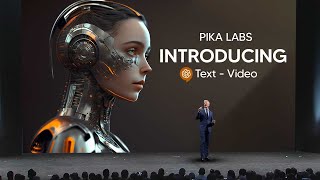
YouTube commentary (by LARRUZ) analyzing recent advances in text-to-video AI, centering on Pika Labs’ demo-driven approach that animates a single "driving image" via textual prompts. The speaker compares Pika Labs to prior leaders (Runway, Xeroscope/Xeroscope XL, FullJourney AI), highlights strengths (coherent animations, object separation, localized motion) and weaknesses (low resolution, low frame-rate, occasional object merging), and notes the absence of a research paper and likely productization.
Questions this video answers
LARRUZ
July 22, 2023
Chapters
So Text to video just got a major upgrade. As many of you know, Text to video is one of the AI fields that isn't as largely covered, but nonetheless it's still receiving an ample amount of research and development and of course, substantial amount of investment. Now one company that recently just came out of absolutely nowhere it seems is Pika Labs. And essentially what they've done is they've managed to pioneer kind of like a new way to, in order to create text to video. And honestly it's a lot better than some of the previous models we have seen before. And then essentially the only other one that was really good was Zero Scope. And this is what I found on Twitter. This was just a video posted by a user. I'll leave a link to this in the actual description. But the point is that text to video AI as you know, has always been pretty difficult. And one of the only other companies that I will come back to in terms of comparisons is of course Runway. This has been the number one company in terms of what people have looked at for text to video, in terms of what is the golden standard. And they have, you know, four different versions. Text to video. Text and image to Video. Image to video and of course stylization. But that's not what we're talking about, what we are talking about. So the AI tool that I'm actually talking about is of course Picolabs. And essentially there's not much on the website in the way of demos that you can see because you can't like actually click the videos. But, but I will show you the actual demos that people have managed to create with this software because honestly, it seems like we're getting somewhere. Like this definitely does seem like something that is actually usable in an end production film. And this doesn't mean that every other text to video was bad before, but I do think that this method of text to video is particularly very, very effective. So if you're wondering, this isn't just raw text to video, what we have here is essentially a driving image. And then of course, that image is animated in a certain way. Now for those of you who are wondering if there is going to be some kind of research paper on this webpage, I don't see any research paper. And my best guess is the reason they haven't released any kind of research paper is simply because what this company is doing is maybe they're building it off the backs of other research papers. For example, if we take a look at Nvidia's Toronto AI lab, they, they have this Thing called align your latents essentially, which is their own version of text to video. But why this is so good is because they're using a different method. And I do think that when companies, maybe they read this research paper, they might figure a few crazy things out. Essentially what they'll do is they'll build their own way and they might fine tune their own model. And I don't think they want to release a research paper because of course this is actually a product that is eventually likely going to be something like midjourney. So enough with the dibble dabble, let's actually take a look at how good this software really is and the kind of examples that it's been managing to generate. So this is the demo that they did post on their actual socials page. And essentially you can see right here that the majority of the content from Pika Labs is going to be using a driving image. Now some of you might say that that isn't text to video, but I'm going to show you that the examples that they showcase are, are actually very, very effective. So you can see on the left hand side we do have the image input, which is of course a young woman wearing a white shirt. And then of course we have the prompt. So essentially what the prompt does is the prompt conditions the image and essentially moves it in a certain way. And if we look at this in terms of pure objectiveness, this definitely looks pretty, pretty effective. The only thing that current text to video models do struggle with are the two main factors. Number one being the frames per second. As you can all see, there is some kind of lag on the hair which is particularly visible and noticeable considering that many of us do watch high framed content. For example, this video that you're currently watching should be at minimum 30 frames per second. And it seems like this is currently at around 20 to 15 frames per second, which can cause visual issues. Now additionally, another thing that we do suffer from in artificial intelligence text to video content creation is of course the low resolution. And I'm not sure what causes this issue, but the low resolution I'm guessing is just maybe a lack of processing power or just a lack of efficiency on how these AI systems manage to create the final output. So that is something that we've seen across the board. I mean, even when we look at Nvidia's paper where they have all of these videos, a lot of these videos aren't actually extremely high quality. They're around 480p, which means that there's something that still needs to be sold. But despite these many drawbacks of AI text to video, I would still regard this as something that does look very coherent. And some other examples that we do show you will showcase this. So take a look at this one Twitter user, what they posted. You can always see the Pika Labs watermark in the bottom right hand corner. And essentially you can see that this does look pretty interesting. So I'm guessing that this might have been a specific image which they use as a driving image. But we can see that with the text to video technologies that we have this considering it's ants and it's pretty close up, these are like macro shots. It does look pretty decent in terms of what we've seen before. One thing that I want you to pay attention to is, is the smoothness in terms of the frames. One thing that many text to AI video things have in common is that they do struggle with the continuous flow of certain things leading to many things just merging together into one. So I think AI does struggle to keep certain objects separate, which is something that this AI software does seem to do a little bit better than. Now, this is by another user called Amareshi. You can take a look at this example right here. And he's actually really nicely given us the prompts that he's used. Now I can't wait to access the beta for this software because it means that we will get a more detailed analysis to be able to test and see which kinds of examples that this software is going to work with more effectively. As you know, certain AIs do work better with certain techniques. For example, ChatGPT is great at writing scripts and it excels at writing code, but in certain things it just isn't good. So for example, we all know that AI image struggled with hands for quite some time and eventually they managed to work on it. So then of course we had this prompt right here, the Golden Gate Bridge on a sunny day. And then of course I'm guessing that the prompt that he used was of course from mid journey. So pay attention to the driving image. We can see the quality. Then of course we can see that once the driving image is then used in the video, you can see that of course, like we talked about before, the that there is that substantial drop off in quality. So that's something that we are hoping in the future does manage to get sold. Then of course we had this one, okay. And this one was my complete favorite. So this is the prompt, okay, which is Batman, the Animated Series style cartoon illustration of Batman standing on a rooftop dark Deco style of Bruce Timm. And then essentially the animation actually looks pretty, pretty decent. And I mean you can see the cape waving in the background. And these animations aren't that long. But if this was some kind of strange noir style cartoon animation that I did see on someone's channel, I wouldn't immediately go to the fact that it could be AI. I mean, you have to understand that the creativity that can lie with just these bass videos. People can add filters, they can add a zoom, in effect, they can add soundtrack, they can add smokes. It's going to be a pretty effective way to create content in the future. And I'm pretty sure that we're about to get some probably fully automated YouTube channels where they just post these AI kinds of videos. And if you think that this isn't happening, you can see here that this channel called AI Commercials is already gaining some substantial traction from making these text to AI videos. And of course it's pretty interesting. But anyways, we can see right here, this is the prompt of a man on a train. And it's very, very effective at localizing where certain things are because you can see that it doesn't move the actual train and but it moves the things behind the train, which gives us the illusion of the train moving forwards or backwards. So it's really, really effective at that. And I would argue that this might be even better than Runway's image to video because although this input image here is pretty decent, we can see that the final version does look a little bit distorted. So one thing that I would like to do if given the chance is to put these two AIs to a head to head test in terms of the exact prompts and, and the same input images to see if they're exactly the same or if they differ in some regards. Then of course we can see another prompt right here of someone walking. I mean the walking animation isn't that great, but it still gets the other things as well, like for example, the mist, the clouds, the fog, the atmosphere, and of course other things too. So this one right here, this prompt is really decent and with the sound effects it actually does seem pretty good. So essentially like we stated before you this is eventually going to be some kind of mid journey sort of subscription. I'm guessing that they might have a free version that leaves you with this watermark on every single video. And then of course the paid version might be some kind of $30 a month, like midjourney. And like we talked about for, if we go on this specific example you can see that the bubbles actually do stay intact, which is very good, because in many videos, like we stated before, there's a lot of merging. And as we can see from here, you can see that this does happen sometimes, which is quite unfortunate because. But I'm guessing that certain AI video generators just struggle with this area because it seems like for some reason, sometimes objects can go missing. But we will overcome this problem in the future. Now, this was something that I did find interesting. One Twitter user managed to actually compare every single AI text video generator in four different other examples. So here you can see it says, prompt, a cat is walking in the grass. Dramatic lighting at sunset. Now, here you're going to see that there are four different AI tools that are compared. We do have Runway Gen 2. We have FullJourney AI. We, of course, have the newly released Pika Labs. Then we might have not seen this before. This is a tool called Xeroscope xl. It's actually integrated with stable diffusion. It uses the stable diffusion engine to generate the pictures that drive it. And you're about to see what we have. So remember that the prompt is is a cat is walking in the grass and dramatic lighting at sunset. So we can see that if we pay attention in terms of what looks the best, we can see that Full Journey AI doesn't do that well in terms of the merging meshing that we talked about. But when we do look at Pika Labs, and we do, of course, look at Xer Scope xl, we can see that this does look pretty decent. I mean, in terms of what actually got the different Factors right, Runway gen 2 got the dramatic lighting at sunset. And of course, Pikalabs did as well. But in terms of which video I had to choose, it would be the one on the bottom left, which is Pika Labs, because, of course, it actually does get the right prompt. I mean, this one is 2cat. This one, the cat looks weird. This one, the cat isn't moving. But this shows us that the rate of improvement in AI is not something to scoff at.










