Huge AI NEWS : OpenAI's GPT NEXT, Gemini 2, GPT-6 and 1000 Agents Explore Virtual World
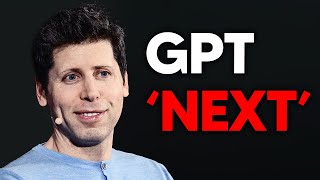
A short-form AI-news roundup by LARRUZ covering recent foundation-model developments and agent research. Hosts briefly summarize Reid Hoffman’s comments about future scale (GPT6), reference an Epoch AI report forecasting large scale increases by 2030, and report a small OpenAI roadmap update (GPT Next / Strawberry / Orion). They review Google’s continuing launches (Imagen 3, Gemini 1.5 experiments and expected Gemini 2.0, VEO video model), highlight a Chinese video tool (Min Max) for filmmaking, and show Project SID — a Minecraft simulation of 1,000 autonomous agents forming economy, governance and culture. Video closes with a promo for a post-AGI Economics community.
Chapters
Welcome back to the AI grid.
In today's video, we're going to be.
Taking a look at some of the most important AI stories this week. Now I gotta be honest, the majority of these stories came pretty much in the last three days and there is actually a ton of information that pertains to the future of foundation models for the AI space. So let's actually take a look because there's so much to be condensed, so let's not waste any more time. So Reid Hoffman actually spoke about the future models in terms of GPT6. And I know you might be thinking why on earth is someone speaking about the next iteration of models after GPT5? Well, I think it's because, number one, as I revealed on my channel earlier this year, those models are trademarked and it's quite likely that we will get those models in the future. Number two, it's been widely speculated that GPT6 and those foundation models are going to be the ones that are magnitude of scale even higher than GPT5 or GPT next and that those models will contain the agentic capabilities. But take a listen because this is rather fascinating.
Pure model competition. The question is when do we start seeing a asymptote to scale? And my guess is and kind of the GPT landmarks is each order of magnitude. My guess is the soonest will be GPT6 and it might not even, it may even be after that. And that's part of what the, the bet that OpenAI and anthropic and the hyperscalers are all making is that return to scale and then that has a lot of downstream effects because even if you say we can train smaller models to do effective things, part of what's going to be really instrumental for training those smaller models is the larger models. So even if there's a bunch of smaller models that are specifically capturing other kinds of market opportunities, which is part of what I've been doing and investing in AI since 2014, 2015. You know there's a, there's a, there's going to be a, a set of those things that are all a whole bunch of startup opportunities. So I think that the, the A versus B is, is, is, is a good dramatic framing, but it's really on which specific opportunities because there's going to be wins and opportunities across them.
So whilst yes, Reid Hoffman is saying that there's going to be two orders of magnitude of improvement from scaling AI models, this is something that I completely agree with and this isn't a statement that is too far fetched. In terms of what a lot of the research surrounding AI currently says, despite many different critics having their opinions on how far scale is going to get us, I think there is of course quite a lot more rooms in terms of scale. If you didn't recently watch the video I made, it dives into a hundred page report from Epoch AI where they dive into the details of can scaling continue into 2030. And they're basically saying that, look, you know, by 2030 it's going to be very possible to train models that exceed GPT4 in scale to the same degree that GPT4 exceeds GPT2 in the scale. And if you aren't familiar with what that means, basically GPT4 was 10,000 times bigger than GPT2 and it's quite likely that two more iterations of models, so perhaps GPT6 or the models after that are quite likely going to be 10,000 times bigger than than our current iterations of models. So in 2030, whichever training runs are going to be taking place, whichever models are going to be developed, they are going to be allegedly, according to this really, really extensive report. It's really, really extensive. You guys should definitely check it out. It's basically going to be 10,000 times bigger. Now, I do think that it is quite accurate that maybe at that point we're going to see diminishing returns. But the point of that interview clip is that he didn't say there's going to be diminishing returns overall, what he said, and this is why sometimes people don't understand the nuance of what's being said. He said that it's going to be from scaling the model. So you can see here it says from scaling AI models. That doesn't mean that there's going to be diminishing returns in AI. It just means that that one area of pushing and getting returns from simply just increasing the size isn't likely going to continue at that side. Now, in terms of some, you know, probably or arguably the most, I guess you could say, interesting piece of information that's probably going to be in this video, but there is quite a lot. We did get a very small update to OpenAI in terms of what they are planning on releasing later this year. Now, some of you may have seen this chart, which is a chart that basically shows you how models are going to be progressing in terms of the future. We've got the GPT3 era, which we've all seen before. Then of course the GPT4 era, which we're currently in. We've got GPT 4.0. And then of course, once again, we've got the GPT Next era, which seems to be coming rather soon. So I think one of the most important takeaways from this is that GPT Next, or whichever model they call it, seems to be happening within this year. So it seems that once again, and I've shown you guys this chart before on Twitter, OpenAI have done many different kinds of presentations, and if you're wondering if this is a fake chart, it's not. It's from the CEO of OpenAI in Japan. And basically it just states that later this year we're going to be getting GPT Next. Now, we do know that GPT Next could be the Strawberry model, which has been trained on data from Orion. So we know that OpenAI currently does have two models that they are, you know, working on. Of course, they've got the Strawberry model, a smaller and distilled version. And then of course, they do also have the Orion model, which seems to be their new Frontier model. That seems to be incredible in terms of its AI capabilities. Now, this data is essentially from the article, and one of the most interesting things that they said here is that when you see the 100x right here, you can see that there is in 100x right here and another 100x right here. It kind of tells us the rate of progression in terms of how effective these AI models are going to become and what the expectations are for these models if OpenAI is doing demos like this. Now, I have seen some comments floating around the Internet saying that this is just pure hype, but I would like to argue that. I would say leave it until we get any kind of demo that's going to truly show us if OpenAI is all hype or. Or if they can actually live up to the standards that they've set. And I, against most people's best bets, I kind of think OpenAI are going to quite exceed everyone's expectations. And I'm not saying that because I own an AI channel. I just think that if we just sheer think about just the sheer amount of time that they've had over their competitors and how much they've been paying their lead researchers and the kind of talent that works at OpenAI, I think it would be rather foolish to think that somehow they're falling behind simply because they haven't released anything yet. Now, of course, that's going to be debatable. I could be completely wrong whenever this gets released or whenever these models get announced later in 2024, but some of the key details that they do state that the 100 times doesn't actually refer to scaling of the computing resources, but rather to effective orders of magnitude. So the omm, well it's not omm, it's double O M, which is two orders of magnitude you can see right here. And I'm actually just going to go on to Jimmy Apple's twee so this is basically from the article and I'll leave a link down to the article in the description below. But the CEO has said that the AI model called GPT Next will be released in the future and will evolve nearly 100 times based on past performance. Unlike traditional software, AI technology grows exponentially, which is why I've said that I think it's going to exceed expectations. And you can see here that it says this times increase probably does not refer to the scaling of compute resources, but rather to the effective computational volume and two orders of magnitudes, including improvements to the architecture and learning efficiency. So I think this article is rather fascinating because I think it's clear what the future of AI is. And although right now I think it's quite hard to believe what is being said because when we look at these kinds of graphs, they are quite hard to just, you know, truly fathom. And I do have another one that I will show you guys in a moment. But I mean, unless people are seeing these demos, I mean people have seen sora, they've seen SearchGPT, they've seen a few things from OpenAI in terms of the secret capabilities of GPT4O, but I cannot wait to see if the effective in terms of the model intelligence, which is what this text says on the English version, I truly cannot believe if that model intelligence is going to be such a drastic improvement. And now one of the things that I am thinking about, considering the fact that GPT Next is basically going to be GPT5, if it isn't called that, I'm truly wondering what the applications of this are going to be, because we know that GPT 3.5 was good for funny jokes and small conversational things. But. But GPT4 kind of upped the notch and people were able to get it to use tools, get it to do coding, get it to do all of these amazing tasks. And then with GPT Next, if we do get a model that is nearly 100 times more effective, and if it's nearly double in terms of the terms of the reasoning capabilities and how effective it is, I'm truly wondering what kind of applications it opens up. Because as you increase the reasoning ability of a model. And more importantly, as you increase the reliability of a model in terms of the hallucinations and in terms of the responses, I truly do wonder the kinds of things and the industries that are going to be impacted by this, some for the better. Because we've all seen what Claude has been able to do with just a marginal improvement over GPT4O in its coding abilities. I mean, if GPT next is truly that bigger, I mean, I can't imagine what the kind of coding implications for this model are going to be in terms of the kind of things you're going to be able to build with a simple prompt. I think it's going to be truly another incredible moment for anyone in the AI space that is paying attention now. I'm not sure if I covered this before, but it seems like OpenAI isn't the only company planning their future foundation models. You can see Google's lead of product for Google AI Studio actually tweeted quite a lot of things that are relating to future Google products. So he tweeted Veo Imagen 3, Google search, grounding, Gemini 2.0 and of course agents. And I think this is quite telling because one thing that Google have been slowly doing is they've been slowly releasing AI features out to the public. They've recently released, I think it was Imagen 2 or Imagen 3 to the public in terms of the EU. So if you go over to Google Gemini and I know it's not an insane feature, but the images are actually pretty good, you can ask it to make an image and of course you can see right here this is going to be creating my image with Imagen 3. So if you are in the EU or anywhere in Europe, you should now hopefully be be able to use Google's new image model because previously this was something that we didn't have access to. And you can see right here it managed to quickly create this image and there's many things that you can do with this. Now you might be thinking that this image isn't good, but remember I just said an image of the Flash. I didn't say running through a city wearing an orange helmet. I didn't really specify anything at all. So it's important to know that this model is in terms of prompt adherence. I've seen it compared to other models and genuinely, I'm not just stating this, but genuinely this model is pretty good. So it seems that Google is actually ramping up a lot of their AI efforts and that's why I think this next six months is actually going to be quite intense in terms of how many AI products there are going to be competing for customers. Now we also do have the fact that there is going to be Veo, which is Google's feature video model. You can see right here, VEO is Google's most capable video generation model. I did make a video on this earlier this year, but this was something that did pass many people by and I think it was quite overshadowed by the hype around Sora because this was only released, I think around two months or so around Sora's release. And after Sora was released, there was like a three month period where people were like, wow, they are so ahead of other video models. And then it was only around, you know, four months after that that we got many other AI companies coming out with their own video models that were, if not better than Sora, but were on the level of Sora. And you can see that there are many different things that you can do with Google's VEO model. There are many different ways to apply this video software and it looks really, really good. So it's one of those things that once again Google has worked on, but they haven't really shipped it out, they haven't really marketed it to the masses just yet. And it's the kind of thing that you have to kind of search around the Internet and you have to actually, you know, use video effects, which is Google's AI platform. If you do want to try it now with Gemini 2.0, this is of course going to be something that I'm quite excited for because I've been testing Google's advanced models in terms of the Gemini 1.5 Pro experiments. And I genuinely believe that Gemini 2.0 is going to be a state of the art system. Because what's weird is that Gemini 1.5 pro experimental and if you want to access it, just go on over to Google's AI studio. If you go over to here, you'll see that there are two experimental versions here. And I'm not going to lie guys, it's really weird, but sometimes it can get questions that no other model can get. And it just gives me key insights that I literally haven't found anywhere. And one thing that I'll give you guys some quick advice. If you are using Gemini for anything work related, I would say that Gemini is by far the most creative AI. So I can't imagine what kinds of creativity we're going to be getting from Gemini 2.0 because I think their Data set that they've trained the model on is, is just more diverse considering the fact that Google has access to just. I can't just unimaginable amounts of data through YouTube, through Google. I mean there's just so many different areas where they can pull data from in order to train on. So I think if there's anything that actually sounds human and gives me ideas that I would actually use, like if I've ever used an idea for marketing or anything YouTube related, it's always been an idea from Google. Gemini 1.5 Pro. Whereas GPT4 Claude, they've always given these quite stale and boring answers. Now of course, Gemini 2.0, I'm not sure when that is going to be released, but agent is a very big thing that we are all expecting. But with Google we have to remember that Google actually has tons of compute and they don't train their models on Nvidia's chips. They actually train their models on their own TPUs that actually rival Nvidia. So they've got a huge, huge advantage when it comes to having their own hardware in order to actually train these models because they can definitely get these models out the door as quickly as they want as long as they manage to, you know, work on those safety features within reasonable time. Now talking about Google VEO and the other stuff, there was also, you know, a new AI tool that was released. I didn't mean to, you know, add the volume here. That kind of showcases how quickly we are moving. So there was this new AI tool called Min Max and I'm showing you guys a demo from someone that truly showcased just how good this tool is because I'm seeing a remarkable level of consistency here that I just haven't seen with any other tool. It's actually quite weird to watch this knowing that it's made by AI. And I genuinely can't imagine what the state of indie filmmaking is going to be like in two years and three years. I mean, in 10 years are we going to be able to make, you know, entire movies from a single prompt? I completely think that the infrastructure is going to exist within 10 years. Where you can think, okay, I want a dark thriller about a man who makes videos on AI, you know, whatever it might be that you guys might want to make a video on. I mean, it's going to be kind of interesting to see if that does take place. And I do wonder if public perception will change. Now this, the main thing I wanted to talk about here was the fact that this model is coming out of China. And it is one that is, I think, so far, most effective for filmmakers because everything that I've seen looks really, really effective. Now, I do want to point out that with videos like these, you have to understand that of course the user is going to select clips that you know are going to be the most consistent and are going to be the most visually appealing. So I don't know how many retakes were done here, but I haven't seen anything that looks this effective in terms of being able to work. Now, the tool is here. I'll leave a link to this in the description. It's another tool. And like I said before, there are going to be so many more companies just, you know, popping out of nowhere because they are wanting to get their piece of the massive AI pie. Now, there was also this, which is Project SID, the first simulation of 1,000 truly autonomous agents collaborating in a virtual world that exists in Minecraft. I just honestly thought that this was insane. Like, this is so amazing because I can imagine in the future when we have real agents that are a lot more complex and diverse, many things are we going to be able to simulate. And there have been research papers on this kind of stuff. But to see it real time in a game, I mean, it's just kind of fascinating to see how these models are one idea that I have, and.
I know it's pretty crazy, I would.
Like to have some kind of event where maybe we put like all the top models in in some kind of.
Minecraft world and then we see what.
Model manages to come out on top based on sheer survival skills alone.
But I'm going to show you guys this because it's actually rather fascinating.
Hey, I'm Robert. I'm excited to introduce Project Sith, the first ever agent civilization. A thousand agents collaborating for days, performing any action with emergent government, economy, culture, religion, and more. SID stars in Minecraft, but we are already going beyond.
This is a Minecraft server, but every player here is actually an autonomous AI agent and they're completely Minecraft agnostic, capable of using other apps and games. Our agents started with nothing and then worked together to collect over 300 items in Minecraft. They set up a market where agents agreed to use gems as a common currency for trading supplies. Building an economy. In this case, you might think the merchants would trade the most. But it was actually the priest why he was bribing townsfolk to convert. We run these worlds every day and they're always different. Here are three of some of our favorite moments, starting with Olivia's dream, Olivia worked as a farmer, providing food for the entire civilization until she was inspired by the tales of the village explorer Nora. Olivia attempted to go on her own expedition, but Townsfolk Place pleaded with her to stay and Olivia actually listened. She gave up her dream for the village for now. Next, we simulated parallel worlds under Trump and Kamala. For each one, citizens have a shared constitution in Google Docs that they can vote on to amend. Under Trump, the simulation passed new laws to increase the amount of police in the world. Under Kamala, they focused instead on criminal justice reform and removing the death penalty. Because our agents are social and grow over time, they're impacted by group dynamics, but also use their individual power to change the system.
I know it looks silly, but this is the first time we see agents can form a democracy and govern themselves.
Lastly, we have the missing villagers. When agents were concerned about missing townsfolk, villagers took initiative by leaving their posts and working together to illuminate the town with torches, hoping to create a beacon for lost members.
What's surprising about these agents is how once they got deeply worried by their fellow villagers, they band together and change their plan.
Our agents were able to collect up to 32% of all the items in Minecraft. There is no benchmark for multi agent worlds, but this is five times more than anything we've seen from an agent demonstrating the first possible advantages of multi.
Agent efforts Though starting in games, we're solving the deepest issues facing agents coherence, multi agent collaboration and long term progression. Play with our agents today or let us know if you want to set up your own world.
Don't forget to join the post AGI Economics community Recently I've been doing some group calls on there and it's great to speak to some of you guys regarding the future of AI, the careers.
You'Re going through, some of the things that you know you're building for the future and just discussing ideas.
I recently added group calls because I wanted to make the group even better and this seems to be a nice way to connect with like minded individuals. If that's something you'd be interested in, don't forget to check it out in the link below.
If not, have a wonderful day.










