Introducing AIRIS – The World’s First Self-Learning Proto AGI
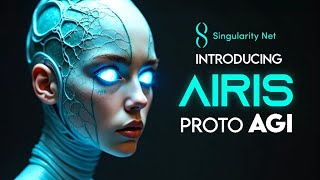
A YouTube narration describing Aeris (also spelled ARIS/Aeris), presented as a self-learning, autonomous AI agent developed and deployed inside Minecraft. The piece summarizes Aeris's neural-symbolic learning approach, its integration with SingularityNET, Fetch.ai, Ocean Protocol, Cudos/10storrent infrastructure and the ASI alliance, and frames Minecraft as a controlled sandbox for developing transferable AGI capabilities and transparent, decentralized AI ecosystems.
Chapters
There's a new AI out there that doesn't just follow commands, it thinks, adapts and actually learns on its own. This is Aeris, the first of its kind. A self learning, thinking AI inside Minecraft, breaking every rule we thought we knew about artificial intelligence. Forget the usual game AIs. With set commands, Aris navigates, solves problems and creates its own rules as it goes. And what's more, this isn't just about gaming. This tech could change everything from smart homes to autonomous robots. Let's talk about how this AI might be setting the stage for the future of AI. So ARIs, or autonomous intelligent Reinforcement Inferred Symbolism was launched within Minecraft and trust me, it's a big deal. It's the first of its kind, a self learning AI that works autonomously, meaning it doesn't need any preset rules or training data to function. Instead, Aeris learns by doing, by interacting with its environment in Minecraft's open ended world. And that's where it gets interesting. Now, why Minecraft? Well, Minecraft isn't just a game. It's a virtual sandbox with endless possibilities. The game's 3D environment has forests, caves, mountains, water bodies, you name it. It's complex, unpredictable and a perfect testing ground for an AI like ERIS that needs to adapt and make decisions on the fly. Minecraft provides a real time setting where ARIS faces challenges that constantly change, forcing it to adapt and create new strategies for navigating through obstacles, avoiding cliffs and even figuring out efficient paths. The tech behind this AI is equally fascinating. It's powered by SingularityNET, an AI network and involves agent technology from Fetch AI, long term memory from Ocean Data and and scalable processing power from Cudos Compute. These are some of the biggest players in AI and blockchain tech, coming together to push the boundaries of what AI can do. Dr. Ben Goertzel, the mind behind SingularityNET, explained that this AI isn't just about solving simple tasks. ERIS symbolizes a step toward an AGI that can think, adapt and even understand on a level that we haven't seen in any AI so far. Now let's get a little more technical, because the sheer depth of this AI's capabilities is mind blowing. And at its core, this AI uses what's called neural symbolic learning. Instead of needing tons of Data like other AIs, this one can form generalizable conclusions from small bits of data by observing and refining its rules as it learns. This type of learning is a huge leap because most AI today relies on vast amounts of Data to perform well. Aris, on the other hand, learns through trial and error, just like a human would, which makes it far more flexible in unpredictable environments. Here's how it works. When Aeris first enters Minecraft, it starts off a bit rough, stumbling around, trying to figure out the lay of the land. But as it encounters obstacles like cliffs, forests, rivers or even mobs, it begins creating its own ruleset. Let's say it faces a steep hill, it might try climbing over it and fail. So it recalculates and chooses a different path next time. This process of real time adjustment is where AORIS shines. Unlike conventional AI, which would need to go through a massive retraining phase for a new environment, ERIS can adapt immediately. This means it's not just learning a path, but understanding its surroundings in a dynamic way. The goal with ARIS isn't just to build an AI that can beat Minecraft, but to develop skills that can be transferred to real world applications like autonomous robots, smart home assistants, and even industrial machines. Imagine a robot in a warehouse learning how to navigate around pallets and shelves, just like Aeris does with trees and hills in Minecraft. Or a home assistant that can understand and adapt to your household's unique layout without needing constant adjustments. But this isn't happening overnight. ASI alliance and SingularityNet see Aeris in Minecraft as a controlled testing ground for AGI development. By testing in this digital sandbox, they can refine how ARIS handles real world problems so it becomes more efficient, faster and smarter over time. There's another really cool aspect to aris's development, and that's the idea of transparency. Barrett Cook, the AI developer from SingularityNET who created Aeris, says that unlike typical black box AI, where we have little idea how decisions are made, Aeris is designed to be understandable. This is a huge deal in the AI world because transparency leads to safer, more ethical AI. We can see how it makes decisions, learn from its mistakes, and even refine it to ensure it's beneficial to human humanity. This isn't just a game changing AI experiment, though. The broader plan for Aeris is to take it beyond Minecraft. ASI alliance envisions a future where ARIS could become a fully autonomous entity in multi agent scenarios, meaning it could collaborate with other AIs on tasks, kind of like how humans work together. Imagine multiple ARIs, like AIs coordinating in an environment, sharing information and working as a team to solve bigger challenges. Looking ahead, there's talk of Aeris developing strategic skills like managing resources and abstract Reasoning to handle more complex tasks. Think of an AI in the future that could not only learn from its environment, but also plan ahead, anticipate needs and make critical decisions. This could transform sectors like home automation, robotics, and even healthcare. Now, ARIS is only one piece of the puzzle. SingularityNET is also working on a network of supercomputers set to roll out as soon as early 2025, designed specifically for AGI development. This isn't your average server rack. These supercomputers will be packed with Nvidia GPUs, AMD processors and 10storrants, black hole and wormhole technologies, all aimed at processing the immense calculations AGI demands. The first phase of this supercomputer network will wrap up around late 2024 or early 2025. Ben Goertzel, CEO of SingularityNET, is pretty, pretty excited about what this tech can accomplish. He believes that building a distributed open source AGI ecosystem could democratize access to AI and avoid the centralization of AI power. You won't need to be Google or OpenAI to access this AGI tech. SingularityNET even uses its AGIX token to allow people to contribute to and benefit from this network. Users can interact with the network on blockchains like Ethereum or Cardano, where they can purchase, access and contribute data, which fuels AGI development in this larger ecosystem. SingularityNet also collaborates with 10storrent, an AI computing company. Their partnership involves a three phase plan to integrate advanced chip technology and create new hardware and software architectures. The goal here is to move beyond the limitations of typical neural networks by using neural symbolic AI that can combine data processing with reasoning. The AI we're talking about won't just crunch numbers, it will make decisions that mimic human cognition. The ASI alliance, which includes SingularityNet, fetch AI and Ocean Protocol, is on a mission to keep AI development transparent, ethical and decentralized. They want to counter the monopolies of big tech and create a decentralized AI landscape. And the partnership between SingularityNET and 10storrent fits right into this vision. They're developing an open source framework, OpenCog Hyperon, to manage the complex computations of AGI so that this powerful tech doesn't stay locked away in corporate labs. If you've been following AI for a while, you've probably heard predictions about when we'll reach true AGI. Some experts, like DeepMind's Shane Legg, believe it could happen by 2028. But with projects like ARIS and SingularityNET's supercomputer network, we might be closer than we think. Ares's journey in Minecraft might seem like just an experiment, but it's much more. This AI isn't just learning to navigate a virtual world. It's laying the groundwork for autonomous, self directed AI that could operate in real world environments. Every step it takes in Minecraft brings us closer to a future where AI can function independently, solve problems, and maybe even think strategically like us. So to wrap it up, we're witnessing a shift towards AIs that don't just follow rules, they make their own rules. SingularityNet and ASI alliance are pushing the boundaries, setting up infrastructures and collaborations to make AGI a reality to from advanced gaming agents in Minecraft to supercomputers designed to host human like cognition, the future of AI isn't just about making machines that respond to commands. It's about building systems that can learn, think and adapt on their own, potentially marking the start of a new era in artificial intelligence. And all of this is happening right now, right in front of us in the most unexpected place, a Minecraft world. So what do you think? Are we ready for this? Let me know in the comments. And as always, if you enjoyed this breakdown, don't forget to like and subscribe for more on the latest in AI and tech. Thanks for watching and I'll see you in the next one.










