Is AI the END of the Middle Class?
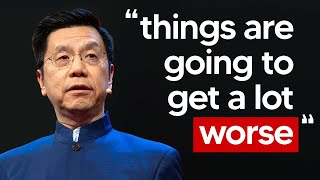
YouTube video (creator LARRUZ) discussing how generative AI could exacerbate wealth inequality, concentrate market power among a few large firms, and displace large numbers of workers. The video cites an IMF paper on generative AI’s economic effects, includes clips and commentary from Kai-Fu Lee and Geoffrey Hinton about productivity gains and inequality, and surveys possible policy responses (tax design, social protection, retraining). The creator emphasizes preparing for labor displacement and potential mitigation measures.
Chapters
So there was a recent study done by the International Monetary Fund, and it's actually really important for the post AGI economics, which is why I'm making this video. I truly, truly believe that we do need to be focusing on the other aspects of generative AI and how AI is actually going to affect the economy, which is why I'm covering this today. So essentially, this paper broadening the gains from generative AI, the role of fiscal policies, this is a paper that actually talks about the wealth inequality that could potentially happen from AI and what's currently being done and what's currently being proposed. Then they actually, you know, talk about some things that I think will be translated well into society. Now there are also a few different video clips, interview clips from notable speakers and popular AI, I guess you could call them spokespeople, but just people that have a very important opinion and that shape the discussion and the discourse around AI. And I think their opinion is very relevant to the discussion, which is why I'm going to include it into today's video. So one of the things that I want to show you all, and I really want to show you guys this first clip, because this clip is actually from around seven to 10 years ago, not exactly sure on the exact date, but it does talk about the inequalities on AI. And I'm going to reference this clip again because the speaker Kai Fu Lee that you can see right here is actually very, very intelligent and actually has predicted some of the things that have already come true. And many of the things that he predicted before are now starting to ring even louder despite many people trying to stick their heads in the sand. So take a listen to what he said. Literally seven years ago, before there was, you know, a lot of the AI hype that we see in today's area.
If we're to project 50 years in the future, I think the entire human profession would shift a lot, a lot more towards service. And the arts and machines would pretty much automate everything for us.
Right?
When we talk about inequalities, both with the haves and have nots, but also with respect to countries and other countries, I think we need to figure out a way that these changes are synchronized worldwide. Otherwise we, we will create pockets of dangerous zones in the world where poverty will persist and perhaps be enhanced. And there might be extremist activities of different types because of the have not situation that the development of technology have put them into. I think a utopian belief might be there would be more of a world government, but I don't think any of us really believe that's likely to happen. A more likely scenario is that US and China will be the two superpowers and the so called smaller, weaker, poorer countries will essentially be aligned with one of the two superpowers.
And so essentially what he's talking about here is the wealth inequality with AI. This is something that I've previously discussed on my private community, on the school, and it was something that I previously spoke about when I first launched a community, when I first actually had it on Patreon. And I spoke about how wealth inequality is going to actually be a real thing. Now at the time I didn't actually know of this interview clip where Kai Fu Lee was actually discussing exactly what I was talking about. And of course his talks are from years ago, which means that his discussion and his viewpoint are to be taken very, very seriously because he was someone that predicted this far before. The generative AI hype train is here. Now essentially there was this article that was in the Financial Times where they actually spoke about how generative AI and they did a small summary. But I'm going to read some of the key points from the article and and then I'm going to dive into the actual paper that actually goes over some of the key points that you need to know. So basically, of course here you can see that they say generative AI could also result in a further rise in the market power and economic rents enjoyed by dominant firms in an increasingly concentrated and winner takes all markets as a result of capital getting more concentrated in in the hands of fewer companies. If you aren't familiar with as to why this is essentially going to happen, think of it like a snowball. If we take a look at some of the giant companies right now, Meta, Google, Amazon, Microsoft, essentially they have a monopoly already on many of the markets. For example, Apple, I wouldn't say they have a monopoly on the phone market, but certainly in the western hemisphere they have the iPhone and the iPhone, the entire ecosystem is pretty dominant. I would say that if, for example, we look at Google, they definitely have a monopoly on the search market. And I think, you know, of course, Meta, they have Instagram, they have WhatsApp. Those, you know, platforms have over billions, you know, of users, which is pretty incredible. And the thing is as generative AI continues to grow, we're going to see those companies get increasingly more powerful as they get increasingly more control. And the point is, is that this might be a winner take all market because of course the companies make more money. And one of the biggest problems about this kind of technology is, is that only a few companies can actually enter this market. Because if you think about how much the next training runs are going to cost, they are going to cost somewhere from 10 billion to $100 billion. It's not like your average run of the mill other technology companies that can raise capital and go ahead and compete. This is not just software. This is something that, you know, these really big companies are working on and only they can compete at that level in order to hire the researchers, hire the people that are going to be building out the data centers, and of course affording all of these GPUs. So it truly is going to be a winner take all market or at least concentrated in the hands of a very few. Now they talk about how governments need to take an agile approach that prepares them for highly disruptive scenarios. And this is where I'm actually going to get into some of the key things that discussed in this, which basically just says, look, there are going to be a lot of economic gains and benefits from generative AI. And what you need to do is you need to ensure that the way how society is set up is that it's actually able to capture the benefits from AI in a way that it is distributed to society in a positive way. Because if we distribute the benefits now and society if less as it is, we're going to be in a pretty dystopian scenario where, where a handful of companies rake in all the profits and the rest of society is just in a dystopian hellhole where they aren't able to benefit from the economic gains that generative AI and all future AI technologies, whichever part of AI is that they have done. So for example, right here they actually talk about the impact on poverty. They said in addition to its effects on labor markets, roboticization may also contribute to increasing poverty. Especially if the negative impact of roboticization is more pronounced for workers at the bottom of the wage distribution. These workers are at a higher risk of falling into poverty because it is harder for them to find new jobs with similar pay. So essentially here they're basically just stating that, look, if you're someone that doesn't make a lot of money and robots come and take your job like actual humanoid robots, then you're going to be, you know, falling into poverty even more because it's quite harder for you to find a similar job with similar pay if robots are there. Now there is going to be something that I will reference from time to time because there was a recent article that actually discusses which kind of jobs are going to be going away and I will be doing a video on that. But the thing is, is that of course this is very, very true and this is something that we need to be paying attention to. And they actually talk about how there needs to be some social assistance in the sense that looks if we are starting to slowly ramp up our production in terms of the AI technologies, these AI products, then we're going to have to think about the people who get displaced by these jobs and ensure that they aren't just completely left to fend for themselves without any way of providing for themselves. Because in some scenarios, people tend to fall through the cracks. And of course, this isn't a good scenario, especially if we're going to have larger waves and certain periods of time where this is a transformative period, because we haven't really had a disruptive technology like this before now. Geoffrey Hinton from Google. Well, he doesn't work at Google anymore. In fact, he actually left so he could speak about the issues of AI, namely AI safety. But he actually does talk very quickly here about how the inequality with AI is probably going to perforate in the litany of things that you're worried about. Obviously, we have battle robots as one. You're also quite worried about inequality. Tell me more about this.
So it's fairly clear. It's not certain, but it's fairly clear that these big language models will cause a big increase in productivity. So there's someone I know who answers letters of complaint for a health service. Yeah. And he used to write these letters himself and now he just gets chatgpt to write the letters. And it takes one fifth of the amount of time to answer a complaint. So he can do five times as much work and so there'll need five times fewer of him. Or maybe they'll just answer a lot more letters.
Or they'll answer more letters. Right. Or maybe they'll have more people because they'll be so efficient. Right. More productivity leads to more getting more done.
I mean, this is maybe not.
This is an unanswered question, but what.
We expect in the kind of society we live in is that if you get a big increase in productivity like that, the wealth isn't going to go to the people who are doing the work or the people who get unemployed. It's going to go to making the rich richer and the poor poorer. And that's very bad for society, definitionally.
Or you think there's some feature of AI that will lead to that?
No, it's not to do with AI. It's just what happens when you get an increase in productivity, particularly in a society that doesn't have strong unions.
But now, so we can see right here that Geoffrey Hinton is basically echoing the same things that Kai Fu Lee is. And essentially what he's talking about here is, you know, you heard that once this increased productivity gains are going to be there, a lot of the gains are just going to go straight to the top of the companies. And this is the thing that this kind of, you know, I guess you could say system kind of breaks capitalism in a sense because capitalism sort of works for everyone. Because yes, you can work harder and you can earn more money, but if we, you know, let's say we just decide to push forward 25 to 50 years into the future where we have true, true automation of nearly everything, we are going to be in a society where the only people who own the AIs are going to be the people who, you know, have the means to earn an income, which means that the fundamental social contract is going to have to change. And during the transition period from the one that we are in now to the one that's going to be there in the future, it means that we'll need to think about how we actually change society now. In my school where I actually talk about all this stuff, there are numerous articles and research papers that I've talked about and I've done little blog posts and stuff like that where I've spoke about some of the solutions and how to position yourself if those scenarios do come about. So, so that is something that you can check about. I'll leave a link in the description to that. But the point is, is that this is a true, true scenario that we will have to brace ourselves. So you can see right here, this is where the research paper, they actually talk about things from the past. So they say. Overall, these findings suggest that the design of social protection systems played a role in ameliorating adverse labor market and poverty impacts in the past. Although roboticization can lead to displacement of workers in routine and manual tasks, the impact of generative AI could potentially be more widespread, replacing a broader spectrum of both routine and high skill, non routine tasks. This calls for more fundamental changes in education and in training systems and policy frameworks to mitigate potential broader social implications. The extent to which existing systems will need to be upgraded in a world of rapid technological change and potentially more significant labor market displacements is discussed in the next section. Basically what they're stating here is that, look, okay, we need to be thinking about education and training systems and policy frameworks to actually mitigate the potential broader societal implications. Because as Kai Fu Lee said, there is going to be people who are frustrated that they've been left out in this next wave of technology. I mean, if you think about it, if you're someone who is on the tail end of what's going on here, you're just going to be someone who loses your job while seeing a lot of people at the very top get rich due to these AI technologies. And the worst thing about it is that if you're someone in certain careers that these AIs are profiting heavily from, then you could even be someone who's had your work, I guess you could say illegally stolen, trained on and then used to replace you. That's just going to fuel your frustration even more. So you can also see here, he says, and not all countries are likely to be affected equally. While the answers are not yet certain countries will need to assess whether their social protection, education and tax systems are are fit for purpose and flexible enough to cope with a wide range of potential scenarios. This is something that I do also believe that many of the countries are not even focusing on at the moment. Whilst yes, many accelerationists are always saying we need to accelerate development, we need to accelerate faster, we need to also ensure that we are putting pressure on the people in control to ensure that they actually accelerate the policies faster too. Because as long as the technology is increasing, as long as these systems get better and more capable, as we know that they are, as even recent, recently Dario Amadei, the CEO of Anthropic, actually stated that we see no signs of the capabilities slowing down and the scaling laws aren't actually tapering off. Which essentially means that these models are going to be getting bigger and better and more capable with scale. Long story short, they're going to be able to do more jobs in the future. Which means that we need to make sure that if we're increasing the capabilities, we're also increasing how much the current economic system or the current economic policies actually favor those who are displaced by these technologies. Maybe there might be a generative AI law where if you're displaced by AI, you get like six months severance from the government and you're able to get a free upskilling program that actually allows you to transition into a new career. Hopefully this would be something that would help those who have been displaced. But right now I'm not sure if there are even any very effective discussions going on. But of course with the IMF making this report, this is going to be something that does help the situation.
Why could I exacerbate wealth inequality?
And what can we do about that?
Yes, we can just already see all the Internet companies. I think without AI, they'd probably be only worth half of what they're worth because AI help them monetize and that will extend into all the other industries. So the tycoons there will be, there will be more numerous, and they will be even richer and richer at the same time because AI is developing human intelligence equivalence. And that means AI can do many of the tasks and jobs that we do today. In particular, AI will first do jobs that are routine. So white collar jobs like telemarketing and customer service and people who copy and paste and file expense reports, desk jobs, those will be gone first, because I can do them just in software. You don't even need robotics. And then blue collar work, visual inspection, assembly line work, many waiters and waitresses, and many of the jobs in factories and warehouses, the pickers at Amazon, the cashiers, grocery store, and of course in about 15, 20 years, all the drivers, all the people who drive for a living. So when you add all that add up, it's a substantial number of jobs. And when, when it's simultaneously making a small number of people ultra rich and making many people jobless, that is the wealth inequality problem that AI will exacerbate. And it sounds like the only jobs.
Now there was also this right here, which is actually rather fascinating because this actually discusses the taxing of AI. Now this is something that I've seen, you know, spoken about quite a lot, but this is where we, I guess you could say, first get our definitive answer on what governments might do. It says here a special tax on generative AI to reduce its speed of adoption and prevent excessive labor displacement will be hard to design and implement and would run the risk of hampering productivity growth, including areas where AI investment augments labor. Basically stating that if you're trying to tax generative AI, this is probably going to slow down productivity. And of course, areas where people are looking to invest in AI, so which actually makes people that are currently working more effective. So they're stating that now it is recommended that countries reconsider the design of the current corporate tax systems in how they incentivize investment in automation. For instance, tax incentives in the form of capital allowances may need to be reconsidered in countries where they are more generously applied to labor displacing software or intangibles than to other assets. At the same time, countries where corporate tax systems impose a much higher tax burdens on AI might hold up deployment and reduce productivity growth. And income tax credits and job credits could also be considered to mitigate excessive labor displacement from automation, even if they cannot be targeted to particular occupations. Finally, given the large amount of energy consumed by AI servers, taxing the associated carbon emissions is a good way to reflect the external environmental costs and the price of technology. So basically they're stating here that, look, taxing AI is going to be pretty hard. We need to be careful about how we are doing this because we don't want to stifle economic growth. What we can do at the moment moment is we can giving tax incentives. And what we can also do is we can tax the associated carbon emissions from the huge data centers that it costs to run. Now, what they basically say here, the imf, is that tax also can be easily avoided by relocating or producing the AI abroad. So there's no real point in taxing generative AI. But a specific tax on generative AI is therefore not recommended. Which means that for those of you who are thinking that we're probably going to get attacks on generative AI or automation, it doesn't seem like we're going to be getting that as a solution anytime soon. So this paper is really, really fascinating because it dives into some of the main things that I talk about in my community on how we can actually mitigate the effects of this. Because I am one that believes that, you know, whilst yes, governments will help us, and yes, they will shape the way that a lot of people are going to be affected by this, I do think that whilst you do have your agency and whilst you do have some actions, you can do certain things to protect yourselves from the coming wave of automation and at least place yourself in the best position to not only not be someone who's automated, but also thrive. I actually recently did a comprehensive guide that is designed to help you navigate the rapidly evolving landscape of AI investments. It is around 22 pages long. It covers every single sector that you can invest in, including private investments, how to get into certain investments that aren't really available to the public, and many different things that people really aren't considering. This is just in this section of the school, the AGI investments. So if you're already in my school, you can download it there as well as a bunch of other content. Now, I quickly want to discuss something that I saw recently and it's something that I wanted to discuss because the comments were something that shocked me and at first they shocked me and then I realized what human nature is. And this is just a quick, you know, tidbit to kind of tell you not to play into your own human nature. Human nature is often one that tells you to run from your fears and will often have you doing things that whilst, yes, they're comfortable, often in the long run they don't actually help you at all. This video right here is called about 50% of jobs will be displaced by AI within three years. Now, essentially in this video, the only thing that the guy is stating right here is that, you know, he's made some past predictions and it looks like they are going to be coming true. Now, if we take a look at the dates, three years from now is going to be 2027. Have you been paying attention to my videos and the AI space? You'll know that many people have predicted, including people that have left OpenAI, some very, very intelligent people. Just trust me, people at OpenAI are exceedingly smart, smarter than you can reasonably imagine. And these people are predicting timelines of 2027. We all know that by then we're going to have some increasingly capable system and for that to be about 50% of jobs. I don't think that that is an overstatement. The point here is that many of the comments on this video were basically stating that this guy is just a moron, this guy doesn't know what he's talking about and that we shouldn't even pay attention to this video. I don't think people are truly stating what they truly believe about the video. I think this is just a knee jerk emotional reaction to them basically stating that they're going to be out of a job. That's why when I make videos, I'm not just basically saying that looks everyone's going to lose their job. I'm trying to say that, look, AI is going to affect the workforce. But of course there are always some solutions on how you can benefit from this revolution. The point here is that when you do see these kinds of videos, don't just immediately get upset and think, oh my God, I'm going to lose my job. Screw this guy and this video. Just start to think critically about what is the best way that you can start to manage yourself and your future in order to at least benefit from this revolution and not be the person who's next on the chopping block and job displacement. I think we all know this is coming. You had said around 2017, you thought in 10 to 15 years, about 40 to 50% of all jobs would be replaced by AI. Is that still an accurate timeline in your opinion? What the heck is everyone going to do when they don't have a job in three years?
If so, it's actually uncannily accurate. People have criticized me for being too aggressive in the 2017, 18, 19 and I was a little nervous at the time. But when Genai came out, I think everybody's on the bandwagon and believing that is the correct pace. And I think the white collar jobs will go a lot faster. Blue collar job may be a little slower because more people are shifting to the software only displacement. And I think it's a very, very significant problem. And I think finally some governments are waking up and realize they have to do something about this. And in my AI 2041 I outlined a number of creative, maybe not necessarily workable solutions that will that was intended to get people thinking. So get a copy of the book.
So just to actually show you some of the comments because when editing this I realized I didn't show you all of the comments. But you can see the first job replaced will be all youtubers who make videos about AI replacing 50% of all jobs, which is basically a dig at this YouTube channel. Of course you can see here when you come back to this video in 3 years to leave a comment saying that this prediction was wrong. Nobody will be paying attention. But of course there are some other insightful comments which actually represent what I am saying and many other people who are paying attention to what is exactly going on are also ushering. Everyone watching this needs to consider the implications AI will have on jobs in our economy very soon and demand policymakers start acting. We cannot stop it, nor we do want to and we need to start preparing for what it means. AI will only keep advancing and ignore the instinct to think it will never do certain things for I can assure you it will and far sooner than you might expect. Do not believe those who say we don't need to prepare as they're probably the ones who will profit the most from the rest of us struggling. It's not going to create anywhere near enough new jobs quickly enough to re employ us all those it will displace. How else will we keep workers afloat while they figure out what to do next? And how else can we protect the middle class from losing everything they've built? I've yet to hear a better answer that doesn't just dismiss what's coming. And I think that's what Kai Fu Lee here has ushered a lot in his comments because he keeps stating that, look, if we just carry on the way we're going to go, there is going to be a serious social divide along those who do have work and who do have money and those who've just been displaced by this automation if the governments don't act quickly. So let me know your thoughts about this in the comment section below, because I think this is definitely an interesting point that we need to further discuss.










