It’s Confirmed: OpenAI ORION is Here Soon, And It's 100x GPT-4 Power
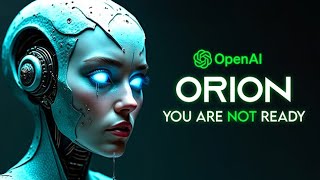
OpenAI's next model, Orion, is rumored to be 100 times more powerful than GPT-4 and could arrive on Microsoft Azure as soon as November. The company raised $6.6B and lost three key leaders, while training Orion on synthetic data from O1 and facing legal questions about web scraping.
Questions this video answers
$6.6 billion
December (with some sources saying possibly November on Microsoft Azure)
Microsoft Azure
O1, internally codenamed 'Strawberry' (launched/mentioned in September)
Chapters
Foreign. Model Orion is supposed to drop by December. Now why is this so big? Because Orion is rumored to be up to 100 times more powerful than GPT4, which is just crazy. But here's the thing. OpenAI is handling Orion a little differently this time around. Unlike GPT 4 and 01, which were widely accessible, Orion isn't hitting ChatGPT for us all to try out, at least not right away. It's instead, OpenAI's working with a few key partners to roll it out gradually. Let's break it down. So what's really cooking with Orion and why is OpenAI doing things this way? First off, OpenAI is partnering up with Microsoft again, like they did for GPT4 to host Orion on Microsoft's Azure platform. Some sources say it could even go live there as early as November. This model is seen as a huge step towards AGI, Artificial General Intelligence, the level where an AI can think and learn like a human. OpenAI CTO Mira Murati and some other key leaders recently left the company, and there's been a lot of buzz that these departures might shake things up. Could this be connected to Orion? Absolutely. OpenAI just raised a massive $6.6 billion to fund these AI ambitions and is pushing towards restructuring as a for profit entity. Basically, there's a lot at stake here. Now some might wonder if orion is just GPT5 under a new name. I actually touched on this in one of my previous videos. While OpenAI hasn't confirmed that, insiders say it's definitely going to be seen as the next big step after GPT4. Sam Altman, OpenAI's CEO, even dropped a cryptic post about winter constellations rising, hinting at Orion, which shows up in the night sky in winter. There's excitement building up and even ChatGPT picked up on Altman's hint about Orion, though it got a bit creative, suggesting you could rearrange letters to spell Orion. Not quite, but nice try. So what's inside Orion? Synthetic data, raw power and AGI ambitions. The journey to Orion has been paved with some bold moves. Remember the O1 model OpenAI launched in September? Internally, it's codenamed Strawberry and it was used as a base for generating synthetic data to train Orion. This synthetic data approach means they're not just scraping the Internet like they used to, but are trying to generate data to make Orion smarter, faster and way more powerful. And when we say powerful, we're talking about OpenAI's goal to create a model that could eventually be called Artificial General Intelligence or AGI. This model is aimed at making the leap beyond just being good at language. They're aiming for it to think, reason and understand at near human levels, if not higher. It's the digital God vision that OpenAI has been working towards for years, and Orion might just be their biggest attempt yet. In fact, this whole shift has led to some high profile exits from OpenAI. One of the latest was Miles Brundage, OpenAI's AGI Readiness Advisor. He left because, in his words, no one is ready for AGI yet. He highlighted that the readiness gap isn't just with OpenAI, but with pretty much every AI company right now. For him, this isn't a minor issue, it's a huge one. Brundage even put out a blog where he talked about how AI could impact jobs, societies and even make work optional. Imagine a world where people don't need to work, where AI drives economic growth. He suggests that if done right, AI could make early retirement a reality. It's an interesting vision, but he also warns that without careful planning, we might face some chaotic years ahead. Brundage didn't just walk away. He emphasized that collaboration on AI safety across governments, companies and civil societies is crucial. Otherwise we risk AI chaotic transition into this future with AI disrupting jobs and economies before anyone is ready to handle it. As if things weren't intense enough, let's add another layer to OpenAI's challenges. Just this week, another former OpenAI researcher, Suchir Balaji, left the company, dropping some major claims about copyright violations. He helped OpenAI gather data to train earlier models, and he admitted they scraped from everywhere books, websites, even forums, often without permission. Back then, even he didn't question if it was legal. But now he feels OpenAI's methods weren't right. He believes this approach could be a huge problem for the Internet itself. Think about it. Platforms like Stack Overflow and Reddit are seeing drops in traffic because people are now asking AI their questions instead of heading to these sites. Balaji isn't just voicing concerns. He wrote an essay saying that AI companies like OpenAI need to be regulated to prevent this kind of uncontrolled data use. This scraping isn't a simple fair use issue either. It involves copying copyrighted data. So it's no surprise OpenAI's facing lawsuits from authors who claim their work was used without consent. The company has signed deals with some publishers, but the legal issues are far from over. Balaji's point, generative AI could be damaging to the Internet as a whole, not just the companies and creators involved The AI race isn't just a tech thing. It it's shaping up to be political and philosophical. While OpenAI's charging forward, some companies are stepping back from the doomerism that used to dominate the industry. Anthropic, a company founded by former OpenAI folks, started as the white hot center of AI doomerism with a cautious approach to AI development. Dario Amodei, Anthropic's CEO, recently put out a lengthy post outlining his vision for super intelligent AI that could be here as soon as 2026. Anthropic initially tried to be the slower, safer alternative to OpenAI. However, with billions in funding from Amazon and their model Claude competing directly with ChatGPT, they've had to join the AI race more aggressively. It's fascinating. Just last year Anthropic was seen as the cautious player focused on AI safety. Now they're competing for funding and pushing ambitious visions for the Future, just like OpenAI. Some wonder if this is just a shift to attract investors, or if they genuinely believe AI could change the world positively. There's tension too, with Amade and OpenAI's Sam Altman having slightly different takes on the timeline for AGI and what safe AI looks like. Altman's focused on rapid growth and deployment, while Anthropic wants safety and control. It's a difference in approach, but both are aiming to bring us closer to AGI. As both companies make these big promises, the question is the industry really prepared to handle what they're building? So where does Orion really fit into all of this? It's more than just another model in OpenAI's lineup. It's their boldest move yet toward creating an AI that can think and act more like a human. OpenAI's CEO Sam Altman has been clear about his vision. He believes we're only a few thousand days away from achieving super intelligent AI. This isn't some distant dream with Orion. They're edging closer by combining the strengths of previous models like GPT4 with free fresh data and techniques. The big aim? To develop an AI capable of reaching AGI, potentially transforming industries like healthcare, science and even democracy. If Orion lives up to expectations, it could change how we work and live. But OpenAI is handling the release cautiously, granting early access only to trusted companies so they can create unique applications and features before it's widely available. They're aiming to test and refine Orion in controlled settings, avoiding the chaos that could come with a wide release of something this powerful. Now, even with all this hype, OpenAI's rapid growth isn't without its issues. They've seen high turnover, including the departure of Mira Murati, their CTO and other high profile leaders. It's a sign that working in such a fast paced, high stakes environment isn't easy. Building something as ambitious as Orion, which could be a stepping stone to AGI, requires more than just money and talent. It takes careful planning, coordination and most importantly, a clear vision of how to manage the risks involved. Brundage's departure highlights these challenges. His warning is neither OpenAI nor any other AI company is fully prepared for the arrival of AGI. He's also cautious about the societal implications, saying AI could lead to a world where people don't need to work. But he warns that we're culturally and politically unprepared for this change, which could lead to civilizational stagnation or worse. If we want AI to benefit humanity, it requires careful decision making and ideally, collaboration across borders. Yet for all the obstacles, the potential benefits are hard to ignore. Orion could lead to breakthroughs in areas like healthcare, the economy and even, some might say, climate solutions. Though OpenAI stays away from directly mentioning climate change, which I personally appreciate. Brundage believes AI could enable a future where early retirement becomes accessible, where jobs become optional, and where life fundamentally changes, but only if handled responsibly. And that's where Orion stands right now. It's a massive, risky leap towards an ambitious future. OpenAI is betting big on this model to bring them closer to AGI, and they're pushing forward despite the challenges. So are we ready for what's coming with Orion? I'm just going to say that if it's anywhere close to what OpenAI envisions, the world will look very different in just a few years. So keep your eyes on this one and it's not just another AI release. And as always, let me know what you think in the comments. Make sure to hit that like button and subscribe for more updates on the latest in AI tech. Thanks for watching and I'll see you in the next one.










