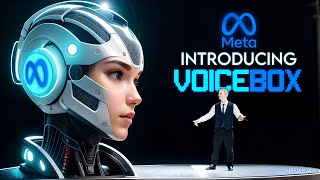
A YouTube explainer by LARRUZ about Meta's Voicebox (June 22, 2023), a text-guided speech-generation model that can mimic voice styles from ~2-second samples, edit/denoise audio, perform cross-lingual style transfer, and produce diverse speech samples. The video highlights performance claims (lower error rate and faster generation vs a competitor named Vale), discusses applications (accessibility, content creation, multilingual content), and raises ethical/privacy concerns—Meta has not released Voicebox publicly and is developing a classifier and guidelines to mitigate misuse.
Questions this video answers
LARRUZ
June 22, 2023
Approximately a 2‑second audio sample
5.9% WER
19% WER
Chapters
So Meta has announced a new AI model that can generate speech in multiple languages and dialects and act like an eraser for audio editing. It's called Voicebox and honestly, it's probably the most amazing text to speech AI model I've seen so far. In this video, I'm going to tell you all about Voicebox, what it can do, how it works, and why it's so revolutionary. I'll also discuss some of the potential applications and implications of this technology and the why Meta hasn't released it to the public yet. Before we dive into it, make sure to subscribe to my channel so that you don't miss any future videos on AI news and updates, alright? So Voicebox is a text guided AI speech generator that can produce natural sounding audio clips from any text input. It can mimic any voice style with only a 2 second sample and generate speech in different languages and dialects. It can also edit and denoise audio clips, replacing misspoken words or unwanted sounds with seamless speech. And it can even transfer the style of one voice to another so you can speak in a foreign language with your own voice. Voicebox is unlike any other generative AI model out there. It uses a technique called in context Learning, which means it can solve tasks that it wasn't specifically trained for by using existing knowledge and data. For example, it can generate speech in languages that it hasn't seen before by using multilingual data and common patterns. It can also adapt to different voice styles and accents by using audio samples and text cues. Voicebox is far more advanced than other speech generating AIs. It can generate speech faster and more accurately than its competitors. Meta claims that Voicebox can generate words with a 5.9% error rate compared to 19% from Vale, another speech generating AI model, and it can do so up to 20 times faster. Now let me show you some of the amazing features of Voicebox in action. First, let's talk about in context text to speech synthesis. This is where Voicebox can generate speech from any text Input using a 2 second audio sample as a style guide. For example, if I give Voicebox a text message from a friend and a two second clip of his voice saying hi. Voicebox can read the message in their voice with the same tone and inflection as they would use. This is incredible because it means that Voicebox can mimic any voice style with very little data. It doesn't need hours of recordings or transcripts to learn how someone speaks. It can actually use any audio sample as a reference and generate speech accordingly. Think about the potential Applications of this feature, you could hear messages from your friends and family in their voices instead of reading them on a screen. Or you could have your favorite celebrities or characters read you stories or jokes. You could even have your own voice read you anything you want. Next, let's talk about speech editing and noise reduction. This is where Voicebox can eliminate unwanted noise from audio clips and replace misspoken words with correct ones. For example, if I have an audio clip of me saying I love this new AI tool but there's a dog barking in the background or I stutter on a word, Voicebox can remove the noise or the mistake and regenerate the speech without any trace of the error. This means that Voicebox can act like an eraser for audio editing. It can fix any flaw or imperfection in an audio clip with ease and precision.
Hi everyone, thanks for tuning in. Today we are going to show you how to create a. Hi everyone, thanks for tuning in. Today we are going to show you how to create a beautiful flower arrangement.
It can also replace words or phrases with different ones without affecting the rest of the speech.
Hi guys, thank you for tuning in. Hi everyone, thank you for tuning in.
To be honest, there are so many uses of this feature. For example, you could modify your podcasts or videos easily and quickly. You would be able to fix errors in your speeches or presentations without needing to do the whole recording again. Or you could easily change what's being said in your audio without changing its style or sound quality. Okay. Another amazing feature of Voicebox is Cross Lingual style transfer. This is where Voicebox can generate speech in different languages using the same voice style. Like if I give Voicebox a text passage in English and a two second clip of my voice saying Bonjour, Voicebox can read the passage in French with my voice and accent. This is truly incredible because it means that Voicebox can make anyone speak a foreign language with their own voice. It doesn't need parallel data or translations to do this. It can use multilingual data and common patterns to transfer the style of one voice to another. So essentially, you could communicate with people from different countries and cultures in their native languages with your own voice, or learn a new language by hearing yourself speak it. You could even create multilingual content with a consistent voice style. Now, the last feature I want to show you is diverse speech sampling. This is where Voicebox can generate multiple speech samples from the same text input with different voice styles and variations. For example, if I give Voicebox a text passage in English and ask it to generate 10 samples VoiceBox can produce 10 different audio clips with different voices, accents, tones and emotions. This way, it can create diverse and natural speech samples from any text input. It doesn't need any style labels or guidance to do this. By using different types of data and random selection, it creates different kinds of speech. This could be helpful in making more realistic and expressive voices for your virtual assistants or Metaverse characters. You could even generate speech samples for data augmentation or evaluation purposes. Now let's discuss some possible uses for this technology, like One potential application of Voicebox is to aid visually impaired people by having their messages read by familiar voices. This could make them feel more connected, comfortable, and supported. Imagine having your messages read by your friends or family members in their voices, or hearing your favorite book read by your favorite author or narrator. This technology could also be useful for content creators for videos or podcasts. It would allow them to easily make and change their audio tracks, which could help them be more efficient, creative and adaptable. They would have the ability to quickly produce and modify your own videos or podcasts. Plus they can alter the content or the style of your audio while still maintaining its quality and uniformity. Voicebox has many uses that we're still discovering. It's a strong and adaptable tool that can provide new opportunities for creating speech and improving how we communicate. But before you get too excited, there's one thing you need to know. Meta hasn't released Voicebox to the public yet. Why? Because they are aware of the potential misuse and abuse of this technology. Anyone could use Voicebox to generate fake or misleading audio clips using someone else's voice without their consent or knowledge. This could have serious consequences for privacy, security, and trust. Creating and using a replica of someone's voice without their permission and potentially for malicious activities is a serious violation of identity and privacy. There are also legal considerations where voice cloning can be used to defame, deceive, or incriminate people. The ethics of using voice cloning technology without someone's consent is questionable and may be illegal in some jurisdictions. Although there is nothing unethical about voice cloning technology itself, there are concerns about the potential misuse of the technology. Meta says they are working on a solution to prevent this problem, a classifier that can distinguish between authentic and AI generated speech. They claim that their classifier can detect Voicebox generated speech with high accuracy and reliability. They also say they are developing ethical guidelines and best practices for using Voice Box responsibly and safely. Until then, we'll have to wait and see when Meta will release voice box to the public and how they will regulate its use and distribution. I hope they will do it soon because I'm dying to try it out myself. Alright, that's all for today's video. I hope you enjoyed it and if you did, please give this video a thumbs up and subscribe to my channel for more videos like this one. And don't forget to leave a comment below telling me what you think about Voicebox and how you would use it if you had access to it. Thank you so much for watching and I'll see you in the next video.