Meta's NEW INSANE LLaMA GPT : SHOCKS The Entire Industry! (GPT Facebook ANNOUNCED!)
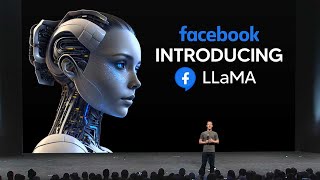
YouTube commentary (uploaded March 13, 2023) about Meta/Facebook's LLaMA release: a 65‑billion-parameter large language model the narrator says outperforms GPT-3 on several benchmarks and is competitive with Google's PaLM (cited ~540 billion parameters). The research release (noted as Feb 24) was restricted under a non-commercial, research-focused license but reportedly leaked to GitHub, enabling users to run the model locally on consumer hardware. The video highlights strengths (efficiency, code-generation performance, feasible local inference) and concerns (bias, hallucinations, misuse such as spam/scams), and shows example prompts and outputs (conversations, HTTP request examples, HTML tag removal).
Questions this video answers
March 13, 2023.
65 billion parameters.
Google's PaLM, cited at approximately 540 billion parameters.
February 24 (as stated in the video).
Chapters
So Facebook just announced Llama, a foundational 65 billion parameter large language model. And this is truly insane. The Llama actually stands for Large Language Model Meta AI because of course Facebook changed their name to Meta in order to represent the metaverse. But you can see here from this paragraph that they are actually managing to focus their research on AI. Additionally, you can also see that this large language model beat GPT3 in some common sense reasoning tests with 92% fewer parameters. Meaning that these large language models that we're running are now getting much more efficient and much more streamlined in terms of how they produce the text generation. Now what's also interesting was that Facebook's LLAMA AI model was only intended for government and approved researchers and was leaked onto GitHub, which means that many people were actually running this software and running this large language model on their own computers. Now this research scientist at Facebook provided us with some very interesting tweets on exactly how this large language model by Meta actually works. Take a look at this. You can see Today we released llama, it outperforms GPT and GPT3 on most benchmarks. Now what was more interesting was that Llama's 65 billion parameter model was actually very, very competitive with the Palm E540 billion parameter model. Now what's interesting about this is that this parameter, the 540,000,001, is by Google, which was released a couple of days ago, which you all know, since I made a video on it, and it's actually on par with several less parameters, which is going to show just how effective this model is. Now what's also interesting is some more data that was released. You can all see here that this model is actually outperforming when it comes to code generation. So you all know that Google is definitely something that coders day is a great company to work for. Now you can all see here that somehow LLAMA and Meta have actually managed to outperform Google in this aspect, which is truly insane. What's also interesting is that people have managed to run this software on their computers. Now usually these large language models are actually run through servers in the cloud, but some users have actually managed to get these large language models to to run on their computers. Now running this on your device locally is pretty cool because it means that the future applications are going to be very, very interesting. And there's still a lot more that we need to get into, which I need to show you, because this large language model is truly a pivoting point, because if people can now run these large language models on their own devices. It's going to change the way that this information is going to be distributed and used by users worldwide. So this is of course the research page that you can see right here. And this was actually released on February 24th. I'm just sure that it slipped under a lot of people's radar because it isn't as usable as ChatGPT. So one thing that I found really interesting about this was that this large language model that was released not actually meant to be used by many people worldwide. You can see right here it says to maintain integral was that this large language model was not meant to be used by many people worldwide. It was only to be used in specific cases and had restrictive access. You can see right here that it says to maintain integrity and to prevent misuse, we are releasing our model under a non commercial license focused on research use cases. Access to the model will be granted on a case by case basis to academic researchers, those affiliated with organizations in government, civil society and academia and industry research laboratories around the world. People interested in applying for access can find the link to the application and in our research paper. So essentially this model wasn't truly released as a final version just yet. I'm guessing it's still kind of in the research stage and of course they're still trying to improve this large language model, as you can see here. It also says there is still more research that needs to be done to address the risks of bias, toxic comments and hallucinations in large language models. So of course, as you know something that is very evident in ChatGPT as there is a huge wave of people who are stating that ChatGPT is, is in far fact too biased in its comments. So as you can see here, this is exactly why Elon Musk is reportedly building his own chatbot, because apparently it is too biased. Okay. And you can see that he is saying that woke AI versus Closed AI and based AI is going to be the one that he is. So the reason that ChatGPT has been seen as biased is that it won't actually argue for fossil fuels. It also won't praise Donald Trump, but will praise Joe Biden. And although these are maybe controversial topics, depending on where you stand, this is something that that Llama is trying to focus on preventing because it's still in the research phase. One thing that you do have to understand is that when these large language models are produced, their text that they generate is of course generative, meaning that it's going to be new pieces of work when this new piece of work is generated. What tends to happen is that the companies that generate said text are going to be on the hook for whatever is said by this AI. So, for example, if an AI says something bad about one particular group, then of course Meta may be liable for what it says. And of course that could open many different kinds of potentially lawsuits and potentially terrible, terrible pr. Exactly what has happened before? If you're wondering why they probably have released this in the research phase, remember that Twitter actually taught Microsoft AI Chatbot to be a racist person in less than a day. Essentially what happened was here was that Microsoft released their AI very, very early. And I'm not going to show you the exact tweets that they had, but essentially they had a Twitter bot, okay, that was a. Which would tweet pretty much anything. And this Twitter bot actually tweeted a whole bunch of just harmful content and pretty much racist content on the Internet. Now you can go ahead and find this content yourself, but it just goes to show exactly why we need to actually look into what AI is going to be doing and how these parameters are set, and if biases are too far left or too far right or where these biases can lead us, and if this model can be trained in ways which actually make it do certain things which isn't really helpful to society. What's also cool here is that this is an article by Simon Wilson and he says large language models are having their stable diffusion. And of course this is cool because people can now generate images on their own hardware. And if you don't know what stable diffusion, diffusion is, it's an image generator that you can use on your computer. Now, of course, as you can see, we've come a long way from that. Now, essentially, this is crazy because of course, as you know, LLAMA is easy to run on your own. Hardware large enough to be useful has equivalent capabilities to GPT3, and it's open source enough that it can be tinkered with. Which means that essentially what people can do is that they can tinker in a way that they can actually use it for specific use cases. So maybe they want to use it in, I guess you could say military applications. They could do that maybe if they wanted to use it in the healthcare industry, maybe in the education industry, there's many different ways that you could actually use this kind of stuff. So it's really, really, really good. Of course there are some risks. Now what we're seeing right here is we're seeing a GIF of the large language model actually running. So this is exactly how this large language model is ran. Now, I'm not sure if Facebook are going to take down the GitHub link because technically they didn't want this large language model out there and they only wanted it in a licensed state. So I'm not really sure how much longer this is going to be public for, but I guess it just depends on Facebook's stance on this. Now, of course there are some risks with this being on the Internet because as you know, some people use software for good and some people use it for bad. Now you can see right here, this technology can be used for harm, for generating spam, automated romance scams, trolling and hate speech. Just essentially a vast use cases of definitely devious ways to use the software, which I hope people don't use the software in that way because of course, as you know, some sometimes people do take advantage of software and eventually what will happen is it'll get restricted in a way where people aren't able to use it creatively. So essentially this article goes over the entire thing, which is a really good article. And of course it says assuming Facebook don't relax the licensing terms, Llama will likely end up more of a proof of concept showing that local language models are feasible on consumer hardware than a new foundation model that people use going forward. So essentially this article pretty much states that although this large language model is actually pretty cool, and it's only showing the capabilities that we can run models like GPT3 on our computers, which goes to show that in the future it's likely that we're going to have very, very large language models running on our hardware locally. Which means that we're going to have, I guess you could say, a much more refined large language model that we're going to be using for our own personal gain. And it's definitely going to be interesting to see which company manages to develop this and manages to put this out where, because I do believe that it's going to be much more efficient, effective and much more interesting. Because as we all know, cloud computing is very, very expensive and that's something that these companies can't continue to afford to pay. If you're wondering what kind of examples there were, you can see that there are examples here that are quite similar to ChatGPT. It says write a conversation between the sun and Pluto and it writes that example right here. It also says how do I send a HTTP? Also says how do I send a HTTP request in JavaScript? Here's an example of how to make a get request using the GSHTP API, and of course, you can see that it's done. And it says the same thing using Fetch, it also says remove all the HTML tags in a Python string. And it's definitely very interesting to show that if this can actually run locally on someone's computer, it's going to make computers very, very, more effective and very, very more powerful in the near future. And bear in mind that this is still the early days of AI, and we're seeing many different companies jump on the race.










