Microsoft New AI "PHI 4" Superior to Google and OpenAI Models
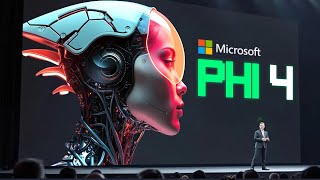
Microsoft's Phi 4 is a 14-billion-parameter AI model that outperforms much larger competitors on math and coding tasks, scoring 80.4 on a math benchmark. It uses synthetic data and novel training techniques to punch above its weight class, handling up to 16,000 tokens of context while running efficiently.
Questions this video answers
14 billion parameters.
80.4.
Over 10 trillion tokens.
16,000 tokens (from 4,000).
Two weeks.
Chapters
Microsoft just dropped its newest generative AI model, 5, 4, showing that when it comes to AI, size isn't everything. This latest addition to the Fi family might be smaller than the massive AI giants out there, but don't let that fool you. Packed with 14 billion parameters, Phi4 is all about quality over size, tackling complex reasoning and math problems like a pro, and even outperforming much larger models in the process. Now hang on. What sets 5, 4 apart is its emphasis on data quality. Instead of relying solely on traditional data sets like web content or code repositories, Microsoft used a significant amount of synthetic data. This data wasn't just randomly generated, it was crafted to provide structured, progressive challenges that the model could learn from. Synthetic data has an advantage here. It ensures the training process aligns closely with the kinds of tasks the model will handle during real world use. For Phi 4, that means tasks like mathematical problem solving and reasoning heavy benchmarks. Microsoft also included curated high quality human generated content to supplement the training process. This hybrid approach gives 5, 4 a broader understanding of real world scenarios while maintaining a high level of precision. For example, in training, the team used techniques like multi agent prompting, where AI agents interact to generate better data, and instruction reversal, which essentially flips tasks to help the model grasp them more intuitively. Benchmarks show how effective this approach is on math competition problems. FE4 outperforms even much larger models like Google's Gemini Pro 1.5 and OpenAI's GPT4O. It scored 80.4 on the math benchmark, putting it ahead of many competitors in coding tasks. It delivered excellent results on HumaneVal and HumaneVal plus showing its capability in technical areas beyond just language processing. This kind of performance proves that a smaller model, when trained smart smartly, can go toe to two with larger systems. One of the standout features of Phi 4 is how it balances performance with efficiency. Larger models like GPT4 or Gemini Ultra often have hundreds of billions of parameters, which makes them computationally expensive to run. Fifor achieves competitive results using far fewer computational resources. This makes it an ideal choice for companies and organizations that need high quality AI capabilities to but don't have the infrastructure to support the larger models. A lot of this success comes down to post training innovations. Microsoft introduced processes like Direct Preference Optimization or dpo, which helps fine tune the model's responses. By comparing different outputs and steering the AI toward the most accurate and helpful ones. For reasoning heavy tasks, DPO makes a noticeable difference. There's also rejection sampling, a method where less accurate or less helpful responses are filtered out during the training process. Together, these techniques refine the model's output to a level that surpasses its predecessors. Fifor isn't just about delivering high performance it's also designed with safety and reliability in mind. Microsoft integrated responsible AI practices into the development process. For instance, their Azure AI Foundry platform provides tools to monitor and manage risks, ensuring the AI remains aligned with ethical standards. Features like prompt shields and content filters add an extra layer of protection, making 5, 4amodel that's not only powerful but also Safe to deploy. There's an interesting story behind this model's timing. Phi 4 is the first Phi series model released since Sebastian Bubek, a key figure in Microsoft's AI division, left the company in October to join OpenAI. His departure hasn't slowed the team down, though. Microsoft is clearly doubling down on its commitment to innovation in this space. The model's training process was a huge factor in its success. Microsoft used over 10 trillion tokens during pre training, a mix of synthetic data and carefully filtered web content. They didn't just throw random data at the model every piece was curated, filtered and optimized to push the boundaries of what 5, 4 could achieve. Synthetic data sets were built from scratch to create scenarios that challenge reasoning and problem solving. Organic data sets like web content and code repositories were meticulously filtered for quality and relevance. A unique aspect of Phi4's training was its use of pivotal token search. This technique identifies critical points in a model's output where the next token can significantly affect the overall result. By focusing on these pivotal moments, the training process becomes more targeted and efficient. It's like giving the model a spotlight on the most important parts of the task at hand, ensuring it learns what matters most. Despite being only 14 billion parameters in size, Phi4 manages to outperform even larger models in certain benchmarks. On tasks like graduate level STEM questions and mathematical reasoning, Phi4 scored higher than its predecessor, GPT4O. It also showed impressive coding capabilities, outdoing many open weight models, including larger ones like Llama 3. But there are some limitations. While 54 excels at reasoning and problem solving, it struggles with strict instruction following, especially when tasks involve specific formatting or structured outputs. It also has moments where it produces hallucinated information such as fabricating details about a non existent person. These are areas Microsoft is already working on, with plans to improve instruction following through additional training and possibly augmenting the model with real time search capabilities. Currently, PHI4 is available in a limited research preview through Microsoft's Azure AI Foundry platform Researchers can access it under a Microsoft Research License agreement, but it's not yet widely available. However, plans are in place to release it on Hugging Face soon, which will open the doors to a much broader audience. This model is a big deal for mid sized companies. Its efficiency makes it accessible for businesses that might have hesitated to adopt AI due to the high costs associated with larger models. Fifor's lower computational demands mean companies can integrate advanced AI capabilities without overhauling their infrastructure or breaking the bank. Microsoft's approach to responsible AI is worth highlighting again. The model underwent rigorous safety testing, including a two week red teaming exercise by Microsoft's AI Red team. They looked for vulnerabilities, risky behaviors and ways to exploit the system. 54 held up well, showing strong defenses against adversarial attacks and prompt manipulation. Microsoft also addressed a common problem in AI data contamination. They improved their decontamination processes to ensure training data didn't overlap with benchmarks and this prevents the model from cheating by having prior exposure to test questions, making the results more credible. Long context tasks are another area where Fifor shines. Microsoft extended the model's context length from 4,000 to 16,000 tokens during mid training. This allows it to handle more complex multi step tasks such as summarizing lengthy documents or reasoning across entire data sets in real world scenarios. This capability is crossing crucial for applications in fields like law, research and technical writing. The numbers back this up in benchmarks like the Helmet long context evaluation. PHI4 performed exceptionally well, even outpacing some larger models. It can retrieve and process detailed information from lengthy inputs with impressive accuracy, making it a strong contender for tasks requiring a broader understanding of context. Safety wasn't an afterthought in Five4's design. Microsoft Incorporated supervised fine tuning data sets focused on reducing hallucinations and improving the model's alignment with human preferences. They also tested Phi4 extensively for harmful content generation and bias. The result is a model that not only performs well, but does so responsibly. There's a lot to be excited about with Phi 4. It's efficient, innovative and designed to tackle specific challenges in reasoning and problem solving. By prioritizing data quality and incorporating cutting edge training techniques, Microsoft has created a model that stands out in a crowded field. For researchers, developers and businesses looking to adopt AI, Phi 4 offers a glimpse into what's possible when smaller models are trained with purpose and precision. All right, let me know what you think in the comments and if you enjoyed this. Make sure to like and subscribe for more AI updates. Thanks for watching and see you in the next one.










