Microsoft's New Autonomous AI Agents Are Already Outperforming Humans
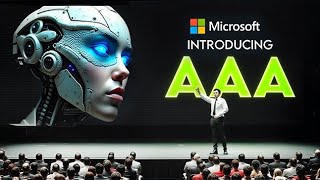
Microsoft released 10 autonomous AI agents for sales, service, finance, and supply chain that operate without human intervention. Honeywell's agents matched 187 full-time employees, Finastra cut production time from 7 months to 7 weeks, and McKinsey reduced onboarding lead times by 90%.
Chapters
Foreign Microsoft is taking things to the next level with the introduction of autonomous AI agents. And this could completely change the way we get things done. These AI agents are designed to handle tasks, boost efficiency and take on the workload like never before. With the public Preview coming in December 2024, it feels like we're on the edge of something big where AI is stepping in to do the heavy lifting, allowing us to focus on what really matters. This is a major shift in how we approach everyday tasks. And it's just the beginning. Let's start with what these agents actually do. So Microsoft is rolling out 10 different autonomous agents designed to work across sales, service, finance and supply chain teams. They are more than just AI chatbots responding to inputs. These agents are capable of functioning independently, making decisions based on real time data. This is literally as having a virtual employee who doesn't take breaks does, doesn't get tired and operates around the clock. What's exciting about these agents is how they seamlessly integrate into Microsoft's already robust Copilot platform. And Copilot has already proven its value with over 60% of Fortune 500 companies using it to accelerate results. For example, Lumen Technologies projects that using Copilot could save them around $50 million annually. That's a huge win for businesses that need to streamline operations and cut unnecessary costs. Companies like Honeywell have seen productivity gains equivalent to adding 187 full time employees. Meanwhile, Finostra reduced their creative production timeline from seven months to just seven weeks. That's the kind of impact we're talking about now. Microsoft's Copilot Studio allows businesses to not only use these pre built agents, but also create their own without needing any coding knowledge. This makes the platform accessible to a much broader range of companies regardless of their tech expertise. And what's truly powerful is that these agents are not isolated. They draw from Microsoft 365 graph, dataverse fabric and systems of record, meaning they have access to a wealth of data. To operate more effectively. These agents handle the background work, allowing teams to focus on more critical and value driven tasks. For example, a sales qualification agent helps sales teams prioritize leads, draft personalized emails and automate customer outreach. It's no longer necessary to manually sift through hundreds of leads. This agent does that for you, enabling sales reps to focus on closing deals. The Copilot Studio platform is where businesses can truly tailor these AI agents to fit their unique needs. It's designed with a no code approach, making it easy for any team to build custom agents early adopters like McKinsey and Company, Clifford Chance and Pets at Home are already seeing significant results. McKinsey, for instance, has developed an agent to speed up the client onboarding process, cutting lead times by 90% and reducing administrative work by 30%. That's the type of efficiency companies need to stay competitive. Take petsome, a UK based pet care company. They've created an agent specifically for their profit protection team. The agent compiles cases more efficiently, potentially saving the company seven figures annually. Meanwhile, Thomson Reuters developed a legal due diligence agent that can cut task times in half, boosting both client satisfaction and new business opportunities. The introduction of these AI agents signals a major shift from traditional business models. Companies are moving from legacy systems to AI first processes that allow them to be faster, more agile and most importantly, more productive. In a world where businesses need to make quick, informed decisions, having AI agents handle time consuming tasks like supply chain management, sales research or customer service inquiries can make all the difference. One agent that stands out is the supplier Communications agent. It autonomously tracks supplier performance, detects delays and takes action to minimize disruptions in the supply chain. Imagine how many hours procurement teams usually spend manually monitoring suppliers and and handling potential issues. This agent frees them up from that constant oversight, allowing them to focus on strategic decision making instead. Another game changer is the Customer Intent agent, which learns how to resolve customer issues more effectively over time. Paired with the Customer Knowledge Management Agent, it adds knowledge based articles to help scale best practices across the team. It's about ensuring that businesses not only respond to customer inquiries, but do so in a way that that is faster and more effective. Now, one thing Microsoft is really emphasizing with these agents is security. Data governance is a critical factor, especially when it comes to handling sensitive business information. The agents follow Microsoft's strict privacy and security guidelines, which include data loss prevention measures, robust authentication protocols and admin controls. All of this is managed within Copilot Studio, ensuring businesses can safely implement these autonomous agents with without exposing themselves to data breaches or mismanagement. Also, Microsoft isn't just creating these agents for other companies. They're using them internally as proof of how effective they can be. They've been able to reimagine how they approach business processes across sales, marketing, customer service and human resources. For example, Microsoft's own sales team has experienced a 9.4% increase in revenue per seller after implementing AI agents. They're also closing 20% more deals thanks to the insights provided by these tools. Their marketing team has seen equally impressive Results with a 21.5% increase in conversion rates on Azure.com that's the kind of data that shows how these agents can make a real difference in optimizing business strategies. In customer service, Microsoft reports that cases are being resolved nearly 12% faster since implementing AI driven support agents. And over in HR, the company's employee self service agent has improved the accuracy of answers to employee questions by 42%. These are the kinds of operational efficiencies that organizations across the board will need to adopt if they want to stay ahead of the curve. In my view, this is far from just a passing trend. Autonomous agents are quickly becoming a staple of the modern workforce. They're transforming business processes by automating routine tasks, which leads to faster, more efficient outcomes. And it's not just Microsoft making moves in this space. Nvidia, Oracle and Google are all working on their own versions of these agents, trying to capitalize on the growing demand for AI powered solutions. With these developments, we're seeing the future of work unfold right in front of us. The way people work and the tasks they prioritize will be influenced more and more by AI. The the agents are just the beginning. As they become more advanced, they'll continue to push the boundaries of what's possible. Andrew Rogoisky, a director at the Institute for People Centered AI, has pointed out that these autonomous agents are one of the ways AI companies will start to show real returns on the billions of dollars of investment they've received. While there's still work to be done, the progress we're seeing is a strong indicator that AI agents will eventually become as integral to businesses as personal computers are today. So this is definitely the next big leap for businesses. Autonomous agents powered by platforms like Microsoft Copilot offer a way to dramatically increase productivity, cut costs and scale operations. And we're seeing real world applications that are already delivering tangible benefits. With autonomous agents taking over tasks that typically require human intervention, businesses are free to focus on strategic growth rather than getting stuck in the weeds of everyday operations. And as these tools continue to evolve, they'll become even more capable of handling complex tasks, delivering greater value to organizations of all sizes. Alright, that's it for today's breakdown of Microsoft's new autonomous AI agents. If you're in business, this is something to watch closely as it's going to have a major impact on how companies operate in the near future. Thanks for watching and I'll see you in the next one.










