Mind-Blowing AI Updates Shocks Tech Insiders This Week!
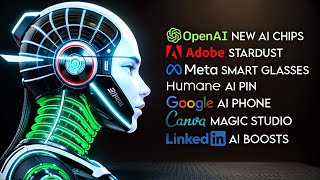
OpenAI and Microsoft are designing custom AI chips while Adobe previews Project Stardust, a new AI photo editor. Meta's Ray-Ban smart glasses ship October 17, and Humane's AI Pin launches November 9 with sensors and projection. Google's Pixel 8 adds on-device AI, and Northwestern researchers built a robot that evolved to walk in 26 seconds.
Questions this video answers
2023-10-08
October 10 (event start date mentioned)
October 17
$299 (starting price)
November 9
Chapters
There's a lot going on in the AI world this week and we've got all the details ready for you. Today we are going to talk about the chip making ambitions of OpenAI and Microsoft amidst a global shortage, the launch of Adobe's intuitive AI Photo Editor, Project Stardust Meta, and Ray Ban's latest Smart Glasses reveal, and the stylish tech debut from humane with its AI pin. We'll also explore Google's AI powered Pixel 8 phones, Canva's Magic Studio update, LinkedIn's AI enhancements for job hunters and recruiters, Microsoft's creative AI boost to Bing Chat, and a unique robot designing AI experiment from Northwestern University. And before we dive in, remember to subscribe to my channel to stay updated with all the latest AI news and developments. Okay, so OpenAI is looking to combat the ongoing chip shortage by potentially making its own AI chips. This shortage has highlighted the importance of GPUs, which play a vital role in AI operations in maintaining a good user experience. For instance, Microsoft's Bing Chat had a hiccup generating images due to a surge in user demand, underscoring the need for a reliable GPU supply. At the moment, OpenAI leans on suppliers like Nvidia for GPUs, but with the chip scarcity, it's mulling over the idea of either working closely with chip manufacturers or making its own AI chips. The interest in making custom AI chips isn't just about ensuring uninterrupted operations. There's chatter about OpenAI teaming up with Jony I've a former top designer at Apple, to come up with a novel AI hardware gadget. This collaboration could be a driving force for OpenAI to delve into the creation of its own AI chips. While there's no solid info on when we might see AI chips from OpenAI or even Microsoft, who's rumored to be on a similar path, it's evident that these tech behemoths are exploring new frontiers to enhance their AI offerings and user experience, especially in a world where the demand for AI and GPUs is skyrocketing. Next, Adobe is introducing an AI photo editing tool, Project Stardust, that's aimed at simplifying image modifications, making it accessible for everyone, not just seasoned editors. This tool will be showcased at the Adobe Max event. Unlike the old way of manually selecting objects in images, this new tool identifies and selects them automatically, much like Google's Magic Editor, but expected to be more advanced. With Project Stardust, objects in pictures are automatically singled out, allowing users to move or erase them easily. The tool smartly fills in the blanks left behind, making the edits look natural. A demo showed that the tool could also predict the next editing step. For instance, it presented a Remove Distractors button when a blurry crowd was selected, which, upon clicking, cleared the crowd from the image. Additionally, Project Stardust flaunts its generative AI capabilities by creating artificial flowers in a selected area or changing clothing items on a model with simple text commands. This feature is part of the growing wave of automated design tools driven by generative AI, similar to offerings from Canva and Google Photos Magic Editor. Although complete details of Project Stardust are yet to be revealed, Adobe hints that what's seen is just the tip of the iceberg. This tool is believed to redefine how users interact with Adobe products, and more will be revealed at the Adobe Max event starting on October 10th. Alright now. Meta has teamed up again with Ray Ban to unveil a newer version of their smart glasses. This is the second time they're bringing out smart eyewear, the first one being two years ago. This version is expected to hit the market on October 17, boasting improvements over the previous model. These glasses aren't just for blocking out the sun. They have a camera that can take photos and record videos, speakers and a microphone system, making it a gadget to capture and share moments on the go. Besides, they have a feature where you can play music, podcasts, send messages, and even make calls, all while keeping your hands free. With the Meta AI assistant built in, a simple hey Meta voice command will get things done for you. Talking about customization, these glasses offer over 150 different frame and lens combinations. Thanks to Ray Ban's diverse designs, you can even get prescription lenses fitted. They've also made tweaks to the audio, enhancing the bass and overall sound quality. The glasses are priced at $299 to start with, which might seem a bit steep, but considering the tech packed in, it can be a worthwhile accessory for some. Okay, next Sam Altman has shown support for a startup called Humane, which recently revealed its first creation, the Humane AI Pin, at a major fashion event in Paris. This gadget will officially hit the market on November 9th. Humane was started by some former Apple bigwigs, and its new product was flaunted by top model Naomi Campbell at the fashion show marking its first appearance in public. Now what's the Humane AI Pin? It's a neat piece of wearable tech that you can attach to your clothes. It's packed with sensors and uses artificial intelligence to bring new personal computing tricks to the table. Unlike other gadgets, the AI Pin doesn't have a screen but operates independently, aiming to blend smoothly into your daily routine. It's designed with privacy in mind, so it won't listen in on you unless you want it to. The tech inside the AI Pin is reported to include a fancy chip that helps it recognize stuff visually and and even project images like a mini laser show. When pitted against Google Clips, a similar sized AI camera from 2017, the AI pin stands out as it works all by itself without needing a smartphone or anything else to function. The detailed specs and more differences between AI Pin and Google Clips will be clearer when Humane officially launches the product in November. We're keeping an eye on how this fresh gadget stacks up against the older tech alright Next Google recently unveiled its new Pixel 8 and Pixel 8 Pro phones, bringing more artificial intelligence to the table. These phones, dubbed by a Google senior vice president as having AI in your hand, take us closer to mainstream AI use, something Google has been keen on. The new Pixels come with enhanced AI capabilities like creating and tweaking photo captions. This AI infusion is part of a broader plan discussed in Google's annual developers conference a few months back. Now Google Assistant, which has been around for seven years, will work with a new AI chatbot, Bard, to perform various tasks. This Bard integration follows its recent linkage to other Google services like Gmail, Maps and YouTube. One cool feature is Bard, helping generate snappy captions for photos, making sharing on social media a breeze. While the new Pixels boast better cameras and AI driven editing tools, especially on the Pixel 8 Pro, they do come with a higher price tag. This price bump mirrors a similar move by Apple, hinting at a trend in the tech industry. The Pixel 8 Pro also has a temperature check feature awaiting US regulatory approval, reflecting a health conscious tech advancement in a post pandemic world. Next canva celebrated its 10th birthday by unveiling Magic Studio, a hefty AI update to simplify design for everyone. Magic Studio hosts AI powered tools extending across Canva's platform, including its design app and video editor editing software. Noteworthy is Magic Switch, which changes designs into various formats with one click. It also offers a text to image AI art generator and an AI writer for brand specific content. Visual content is vital for businesses to stand out today, yet not all have the means or expertise to create professional visuals. MagicStudio bridges this gap, aiming to democratize visual communication for everyone. It promises to speed up the design and creation processes, making content generation a breeze. Magic Design, which can create fully designed documents and videos from text prompts is expected to be a crowd puller. Users can further tweak these designs to their liking. Additional features like Magic Media and Magic Morph enhance creative options. Two more tools, Magic Grab and Magic Expand, provide smart photo editing choices. Canva is also committing $200 million to a creator compensation program over three years to support creators addressing concerns regarding AI in the creative field. Now LinkedIn is stepping up its game with a bunch of new AI features thanks to OpenAI and Microsoft's technology. For those hunting for jobs or recruiters on the lookout for talent, LinkedIn's Recruiter platform now has AI woven into it, making the search for the right candidates or jobs smoother. There's also a new AI buddy to help with learning. Called the Learning Coach, this AI tool offers advice and might even recommend courses to help you brush up on soft skills like delegating tasks effectively. Not to leave marketers behind, LinkedIn is introducing an AI tool named accelerate to streamline marketing campaigns. This will ease the process of running campaigns on LinkedIn, although it's limited to data within LinkedIn itself. Now onto sales, especially B2B sales. LinkedIn's AI will now help in finding potential connections and engaging in conversations with leads easier. This new feature could be a boon for salespeople aiming to expand their networks or find new clients on LinkedIn. The blend of OpenAI, Microsoft's tech, and LinkedIn's new features seem to be aimed at making the professional world more interactive and efficient, making LinkedIn not just a place for networking, but a hub of AI driven functionalities. Okay, next Microsoft has jazzed up the AI image generator in Bing chat by integrating OpenAI's latest Dall E3 model, making it accessible to all users. Now, creating images like a dog bathing in a waterfall made of Skittles is just a chat away. This upgrade comes to bing even before OpenAI's own ChatGPT, giving Microsoft an edge in image generation. For a while, Dall E3 understands commands better, promising more creative and realistic images. It's user friendly too, as it's merged with bing Chat and ChatGPT, allowing you to chat with a bot to refine your image instead of being stuck with your first idea. This new version also has safety features to prevent creating inappropriate images or ones of public figures. On Bing Image Creator, Microsoft adds watermarks to these AI generated images for easy identification and has its own content moderation in place. Microsoft isn't stopping at Bing, they're bringing Dall E Tech to the Paint app, creating a new feature called Paint co Creator. This venture, however, faced a minor setback during the launch as the servers were overwhelmed due to a high number of user requests. But once past this hiccup, Dall E3 not only helps create your desired image, but also suggests creative modifications, making image creation a fun, interactive experience. And finally, Northwestern University researchers have developed a remarkable AI that can design robots from scratch swiftly. They tested it by asking to create a robot able to walk on flat ground. Unlike the lengthy evolution process, this AI conjured up a walking robot in seconds. It operates on a regular personal computer, creating entirely new designs, unlike other AIs that need huge computers and data just replicating old human designs. Led by Sam Kriegman, this experiment crafted a unique robot that doesn't resemble any known creature, coining the term instant evolution. It's a leap from Krigman's earlier work on xenobots, living robots made from biological cells pushing further into artificial life exploration. The AI initially had a soap bar sized block which could only jiggle. It quickly refined the design, making the block bounce, hop and eventually walk, all within 26 seconds. Interestingly, the robot was designed with three legs, autonomously determined, as efficient for walking alongside holes in its body, possibly to reduce weight and add flexibility. This AI's design capability could lead to various applications like robots navigating through disaster zones, inspecting sewage systems or medical nanobots. This opens up a world of AI designed tools for tackling complex issues. Alright, that concludes this week's AI News. If you enjoyed this video, don't forget to hit the like button. Subscribe to my channel and click the Bell icon to stay updated on all my future uploads. Thanks for tuning in and I'll catch you in the next one.










